
Texas offers several distinct data center markets. Dallas–Fort Worth has a dense interconnection ecosystem, while Austin, Houston, and San Antonio serve different enterprise, cloud, and regional continuity needs. A Texas colocation decision should start with the specific facility’s power availability, network routes, risk profile, and contract terms.
This guide compares the main metros and the questions to ask before choosing a Texas data center. Published facility counts, utility prices, and construction pipelines change quickly; use current operator documentation and a written quote for a specific site.

Why Consider a Data Center in Texas?
Texas combines a large enterprise market with multiple colocation and interconnection options. The state’s facility directory spans major metros and smaller markets, but directory totals can include planned facilities. Availability, rack density, and network choices must be confirmed at the building level.
Some qualifying data centers or large data center projects can receive a Texas state sales and use tax exemption for eligible items. Certification and purchaser requirements apply; a retail colocation customer should not assume the exemption passes through to its quote.
How Do Power and Grid Conditions Affect a Texas Deployment?
ERCOT manages the grid serving most, but not all, of Texas. Its role does not guarantee uninterrupted power at any facility. In 2026, ERCOT and the Public Utility Commission introduced a process to study large-load interconnections, including data centers, against grid reliability and location constraints. A proposed campus or expansion should have a credible energization schedule, not just announced megawatts.
A statewide commercial electricity average is not a colocation rate. Compare the delivered price for committed and metered power, cooling, space, cross-connects, and contract escalators. Ask how utility charges, transmission costs, and curtailment provisions are handled. Request the site’s utility-feed design, UPS and generator capacity, fuel plan, maintenance record, and tested load per rack.
What Risks Should Buyers Check?
Texas does not have uniformly low natural-disaster risk. The Gulf Coast faces hurricanes and flooding; inland sites can face flash flooding, severe storms, heat, and occasional extreme cold. Review address-specific flood maps, local hazard history, building elevation, cooling performance, and access routes. A second site should be separated by more than mileage: examine shared grid, floodplain, carrier, and fuel dependencies.
Connectivity also varies by facility. Obtain the on-site carrier list, diverse fiber entrance diagrams, cloud connection options, cross-connect pricing, and realistic installation intervals. Test latency to your users and other workloads rather than using residential broadband speeds as a proxy for data center connectivity.
Which Texas Colocation Market Fits Your Needs?
The four metros below are useful starting points. Each contains different facilities and neighborhoods, so compare named sites with the same technical checklist.
Dallas–Fort Worth
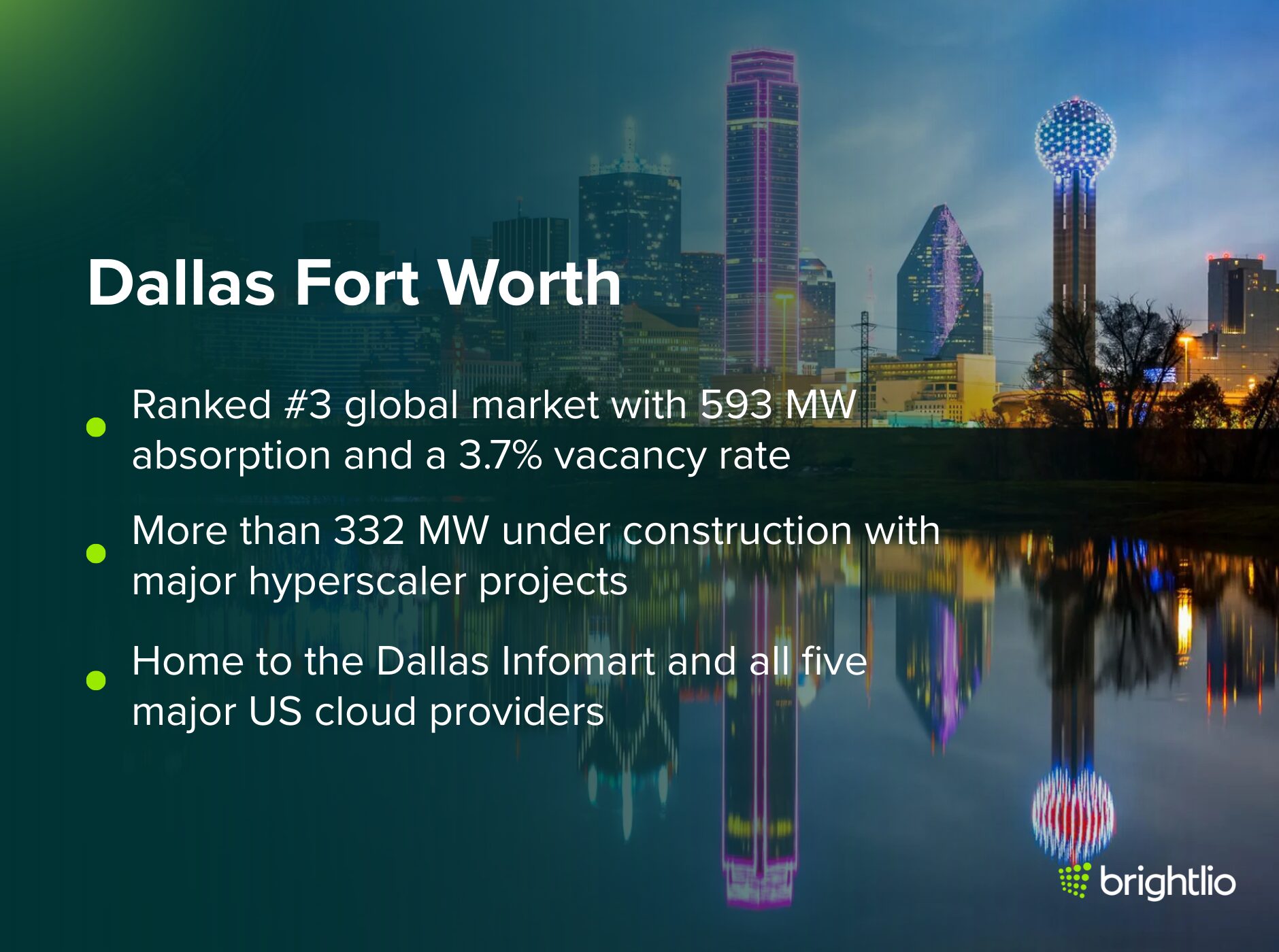
Dallas–Fort Worth is a major interconnection and colocation hub. Equinix’s Dallas metro facilities include the Infomart ecosystem, while other operators offer different campus, density, and carrier profiles. Favor a building with the specific network peers and power capacity your design needs; check the exact delivery date for new space.
Austin
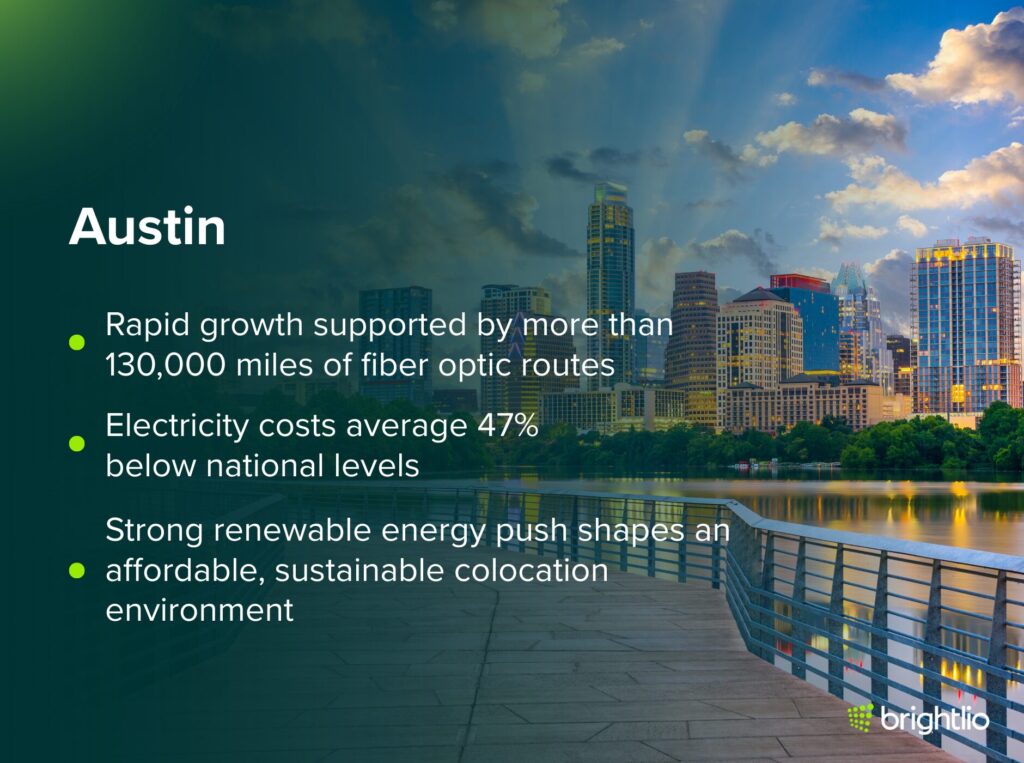
Austin can suit workloads close to central Texas users and technology operations. For example, DataBank lists an Austin facility. Compare downtown access with suburban space, carrier diversity, and power availability. Do not assume a citywide electricity rate or fiber mileage applies to the data hall you buy.
Houston
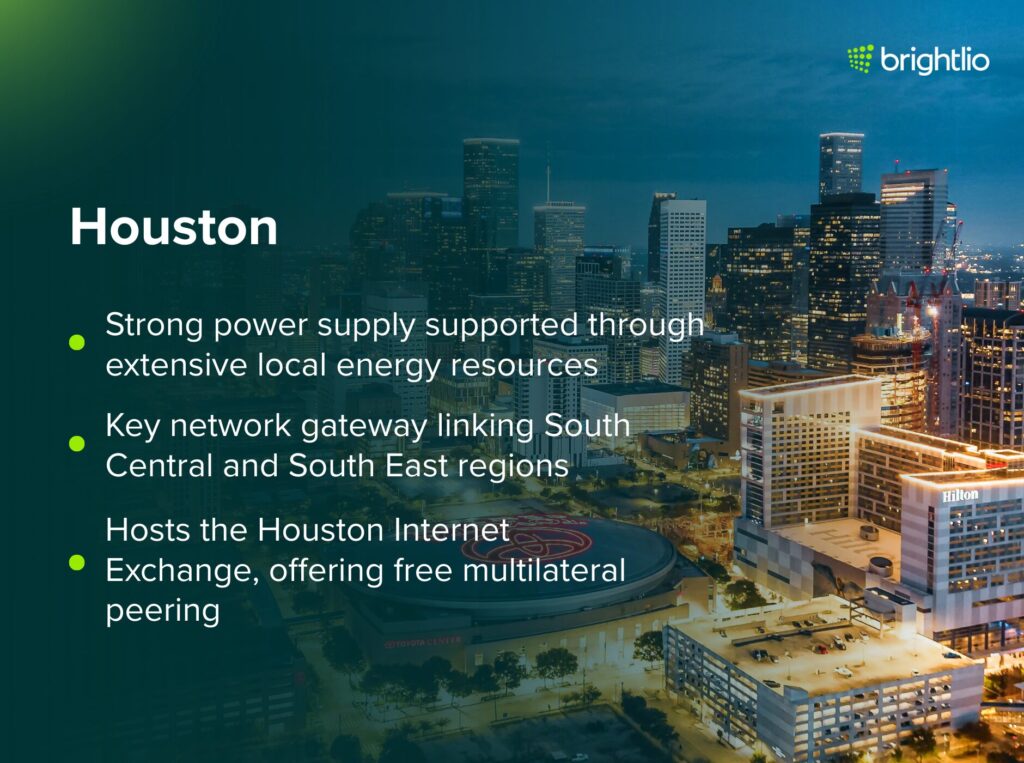
Houston serves energy, healthcare, logistics, and regional enterprise demand. Equinix lists HO1 in the greater Houston area, among other local choices. Scrutinize flood exposure, storm preparation, backup fuel, and diverse carrier routes at the exact address; the metro’s size makes location especially consequential.
San Antonio
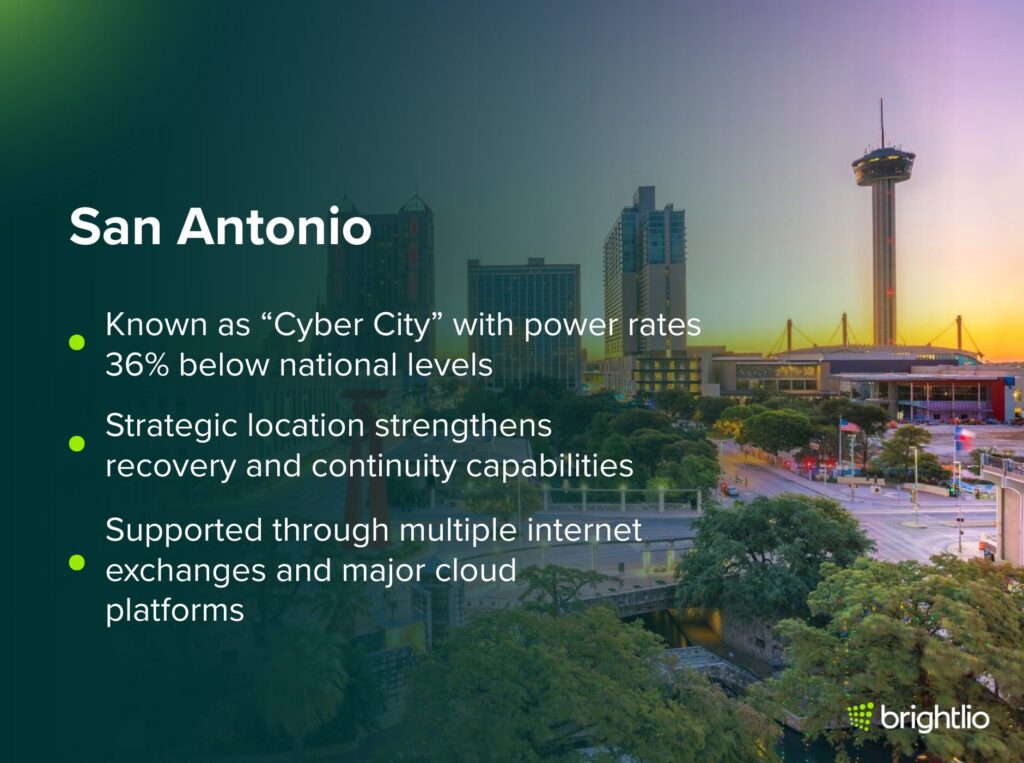
San Antonio offers a central and south Texas option for enterprise infrastructure and recovery designs. Compare actual on-site carriers, facility redundancy, generator testing, and usable rack power. Treat claims about a universally safer city or automatically cheaper electricity as site-specific questions rather than selection criteria.
What Should a Texas Colocation Quote Include?
- Space and timing: cabinet or suite size, available kW per rack, expansion rights, and firm service-ready date.
- Power and cooling: utility feeds, redundancy, density limits, metering, heat rejection, and any curtailment or pass-through terms.
- Connectivity: on-site carriers, cloud on-ramps, diverse entrances, cross-connect fees, and provisioning times.
- Resilience: site-specific flood and weather assessment, backup fuel, maintenance practices, security, and remote-hands coverage.
- Commercial terms: installation charges, recurring costs, annual increases, service credits, contract term, and exit obligations.
Ask each provider to answer the same requirements. That makes a Dallas quote comparable with one from Austin, Houston, or San Antonio even when the facilities bundle services differently.
Compare Texas Data Centers With Brightlio
Brightlio can help shortlist Texas colocation facilities against your power, connectivity, resilience, and budget requirements. Contact Brightlio with the desired metro, rack count, kW per rack, carrier needs, and target date to request comparable options.

John Minnix is the Founder and CEO of Brightlio, with two decades of experience in data center, cloud, and network solutions. He previously built VPLS Solutions into a top Southern California technology partner before its acquisition by Evocative, where he served as President and COO overseeing global sales, operations, and strategic acquisitions.
Recent Posts

Data Centers In Pennsylvania

Data Centers In Nebraska

Data Centers In Mississippi

Data Centers In Indiana
Let's start
a new project together