

Albuquerque has a smaller colocation market than the largest U.S. data center hubs, but it offers downtown carrier access, regional reach, and several facilities with different space and power options. This guide compares three Albuquerque operators and the practical questions to ask before choosing a site.
Facility capacity, available cabinets, network routes, and pricing change. Use the operator specifications below as a starting point and request a current proposal for your exact deployment.
Albuquerque Data Center Market at a Glance
- Facility listings: Data Center Map lists 19 locations in its Albuquerque market. Its geographic count includes nearby Los Lunas and planned projects, so it should not be read as 19 operating colocation facilities within the city.
- Power cost context: The U.S. Energy Information Administration reports an average New Mexico commercial electricity price of 11.90¢/kWh for July 2026. This statewide retail average is not a data center power or colocation quote.
- Network access: Compare the carriers and cross-connects available in the specific building. Residential broadband speeds do not describe a data center’s network options.
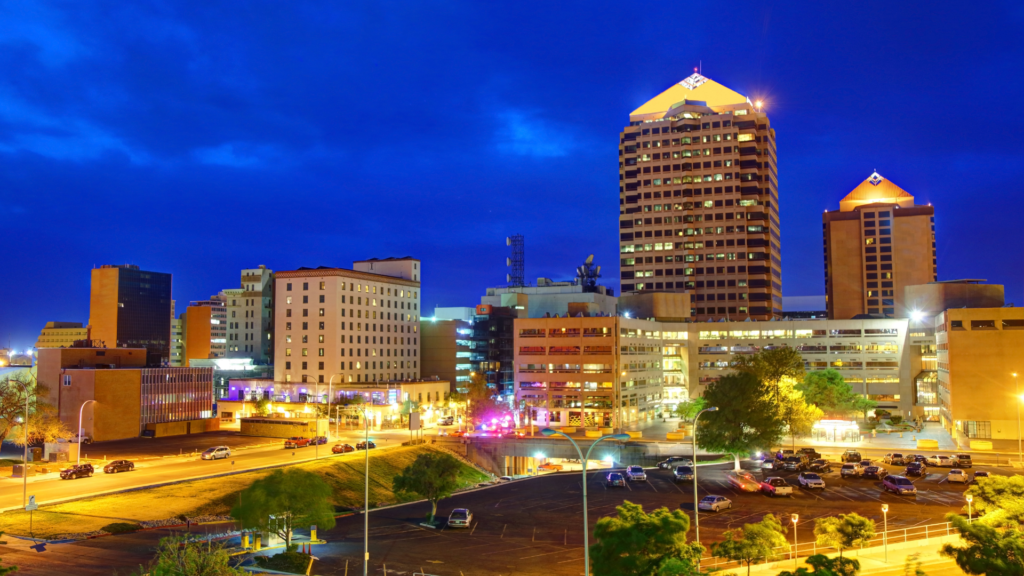
Albuquerque Offers Advantageous Geographic Positioning
Albuquerque’s central location presents a compelling advantage for data center customers. The city sits in the Southwestern United States at the junction of Interstate 40 (east to west) and Interstate 25 (north to south), often referenced locally as the “Big I” interchange. Its central location makes it a practical link between the markets of Texas, the Mountain States, and California. From this position, an Albuquerque data center can reach markets such as Phoenix, Las Vegas, Denver, Dallas, and San Antonio. Beyond the U.S. border, Albuquerque’s proximity to Mexico can support cross-border connectivity needs.
Compared with Gulf and Atlantic coastal metros, Albuquerque avoids routine hurricane storm surge exposure, since storm surge risk mapping focuses on hurricane-prone coastlines. At the same time, NOAA notes that hurricane impacts can extend far inland, so remnants still matter for wind and rain planning. Earthquake risk is also not zero.
USGS publications model a magnitude 7.0 scenario on faults adjacent to Albuquerque, which is why serious operators still plan for seismic resilience even outside the highest-risk corridors.
Local weather hazards deserve equal attention. The National Weather Service highlights monsoon-season flash flooding risks in the Albuquerque area, and the City of Albuquerque also notes seasonal flooding concerns tied to monsoon conditions.
Meta recognized the region’s advantages when it selected nearby Los Lunas, New Mexico, for a large data center campus. In a September 2026 site fact sheet, Meta puts its New Mexico data center investment at more than $2.5 billion and says the Los Lunas facility supports more than 400 operational jobs.
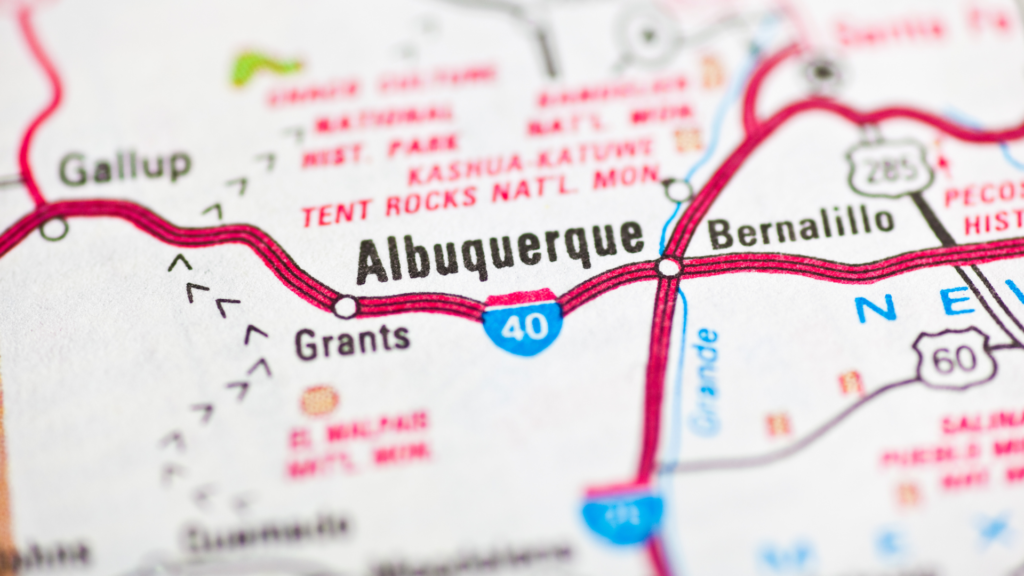
Albuquerque is Affordable
While Silicon Valley, Los Angeles, Austin, and other renowned tech hubs continue to dominate headlines, there’s a quiet yet significant shift toward alternative cities for data center services. As advances in technology, including AI, drive sustained data center demand, enterprise customers are looking at alternate locations for colocation capacity.
Albuquerque benefits from New Mexico’s favorable power-cost picture. EIA’s July 2026 preliminary data shows New Mexico’s average industrial electricity price at 4.16¢/kWh, compared with a U.S. industrial average of 9.77¢/kWh. The state’s commercial average was 11.90¢/kWh versus 14.53¢/kWh nationally. These are statewide retail averages, not the power tariff or colocation price at a particular facility.
Commercial real estate also remains comparatively accessible. CBRE’s Q2 2026 figures put Albuquerque’s average direct industrial asking rent at $11.10 per sq ft NNN. Industrial rent is only a broad real estate indicator, not a data center space quote.
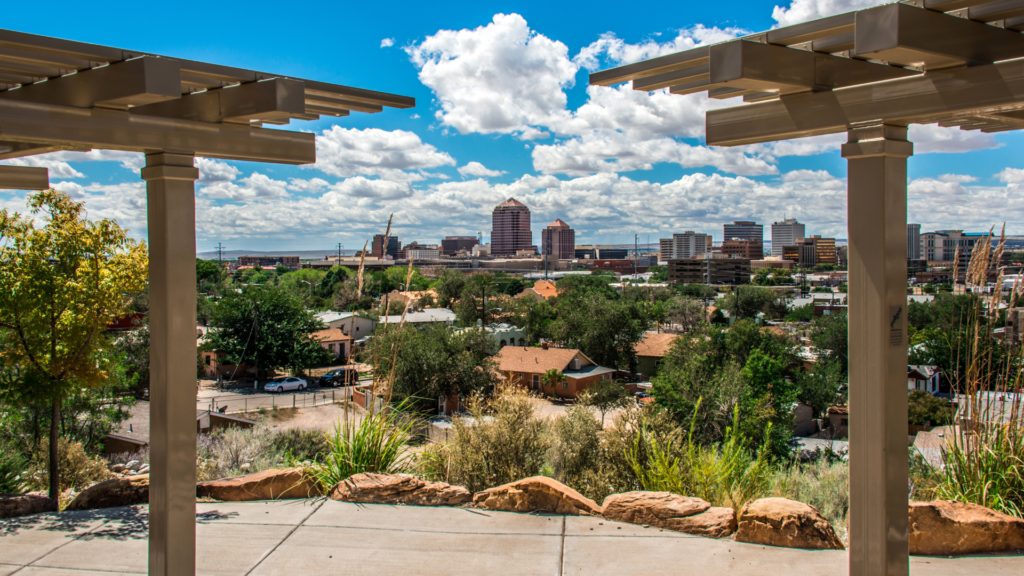
Albuquerque Offers Solid Network Connectivity Infrastructure
Albuquerque is making a concerted effort to build robust network connectivity. The city’s Broadband Office says multiple providers are expanding fiber infrastructure for homes and businesses. The city announced Vexus Fiber’s $250 million network investment in 2022; construction and service availability vary by address. Residential fiber expansion is separate from the carrier connectivity available inside a data center.
H5 Data centers recognized the advantageous connectivity in the city when they acquired the carrier hotel, 505 Marquette, in June 2022. The facility is one of Albuquerque’s most connected buildings. H5 now lists 25 on-net carriers and network service providers at its Albuquerque campus, with access to dark fiber and long-haul routes.
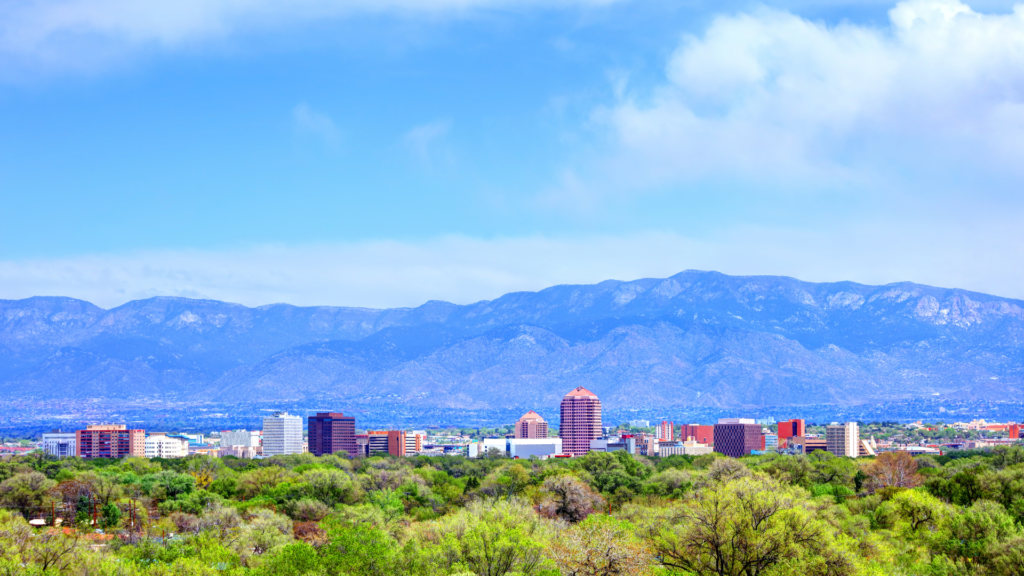
Albuquerque Colocation Facilities to Compare
Three providers illustrate different choices in the local market. Published specifications describe the facilities, not available inventory or a customer-specific service level. For a useful colocation quote, specify rack space, committed power, network requirements, and expansion plans.
Oso Grande Technologies — 725 6th Street NW
Oso Grande is a local provider with multiple data hall options at its downtown Albuquerque site. Its published specifications include full and partial racks, cages, and build-to-suit space. The provider has described a fiber connection to the carrier hotel at 505 Marquette Avenue NW.
Compare the power and backup design for the particular data hall offered in your proposal, along with remote hands, bandwidth, cross-connect costs, and any lease conditions.
Csquare ABQ1 — 400 Tijeras Avenue NW
Csquare lists 12,921 sq ft of raised floor, 8.6 MW of utility capacity, 1.8 MW of UPS capacity, 5 MW of generator capacity, and 12 connectivity providers at ABQ1. These are facility specifications; ask how much space and protected power is available for your deployment.
The site has appeared under the Cyxtera and Centersquare names. Review the current operator’s network list, power service levels, security controls, and disaster recovery assumptions rather than relying on older facility profiles.
H5 Data Centers — 505 Marquette Avenue NW
H5 Data Centers describes a two-facility Albuquerque campus with 225,000 sq ft of colocation space and 25 carriers and network service providers. It lists cabinets, secure cages, private suites, and powered shell options, with access to metro and long-haul fiber.
Ask which building and space type is being quoted, the applicable UPS and cooling design, a current carrier list, and the contract’s actual uptime commitments.
How to Compare Albuquerque Data Center Quotes
Request the same set of specifications from each operator so the total costs and service designs are comparable:
- Rack or suite space, committed kW, power density, and expansion rights.
- On-net carriers, cross-connects, cloud access, route diversity, and transport charges.
- UPS, generator, cooling, physical security, remote hands, and maintenance procedures.
- One-time and recurring charges, service levels, access terms, and contract length.
Find an Albuquerque Colocation Option With Brightlio
Brightlio can help compare colocation and connectivity proposals. Share your rack count, power requirement, network needs, budget, and timeline to obtain relevant options. Contact Brightlio to get started.

John Minnix is the Founder and CEO of Brightlio, with two decades of experience in data center, cloud, and network solutions. He previously built VPLS Solutions into a top Southern California technology partner before its acquisition by Evocative, where he served as President and COO overseeing global sales, operations, and strategic acquisitions.
Recent Posts

Data Centers In Pennsylvania

Data Centers In Nebraska

Data Centers In Mississippi

Data Centers In Indiana
Let's start
a new project together