
The U.S. data center market continues to expand as AI, cloud, and hyperscale demand compete for limited deliverable power. CBRE reported that supply across North America’s primary markets reached 10,903 MW in the first half of 2026, up 33.7% year over year, while vacancy fell to a record-low 1.4%. Capacity under construction reached 7,481.1 MW, and 80.4% of that pipeline was already preleased.
As a global colocation broker, Brightlio tracks developments across the United States. If you are exploring colocation services, this guide compares ten leading U.S. markets by current inventory, construction activity, connectivity, power availability, pricing pressure, and suitability for enterprise deployments. It is a practical 2026 guide, not a ranking based on one metric alone.
Let’s get started!
1. Northern Virginia
Northern Virginia, widely known as “Data Center Alley,” remains North America’s largest data center market. CBRE recorded 4,496.5 MW of inventory in the first half of 2026, 467.6 MW of net absorption, and a vacancy rate of just 0.2%.
Its unrivaled connectivity to major metropolitan areas and government agencies, robust power grid, and low-latency access to undersea cables make it an ideal hub for colocation. Northern Virginia is also home to all seven major public cloud providers. The region’s strategic location near Washington, D.C., positions it as a prime choice for businesses seeking secure data storage and processing capabilities.
CBRE also reported 2,420.2 MW under construction in Northern Virginia in the first half of 2026, up 16.5% year over year. Even with that pipeline, extremely low vacancy plus power, land, and permitting constraints keep pricing tight. Brightlio partners can still provide affordable colocation options in the region, including partial racks.

2. Dallas-Fort Worth
The Dallas-Fort Worth area offers an attractive combination of scale, connectivity, and relative affordability. Dallas is one of CBRE’s eight primary North American data center markets, supported by a business-friendly environment, plentiful land, major fiber routes, and a broad colocation ecosystem.
Demand continues to run ahead of immediately available capacity, putting upward pressure on pricing. Dallas-Fort Worth and other growth markets in Texas benefit from lower development costs than many coastal hubs, but utility delivery timelines now determine which projects can open on schedule.

3. Chicago
Chicago boasts a prime location as the crossroads of America. Its strategic positioning makes it a critical data center market for businesses looking to serve both coasts and the key Canadian market of Toronto. The city’s robust telecommunications infrastructure and access to multiple power sources enhance its appeal for colocation. Chicago’s climate stability and proximity to major transportation routes further solidify its leadership position.
Chicago remains attractive to hosting, cloud, and enterprise buyers, but it is no longer accurate to describe the market as uniformly inexpensive. CBRE’s H1 2026 report found that asking rates for requirements of 10 MW or more rose 9.7% year over year as availability tightened.

4. Silicon Valley
Silicon Valley’s significance in the tech world is unmatched, and its demand for data centers continues to grow. The region’s concentration of tech giants and startups demands high-performance data processing capabilities, making it an ideal location for colocation. Access to innovation and a skilled tech workforce further strengthens Silicon Valley’s appeal.
Demand remains high, while expensive land, constrained power, and long development timelines keep Silicon Valley a premium market. CBRE reported that asking rates for requirements of 10 MW or more were unchanged year over year in the first half of 2026 because transaction activity was limited—not because capacity was abundant. Buyers should confirm power availability and delivery dates early.

5. Phoenix
Phoenix is now one of CBRE’s primary North American data center markets. Its business climate, available land, renewable-energy potential, and fiber routes between the eastern and western United States make it a strategic colocation location.
Cloud and AI infrastructure demand continues to support development in Phoenix. The market can offer lower real-estate costs than coastal hubs, but power delivery, water use, and sustainability requirements now deserve the same scrutiny as pricing and network connectivity. For a wider view of operating facilities and planned projects beyond Phoenix, see our guide to data centers in Arizona.

6. New York/New Jersey
The New York Tri-State area is one of CBRE’s primary North American data center markets. Proximity to the world’s largest financial center supports low-latency demand, while submarine cables and dense network infrastructure provide strong connectivity to Europe, Latin America, and the Caribbean.
If ultra-low-latency connectivity to financial markets is a requirement, consider one of Manhattan’s carrier hotels. Better values can often be found in New Jersey, including Secaucus and Newark. Pricing is tightening, however: CBRE reported a 19% year-over-year increase in asking rates for requirements of 10 MW or more in the first half of 2026.

7. Atlanta
Atlanta is now one of North America’s fastest-expanding data center markets. In the first half of 2026, CBRE recorded 2,882 MW under construction, up 52.3% year over year. That pipeline put Atlanta ahead of Northern Virginia in total construction for the first time.
Atlanta benefits from Southeastern fiber routes, a business-friendly climate, and hyperscale demand. Growth has not eliminated scarcity: CBRE reported that asking rates for requirements of 10 MW or more rose 14.5% year over year. Buyers should assess grid capacity, permitting, and delivery schedules alongside price.

8. Portland/Hillsboro
Oregon’s Portland/Hillsboro area combines strong data center infrastructure with a temperate climate and access to renewable power. CBRE now treats Hillsboro as one of North America’s primary markets, making it a credible option for organizations prioritizing sustainability, reliability, and West Coast reach.
Technology demand, Pacific Northwest cloud campuses, and proximity to subsea cables support the market’s international connectivity. CBRE reported flat year-over-year asking rates for requirements of 10 MW or more in the first half of 2026 because few large transactions closed; utility and land availability still require careful review.

9. Los Angeles
Los Angeles stands at the crossroads of entertainment, technology, and international trade. This dynamic city requires robust data infrastructure to support its thriving industries. Colocation providers in LA leverage its strategic location and connectivity to serve various businesses, from Hollywood studios to tech startups.
Los Angeles data centers also offer excellent connectivity to international markets. Subsea cables connect Southern California to Japan, Malaysia, Indonesia, Australia, and New Zealand, while One Wilshire remains one of the region’s most important carrier and interconnection hubs.
Rising power costs, limited scalable sites, permitting requirements, and utility timelines constrain growth. Los Angeles remains important for edge computing, media, content delivery, and Asia-Pacific connectivity, but customers planning larger deployments should compare options across Southern California.

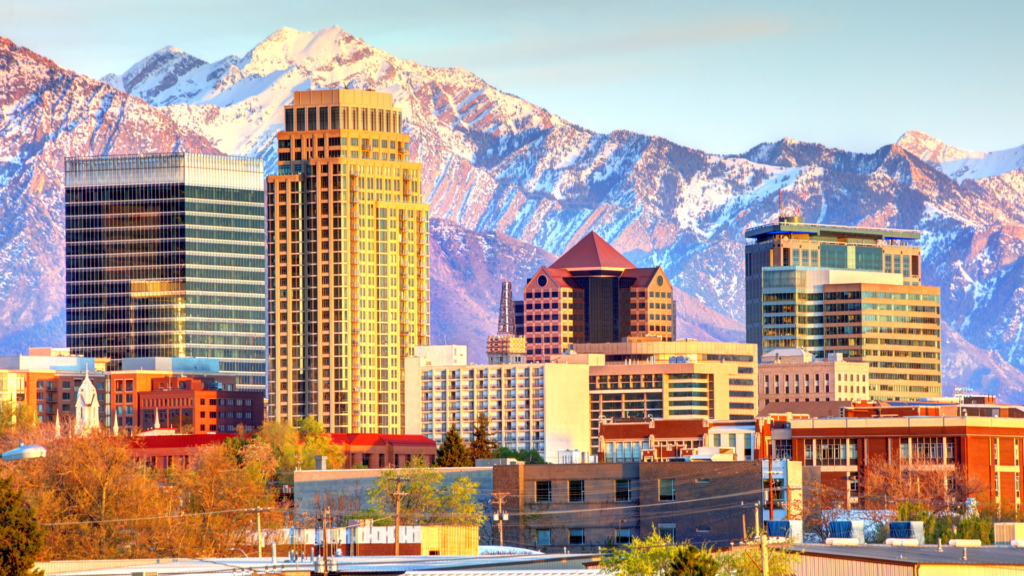
10. Salt Lake City
Salt Lake City has grown into an important secondary data center market, supported by a business-friendly environment, developable land, access to renewable energy, and a useful position on western fiber routes. Its relative affordability can make it an attractive alternative to larger West Coast markets.
Cloud and AI demand continues to raise interest in Salt Lake City. Buyers should verify available power, delivery schedules, seismic design, and carrier diversity for each facility rather than relying on citywide averages.
Brightlio Delivers Colocation Solutions!
If you are in the market for colocation services, Brightlio can help. As a colocation broker, we leverage a global network of provider partners to deliver the best solution for your needs and budget.
Additionally, we offer network connectivity, cloud, unified communications, value-added resale, and advisory services. This makes us a fit for almost all of your technology needs. We are committed to being your most trusted and responsive technology partner.
Get started with Brightlio today!

John Minnix is the Founder and CEO of Brightlio, with two decades of experience in data center, cloud, and network solutions. He previously built VPLS Solutions into a top Southern California technology partner before its acquisition by Evocative, where he served as President and COO overseeing global sales, operations, and strategic acquisitions.
Recent Posts

Data Centers In Indiana

Data Centers In Arizona
What Is a Data Center?
10 Largest AI Data Centers in the World
Let's start
a new project together