
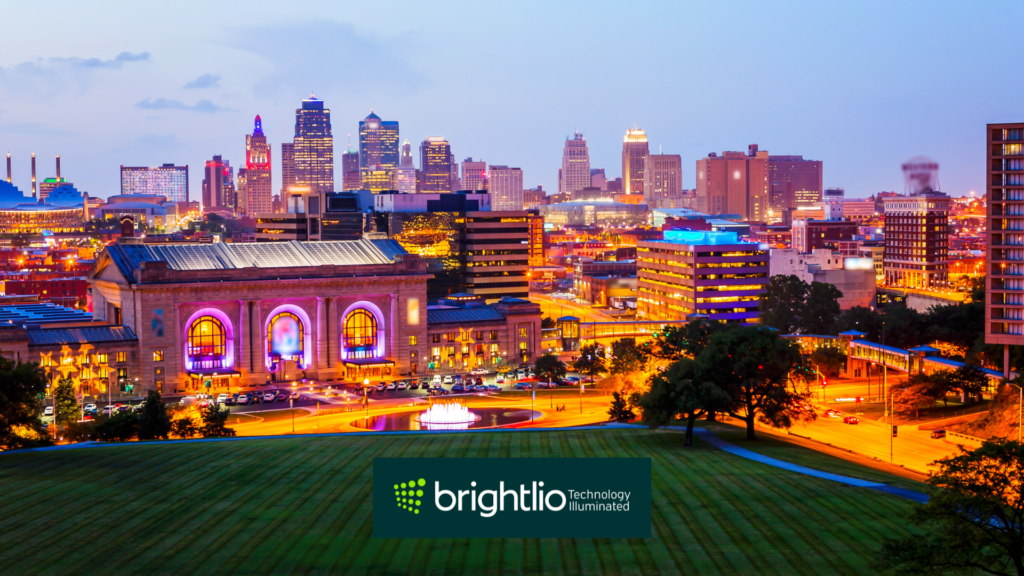
Kansas City offers colocation options for businesses that need a central U.S. location, regional network access, or a second site for resilience. The metro includes an interconnection-rich downtown carrier hotel, underground colocation, and smaller server-hosting options.
This guide compares current facilities and explains how to assess power, connectivity, risk, and total cost. Published market averages and operator specifications are starting points; request a site-specific quote before making a decision.
Kansas City Data Center Market Overview
The Kansas City metro spans Missouri and Kansas, so a facility count or electricity rate depends on the side of the state line and the boundaries used. A statewide energy average or a residential internet-speed test is not a colocation price or an indication of carriers inside a building.
For example, the U.S. Energy Information Administration reports a July 2026 average commercial electricity price of 12.64¢ per kWh in Missouri and 12.04¢ in Kansas. These are statewide retail averages, not the tariff or bundled rate a data center customer will pay.
Why Consider Kansas City for Colocation?
Kansas City sits on long-haul network routes serving the central United States. That position can support regional applications and disaster recovery, but latency and path diversity depend on the exact carriers and circuits purchased. Test routes to your users and to any primary site rather than assuming a central address guarantees a specific performance level.
The market has attracted larger infrastructure projects alongside traditional colocation. Meta announced in August 2025 that its Kansas City data center was online. That hyperscale campus is a separate type of deployment from a retail colocation facility and should not be counted as generally available rack space.

How Does Kansas City Connectivity Compare?
Netrality’s 1102 Grand is a downtown carrier hotel with network providers, exchanges, and cloud interconnection options. Netrality lists access to AWS Direct Connect and Google Cloud Interconnect. These are connection services, not AWS or Google Cloud availability zones housed in the building.
Ask each facility for its current on-net carrier list, cross-connect charges, cloud on-ramp availability, and diverse entrance paths. A second Kansas City facility may serve a disaster recovery strategy, but verify shared power, network, and weather risks before treating two sites as independent.

What Determines Kansas City Colocation Cost?
Pricing depends on reserved space, committed power, power density, bandwidth, cross-connects, remote hands, and contract length. State electricity averages, wholesale power prices, and land costs do not translate directly into a retail rack quote.
Compare the recurring and one-time charges on the same requirements. Include escalation terms, backup-power commitments, network fees, equipment access, and expansion rights. A low entry price can change materially once power and connectivity are included.
Kansas City Data Center Providers to Compare
The following operators publish Kansas City-area facilities with different service models. Confirm current capacity and the applicable service level with the operator.
Netrality — 1102 Grand and KC2
Netrality lists 1102 Grand in Kansas City, Missouri, as its downtown carrier hotel and KC2 at 7801 Nieman Road as a separate, purpose-built site for higher-density and wholesale deployments. Compare which facility provides the carriers, power density, and interconnection services your workload needs.
Lightedge — Kansas City Facilities
Lightedge lists an underground Kansas City facility at 9050 NE Underground Drive for colocation and hybrid cloud services. Its published materials describe options from a single rack to a secure cage. Ask for the current power, network, and security specifications for the space offered.
In April 2026, Lightedge announced another 3 MW Tier III certified Kansas City facility. The newly acquired site was described as fully preleased or subject to a right of first refusal, so it should not be presented as open retail inventory.
Patmos (Formerly Joe’s Datacenter) — 1325 Tracy Avenue
The Tracy Avenue data center previously associated with Joe’s Datacenter is now listed in Patmos’s Kansas City 1 operations. Patmos offers colocation and hosting services. Confirm the current operator, rack options, support scope, and price directly rather than relying on historical Joe’s Datacenter plan listings.

How to Request Comparable Colocation Quotes
Send the same requirements to each provider so the proposals can be evaluated side by side:
- Rack units or suite size, committed kW per rack, and expected growth.
- Required on-net carriers, cloud connections, bandwidth, cross-connects, and route diversity.
- Power and cooling design, maintenance procedures, physical security, remote hands, and access hours.
- One-time charges, monthly recurring costs, service-level terms, renewal increases, and contract length.
For a single server or partial rack, ask whether the provider offers that footprint and what power and bandwidth are included. For a larger suite, request available contiguous capacity and a realistic delivery schedule.
Compare Kansas City Options With Brightlio
Brightlio can help source colocation and connectivity proposals based on your space, power, network, and budget requirements. Contact Brightlio for current options in the Kansas City metro.
If your deployment needs security and compliance support, see this overview of Kansas City cybersecurity providers.

John Minnix is the Founder and CEO of Brightlio, with two decades of experience in data center, cloud, and network solutions. He previously built VPLS Solutions into a top Southern California technology partner before its acquisition by Evocative, where he served as President and COO overseeing global sales, operations, and strategic acquisitions.
Recent Posts
Data Centers In Pennsylvania
Data Centers In Nebraska
Data Centers In Mississippi
Data Centers In Indiana
Let's start
a new project together