
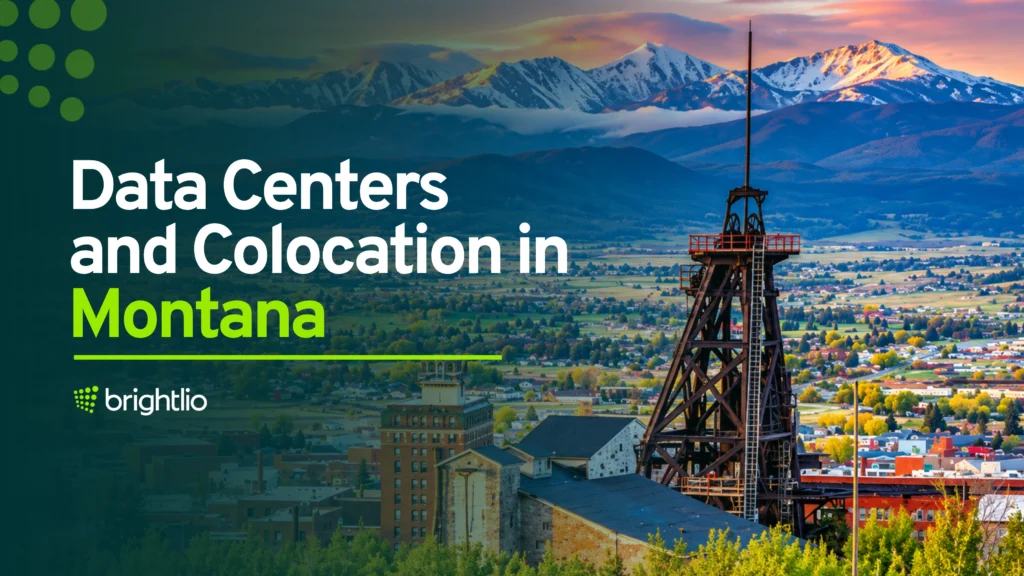
Montana is one of the smallest data center markets in the West. Atlas Power runs a high-density compute site outside Butte, and Sentinum’s BNI Montana bitcoin mine in eastern Montana draws about 10 MW.
The rest of the five largest operating sites are small colocation buildings. Vision Net’s Billings facility covers 47,000 sq ft, with about 24,000 sq ft of data center space, Montana Opticom offers more than 5,000 sq ft in Bozeman, and Cogent runs a 1,201 sq ft edge site in Billings.
The state’s appeal is climate and power mix. Cold, dry winters favor outside-air cooling, and hydro and wind supply more than half of in-state generation.
The grid is the limit. NorthWestern Energy’s Montana load averages about 765 MW, so a single large campus would rival the demand of the entire system, and local opposition has already stopped three proposed projects.
Montana works for regional businesses and small high-density deployments. Large buyers will find more room and more carriers in Denver, Salt Lake City, or Seattle.
Montana Data Center Tracker
12tracked data center sites
9 operational, 7 of them colocation3 planned
This tracker counts each site once and drops withdrawn projects, including TAC's 600 MW Great Falls campus. It covers 9 operating sites, 7 of them colocation, plus 3 planned projects.
Market Snapshot
Largest Operating Data Centers In Montana
Ranked where operators publish power or floor space. Atlas Power does not publish capacity but runs high-density crypto and GPU loads. Seven of the 9 operating sites are colocation facilities, shown as green squares, with planned projects in coral.
- Atlas Power ButteButteNot publishedOperational
High-density compute site about six miles southeast of Butte, formerly owned by CryptoWatt, used for crypto mining and GPU hosting with mostly air cooling. A 150 MW expansion letter of intent with NorthWestern is not counted, since those talks fell through
- Address:
- 200 Technology Way, Butte
- Operator:
- Atlas Power
- Sentinum BNI MontanaEastern Montana (approximate pin), current powerAbout 10 MWOperational
Bitcoin mining site run by a Hyperscale Data subsidiary, one of two leased Montana sites about 15 miles apart. Pin is approximate
- Location:
- Lower Yellowstone REC territory, exact site not disclosed
- Operator:
- Sentinum (Hyperscale Data)
- Vision Net Billings (1030 Central)Billings, total building47,000 sq ftOperational
47,000 sq ft total building with about 24,000 sq ft of data center space
- Address:
- 1030 Central Ave, Billings
- Operator:
- Vision Net
- Montana Opticom BozemanBozeman5,000+ sq ftOperational
N+1 data center space in Bozeman
- Address:
- 144 Quail Run Rd, Bozeman
- Operator:
- Montana Opticom
- Cogent Data Center BillingsBillings1,201 sq ftOperational
Cogent's Billings edge facility, offering 1,201 sq ft of colocation space
- Address:
- 3025 Hesper Rd, Billings
- Operator:
- Cogent Communications
Other operating sites, shown on the map in green: , , , .
Planned And Unconfirmed Projects In Montana
Quantica's Broadview campus is the only large project with site work under way. TAC's 600 MW Great Falls campus, Sabey's Butte campus and Krambu's 29 MW Bonner project were withdrawn, so they are left off.
- Quantica Big Sky CampusBroadview, NorthWestern letter of intent, up to1,000 MWSite work started
AI campus on a nearly 8 square mile property in Yellowstone County. NorthWestern projects 500 MW initially, growing in phases to 1,000 MW. Road and well work began in September 2026, and the company has no water rights on record with the state
- Location:
- Near Broadview, Yellowstone County
- Developer:
- Quantica Infrastructure
- Sentinum BNI Montana ExpansionEastern Montana (approximate pin), conditional will-serve125 MWConditional
Lower Yellowstone Rural Electric Cooperative will serve up to about 125 MW more, subject to engineering studies, grid upgrades and regulatory approvals. One required transmission line has a 2031 completion timeframe
- Location:
- Existing BNI Montana site
- Developer:
- Sentinum (Hyperscale Data)
- Bitzero PolsonPolson, announced in 202250 MW (2022)Unconfirmed
Announced in June 2022 to run on Kerr Dam hydropower on Flathead Reservation land, when the Confederated Salish and Kootenai Tribes called talks very preliminary. Current status is unconfirmed, so its 50 MW is left out of the proposed load total
- Location:
- Polson, Flathead Reservation
- Developer:
- Bitzero
Colocation Facilities In Montana
Colocation is small and spread across Billings, Bozeman, Missoula and Helena, led by Vision Net. These operating facilities also count in the Operational tab.
- Vision Net Billings (1030 Central)Billings, total building47,000 sq ftColocation
47,000 sq ft total building with about 24,000 sq ft of data center space
- Address:
- 1030 Central Ave, Billings
- Operator:
- Vision Net
- Montana Opticom BozemanBozeman5,000+ sq ftColocation
N+1 data center space in Bozeman
- Address:
- 144 Quail Run Rd, Bozeman
- Operator:
- Montana Opticom
- Cogent Data Center BillingsBillings1,201 sq ftColocation
Cogent's Billings edge facility, offering 1,201 sq ft of colocation space
- Address:
- 3025 Hesper Rd, Billings
- Operator:
- Cogent Communications
- Vision Net Billings Fiber HotelBillingsNot publishedColocation
Carrier fiber hotel in downtown Billings's Granite Tower
- Address:
- 222 N 32nd St, Billings
- Operator:
- Vision Net
- Parsec Data CenterBillingsNot publishedColocation
Billings colocation and data management facility. Listings give both 3450 and 3470 Gabel Rd, so the pin marks the block
- Location:
- Gabel Rd, Billings
- Operator:
- Parsec Data Management
Other colocation facilities, shown on the map as green squares: , .
Choose a category to switch the list and highlight its sites on the map. Click any site card to find it on the map, or click a marker to jump to its card. Pins are approximate, and each MW figure carries the basis shown beside it.
Data sourced from Data Center Map, EIA rates, Low-Carbon Power, BillTrack50, Bozeman Daily Chronicle, Montana Free Press, Montana Free Press (water), Montana Kaimin, Hyperscale Data, DatacenterDynamics, NorthWestern Energy, NorthWestern resource plan, Montana Code, Missoula County, Vision Net and KRTV, checked October 23, 2026. Totals count each campus or facility once.
Why Colocate In Montana?
Montana's benefits are real but narrow: a cold, dry climate, power priced below the national average, a grid led by hydro and wind, and a property tax break for onsite generation.
Four benefits hold up under scrutiny.
1. Cold, Dry Climate And Free Cooling
Long cold seasons and low humidity let operators cool data halls with outside air for much of the year. That cuts the power spent on chillers, one of the largest operating costs in a data center.
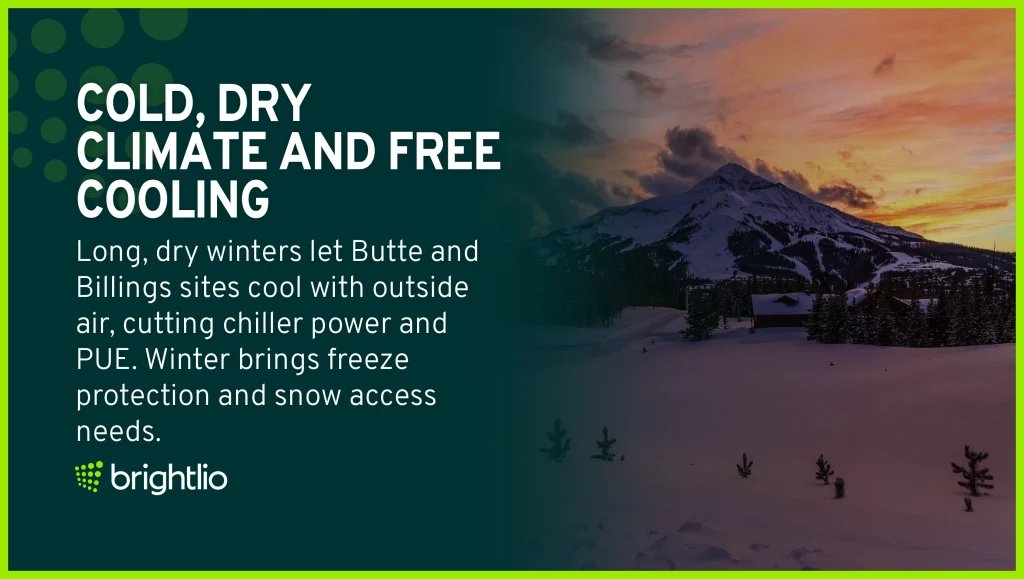
The climate already supports dense loads. Atlas Power runs crypto mining and GPU hosting outside Butte with mostly air cooling.
Cooling is the largest share of a data center's non-IT power, so a long free-cooling season lowers both PUE and the monthly bill. In Butte and Billings, temperatures stay below freezing for weeks at a time each winter, which lets operators run economizers with little mechanical cooling.
The tradeoff is winter itself. Sites need freeze protection, heated generator enclosures, and staff who can reach the building through snow, and the coldest sites sit far from fiber and labor.
2. Power Priced Below The National Average
Montana's commercial rate was 13.33¢/kWh in July 2026, about 8% below the 14.53¢ national average.
The edge is modest. Buyers comparing colocation pricing across the West will find cheaper power in Nevada and Washington, so price alone rarely justifies choosing Montana.
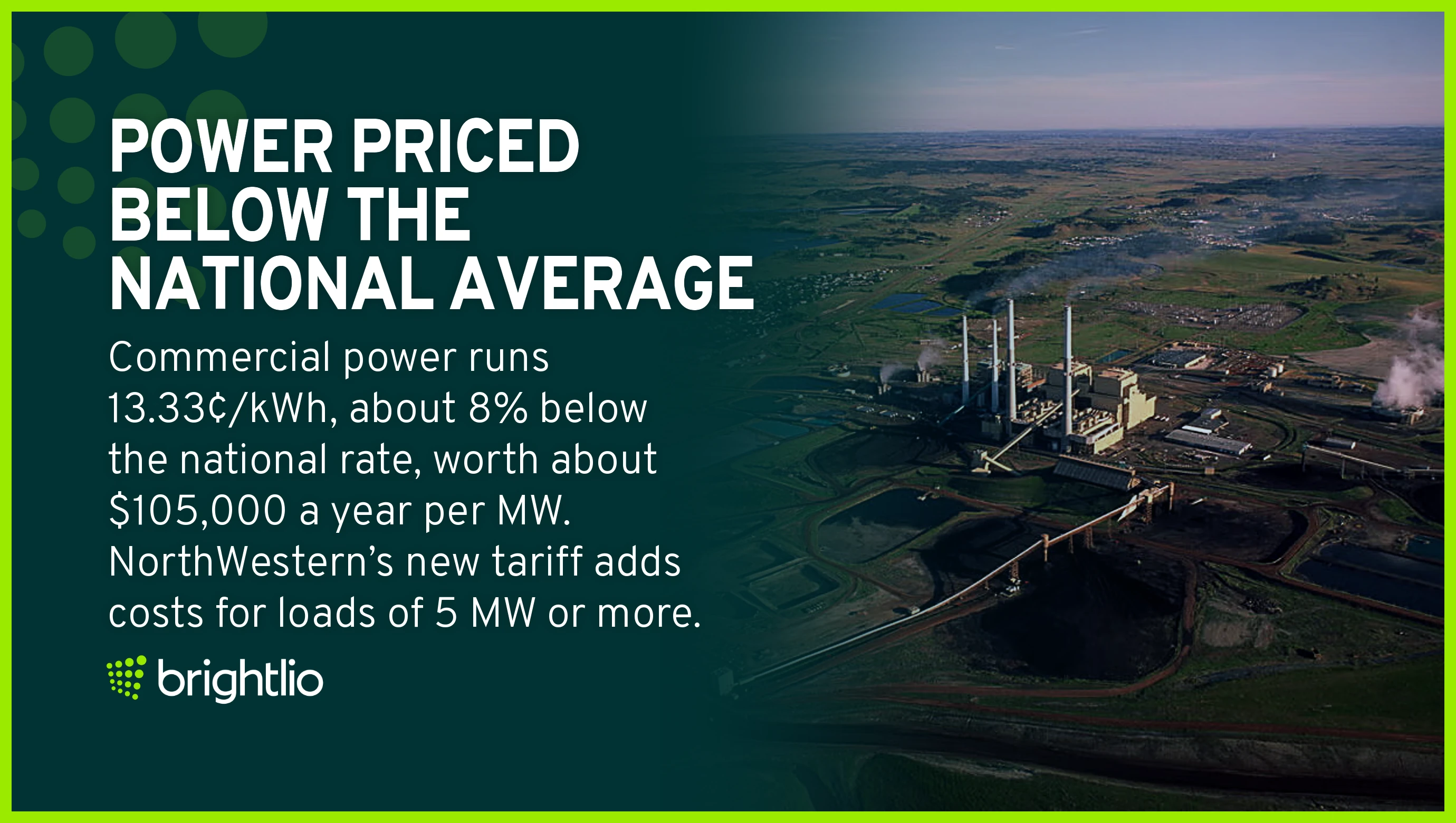
The gap matters most at scale. A 1 MW deployment running all year uses about 8,760 MWh, so a 1.2¢ discount from the national average is worth about $105,000 a year.
New large loads will not keep that rate for free. NorthWestern filed a Large New Load tariff with the Public Service Commission in March 2026 for new loads of 5 MW or more, with minimum service terms, collateral, and exit fees, so large buyers need to budget for upgrade costs on top of the energy rate.
3. A Grid Led By Hydro And Wind
Hydropower supplied about 39% of Montana's generation from July 2025 to June 2026, and wind about 23%. Together they make up more than 60% of the mix.
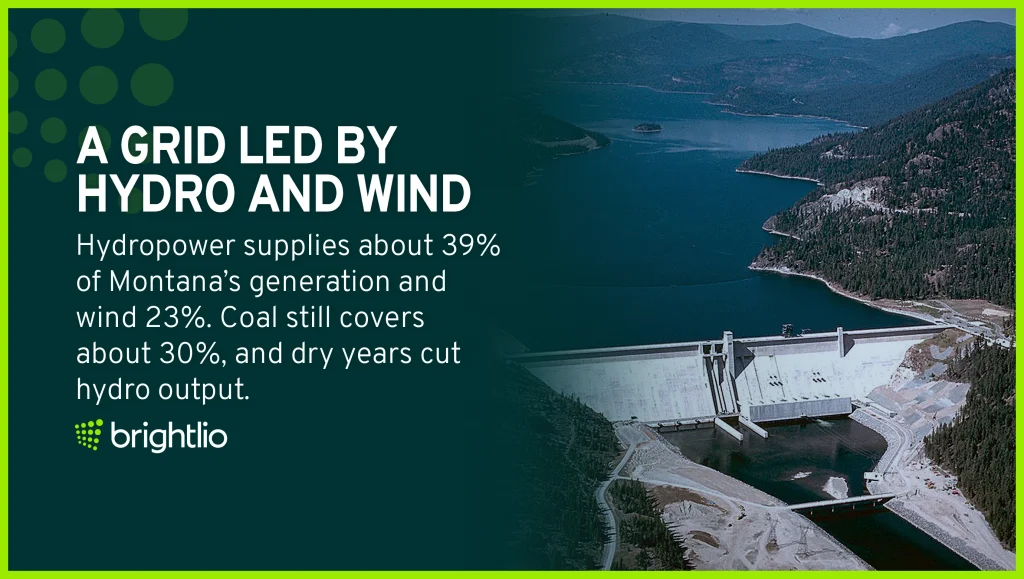
For buyers with carbon targets, that mix gives a head start before any renewable contract. Coal still supplies about 30%, so the grid is far from carbon-free.
Hydropower also gives the grid clean supply that runs day and night, which wind and solar cannot match alone. Dry years cut hydro output, and coal or market purchases fill the gap, so the mix shifts from year to year.
4. Property Tax Relief For Onsite Generation
HB 424, passed in 2025, places qualifying onsite generation in property tax class 17 for 10 years. That class carries a 0.9% taxable valuation rate before local mill levies, against 6% for class 13 property.
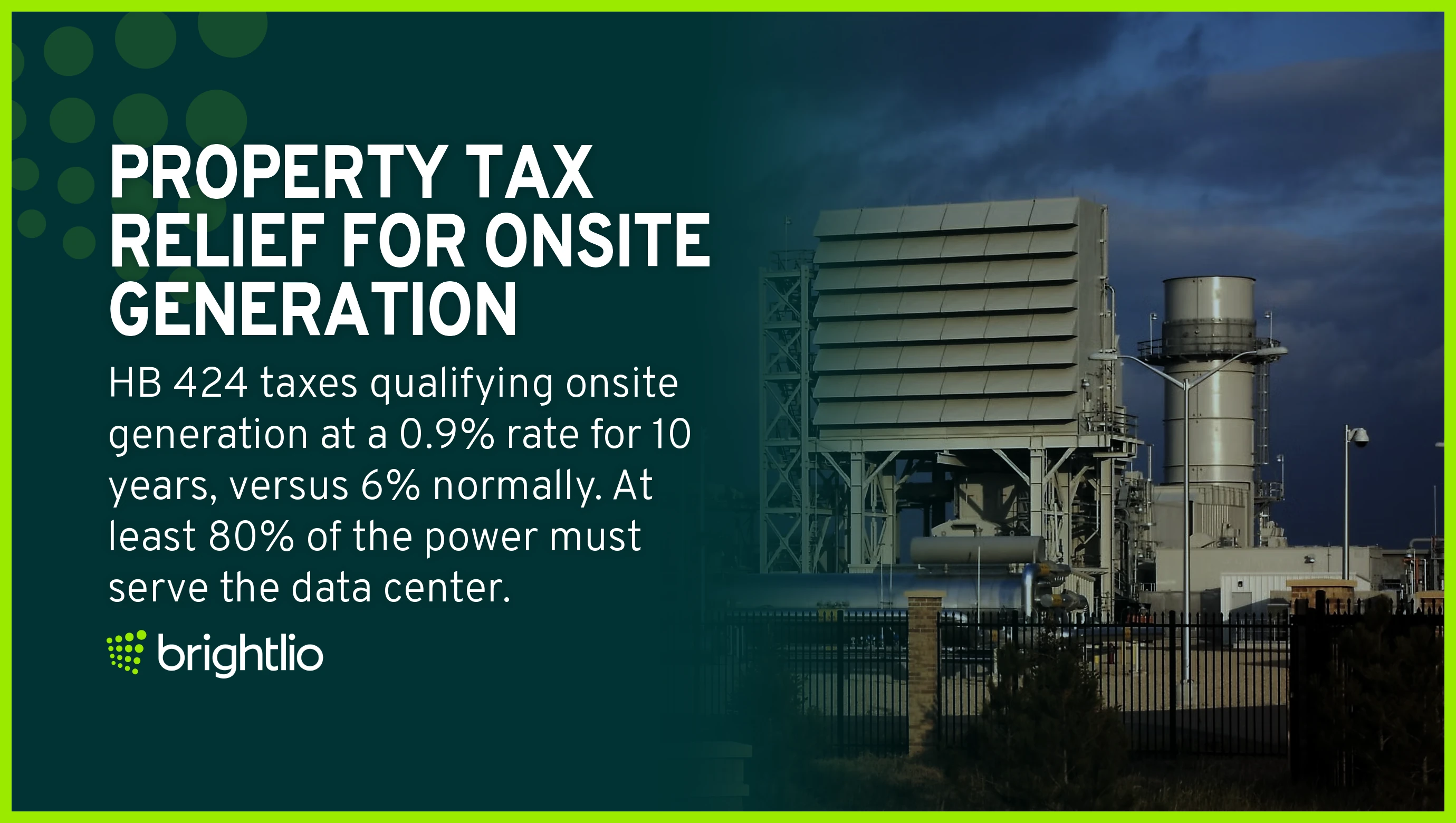
The break helps developers who build their own power plants beside a campus. Retail colocation tenants gain nothing from it.
The break matters because Montana's grid has little spare capacity. A developer that builds its own gas or battery plant can connect sooner, and HB 424 lowers the tax cost of doing so.
The rule has limits. At least 80% of the generation must serve the data center each year, outside a governor-declared emergency, so the plant cannot double as a merchant power business.
Key Cities Or Submarkets In Montana
Montana's data centers are spread across six operating markets, with Billings holding the most colocation and Butte and eastern Montana hosting the high-density compute sites.
The five submarkets below run from the busiest retail market to the most remote compute site.
1. Billings
Billings is Montana's largest colocation market. Vision Net's facility at 1030 Central Ave and Cogent's edge site, both profiled below, anchor the city.
Vision Net runs a second Billings site, a carrier fiber hotel in the Granite Tower at 222 N 32nd St downtown. Parsec Data Management operates a colocation facility on Gabel Rd.
Billings suits regional enterprises, health systems, and energy companies in eastern Montana and northern Wyoming that need cabinets to small cages.
Billings sits on Interstate 90, the state's main east-west corridor, and its fiber hotel gives carriers a meeting point in eastern Montana. With four colocation sites in one city, it is the only Montana market where buyers can compare providers side by side.
2. Bozeman
Bozeman holds Montana Opticom's N+1 facility, profiled below, the only colocation site in the Gallatin Valley.
The city's growing software and research base, anchored by Montana State University, gives the market local demand. Space is limited, so larger buyers will need a second site elsewhere.
Bozeman's fast growth has pushed up land and labor costs, so any new facility here will cost more to build than one in Billings or Butte. Buyers often pair local cabinets with a recovery site in Billings, about two hours east on I-90.
3. Butte
Butte is Montana's high-density compute town. Atlas Power, profiled below, runs crypto mining and GPU hosting about six miles southeast of the city.
Sabey withdrew its proposed Butte campus, which leaves Atlas as the only large compute operator in the area. The town suits high-density tenants that want cheap air cooling and can live with limited carrier choice.
Butte's industrial history gives it industrial land and a workforce used to heavy operations. Enterprise tenants need carrier diversity and remote hands more than raw power, and Butte offers less of both than Billings.
4. Missoula And Helena
Vision Net runs colocation sites in both Missoula and Helena, which serve western Montana businesses, the University of Montana, and state government.
Missoula County has paused new or expanded data centers outside Missoula city limits from July 9, 2026, to July 8, 2027. Krambu withdrew its 29 MW project in nearby Bonner.
These cities suit local enterprises and state agencies. New large projects face the strongest local resistance in the state here.
The pause covers only unincorporated Missoula County, so sites inside city limits remain open to proposals. Helena's state government base keeps steady demand for compliant hosting, and Vision Net's two western sites give buyers a production and recovery pair on the I-90 and I-15 corridors.
5. Eastern Montana
Eastern Montana hosts Sentinum's BNI Montana bitcoin mine, profiled below, on Lower Yellowstone Rural Electric Cooperative power. The operator leases two Montana sites about 15 miles apart.
The region offers cheap land and cooperative power. It has no colocation market and suits mining and power-driven compute only.
Cooperative power changes the math here. Rural cooperatives can serve large loads on their own terms, but major expansions still depend on transmission upgrades that take years.
Distance is the other limit. Sites in the region sit hours from Billings, with few carriers and little local technical staff.
Notable Colocation Providers And Facilities In Montana
Montana's five largest operating sites are two power-driven compute sites and three small colocation buildings. Only Sentinum publishes a power figure, and the largest colocation building is smaller than a single hall at a typical hyperscale campus.
The five profiles below follow the tracker's ranking.
1. Atlas Power Butte
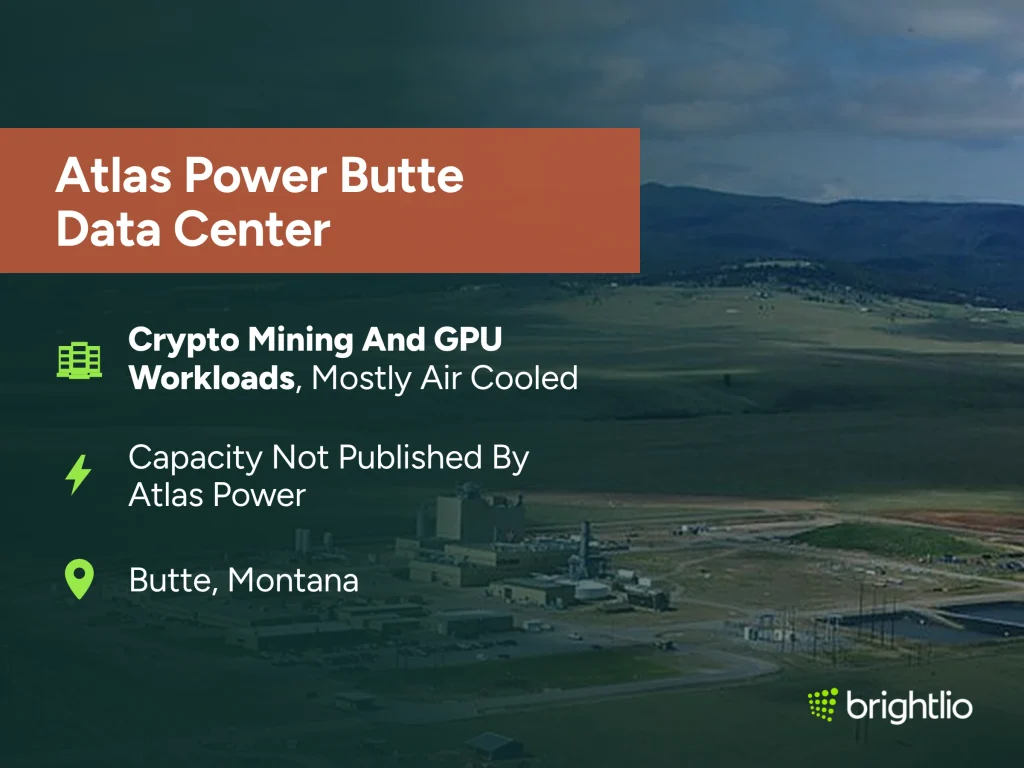
Atlas Power runs a high-density compute site at 200 Technology Way, about six miles southeast of Butte. The site, formerly owned by CryptoWatt, hosts crypto mining and GPU workloads with mostly air cooling.
Atlas does not publish its capacity.
Atlas Power is best suited for GPU and high-density tenants that want cheap air cooling and can accept limited carrier choice.
The site shows how Montana's compute market has shifted from pure bitcoin mining toward GPU hosting. Buyers looking at Atlas need to confirm power availability, network routes into Butte, and contract terms directly, since the operator publishes no capacity.
2. Sentinum BNI Montana
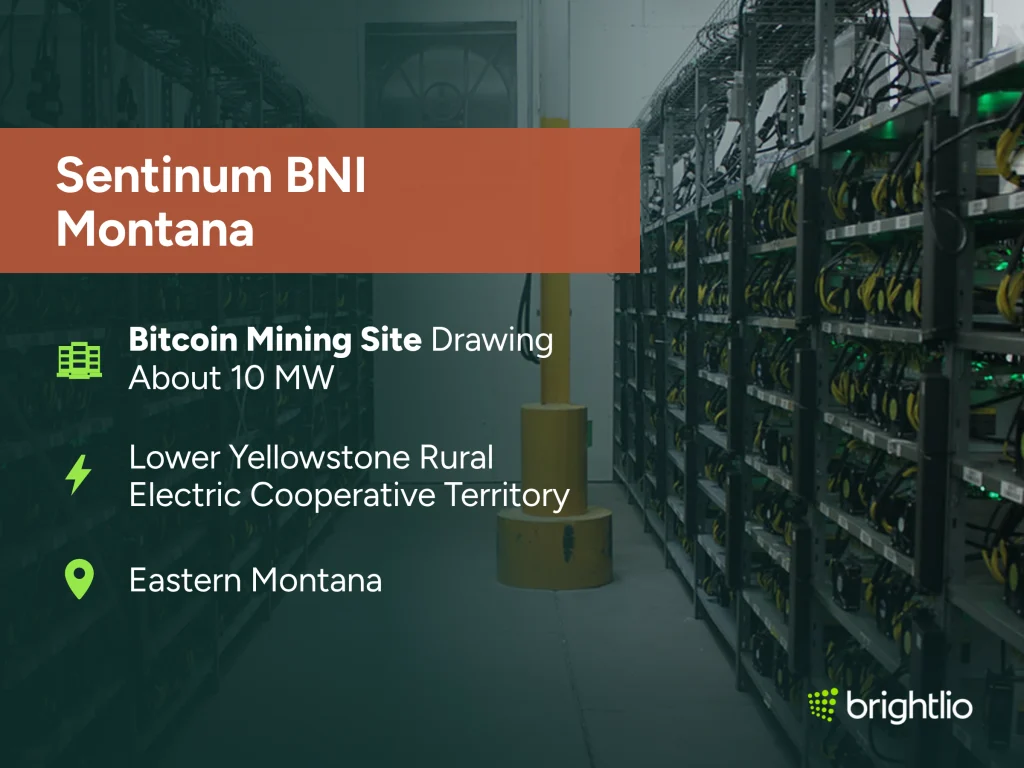
Sentinum, a subsidiary of Hyperscale Data, runs a bitcoin mining site in eastern Montana that draws about 10 MW. The site sits in Lower Yellowstone Rural Electric Cooperative territory, and its exact location is not disclosed.
The operation is a mining site with no colocation services.
It matters to other buyers as proof that rural cooperative power can support high-density loads in Montana.
Mining loads can switch off fast when power prices spike, which makes them flexible customers for a cooperative grid. That flexibility explains why rural utilities accept them, and it does not carry over to enterprise workloads that must stay online.
3. Vision Net Billings (1030 Central)
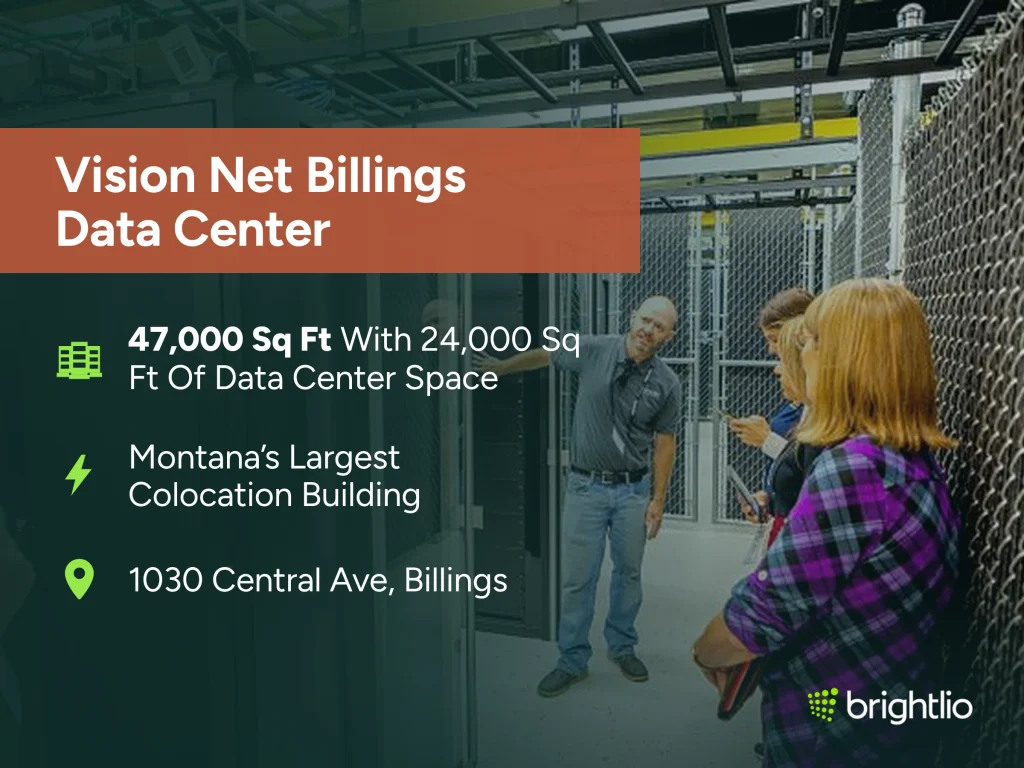
Vision Net's facility at 1030 Central Ave covers 47,000 sq ft, with about 24,000 sq ft of data center space. It is the largest colocation building in Montana.
Vision Net runs more Montana colocation than any other provider, with sites in Billings, Missoula, and Helena, so tenants can spread workloads across cities with one contract.
Vision Net Billings is best suited for regional enterprises, health systems, and energy companies that need room to grow from cabinets to cages.
Its size gives tenants room that smaller Montana buildings lack. A buyer can start with one cabinet and grow without moving to another city, which matters in a state with so few large rooms.
4. Montana Opticom Bozeman
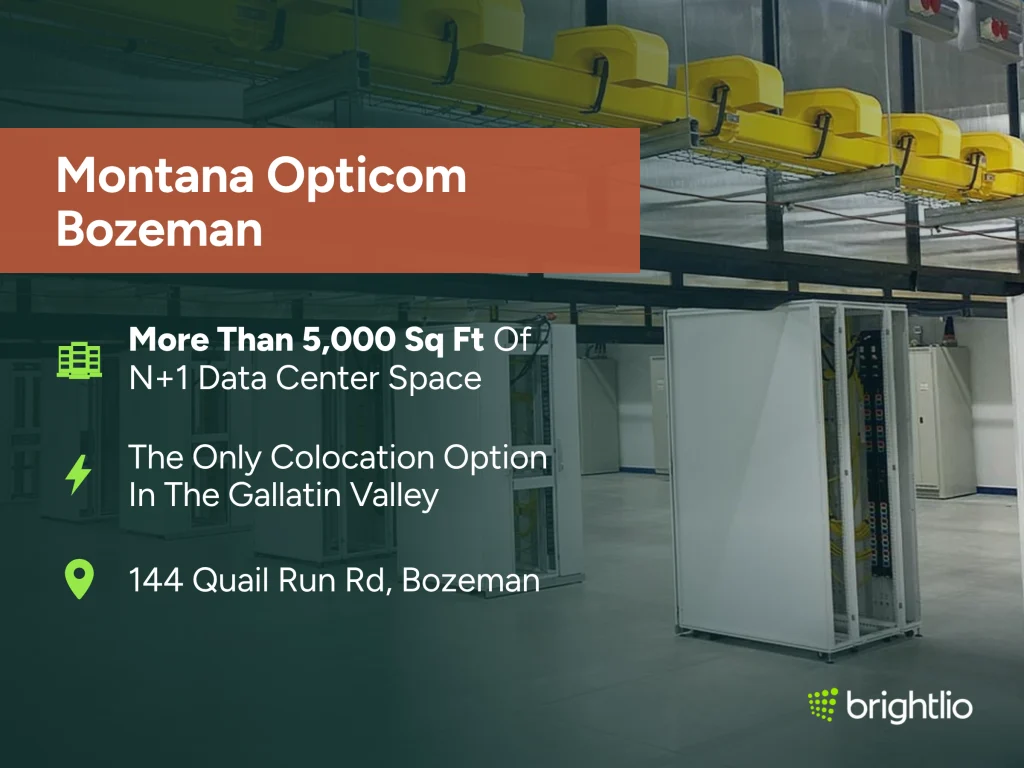
Montana Opticom offers more than 5,000 sq ft of N+1 data center space at 144 Quail Run Rd in Bozeman.
It is the only colocation option in the Gallatin Valley, which gives local businesses an alternative to hosting in Billings.
Montana Opticom is best suited for Bozeman software firms, research groups, and small businesses that want local colocation.
N+1 design means one spare component for each critical system, so a single failure does not take the room down. Buyers needing 2N power or higher redundancy will need to confirm the design directly or look to Denver.
5. Cogent Data Center Billings
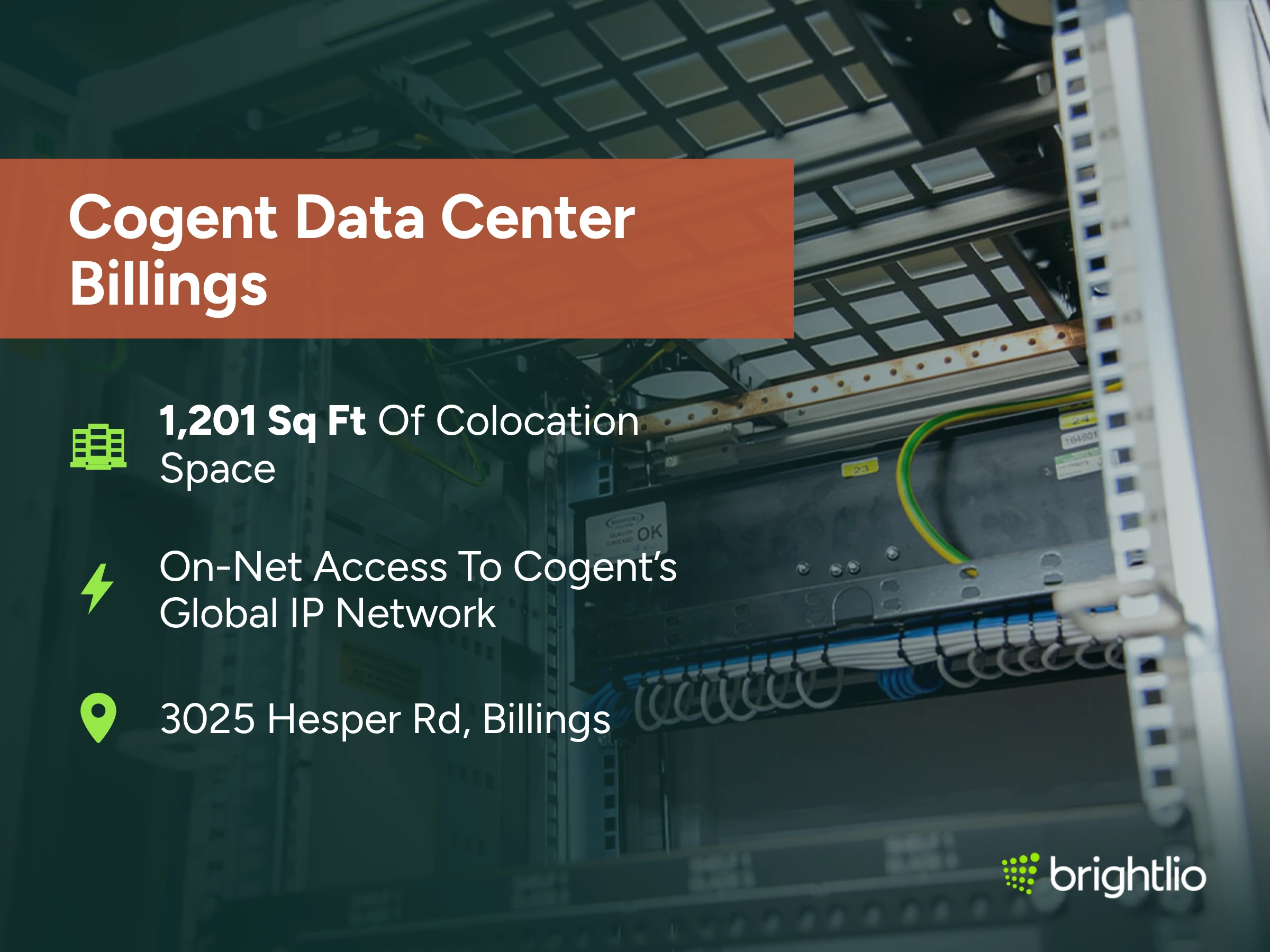
Cogent's edge facility at 3025 Hesper Rd in Billings offers 1,201 sq ft of colocation space.
Cogent pairs the space with its own global IP network, which suits tenants that need transit more than floor space.
Cogent Billings is best suited for ISPs and enterprises that want on-net access to a national carrier in eastern Montana.
The small footprint makes this site a network node more than a hosting floor. It works best paired with a larger Billings facility, with Cogent providing transit and Vision Net or Parsec providing space.
Recent Developments In Montana (Last 12 To 24 Months)
- July 2026: Missoula County paused new or expanded data centers outside Missoula city limits for one year, after the Bonner property owner pulled support for Krambu's proposed data center.
- November 2025: TAC Data Centers withdrew its proposed Great Falls campus, citing NorthWestern power timelines that did not fit its schedule.
- May 2025: Governor Greg Gianforte signed HB 424, which cuts the property tax rate on qualifying data center onsite generation.
Drawbacks And Considerations For Colocation In Montana
Montana's drawbacks start with scale. The market is small, the grid is small, and local communities have pushed back on the projects that tried to change that.
The five drawbacks below matter most when comparing Montana with Denver, Salt Lake City, and the Pacific Northwest.
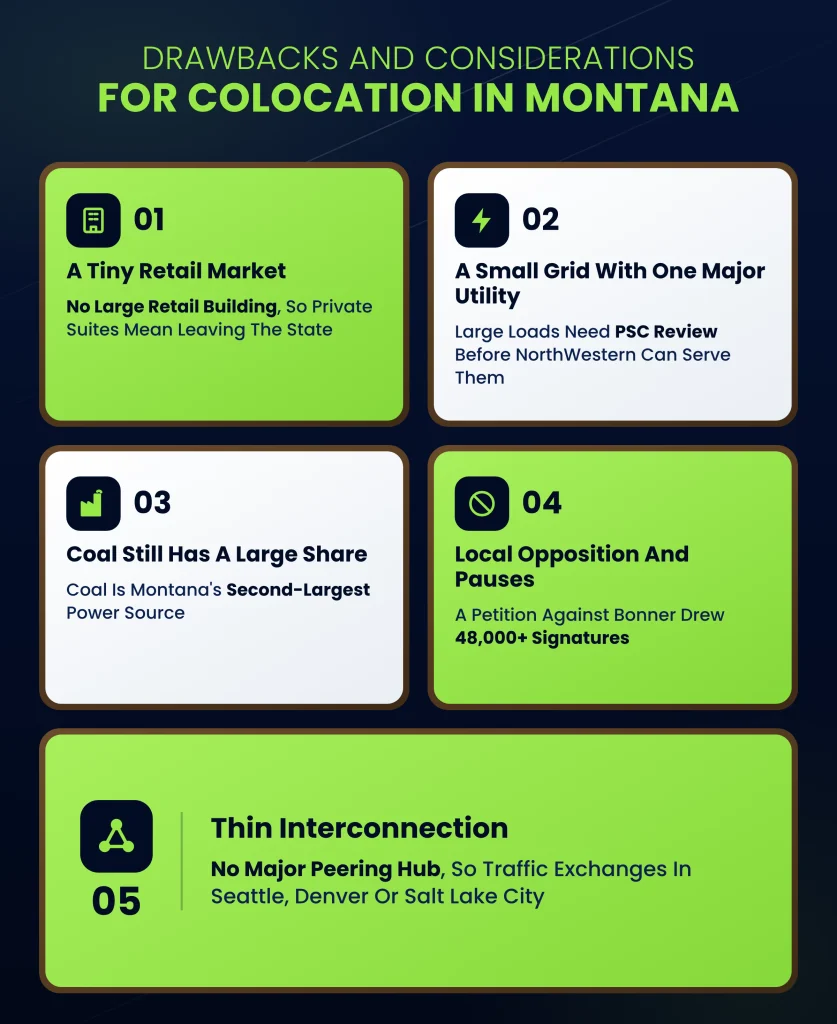
1. A Tiny Retail Market
Montana has no large retail colocation building, and most facilities publish no size. Buyers needing private suites or many cloud on-ramps will find far more in Denver or Seattle.
Small buildings also mean less price competition and fewer contract options. Buyers who outgrow a Montana cabinet often have to move out of state, since no local facility offers private suites at scale.
2. A Small Grid With One Major Utility
NorthWestern Energy serves most of the state, and its Montana load is small enough that one large campus would strain it. Power timelines already drove TAC out of Great Falls.
State law bars NorthWestern from serving a large load before the Public Service Commission confirms the service will not harm existing customers, and the utility's Large New Load tariff is still under review. Large buyers face a review process, collateral, and minimum terms before power arrives.
3. Coal Still Has A Large Share
Coal remains the second-largest source of Montana's power. Buyers with strict carbon targets will still need renewable contracts.
Coal matters most in dry years, when hydro output falls and coal fills more of the gap. Buyers with hourly carbon goals will find the grid cleaner during spring runoff than in late summer.
4. Local Opposition And Pauses
Missoula County has paused new data centers outside the city, and a petition against the Bonner project drew more than 48,000 signatures. Communities are pressing developers on power and water use before any approval.
Opposition has been effective. The Great Falls and Bonner projects ended before any public vote, and Sabey dropped its Butte plan, so developers now face real odds of failure before they file.
5. Thin Interconnection
Montana has no major peering hub. Traffic exchanges in Seattle, Denver, or Salt Lake City, which adds transport cost and latency for network-heavy deployments.
Montana's long-haul routes follow I-90 and I-15 toward Seattle, Spokane, Salt Lake City, and Denver. An outage on one of those routes can cut off whole regions of the state, so buyers need diverse paths from more than one carrier.
How Brightlio Can Help With Colocation In Montana
Brightlio helps organizations compare Montana colocation, cloud connectivity, high-density compute, and disaster recovery options across Billings, Bozeman, Butte, Missoula, Helena, and nearby Mountain West markets. Our team helps clients evaluate facility fit, power pricing, carrier access, compliance needs, power density, cooling design, and long-term site risk.
We compare providers such as Vision Net, Montana Opticom, Cogent, Parsec, Atlas Power, and other Montana operators, along with options in Denver, Salt Lake City, and Seattle when the in-state market falls short.
For Montana projects, we pay close attention to NorthWestern Energy and cooperative power terms, class 17 tax treatment, local zoning pauses, winter weather, carrier routes out of state, and expansion rights.
Brightlio can support cabinet, cage, private suite, high-density, and multi-site disaster recovery planning, and our quotes come free to clients. Contact Brightlio to compare Montana colocation solutions and start planning a cost-effective and resilient deployment.
Frequently Asked Questions
1. Which U.S. State Has The Most Data Centers?
Virginia has the most data centers in the United States, led by Northern Virginia's Loudoun County cluster. Montana is one of the smallest markets, with 12 tracked sites.
2. How Many Data Centers Are In Montana?
Montana has 12 tracked data center sites: 9 operating, 7 of them colocation, plus 3 planned projects. They span 6 operating markets.
3. What Is The Largest Data Center In Montana?
Vision Net's Billings facility is the largest colocation building, at 47,000 sq ft. Atlas Power's Butte site runs the densest loads in the state but does not publish its capacity.
4. Who Operates Data Centers In Montana?
Vision Net runs the most colocation, with sites in Billings, Missoula, and Helena. Montana Opticom, Cogent, Parsec, Atlas Power, and Sentinum run the other operating sites.
5. Are Montana Electricity Costs Favorable For Colocation?
Somewhat. Commercial power cost 13.33¢/kWh in July 2026, a little below the national average but higher than Nevada or Washington.
6. What Tax Incentives Does Montana Offer Data Centers?
Qualifying data center property falls in class 17, taxed at a 0.9% rate. HB 424 extends that rate to onsite generation for 10 years.
7. Which Cities Are Best For Colocation In Montana?
Billings has the most colocation, led by Vision Net and Cogent. Bozeman, Missoula, and Helena serve local needs, and Butte suits high-density compute.
8. Can Montana Colocation Support AI Or High-Density Workloads?
Only at small scale. Atlas Power hosts GPU and mining loads near Butte, but the retail buildings are not designed for dense GPU racks.
9. Why Have Montana Data Center Projects Been Withdrawn?
Power timelines and local opposition stopped them. TAC left Great Falls over NorthWestern's timeline, and the Bonner project collapsed after residents pushed back.
10. Who May Not Need Montana Colocation?
Buyers needing large suites, dense peering, or fast access to new power will do better in Denver, Salt Lake City, or Seattle. Montana fits regional businesses best.
Keep reading with our colocation guides for these nearby markets:

Tamzid is a cybersecurity researcher with 5+ years of experience across SaaS, security, compliance, data centers and cloud. He writes for brightdefense.com and hipaasimple.com, covering security, compliance, and infrastructure topics. Certified through Cisco, Fortinet (NSE 1), and the Basel Institute on Governance in OSINT, he grounds his work in primary sources and verified data.
Recent Posts

Top 5 Floating Data Centers
Data Centers and Colocation in Colorado
Data Centers and Colocation in Delaware
Data Centers and Colocation in Hawaii
Let's start
a new project together