
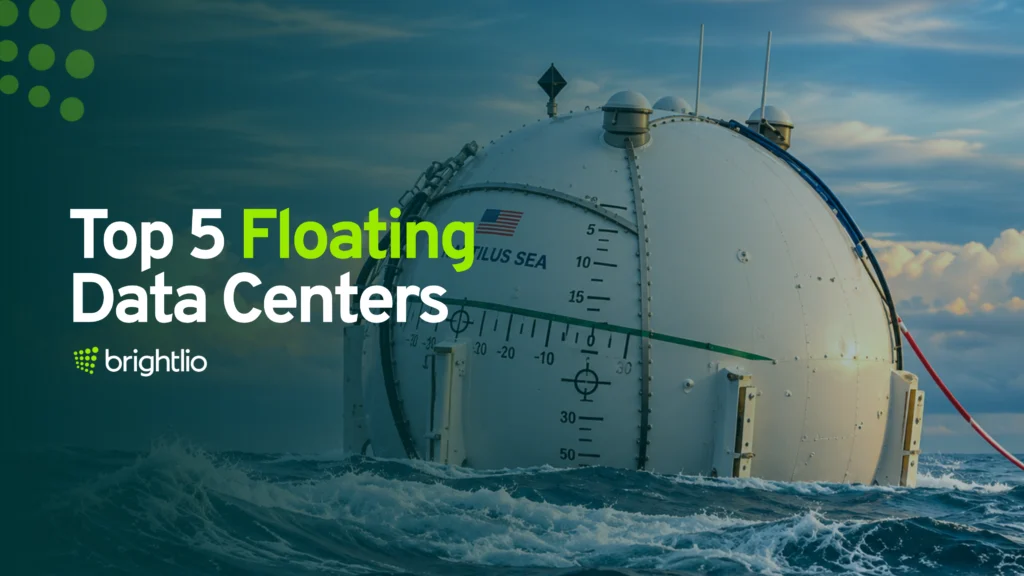
A floating data center houses computing equipment on a moored vessel or platform. It brings servers closer to a natural source of cooling water and gives developers another option for locating infrastructure near coastal cities, ports, and rivers.
Facilities in California and France already demonstrate different approaches to floating infrastructure. Larger developments and ship conversion proposals are exploring how far the model can scale.
For your business, the useful question is whether a floating facility can deliver the capacity, connectivity, and reliability you need at a competitive total cost. This guide explains how floating data centers work, where projects stand, and what to evaluate before choosing one.
What Are Floating Data Centers
Floating data centers place servers, storage, networking, and supporting infrastructure aboard a buoyant structure. That structure might be a purpose-built barge, a floating platform carrying modular equipment, or a converted ship.
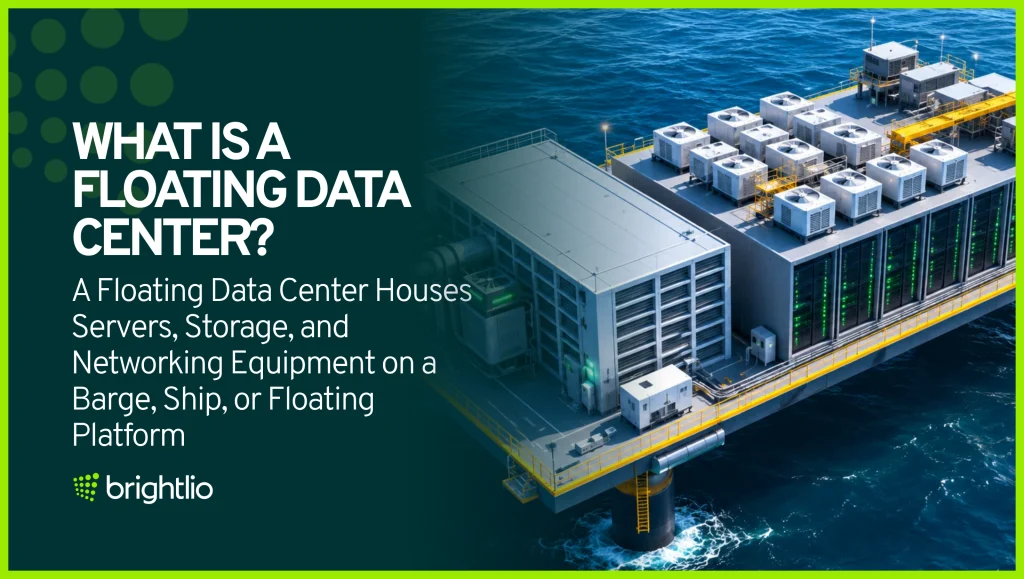
A typical nearshore design stays moored at an approved location. Connections to land provide services such as electricity, fiber connectivity, and access for technicians. The equipment still needs backup power, fire protection, security, and maintenance.
The delivery model can also vary. A floating facility may host one large customer, provide cloud services, or support colocation. In a colocation arrangement, your business places its equipment in a provider’s facility and purchases the supporting infrastructure services.
How Floating and Underwater Data Centers Differ
Floating facilities keep their computing equipment aboard a structure at the surface. Underwater designs put the equipment inside a submerged enclosure, which changes how operators install, maintain, and recover it.
Microsoft’s Project Natick is an underwater example. Its Northern Isles module was deployed on the seabed in 2018 and retrieved in 2020. That experiment should be distinguished from a floating facility that technicians can access from shore.
How Do Floating Data Centers Work
A floating facility combines conventional data center systems with marine infrastructure. Its design must support the computing workload while keeping the platform secure and connected to land.
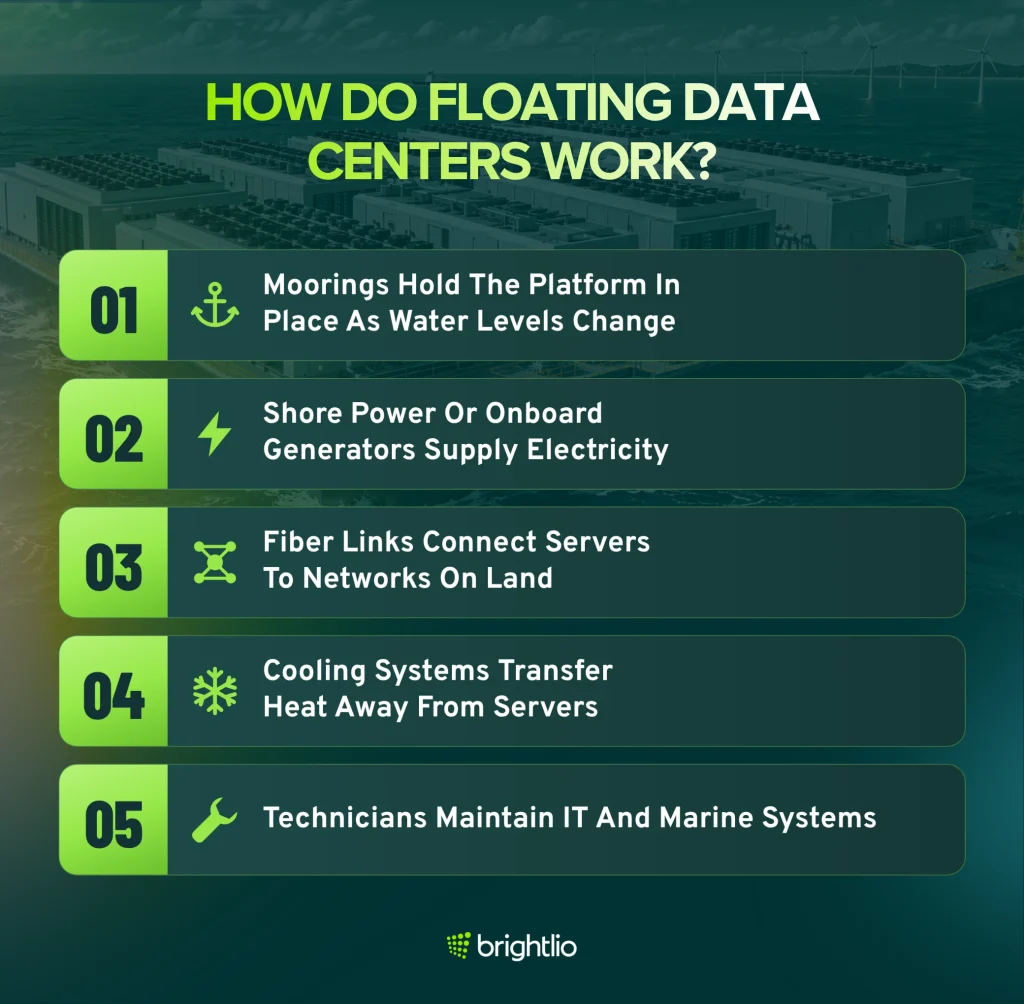
The following are five main functions it must support:
1. Secure the Platform at Its Operating Location
Moorings hold the structure in position while allowing for movement within its design limits. Engineers must account for water depth, tides or changing river levels, currents, wind, and the loads placed on the platform.
Access routes and utility connections need to accommodate that movement. A suitable berth also needs space for equipment deliveries, emergency access, and routine servicing.
2. Supply Reliable Power
Servers require a continuous electricity supply. Depending on the project, this can come from a shore connection or a dedicated generation system, supported by batteries and backup equipment.
Being on water does not generate electricity by itself. The power arrangement must cover the IT equipment and supporting systems, including pumps, ventilation, networking, and marine services.
3. Connect to Customers and Other Facilities
Fiber links carry traffic between the floating facility and terrestrial networks. Their capacity, routing, and redundancy determine how well the site can support cloud access, replication, and other applications.
Two network providers do not necessarily provide two independent physical routes. Buyers should verify whether connections share a shore entry point, duct, or upstream facility that could interrupt both services.
4. Transfer Heat Away From Servers
Cooling equipment moves heat from the computing hardware to an external heat sink. Water can serve that role, but the design determines how the facility interacts with the surrounding environment.
Nautilus describes an open river-water loop and a separate closed cooling loop at its Stockton facility. Heat exchangers transfer heat between the circuits, keeping river water separate from the internal cooling fluid.
Other designs avoid withdrawing river water. DENV-R describes a closed-loop system at its Nantes installation, discussed in the project examples below. Seasonal water temperatures also affect cooling performance. The provider must demonstrate that the system can remove the required heat during the warmest expected conditions.
5. Maintain Both Computing and Marine Systems
Technicians need access to servers, electrical equipment, and cooling infrastructure. Operators also need procedures for inspecting the hull or platform, moorings, utility connections, and exposed components.
Responsibility must be clear when these systems overlap. A cooling interruption, for example, may require coordinated work by the data center operator, marine contractor, and equipment supplier.
What Are Some Examples of Floating Data Centers
Existing facilities show that the concept can work, while newer announcements explore larger scales and different construction methods. Their development stages are important when assessing what customers can use today.
The following examples distinguish completed milestones from future targets, based on public information reviewed in October 2026:
| Project | Location Or Scope | Status And Milestone |
|---|---|---|
| Nautilus Stockton | California, United States | Commissioned in 2021; 6.5 MW of IT capacity. |
| DENV-R | Nantes, France | Inaugurated on October 8, 2024. |
| Keppel Floating Data Center | Singapore | Targets service in 2028; fully pre-leased. |
| MOL And Hitachi | Ship conversion proposal | Feasibility agreement announced in March 2026; targets operations in 2027 or later. |
| Hanwha Ocean | Proposed 60 MW concept | Received ABS approval in principle in September 2026. |
1. Nautilus In Stockton
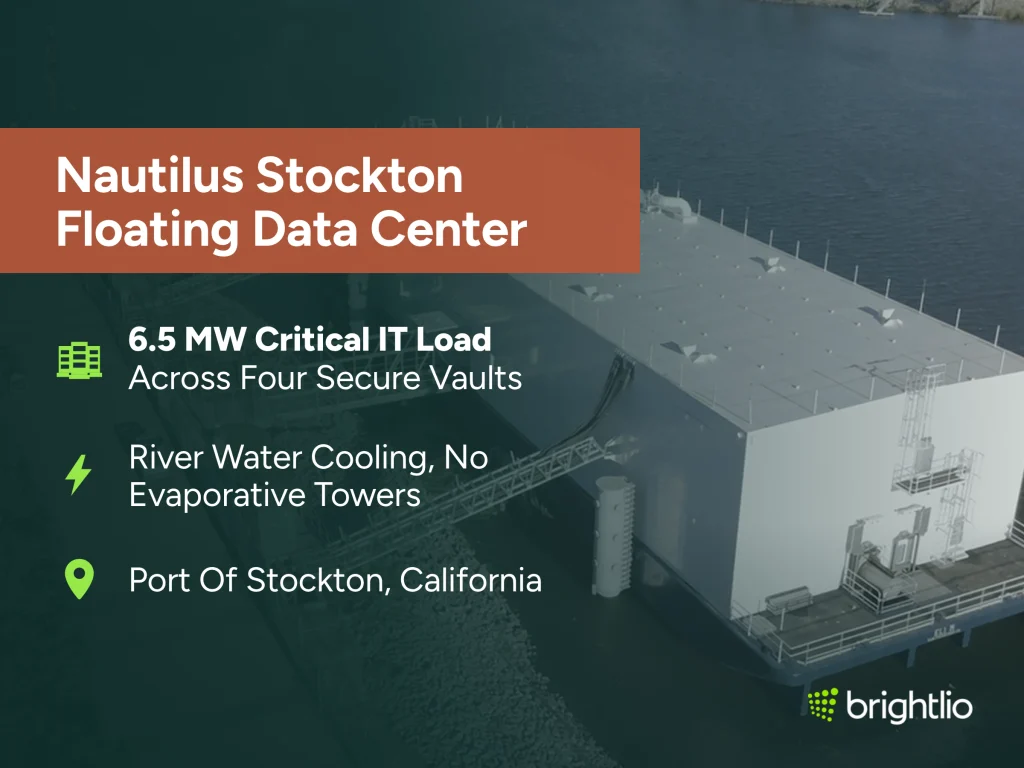
Nautilus operates a floating data center at the Port of Stockton in California, commissioned in 2021. The barge-based facility uses the San Joaquin River as a heat sink and offers 6.5 MW of scalable critical IT load across four secure vaults.
Critical IT load measures the power available to computing equipment, so this figure needs to remain separate from ratings that include cooling and other facility systems.
The cooling system transfers heat through two separate water circuits. An open river-water circuit handles intake, filtration, and discharge. A closed secondary circuit serves the data halls through heat exchangers. This arrangement keeps river water separate from the internal cooling circuit and avoids evaporative cooling towers.
Black & Veatch completed commissioning oversight for the electrical, cooling, and machinery systems. During a test involving a 1.45 MW IT load in the first data hall, power to the equipment continued during a transfer to generators, and the room maintained its temperature. These results document performance under the tested conditions.
Key Features And Project Details
- Capacity: The published specification lists 6.5 MW of critical IT capacity across four vaults.
- Deployment options: Customers can use space ranging from a single cabinet to a full vault.
- Rack density: Published specifications include 35 kW for 24-inch cabinets and 55 kW for 30-inch cabinets.
- Cooling compatibility: The facility supports rear-door, immersion, and direct-to-chip cooling.
- Connectivity: An 18-mile redundant fiber ring connects the carrier-neutral facility to network providers.
2. DENV-R In Nantes
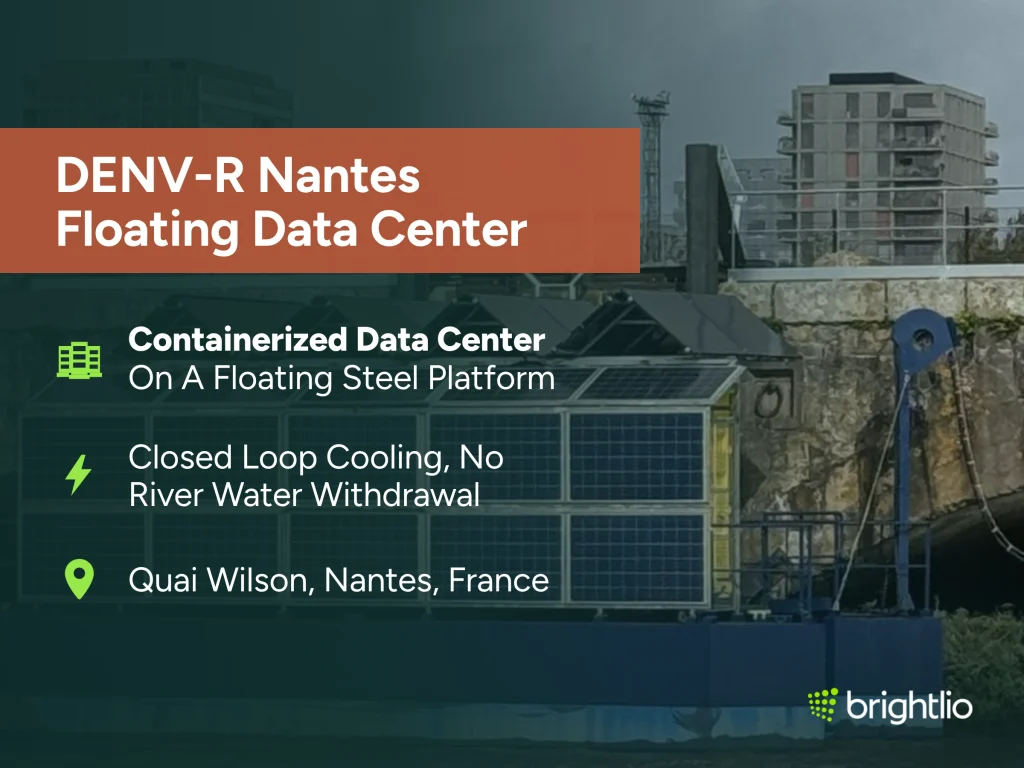
DENV-R’s floating data center sits at Quai Wilson on the Loire River in Nantes, France, and was inaugurated on October 8, 2024. The installation places a containerized data center on a floating steel platform designed with maritime engineering company GEPS Techno. Its location brings computing infrastructure into an existing port area with access to nearby digital and energy networks.
The facility uses a closed-loop hybrid cooling system that does not draw water from the Loire. Rooftop solar panels supply auxiliary systems, so their contribution should remain separate from the electricity required to run the servers.
The floating structure reduces the need for a conventional building plot and creates a potential option for computing infrastructure near port operations.
DENV-R’s business extends to cloud services, including hosting and backup. The Nantes installation provides a practical example of a compact floating facility connected to a local digital ecosystem.
Key Features And Project Details
- Location: The facility occupies a berth at Quai Wilson within the Nantes Saint-Nazaire Port area.
- Structure: Computing equipment sits inside a container mounted on a floating steel platform.
- Cooling: The closed-loop system operates without withdrawing river water.
- Solar contribution: Rooftop panels provide electricity for auxiliary equipment.
- Services: DENV-R offers cloud infrastructure, hosting, and backup services.
3. Keppel In Singapore
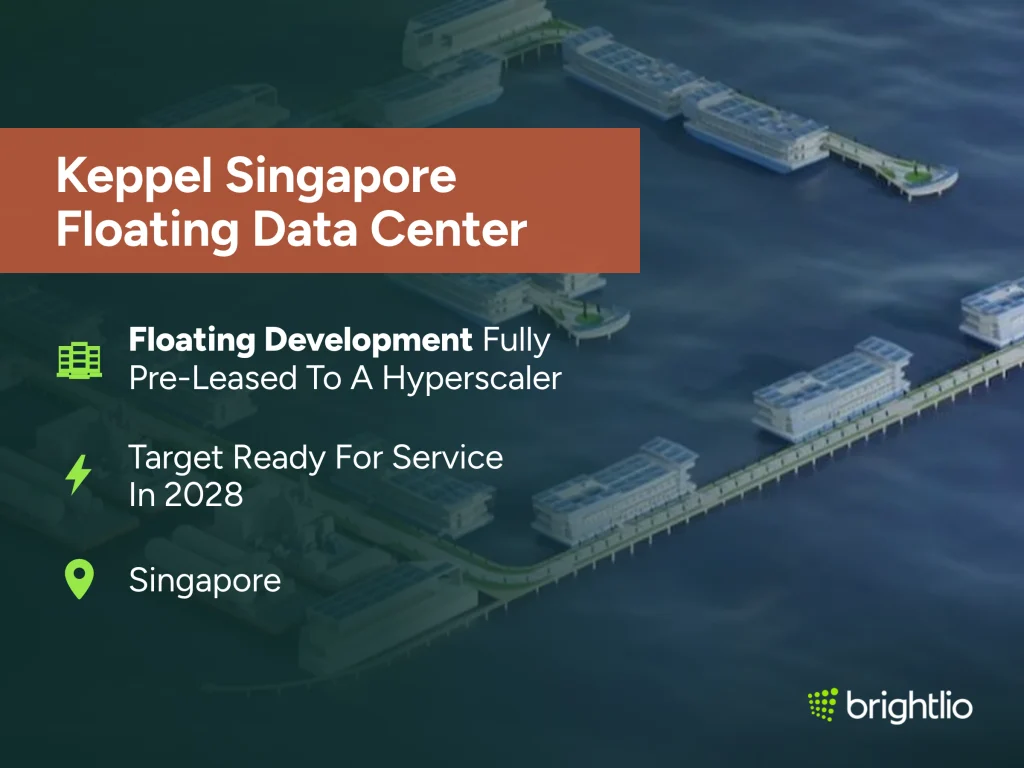
Keppel’s floating data center development in Singapore has a target ready-for-service date of 2028. The project is funded through Keppel Data Centre Fund II and is fully pre-leased to a hyperscale customer. Its portfolio listing records an investment year of 2026.
The development addresses the challenge of adding computing infrastructure in cities with limited land and resources. Keppel presents the project as a full-scale demonstration of its floating data center approach for the Asia-Pacific market. Its commercial structure includes a committed customer before the planned service date.
The 2028 date remains a delivery target. The portfolio listing does not provide a megawatt capacity figure or detailed cooling specifications, so those characteristics should remain unspecified.
Full pre-leasing indicates that the project’s capacity is already committed under the announced arrangement.
Key Features And Project Details
- Location: The planned floating development is in Singapore.
- Funding: Keppel Data Centre Fund II finances the project.
- Delivery target: The portfolio lists 2028 as the target ready-for-service year.
- Customer commitment: The development is fully pre-leased to a hyperscaler.
- Project stage: The listing describes a future development with a planned service date.
4. MOL And Hitachi Ship Conversion Proposal
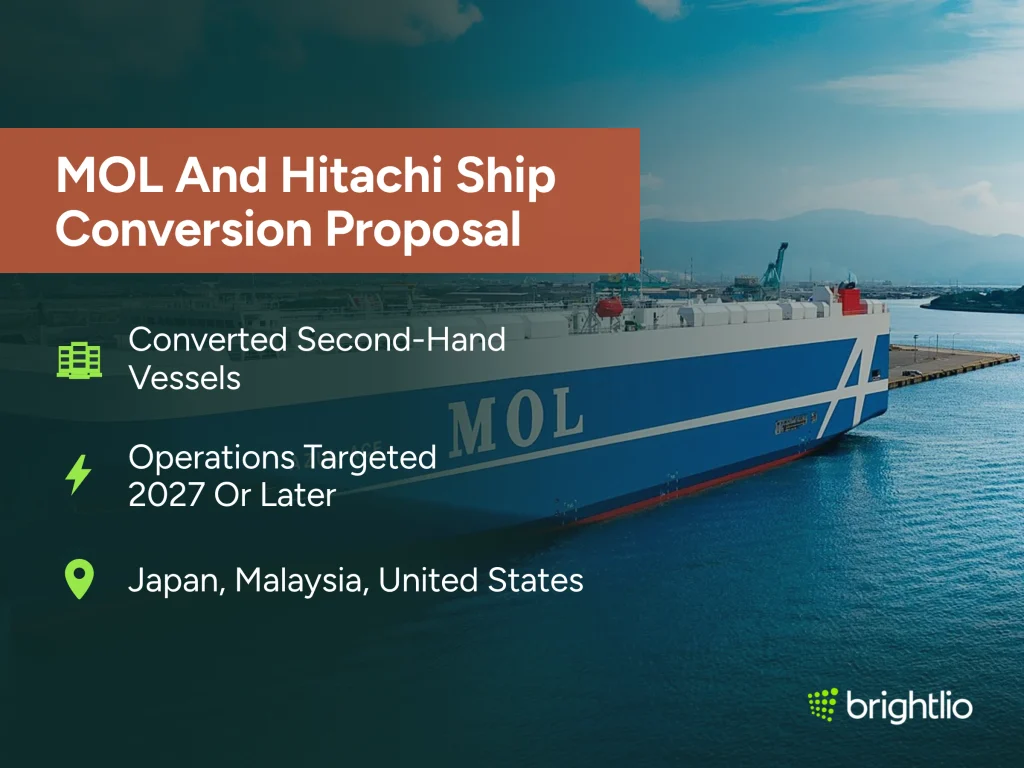
MOL, Hitachi, and Hitachi Systems announced a memorandum of understanding on March 30, 2026, to examine floating data centers converted from second-hand vessels.
The initiative covers demand assessment, technical specifications, operating procedures, and commercial feasibility. The companies aim to begin operations in 2027 or later.
The proposal explores the reuse of existing ship hulls and onboard infrastructure to reduce land requirements and potentially shorten development schedules. Japan, Malaysia, and the United States are the initial markets under consideration.
Responsibilities span maritime engineering and computing infrastructure. MOL leads vessel conversion planning, port discussions, mooring requirements, maintenance planning, and financing studies.
Hitachi and Hitachi Systems handle data center design, IT requirements, networking, security, and customer needs. The agreement remains a feasibility milestone, with delivery dependent on subsequent project decisions.
Key Features And Project Details
- Development model: The proposal uses converted vessels as platforms for computing infrastructure.
- Target markets: Initial studies focus on Japan, Malaysia, and the United States.
- Maritime responsibilities: MOL handles vessel planning and port-related operating requirements.
- Technical responsibilities: Hitachi and Hitachi Systems assess data center systems and customer requirements.
- Timing: Operations are targeted for 2027 or later, subject to feasibility and commercialization work.
5. Hanwha Ocean Concept Design
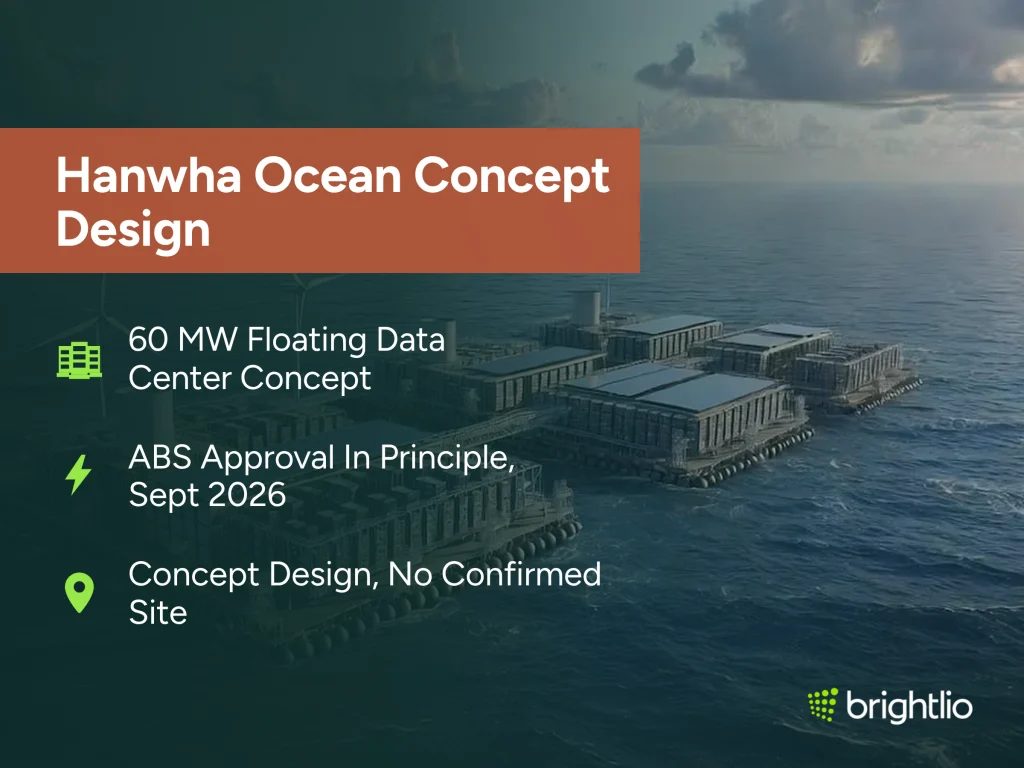
Hanwha Ocean’s 60 MW floating data center concept received approval in principle from ABS on September 28, 2026. The milestone concerns the concept design and reflects the application of shipbuilding and offshore engineering expertise to computing infrastructure.
The proposed development addresses constraints associated with land, power, and cooling. Hanwha Ocean connects its experience in marine structures with Hanwha Group’s energy and data capabilities. The announcement places the project within the concept development stage.
Approval in principle represents an early design assessment. It does not confirm construction completion, commissioning, or customer availability.
The announced 60 MW rating therefore belongs to a proposed concept and should remain separate from totals for operational floating data centers. The announcement does not clarify whether that rating represents critical IT load or total facility power.
Key Features And Project Details
- Developer: Hanwha Ocean is responsible for the floating data center concept.
- Announced capacity: The concept carries a 60 MW rating.
- Assessment body: ABS issued the approval in principle.
- Approval date: The milestone was announced on September 28, 2026.
- Delivery status: The announcement does not provide a confirmed operating location, commissioning date, or customer availability schedule.
What Are the Potential Benefits of Floating Data Centers
Floating infrastructure can address specific constraints around land, cooling, and construction. The value depends on the location and on whether the complete project performs better than available alternatives.
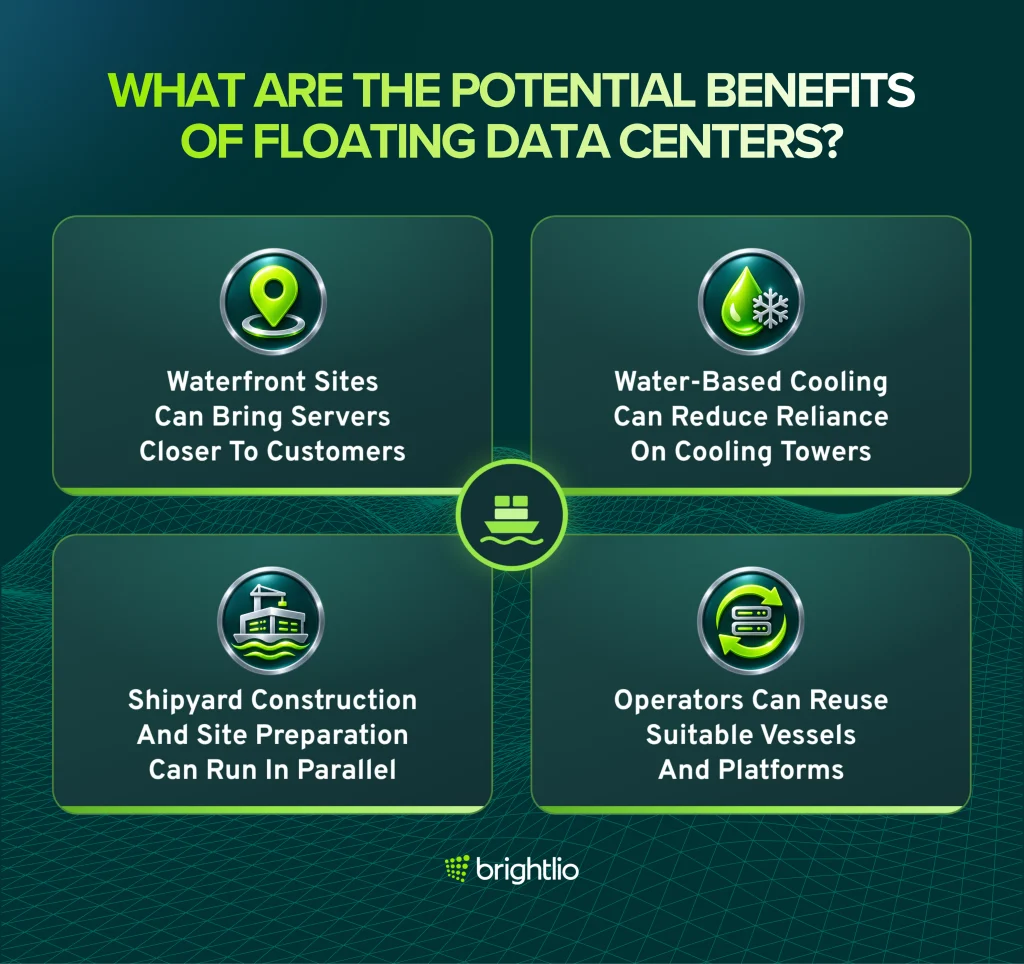
The following are four potential benefits:
1. Expand Location Options Near Customers
A waterfront site can provide another way to place computing capacity near a city or industrial area where suitable land is limited. Keeping workloads close to customers may also help meet application latency requirements, depending on network routing.
The project still needs shoreside infrastructure. Substations, fiber connections, access areas, and emergency services must fit into the location plan. Your evaluation should include both the berth and the land supporting it.
2. Reduce Dependence on Evaporative Cooling
A suitable water-based heat rejection system can reduce reliance on cooling towers that consume water through evaporation. Keppel’s floating data center overview describes seawater cooling as part of its approach to reducing reliance on treated water.
Potential savings depend on water temperature, equipment design, and the alternative cooling system being compared. A land-based facility with an efficient non-evaporative design may offer some of the same advantages.
3. Use Modular Construction Methods
Building parts of the facility in a shipyard or factory can allow platform work and site preparation to proceed at the same time. Repeatable modules may also simplify some manufacturing and testing activities.
However, the full delivery schedule includes permits, power connections, fiber installation, towing, mooring, and commissioning. A short fabrication timeline is useful only if those other tasks are ready when the structure arrives.
4. Reuse Suitable Marine Assets
Converting a vessel may reuse part of an existing structure. In some cases, a movable platform could also give an operator options when a site agreement ends or demand shifts.
These benefits depend on the asset’s condition, remaining service life, and conversion requirements. Relocation requires a suitable destination, new connections, approvals, and service planning. Customers should not assume a live facility can simply move without disruption.
What Challenges Must Floating Data Centers Overcome
Operating on water adds responsibilities to the normal demands of running a data center. Your provider should explain how those responsibilities affect reliability, cost, and your service agreement.
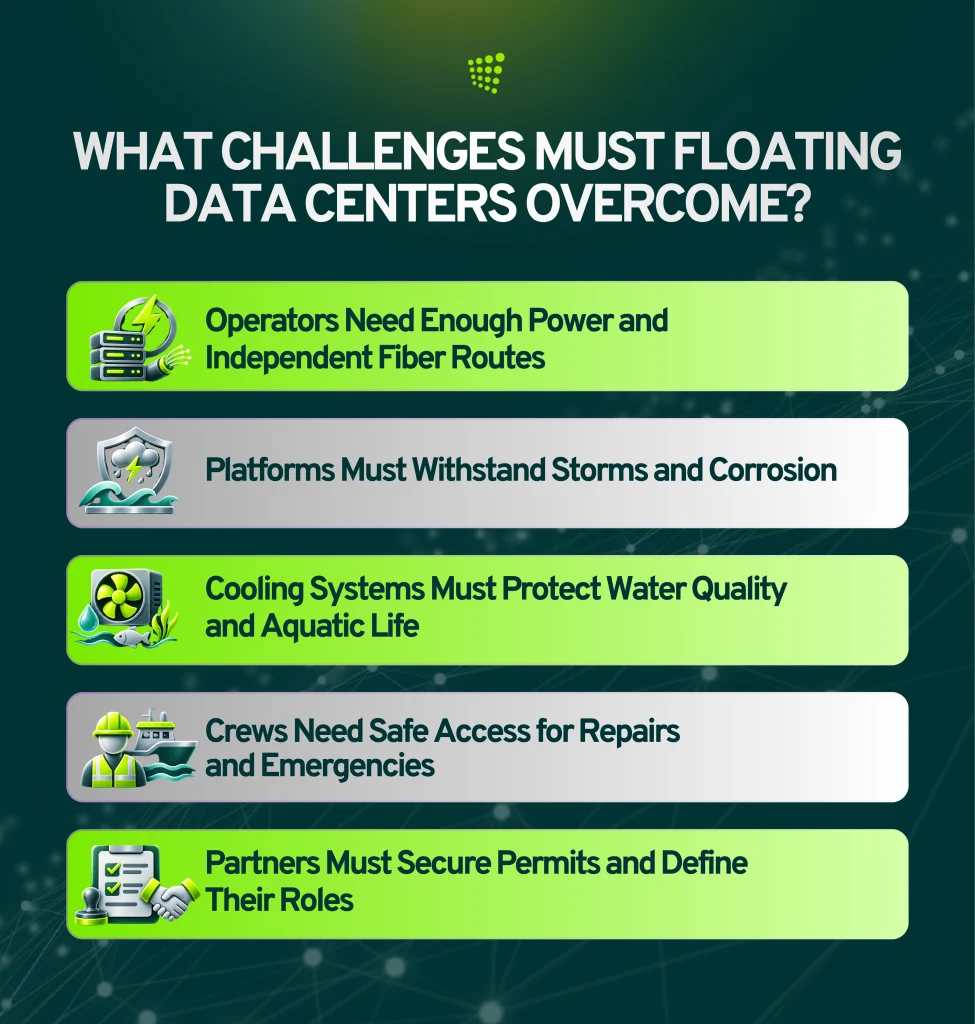
The following are five challenges to evaluate:
1. Securing Power and Network Capacity
A usable berth does not guarantee access to sufficient electricity or diverse fiber routes. Utility upgrades and connection schedules can determine when a project becomes commercially useful.
Ask for the power capacity committed to your deployment, the date it becomes available, and the assumptions behind later expansion. A planned connection should not be treated as energized capacity.
2. Managing Weather and Marine Exposure
The platform, moorings, and shore connections must be designed for the site’s conditions. Storms, changing water levels, floating debris, and vessel traffic can affect different parts of the installation.
Marine engineering also needs to address corrosion and material compatibility. Where cooling equipment interacts with natural water, debris and biological growth can create additional inspection and cleaning needs. Lloyd’s Register’s work on floating data center designs highlights the importance of structural integrity, safety, and system integration.
3. Protecting the Surrounding Water Environment
A system can consume little water while withdrawing and returning a substantial volume. Those are different measurements, and neither alone establishes the full environmental impact.
The US Environmental Protection Agency’s cooling-water intake guidance explains how intakes can trap aquatic organisms or draw them into cooling systems. Designs with intake and discharge arrangements also need assessment of the heat returned to the water and any treatment chemicals used.
Closed-loop arrangements without withdrawal avoid some intake concerns. Their heat transfer, installation, and maintenance still need site-specific evaluation.
4. Planning Maintenance and Emergency Access
Server repairs are only part of the maintenance plan. Operators need to show how they will inspect and repair marine infrastructure while protecting customer workloads.
Your review should cover replacement equipment access, spare parts, maintenance windows, fire response, and evacuation procedures. If a major repair requires taking part of the facility out of service, the provider should explain how customers retain capacity or recover elsewhere.
5. Defining Approvals and Operating Responsibility
A floating facility may involve a data center provider, vessel owner, port authority, utility, and specialist maintenance contractors. The applicable approvals and contractual responsibilities depend on its location and design.
Customers need a clear service counterparty and an escalation process that covers the complete facility. Marine design approval alone does not establish application availability, cybersecurity, or the provider’s ability to meet a service-level agreement.
How Do Floating Data Centers Compare With Facilities on Land
The best option is the one that meets your workload requirements with an acceptable operating model and total cost. Location on water changes some infrastructure choices, but both designs still depend on reliable power, cooling, and networks.
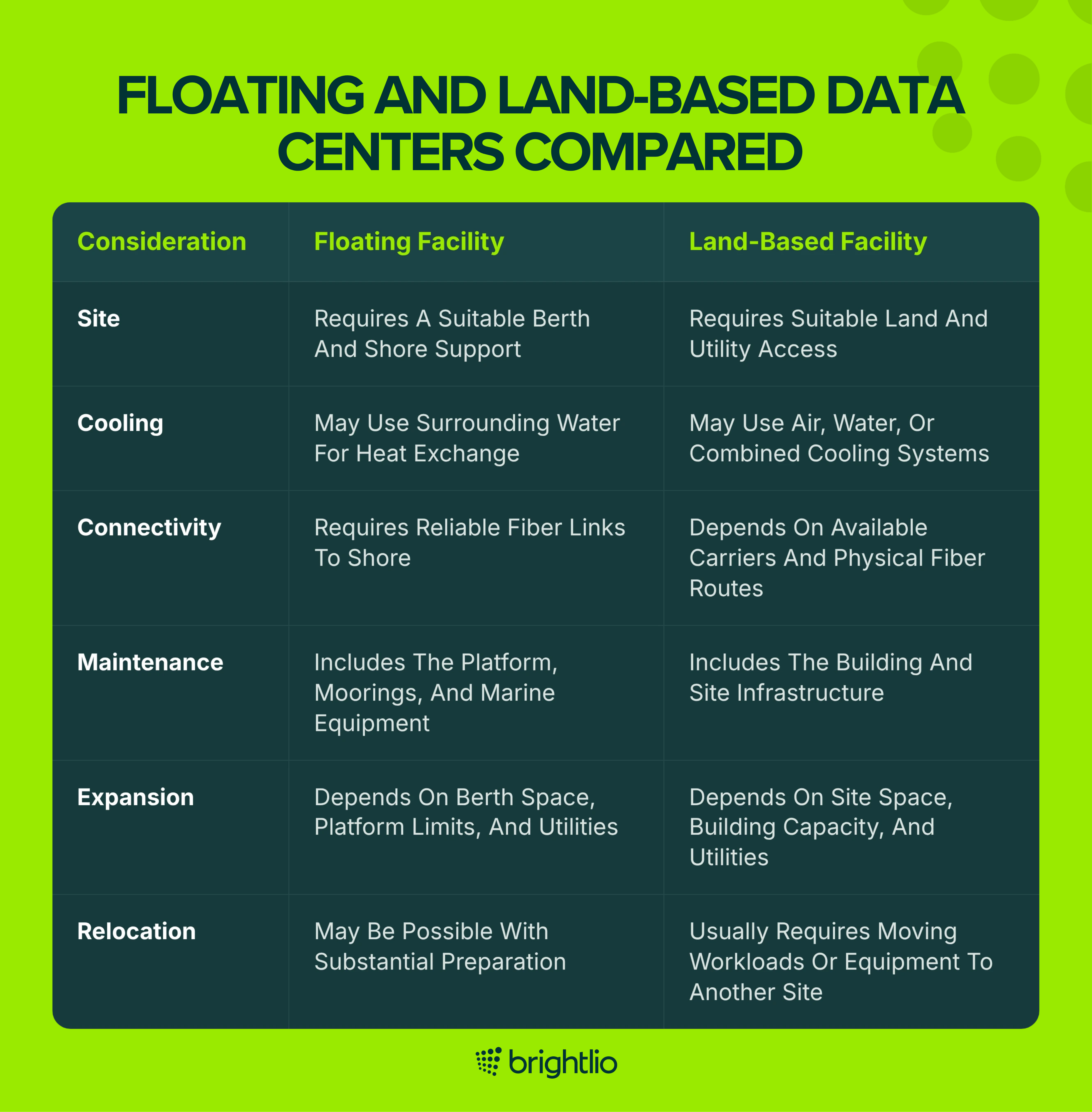
The following comparison highlights the main differences:
Do Floating Data Centers Cost Less
There is no universal cost advantage. Savings in land or cooling can be offset by platform construction, mooring, marine maintenance, insurance, utility connections, and environmental monitoring.
Compare proposals using the same committed IT capacity, redundancy, contract term, and service scope. Brightlio’s colocation pricing guide explains the space, power, bandwidth, and support charges that can affect the bill.
For a floating facility, clarify whether marine operating costs are included or passed through separately. Also compare setup charges, minimum power commitments, annual price increases, and exit costs.
Power usage effectiveness, or PUE, can help assess infrastructure energy overhead. The US Department of Energy’s design guide defines it as total facility energy divided by IT equipment energy over the same annual period.
For an illustrative comparison, assume two facilities each deliver 8.76 million kilowatt-hours to IT equipment in a year. At an annual PUE of 1.2, total facility use would be 10.512 million kilowatt-hours. At 1.4, it would be 12.264 million. The difference is 1.752 million kilowatt-hours before considering electricity prices or other costs.
These are hypothetical figures, not measured results for a floating project. Request annual operating data and the measurement boundary when comparing a provider’s efficiency claims.
Are Floating Data Centers More Sustainable
A floating design can reduce some resource demands, but sustainability needs a broader assessment. The electricity source, cooling arrangement, construction materials, operating life, and eventual decommissioning all affect the result.
Low water consumption is useful where freshwater is constrained. It should be reported alongside water withdrawal, thermal discharge, and the condition of the surrounding ecosystem. A claim about one measure should not replace the others.
Energy efficiency also differs from carbon performance. Two facilities with the same PUE can have different emissions because their electricity supplies differ. PUE does not show how efficiently the servers perform useful computing work.
For your business, a useful comparison uses consistent boundaries and evidence from actual operations. Assess the proposed floating design alongside a land-based alternative you would realistically consider in the same market.
When Should Your Business Consider a Floating Data Center
A floating facility may deserve consideration when you need capacity near a coastal market, suitable land is difficult to secure, and the proposed waterfront site already has a credible power and network plan.
It must also offer the commercial service model your business needs. A facility reserved for one hyperscaler is different from a provider selling individual racks or cloud resources.
For example, an organization adding regional computing capacity could compare a floating provider with nearby colocation facilities. The comparison should use the same workload, rack density, connectivity, recovery requirements, and deployment date. Brightlio’s data center location guides provide a starting point for researching alternative markets.
The following questions can help you evaluate a specific proposal:
- What capacity is commissioned and available for our deployment date?
- How independent are the power, network, and cooling paths?
- What operating evidence supports the availability and efficiency claims?
- Which marine maintenance costs and outage scenarios are covered by the contract?
- How will we recover or relocate workloads if the facility becomes unavailable?
A planned project can be relevant to a long-term expansion strategy. For an immediate deployment, prioritize verifiable delivery dates and capacity that matches your requirements.
What Is the Future of Floating Data Centers
Completed installations and new design programs suggest a role for floating facilities in selected markets. Larger projects will help establish whether the approach can deliver repeatable economics and dependable service at greater scale.
The most useful milestones will be commissioned capacity, customer deployments, annual operating results, and demonstrated maintenance procedures. Those measures will show where floating infrastructure provides lasting value.
For buyers, the practical approach is to evaluate each facility on its own merits. The location of the servers is one part of a decision that also depends on power, connectivity, support, and the ability to serve your applications over time.
Find the Right Data Center Solution With Brightlio
Choosing a data center starts with understanding your workloads, growth plans, and business priorities. Brightlio helps businesses evaluate colocation, cloud, and connectivity options against those requirements.
Whether you are researching emerging infrastructure or comparing established providers, a clear view of capacity, pricing, and service commitments makes the decision easier. Contact Brightlio to discuss your requirements and explore suitable options.
Frequently Asked Questions
1. Are Floating Data Centers the Same as Underwater Data Centers
No. Floating data centers house equipment aboard a structure at the water’s surface. Underwater data centers place equipment in submerged enclosures, which creates different access and maintenance requirements.
2. Do Floating Data Centers Use Seawater Inside Servers
Designs using seawater or river water can keep it separated from internal cooling circuits through heat exchangers. Ask the provider how its specific system transfers heat and which fluids contact the IT cooling equipment.
3. Can a Floating Data Center Support AI Workloads
Potentially, if its electrical capacity, rack density, cooling system, and network meet the workload’s requirements. Floating location alone does not establish that a facility can support a particular AI deployment.
4. Are Floating Data Centers Protected From Flooding
A floating structure can move with changing water levels within its design limits. Its moorings, access routes, utilities, and shoreside equipment still need protection against the site’s flood and storm conditions.
5. Can a Floating Data Center Move to Another Location
Some structures can be relocated, but doing so requires planning. The destination needs a suitable berth, approvals, power, fiber connections, and commissioning. Workload continuity during the move must be addressed separately.
6. Does Floating Infrastructure Eliminate Water Consumption
Some cooling designs avoid evaporative water consumption or river-water withdrawal. Claims need a defined boundary, since other facility activities and electricity generation may have water requirements. Review the complete design before treating the service as water-free.

Tamzid is a cybersecurity researcher with 5+ years of experience across SaaS, security, compliance, data centers and cloud. He writes for brightdefense.com and hipaasimple.com, covering security, compliance, and infrastructure topics. Certified through Cisco, Fortinet (NSE 1), and the Basel Institute on Governance in OSINT, he grounds his work in primary sources and verified data.
Recent Posts
Top 5 Floating Data Centers

Data Centers and Colocation in Colorado
Data Centers and Colocation in Delaware
Data Centers and Colocation in Hawaii
Let's start
a new project together