

Pennsylvania is two markets in one: a deep retail colocation base in Philadelphia and Pittsburgh, and a wave of gigawatt campuses rising beside power plants. AWS’s Susquehanna campus in Berwick leads the operating base at 960 MW of campus design, backed by up to 1,920 MW of contracted nuclear power.
The rest of the five largest operating sites are energy-linked compute: Big Digital Energy’s 120 MW Midland site and three Keel Infrastructure sites at Scrubgrass (63 MW), Panther Creek (60 MW), and Sharon (30 MW), all of them bitcoin mines today.
The pipeline is enormous. Planned projects total 9,600 MW, led by a 4,500 MW AWS campus at Homer City built around a new gas plant.
Power is the problem. Every Pennsylvania utility runs in PJM, where capacity prices have hit record highs three auctions running and the grid fell short of its reliability target for 2027. Enterprises get two of the strongest retail markets in the Northeast, while new large loads face rising costs and a strained grid.
Pennsylvania Data Center Tracker
130data center listings
Pittsburgh 34Philadelphia 29Harrisburg 18Scranton 911 others 40
Pittsburgh and Philadelphia hold 63 of Pennsylvania’s 130 listings, while the biggest projects rise beside power plants in Homer City, Berwick and Upper Burrell.
Market Snapshot
Largest Operating Data Centers In Pennsylvania
These are the five largest operating sites by published capacity. Amazon’s Susquehanna campus far outsizes the rest, and every other listing appears on the map, with operating sites in green and planned ones in coral.
- AWS Susquehanna CampusBerwick, campus design960 MWOperational
1,200-acre campus beside Talen’s Susquehanna nuclear plant, bought by AWS in March 2024
- Location:
- Salem Township, Luzerne County
- Operator:
- Amazon Web Services
- Power:
- Up to 1,920 MW of nuclear power contracted through 2042
- Live supply:
- 300 MW co-located before the 2026 grid switch
- Big Digital Energy MidlandMidland, site power120 MWOperational
Former Mawson site offering colocation for bitcoin mining, AI and HPC
- Address:
- 950 Railroad Ave, Midland
- Operator:
- Big Digital Energy
- Keel Infrastructure ScrubgrassKennerdell, energized63 MWOperational
Former waste-coal power plant site, with up to 1,363 MW identified for future growth
- Address:
- 2151 Lisbon Rd, Kennerdell
- Operator:
- Keel Infrastructure (formerly Bitfarms)
- Use:
- Bitcoin mining today, AI campus planned
- Keel Infrastructure Panther CreekNesquehoning, energized60 MWOperational
Bitcoin mining site with 350 MW secured for growth
- Location:
- Nesquehoning, Carbon County
- Operator:
- Keel Infrastructure
- Keel Infrastructure SharonSharon, energized30 MWOperational
Former Westinghouse plant site, with 80 MW more under contract
- Location:
- Sharon, Mercer County
- Operator:
- Keel Infrastructure
- Expansion:
- 110 MW total, with new substations due by the end of 2026
Also operating, shown on the map as green circles: .
Largest Planned Data Centers In Pennsylvania
Homer City and TECfusions’ Keystone Connect account for 7,500 MW of the 9,600 MW shown here, both built around large power supplies.
- Homer City Energy Campus (AWS)Homer City, gas plant4,500 MWPlanned
36-building AWS campus on 1,100 acres, powered by a new 4.5 GW natural gas plant
- Location:
- Homer City, Indiana County
- Developers:
- Homer City Redevelopment and Amazon Web Services
- Timeline:
- Construction from December 2026, completion by June 2036
- TECfusions Keystone ConnectUpper Burrell, six-year build3,000 MWPlanned
Redevelopment of the former Alcoa R&D campus for 3 GW over six years
- Location:
- Upper Burrell, Westmoreland County
- Developer:
- TECfusions
- PowerHouse Pennsylvania Digital 1Carlisle, full campus1,350 MWPlanned
Multi-building PowerHouse campus in Cumberland County
- Location:
- Carlisle, Cumberland County
- Developer:
- PowerHouse Data Centers
- Project Laurel CampusPottstown, secured power750 MWPlanned
Eight buildings totaling 1.4 million sq ft on 192 acres near the Limerick nuclear plant
- Location:
- Limerick Township, Montgomery County
- QTS Salem CampusBerwickNot publishedProposed
1,700+ acre campus with room for 12 to 17 data centers
- Location:
- Salem Township, Luzerne County
- Developer:
- QTS Data Centers
- Switch Big Beaver CampusWampumNot publishedPlanned
382-acre campus with closed-loop cooling
- Location:
- Big Beaver, Beaver County
- Developer:
- Switch
Also planned, shown on the map as coral circles: , , , , , , , , , , .
Largest Colocation Facilities In Pennsylvania
Retail colocation clusters around Philadelphia’s 401 North Broad carrier hotel and downtown Pittsburgh, led by Unisecure’s 100,000 sq ft Tier IV facility.
- Unisecure Philadelphia DCPhiladelphia100,000+ sq ftColocation
Tier IV standard facility rated for 99.995% uptime
- Address:
- 2401 Locust St, Philadelphia
- Operator:
- Unisecure Data Centers
- H5 Data Centers PhiladelphiaPhiladelphia72,000 sq ftColocation
Downtown facility at 1500 Spring Garden Street
- Address:
- 1500 Spring Garden St, Philadelphia
- Operator:
- H5 Data Centers
- MSA RockpointeTarentum42,000 sq ftColocation
Tier III facility serving Western Pennsylvania
- Location:
- Tarentum, Allegheny County
- Operator:
- Management Science Associates
- Lumen Philadelphia 3Philadelphia31,877 sq ftColocation
AC and DC power with N+1 cooling and diverse fiber
- Address:
- 3020 Market St, Philadelphia
- Operator:
- Lumen
- Expedient Pittsburgh North ShorePittsburgh26,000 sq ftColocation
Raised floor at Nova Place with redundant utility feeds and four generators
- Address:
- 100 S Commons, Pittsburgh
- Operator:
- Expedient
- Netrality 401 N BroadPhiladelphiaNot publishedColocation
International gateway and Philadelphia’s most interconnected carrier hotel
- Address:
- 401 N Broad St, Philadelphia
- Operator:
- Netrality
- Iron Mountain WPA-1BoyersNot publishedColocation
Underground facility for high-security production and disaster recovery
- Address:
- 1137 Branchton Rd, Boyers
- Operator:
- Iron Mountain Data Centers
More operating colocation, shown on the map as green squares: , , , , , , , , , , , , , , , , , , , , , , , , , , , , , , , , , , , , , , , , , , , , , , , , .
Choose a category to switch the list and highlight its sites on the map. Click any site card to find it on the map, or click a marker to jump to its card. Pins are approximate, and each MW figure carries the basis shown beside it.
Data sourced from Data Center Map, EIA, Talen Energy, Keel Infrastructure, Utility Dive and Inflect, checked October 10, 2026. Listings count individual buildings, and the lists show the largest sites in each category.
Why Colocate In Pennsylvania?
Pennsylvania wins on location, retail depth, nuclear and gas supply, and a cold climate. It loses on power price, grid strain inside PJM, and a tax break that covers equipment only.
The six factors below weigh each side.
1. Market Access And Latency
Philadelphia sits on the I-95 corridor between New York and Washington, D.C., which puts the largest population centers in the Northeast within a short fiber hop. Philadelphia’s carrier hotels routinely host production serving New Jersey and New York users.
Pittsburgh faces west. It connects the state to Ohio, the Great Lakes, and the Midwest, and it works as a lower-cost alternative to East Coast metros for regional production and recovery.
The gigawatt campuses sit far from both. Homer City, Berwick, Upper Burrell, and Carlisle were chosen for power and land, and they serve hyperscale tenants with their own long-haul networks.
2. Network Connectivity And Peering
Philadelphia is one of the most connected cities on the East Coast. Netrality’s 401 N Broad is the city’s main carrier hotel and an international gateway, and Equinix, DataBank, Crown Castle, Uniti, and Digital Edge all run Philadelphia sites.
Pittsburgh has a smaller but capable ecosystem. Expedient, DataBank, DQE, TeraSwitch, EdgeConneX, and Ardent operate downtown and suburban facilities, with Duquesne Light’s DQE fiber network serving the region.
The depth tops out below the region’s two giants. Dense peering and the largest cloud on-ramps still sit in New York and Northern Virginia, so Pennsylvania buyers with heavy peering needs keep a presence there.
3. Power, Cost, And Sustainability
Pennsylvania’s power is not cheap. Business customers paid 13.56¢/kWh in May 2026 and industrial customers 10.31¢/kWh, far above the 6.45¢ Tennessee and 7.50¢ Mississippi industrial users paid in the same month.
Buyers comparing colocation pricing will find Pennsylvania competitive with other Northeast metros and expensive next to the South.
The supply side is strong. Pennsylvania sits on the Marcellus Shale, natural gas supplied 58% of in-state generation in 2025, and nuclear supplied 30%, with coal down to 7%. That nuclear share is why AWS contracted up to 1,920 MW from Talen’s Susquehanna plant through 2042.
PJM is the problem. In December 2025, the capacity auction for June 2027 to May 2028 cleared at a record $333.44 per MW-day, the price cap Governor Josh Shapiro negotiated, and PJM estimates the price would have been about $530 without it.
The auction still fell 5.2% short of PJM’s reliability target, the first shortfall in the grid’s history, and PJM attributed almost all of a 5,250 MW jump in forecast demand to data centers. The cap covered only two auctions.
That leaves new large loads in Pennsylvania facing rising capacity costs, political pressure to pay for their own supply, and a grid with less margin each year. Developers are answering with on-site and adjacent generation, from Homer City’s planned gas plant to Project Laurel’s site near the Limerick nuclear station.
4. Tax Policy And Incentives
Pennsylvania exempts computer data center equipment from sales and use tax for certified data centers, with eligibility tied to investment, payroll, and county size. The exemption matters because Pennsylvania charges 6% state sales tax, plus 1% in Allegheny County and 2% in Philadelphia.
The package is ordinary for a major data center state. It covers equipment and leaves power costs untouched, so it does little to offset Pennsylvania’s above-average electricity prices.
The state took years to get here. Its original 2016 program was a refund capped at $5 million a year and prorated across applicants, which left Pennsylvania behind Ohio and Virginia until lawmakers converted it to a standard exemption.
5. Workforce And Ecosystem
Pennsylvania’s labor market is strong, with room to hire. Unemployment fell to 3.7% in August 2026, below the 4.1% national rate, and the state’s labor force hit a record high.
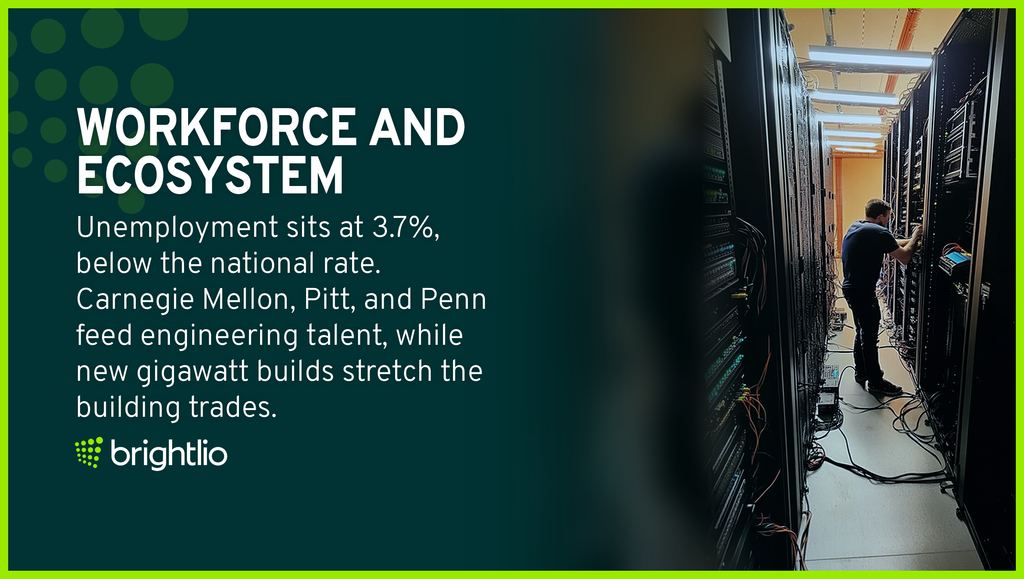
The technical base runs deep. Carnegie Mellon, the University of Pittsburgh, Penn, Drexel, and Penn State supply engineering and computing talent, and the state’s industrial history leaves a large pool of electricians and mechanical trades.
Building trades will be stretched. Homer City, Keystone Connect, PowerHouse, and Project Laurel all need large construction crews over the next decade, and they will compete for the same skilled labor.
6. Risk And Resiliency
Riverine flooding is Pennsylvania’s main natural hazard, especially in low-lying areas along the Susquehanna, Delaware, and Pittsburgh’s three rivers. Winter storms add ice, snow, and access risk.
The climate helps. Cold winters give operators long free-cooling seasons, which cuts cooling costs compared with Southern markets.
Grid reliability is the newer risk. PJM’s own auction shows the region short of its reliability target for 2027, so buyers need generator capacity and fuel plans sized for extended grid stress as well as storms.
Key Cities Or Submarkets In Pennsylvania
Pennsylvania’s market splits between two retail metros at either end of the state and a set of power-plant campuses in between.
The six submarkets below run from the deepest retail markets to the largest land and power plays.
1. Philadelphia
Philadelphia holds 29 of Pennsylvania’s 130 listings and the state’s densest interconnection. Netrality’s 401 N Broad carrier hotel, Unisecure’s Tier IV facility, and H5’s downtown site anchor the market, all profiled below.
Retail options run deep. Lumen Philadelphia 3 offers 31,877 sq ft at 3020 Market St with N+1 cooling, TierPoint serves the Delaware Valley from the Navy Yard, and Equinix, DataBank, Crown Castle, 365 Data Centers, Colocation America, and Digital Edge all operate in the city.
The Philadelphia colocation market suits financial services, healthcare, pharmaceutical, and media buyers that need dense carrier access close to New York and Washington. It is Pennsylvania’s strongest retail market.
2. Pittsburgh And Western Pennsylvania Retail
Pittsburgh has the most listings in the state at 34. Expedient’s North Shore facility at Nova Place, profiled below, leads the downtown market, with DataBank, DQE, TeraSwitch, EdgeConneX, Ark, Ardent, and Lumen running local sites.
The suburbs add capacity. Management Science Associates runs the 42,000 sq ft Tier III Rockpointe facility in Tarentum, and Iron Mountain’s underground WPA-1 in Boyers, profiled below, serves high-security and recovery workloads.
The Pittsburgh colocation market suits healthcare, financial, university, and industrial buyers that want lower costs than East Coast metros with solid carrier choice.
3. Western Pennsylvania Power Corridor
The region around Pittsburgh holds Pennsylvania’s largest planned campuses. Homer City Redevelopment and AWS plan a 4,500 MW, 36-building campus on 1,100 acres in Indiana County, powered by a new 4.5 GW natural gas plant, with construction from December 2026 and completion by June 2036.
TECfusions plans 3,000 MW over six years at Keystone Connect, the former Alcoa research campus in Upper Burrell. Switch has a 382-acre Big Beaver campus with closed-loop cooling, and Aligned, Provident, and Stonebridge have projects in Shippingport, Wampum, and Lawrence County.
The operating sites here are mostly mining. Big Digital Energy in Midland and Keel Infrastructure’s Scrubgrass and Sharon sites, all profiled below, run bitcoin mining today, with AI conversions planned.
The pipeline is concentrated. Homer City and Keystone Connect account for 7,500 MW of the 9,600 MW of planned capacity, about 78%, and Homer City alone takes a decade to complete.
4. Northeastern Pennsylvania: Berwick And Scranton
Luzerne County holds Pennsylvania’s largest operating campus. AWS’s Susquehanna site in Salem Township, profiled below, sits beside Talen’s nuclear plant.
QTS has proposed a 1,700-acre-plus campus in the same township with room for 12 to 17 data centers, and Keel’s Panther Creek mining site, profiled below, operates in nearby Nesquehoning.
Scranton holds 9 listings, mostly smaller enterprise sites. This region suits hyperscale tenants seeking nuclear-backed power and offers little retail space.
5. Harrisburg And South-Central Pennsylvania
Harrisburg holds 18 listings and sits within reach of Baltimore and Maryland. Alerify and Loop Internet run retail sites, and Harrisburg I, Keystone Trade Center, and a York Energy Center project are in the pipeline.
PowerHouse Data Centers plans the 1,350 MW Pennsylvania Digital 1 campus in Carlisle, Cumberland County, the third-largest planned project in the state.
The region suits state government, logistics, and enterprise recovery sites, along with hyperscalers drawn to Carlisle’s interstate access.
6. Philadelphia Suburbs And The Lehigh Valley
The ring around Philadelphia mixes retail sites with large proposals. Project Laurel plans eight buildings totaling 1.4 million sq ft on 192 acres in Limerick Township near the Limerick nuclear plant, with 750 MW of secured power.
Retail supply comes from DaSTOR in King of Prussia, Flexential in Collegeville and Allentown, and TierPoint in Valley Forge, Bethlehem, and Allentown. The Pennhurst campus and a Chester County project round out the pipeline.
These suburbs suit enterprises that want Philadelphia-area access with more room and lower costs than the city, along with AI data center developers chasing nuclear-adjacent power.
Notable Colocation Providers And Facilities In Pennsylvania
Pennsylvania’s provider list starts with the five largest operating sites, one hyperscale campus and four energy-linked mining sites, and continues with the retail operators that make Philadelphia and Pittsburgh strong enterprise markets.
The ten facilities below cover both groups.
1. AWS Susquehanna Data Center Campus
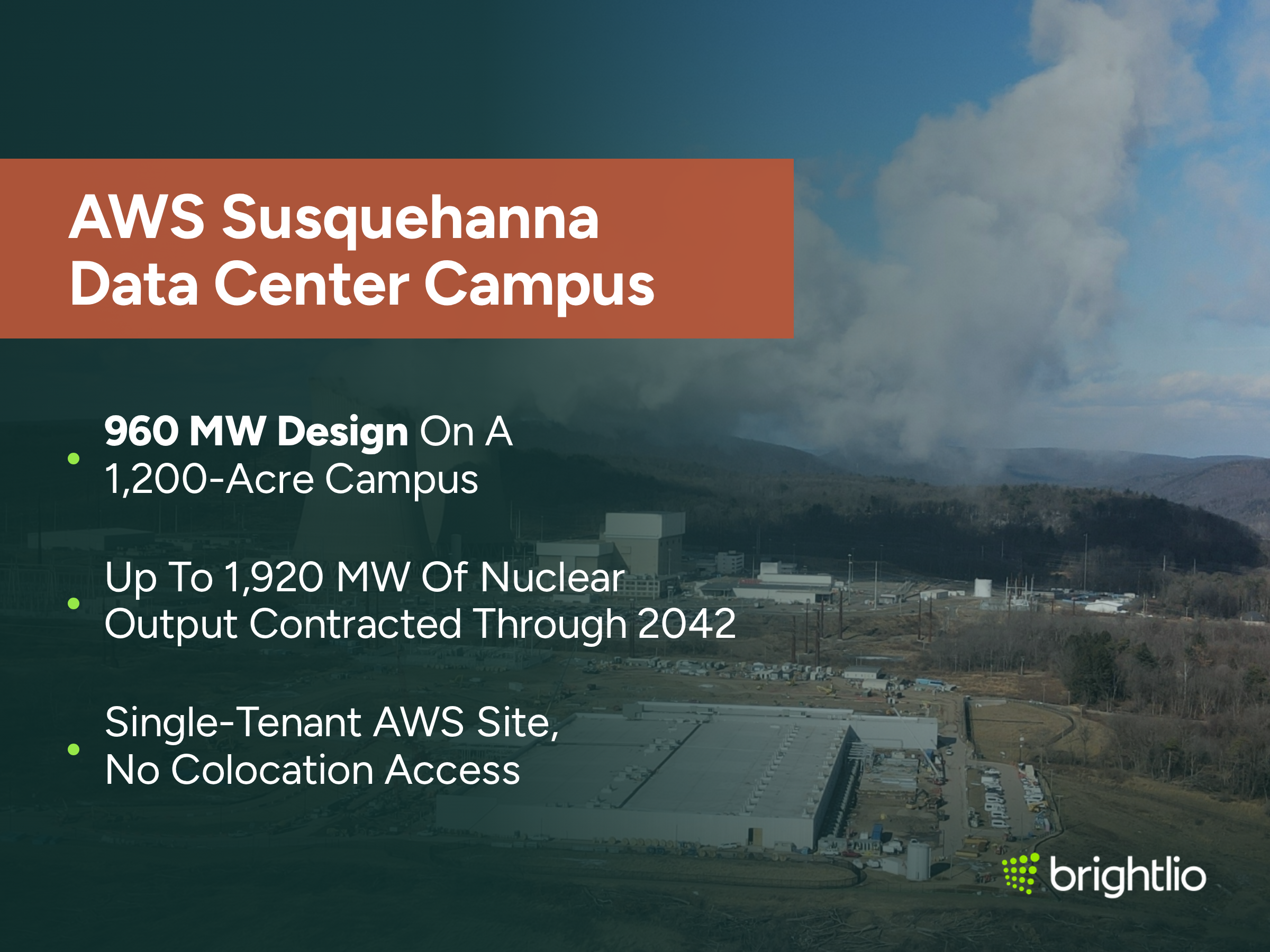
AWS bought the 1,200-acre Susquehanna campus beside Talen Energy’s nuclear plant in Salem Township in March 2024. The campus is designed for 960 MW.
Power comes from up to 1,920 MW of nuclear output contracted from Talen through 2042. The site ran on 300 MW of co-located supply before switching to a grid connection in 2026, after federal regulators pushed back on expanding behind-the-meter service.
Susquehanna is a single-tenant AWS site with no colocation access. It shows that nuclear-backed power in Pennsylvania can anchor a hyperscale campus, and how hard regulators look at those deals.
2. Big Digital Energy Midland
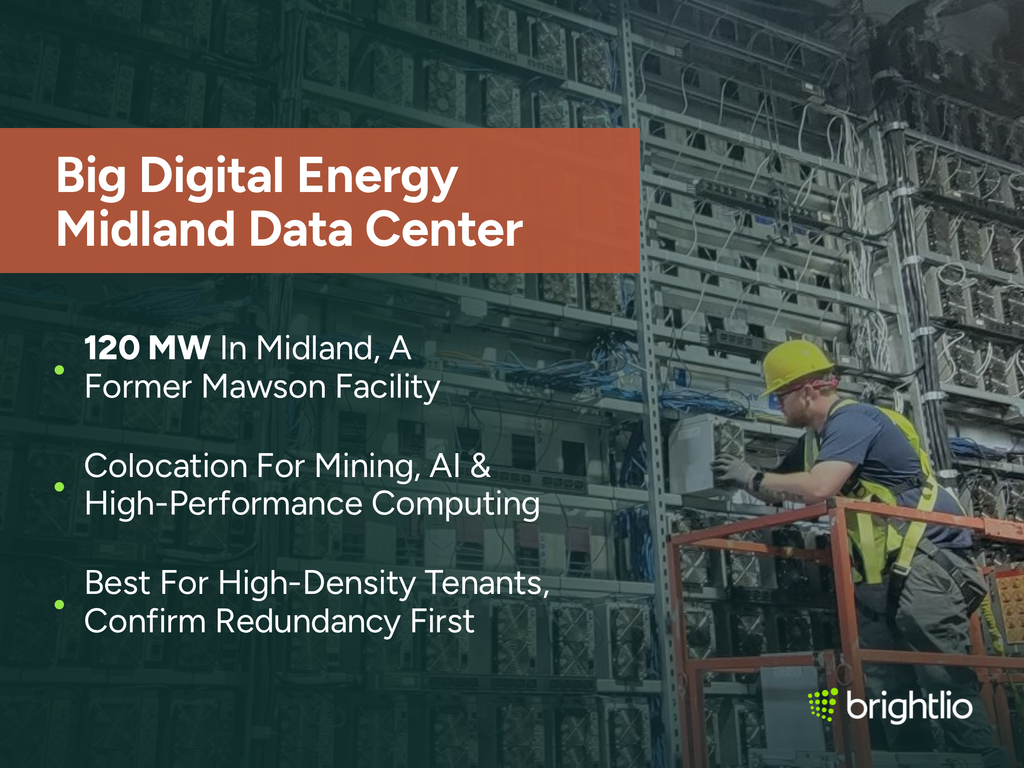
Big Digital Energy runs a 120 MW site at 950 Railroad Ave in Midland, a former Mawson facility that offers colocation for bitcoin mining, AI, and high-performance computing.
It is one of the few large Pennsylvania sites that leases capacity to outside tenants, though its design reflects mining roots.
Big Digital Energy Midland is best suited for mining and high-density compute tenants that want powered space in western Pennsylvania. Enterprise buyers need to confirm redundancy levels before committing.
3. Keel Infrastructure Scrubgrass
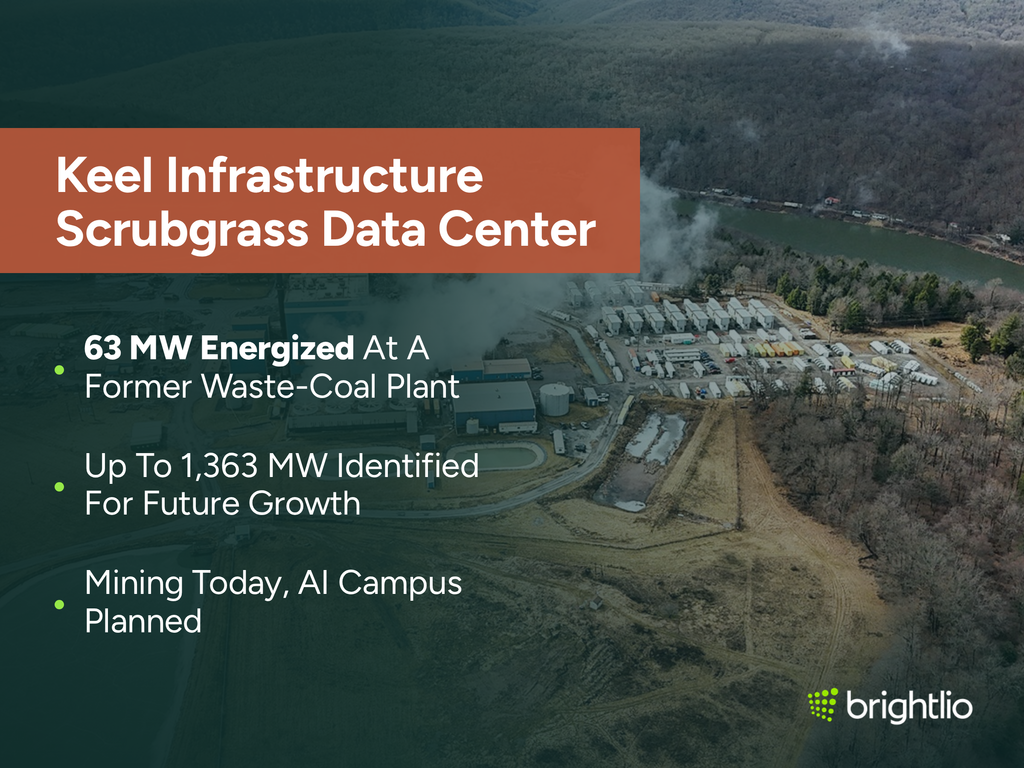
Keel Infrastructure, formerly Bitfarms, runs a 63 MW energized bitcoin mining site at 2151 Lisbon Rd in Kennerdell, on the grounds of a former waste-coal power plant.
Keel has identified up to 1,363 MW for future growth at the site and plans an AI campus there.
Scrubgrass matters as a power play. Its energized connection and expansion room make it a candidate for AI conversion, though nothing beyond mining is running today.
4. Keel Infrastructure Panther Creek
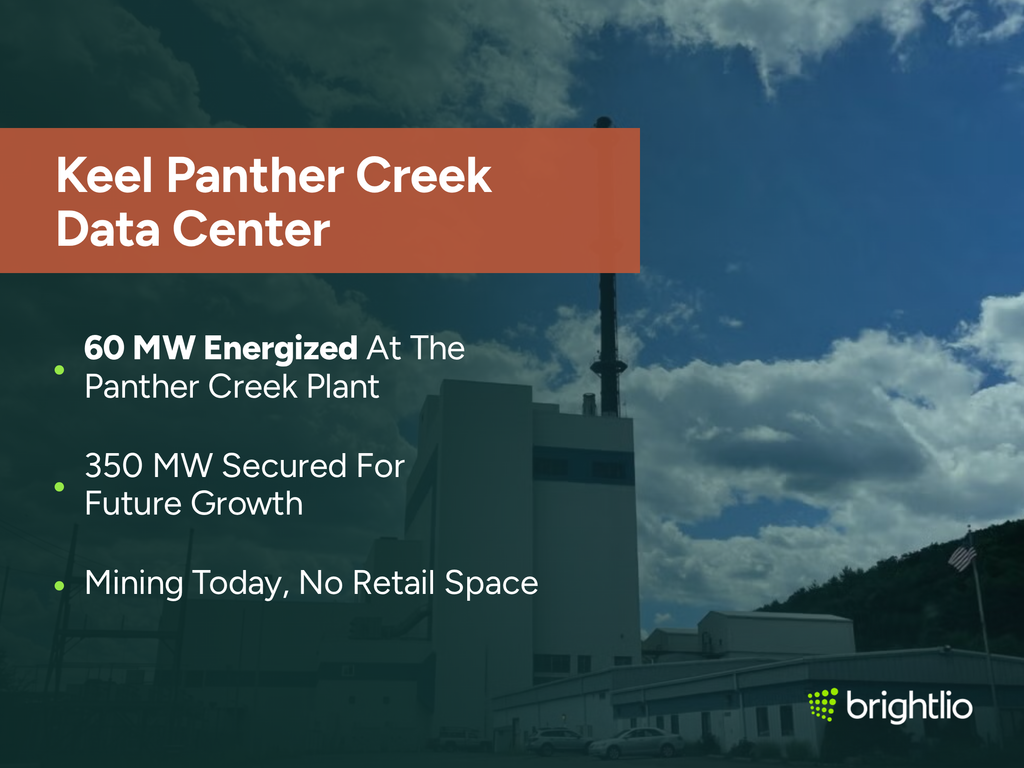
Keel’s Panther Creek site in Nesquehoning, Carbon County, runs 60 MW of energized bitcoin mining capacity, with 350 MW secured for growth.
The secured power gives Keel a second large expansion option in eastern Pennsylvania.
Panther Creek offers no retail space today and suits mining and future high-density tenants.
5. Keel Infrastructure Sharon
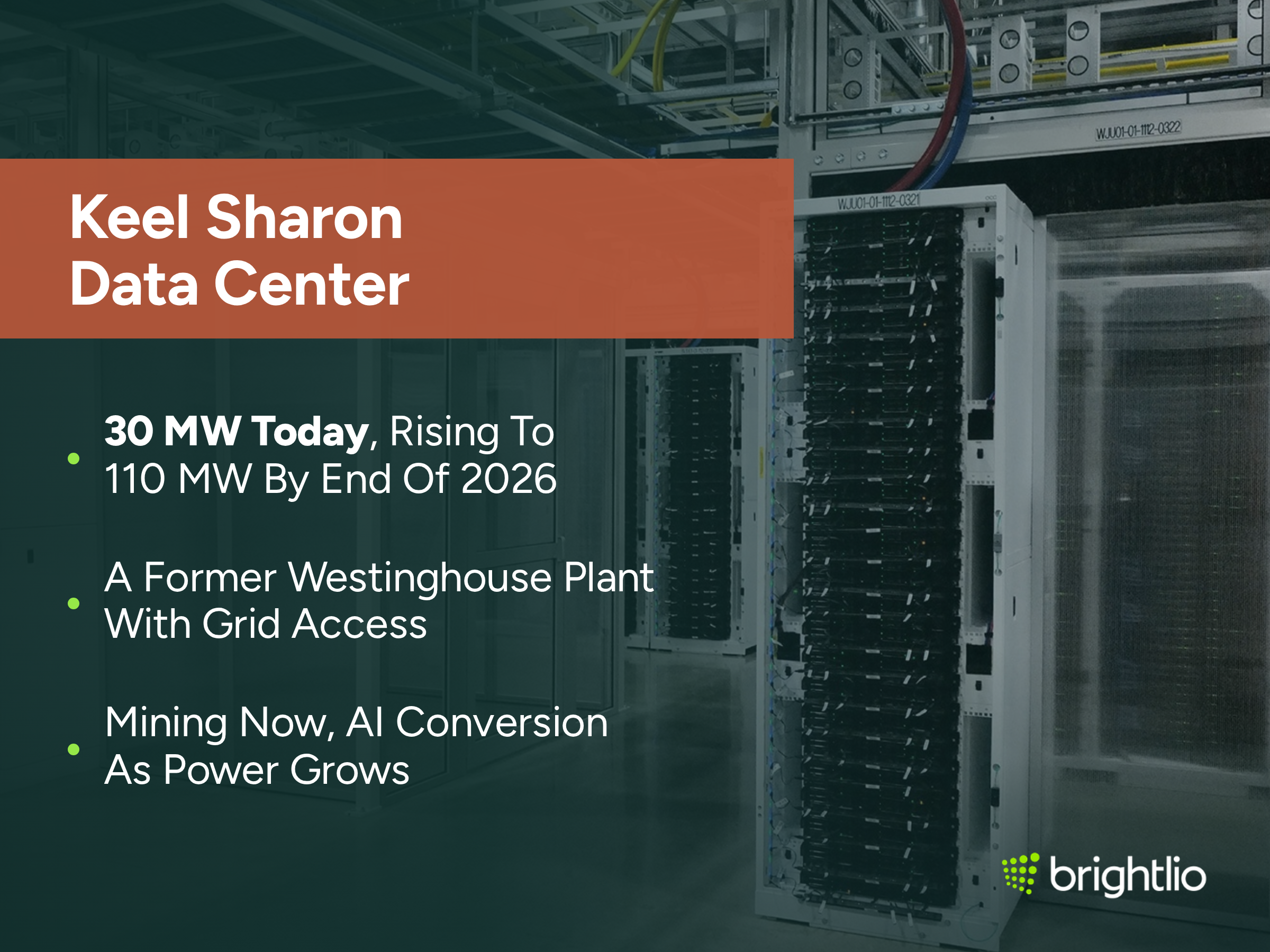
Keel’s Sharon site in Mercer County, a former Westinghouse plant, runs 30 MW today with 80 MW more under contract. New substations due by the end of 2026 will bring the site to 110 MW.
Sharon shows Keel’s strategy across Pennsylvania: buy industrial sites with grid access, mine bitcoin, and convert to AI as power grows.
The site offers no retail space.
6. Unisecure Philadelphia Data Center
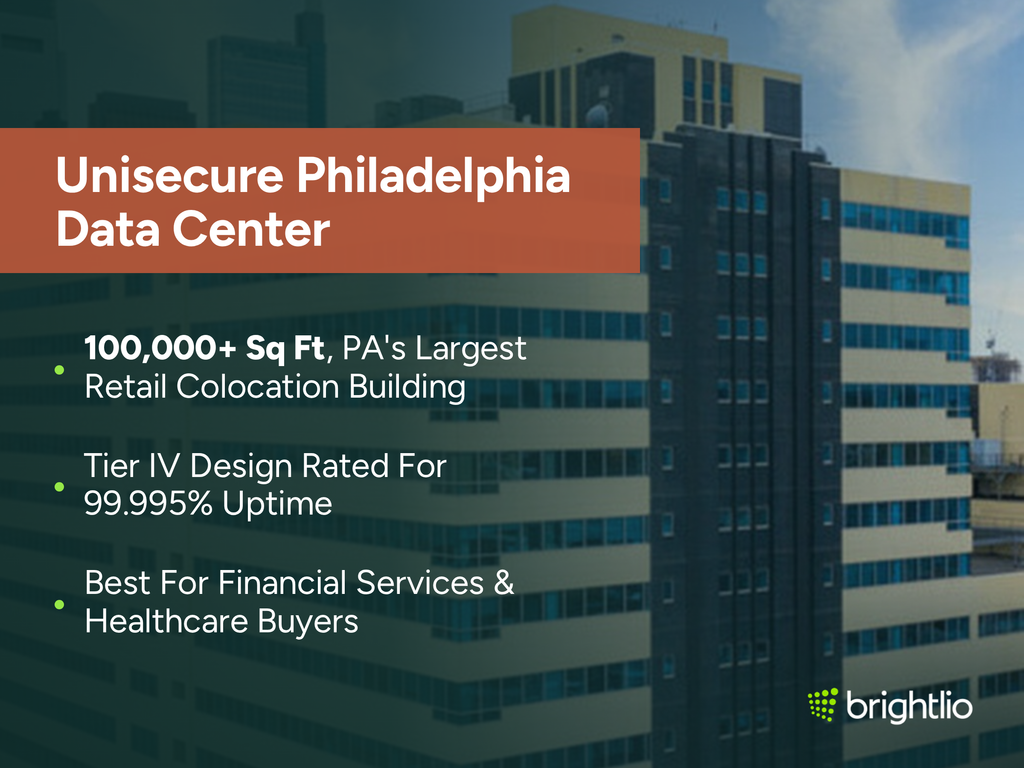
Unisecure’s facility at 2401 Locust St offers more than 100,000 sq ft, the largest retail colocation building in Pennsylvania. It is built to a Tier IV standard rated for 99.995% uptime.
Tier IV design gives tenants fault-tolerant power and cooling in the heart of Philadelphia.
Unisecure is best suited for financial services, healthcare, and other buyers that need the highest redundancy level in the city.
7. H5 Data Centers Philadelphia
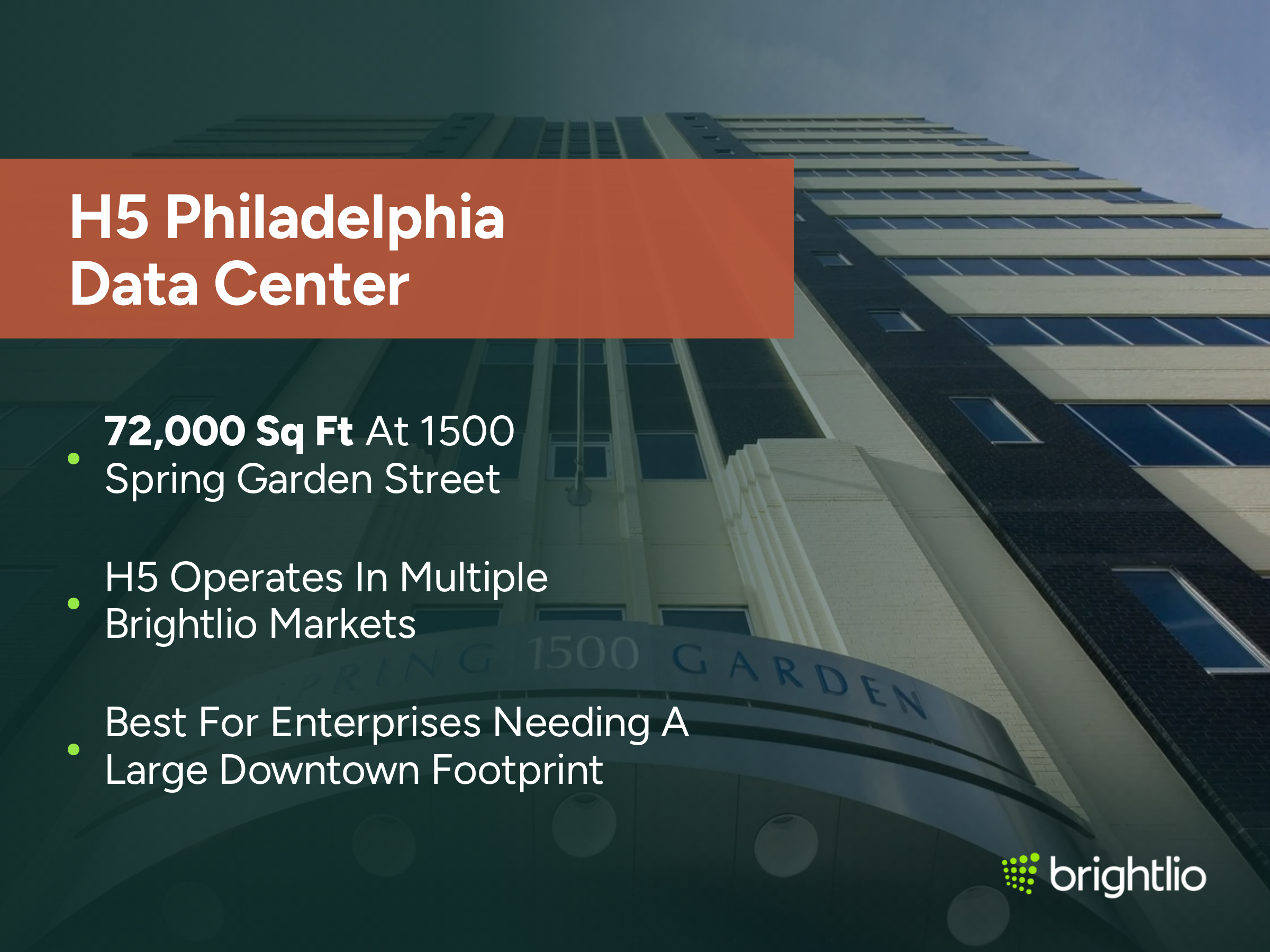
H5’s downtown facility at 1500 Spring Garden St covers 72,000 sq ft, one of the largest retail buildings in the city.
H5 operates in other Brightlio markets, including Nashville, so multi-region buyers can standardize on one provider.
H5 Philadelphia is best suited for enterprises that need a large downtown footprint with room to grow.
8. Netrality 401 N Broad
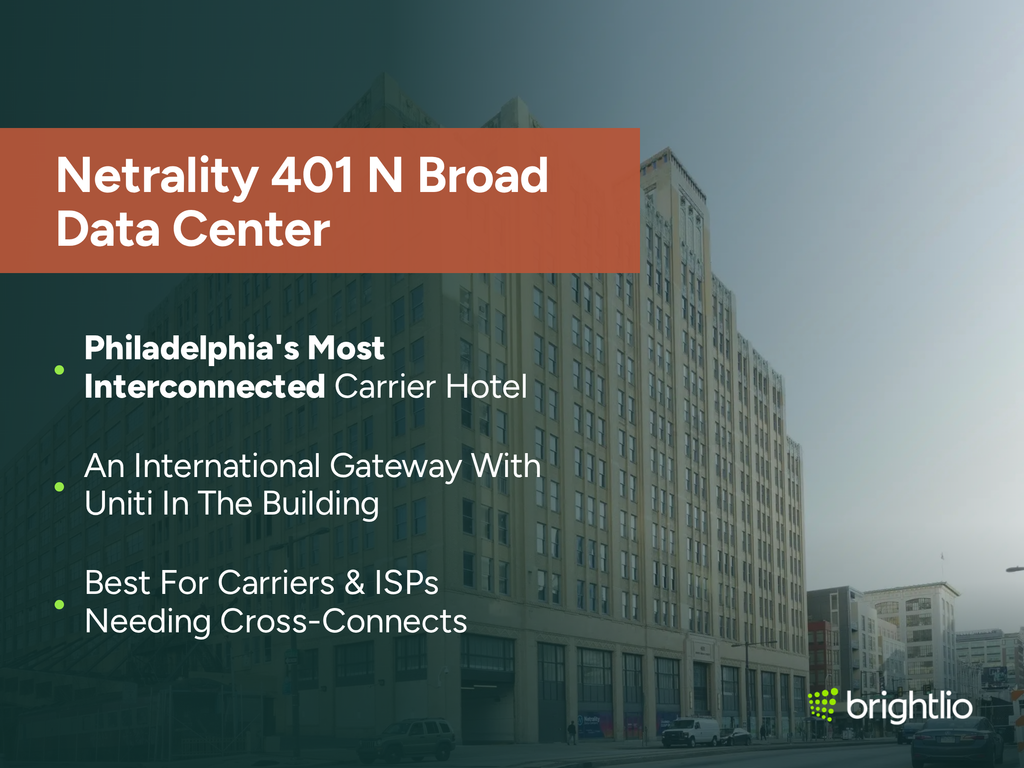
Netrality’s 401 N Broad is Philadelphia’s most interconnected carrier hotel and an international gateway. It does not publish its size.
Netrality runs carrier hotels in other central and eastern U.S. markets, including Kansas City, and Uniti operates space in the same building.
401 N Broad is best suited for carriers, ISPs, and enterprises that need cross-connects to the largest number of networks in Pennsylvania.
9. Expedient Pittsburgh North Shore
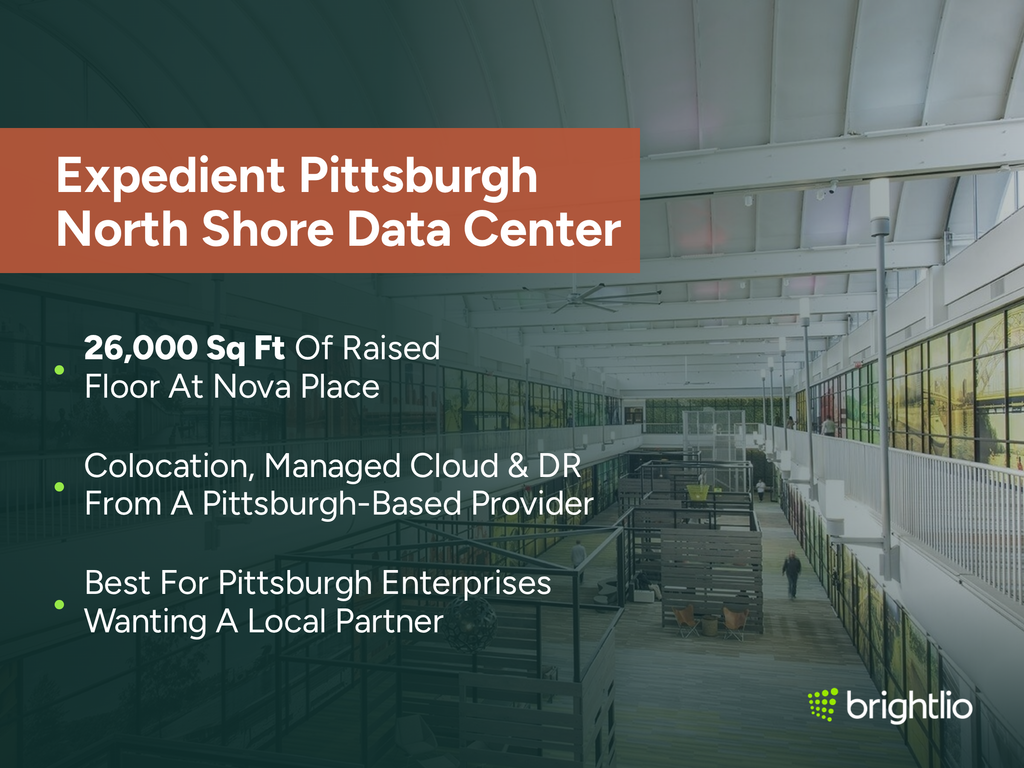
Expedient’s North Shore facility at Nova Place, 100 S Commons, offers 26,000 sq ft of raised floor with redundant utility feeds and four generators. Expedient is headquartered in Pittsburgh and runs a second local site south of the city.
Expedient pairs colocation with managed cloud and disaster recovery services, so tenants can mix owned hardware and hosted capacity.
Expedient North Shore is best suited for Pittsburgh enterprises that want colocation and managed services from a local provider.
10. Iron Mountain WPA-1
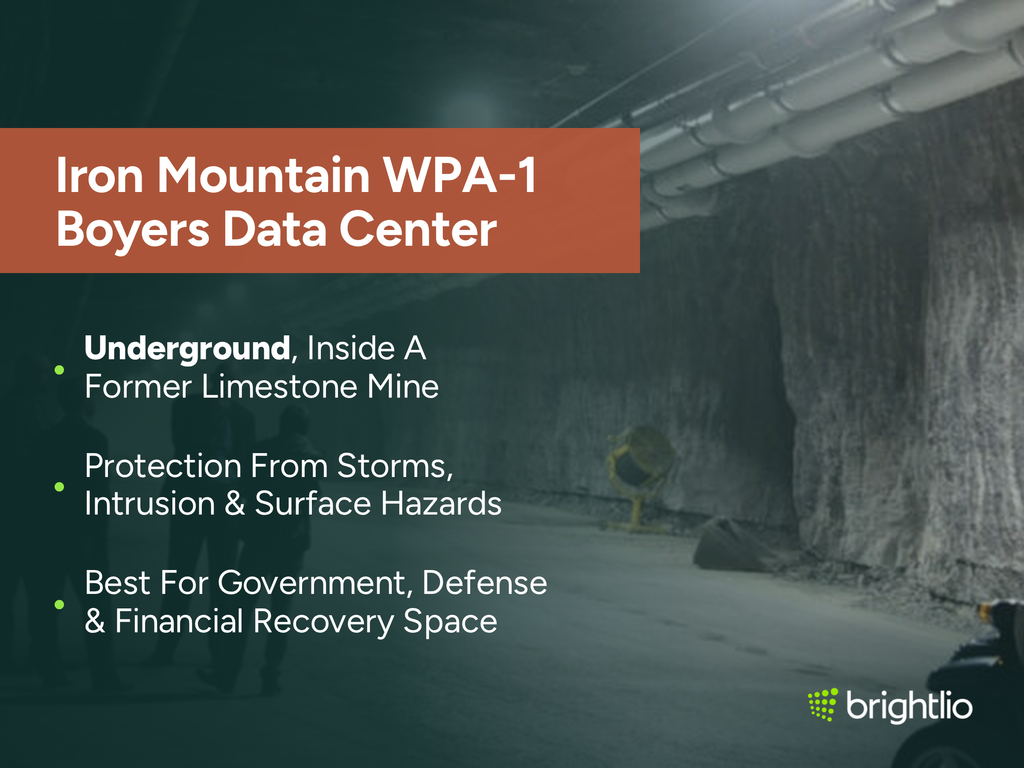
Iron Mountain’s WPA-1 at 1137 Branchton Rd in Boyers is an underground facility built inside a former limestone mine. Iron Mountain does not publish its capacity.
The underground setting protects against storms, physical intrusion, and surface hazards, which suits high-security production and disaster recovery.
WPA-1 is best suited for government, defense, financial, and other buyers that need hardened recovery space.
Recent Developments In Pennsylvania (Last 12 To 24 Months)
- 2026: AWS’s Susquehanna campus switched from 300 MW of co-located nuclear supply to a grid connection, under its restructured deal with Talen.
- December 2025: PJM’s capacity auction for 2027 to 2028 cleared at the $333.44 per MW-day price cap and fell 5.2% short of the grid’s reliability target, the first shortfall in PJM history.
- June 2025: Talen and Amazon restructured their Susquehanna agreement to supply up to 1,920 MW of nuclear power through 2042 over the grid.
- June 2025: Amazon announced at least $20 billion of data center investment in Pennsylvania, including the Susquehanna campus.
- April 2025: Governor Josh Shapiro reached a settlement with PJM that capped capacity prices for two auctions, a cap that shielded customers from a price PJM put near $530 per MW-day.
Drawbacks And Considerations For Colocation In Pennsylvania
Pennsylvania has strong retail markets and huge projects, but its power picture is the weakest part of the pitch. The five considerations below matter most when comparing Pennsylvania with Virginia, Ohio, and the Southeast.
1. Power Costs Run High
Pennsylvania’s industrial rate is well above Southern markets, and capacity charges keep climbing. Buyers choosing a market on power cost will do better elsewhere.
2. A Strained PJM Grid
PJM has hit its price cap in consecutive auctions and expects a reliability shortfall in 2027. New large loads face rising costs and pressure to bring their own power.
3. An Equipment-Only Tax Break
The sales tax exemption covers equipment and nothing else. It does little to offset high electricity costs, unlike states that exempt power as well.
4. A Pipeline Built On Plants Not Yet Built
The largest planned campuses depend on new gas plants or long build-outs, with Homer City running to 2036. Most of the 9,600 MW pipeline is years from delivery.
5. Operating Capacity Outside AWS Is Mostly Mining
Beyond Susquehanna, the largest operating sites are bitcoin mines. Their AI conversion plans are real, but enterprise-grade capacity at scale still sits mainly in Philadelphia and Pittsburgh retail buildings.
How Brightlio Can Help With Colocation In Pennsylvania
Brightlio helps organizations compare Pennsylvania colocation, cloud connectivity, AI infrastructure, and disaster recovery options across Philadelphia, Pittsburgh, Harrisburg, the Lehigh Valley, and nearby Northeast markets. Our team helps clients evaluate facility fit, power pricing, carrier access, compliance needs, power density, cooling design, and long-term site risk.
We compare providers such as Unisecure, H5 Data Centers, Netrality, Equinix, DataBank, Expedient, TierPoint, Iron Mountain, Flexential, and other Pennsylvania operators. For Pennsylvania projects, we pay close attention to PJM capacity exposure, utility contracts, sales tax certification, flood risk along the state’s rivers, winter access, carrier routes to New York and Northern Virginia, and expansion rights.
Brightlio can support cabinet, cage, private suite, single-tenant, high-density, AI, and multi-site disaster recovery planning, and our quotes come free to clients. Contact Brightlio to compare Pennsylvania colocation solutions and start planning a cost-effective and resilient deployment.
Frequently Asked Questions
1. Which U.S. State Has The Most Data Centers?
Virginia has the most data centers in the United States, led by Northern Virginia’s Loudoun County cluster, and Texas and California follow among the top data center markets in the US. Pennsylvania has 130 listings and a planned pipeline of 9,600 MW.
2. How Many Data Centers Are In Pennsylvania?
Pennsylvania has 130 data center listings across 15 markets. Pittsburgh holds 34, Philadelphia 29, Harrisburg 18, and Scranton 9, with 11 smaller markets sharing the remaining 40.
3. What Is The Largest Data Center In Pennsylvania?
AWS’s Susquehanna campus in Berwick is the largest operating site, designed for 960 MW and backed by up to 1,920 MW of contracted nuclear power. The largest planned project is AWS’s 4,500 MW Homer City campus.
4. Who Is Building Data Centers In Pennsylvania?
Amazon leads with Susquehanna and Homer City. TECfusions, PowerHouse Data Centers, QTS, Switch, Aligned, and the Project Laurel developers are behind other large proposals, and Keel Infrastructure plans AI conversions at its mining sites.
5. Are Pennsylvania Electricity Costs Favorable For Colocation?
No. Business customers paid 13.56¢/kWh and industrial customers 10.31¢/kWh in May 2026, well above Southern markets. PJM capacity prices add further upward pressure.
6. What Tax Incentives Does Pennsylvania Offer Data Centers?
Certified data centers are exempt from sales and use tax on computer data center equipment, which avoids the 6% state rate plus local add-ons in Allegheny County and Philadelphia. The exemption does not cover electricity.
7. Which Cities Are Best For Colocation In Pennsylvania?
Philadelphia is the best fit for dense interconnection and proximity to New York and Washington, and Pittsburgh offers a strong, lower-cost alternative in the west. The Philadelphia suburbs, Lehigh Valley, and Harrisburg serve enterprise and recovery needs.
8. Can Pennsylvania Colocation Support AI Or High-Density Workloads?
Yes, mostly at hyperscale and energy-linked sites. AWS, Keel Infrastructure, and Big Digital Energy run or plan high-density compute, while Unisecure’s Tier IV building and H5’s Philadelphia site give retail buyers room for denser racks.
9. Why Are Data Centers Raising Power Bills In Pennsylvania?
PJM attributed almost all of a 5,250 MW jump in forecast demand for 2027 to data centers, and capacity prices hit the price cap in consecutive auctions. Those capacity costs flow into every customer’s bill, which has turned data center growth into a political issue in the state.
10. Who May Not Need Pennsylvania Colocation?
Buyers choosing a market for cheap power will do better in the South. Networks that depend on the densest peering get more from New York or Northern Virginia, and smaller deployments gain little from an equipment-only tax break.
Keep reading with our colocation guides for these nearby markets:

Tamzid is a cybersecurity researcher with 5+ years of experience across SaaS, security, compliance, data centers and cloud. He writes for brightdefense.com and hipaasimple.com, covering security, compliance, and infrastructure topics. Certified through Cisco, Fortinet (NSE 1), and the Basel Institute on Governance in OSINT, he grounds his work in primary sources and verified data.
Recent Posts

Data Centers In Pennsylvania

Data Centers In Nebraska

Data Centers In Mississippi

Data Centers In Indiana
Let's start
a new project together