
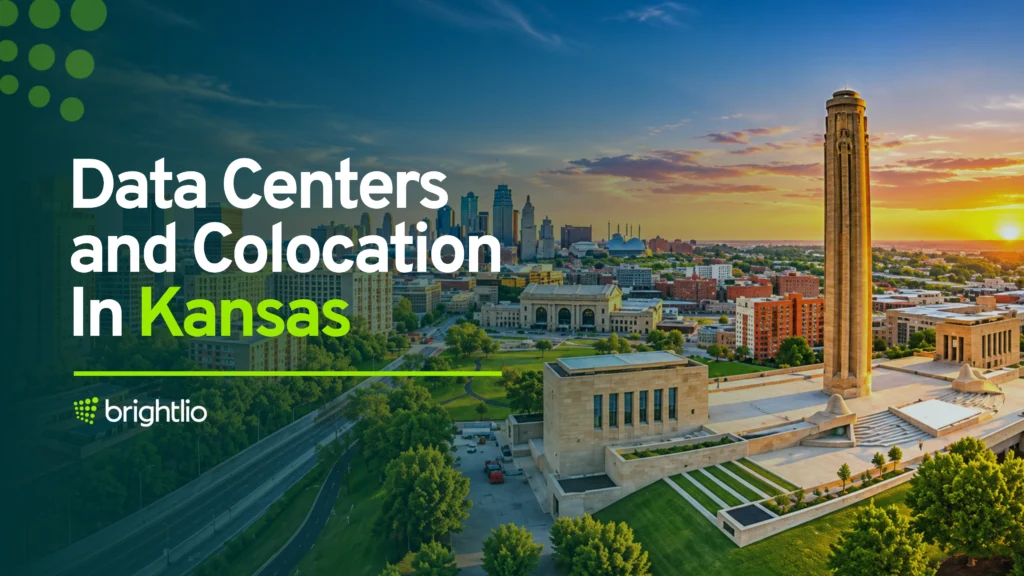
Kansas offers established colocation options in the Kansas City suburbs and a growing list of proposed large campuses. Buyers should evaluate those two markets separately. A campus announcement does not tell you how much space is available for a deployment today.
The October 10, 2026 market snapshot identifies 23 facilities across 18 operators. This includes five featured operating sites, nine additional colocation locations, and nine planned projects. The additional colocation locations also include operating facilities.
Most established choices in the supplied inventory sit in northeastern Kansas. Lenexa, Olathe, Shawnee, and Overland Park support the Kansas side of the Kansas City metropolitan area. Wichita offers a smaller set of local colocation options.
Wind supplied 52% of Kansas electricity generation in 2024. That is a useful starting point for energy discussions, but it does not establish the renewable content of a particular facility’s electricity. For a deployment today, focus on a building’s available capacity and network access. Evaluate large campus proposals against a separate, longer-term delivery schedule.
The supplied May 2026 benchmarks put commercial electricity at 11.19¢/kWh and industrial electricity at 8.12¢/kWh. These statewide averages provide context for budgeting. A facility’s tariff and colocation contract determine what a customer actually pays.
Kansas Data Center Tracker
23data center facilities
5 operational9 planned9 colocation
Data Center Map counts 39 buildings across 7 markets here. Multi-building campuses count once, while tenant suites in shared buildings count separately.
Market Snapshot
Largest Operating Data Centers In Kansas
These are the five largest operating sites by published capacity. Kansas's operating base is mostly Johnson County colocation, and every other listing appears on the map, with operating sites in green and planned ones in coral.
- DigiCo Kansas City KCM1Olathe, IT power7.5 MWOperational
Purpose-built enterprise facility with 6,582 square meters of white space and long-term leases in place
- Address:
- 24400 W Valley Pkwy, Olathe
- Operator:
- DigiCo Infrastructure REIT
- TierPoint Kansas City LenexaLenexa, reported5 MWOperational
60,000 sq ft facility with redundant power feeds, generators, UPS and cooling
- Address:
- 14500 W 105th St, Lenexa
- Operator:
- TierPoint
- Netrality KC2 7801 NiemanShawneeNot publishedOperational
Purpose-built, high-density facility for edge and wholesale deployments
- Address:
- 7801 Nieman Rd, Shawnee
- Operator:
- Netrality
- QTS Overland Park 1 DC1Overland ParkNot publishedOperational
QTS facility serving the Kansas City metro
- Address:
- 12851 Foster St, Overland Park
- Operator:
- QTS Data Centers
- LightEdge LenexaLenexaNot publishedOperational
Underground facility 125 feet below the surface, formerly Cavern Technologies
- Address:
- 17501 W 98th St, Lenexa
- Operator:
- LightEdge
5 Largest Planned Data Centers In Kansas
The proposed Flint Hills campus in Emporia and two 600 MW campuses near Kansas City account for 2,200 MW of the 2,371 MW in the five largest projects.
- Flint Hills Digital CampusEmporia, gigawatt-scale1,000+ MWProposed
Proposed 1,000-acre campus mixing grid power and on-site generation
- Location:
- Emporia Industrial Park IV, Lyon County
- Digital Realty Astra North CampusDe Soto, by 2028600 MWPlanned
Up to nine buildings totaling 3 million sq ft on 1,440 acres
- Location:
- W 103rd St and Lexington Ave, De Soto
- Developer:
- Digital Realty
- Red Wolf DCD Properties CampusKansas City, campus plan600 MWProposed
Six buildings totaling 1.8 million sq ft on 400 acres
- Address:
- 13000 Parallel Pkwy, Kansas City
- Developer:
- Red Wolf DCD Properties LLC
- Alcove Osawatomie Data CenterOsawatomie, upper rangeUp to 150 MWProposed
116-acre campus aiming for 50 to 150 MW, with a $900 million to $1.1 billion investment
- Location:
- W 335th St and Osawatomie Rd, Osawatomie
- Developer:
- Alcove Development
- Spark AI Foundry OlatheOlathe, IT load21 MWPlanned
AI and HPC colocation campus with on-site Bloom Energy fuel cells and BNSF rail access
- Location:
- Olathe, Johnson County
- Developer:
- Spark AI Foundry
Other planned projects, shown on the map in coral: , , , .
5 Colocation Facilities In Kansas
Retail colocation clusters in Lenexa and Overland Park on the Kansas side of the metro, with smaller facilities in downtown Wichita.
- DataBank MCI1 South LakeLenexaNot publishedColocation
Enterprise-class managed space and colocation
- Address:
- 15721 College Blvd, Lenexa
- Operator:
- DataBank
- DataBank MCI2 Pine RidgeKansas CityNot publishedColocation
Fault-tolerant managed and colocation environment
- Address:
- 10605 W 84th Terrace, Kansas City
- Operator:
- DataBank
- C1 Kansas Data CenterOlatheNot publishedColocation
Cloud and on-premise IT infrastructure support
- Address:
- 17795 W 106th St, Olathe
- Operator:
- One C1
- FullControl Network Data CenterLenexaNot publishedColocation
Enterprise colocation with a direct connection to the LightEdge underground site
- Address:
- 14400 College Blvd, Lenexa
- Operator:
- FullControl Network
- Concergent Wichita (UV&S Data Center)WichitaNot publishedColocation
Downtown Wichita colocation facility
- Address:
- 245 N Waco, Wichita
- Operator:
- Concergent
Other colocation facilities, shown on the map as green squares: , , , .
Choose a category to switch the list and highlight its sites on the map. Click any site card to find it on the map, or click a marker to jump to its card. Pins are approximate, and each MW figure carries the basis shown beside it.
Data sourced from Data Center Map, EIA, the Kansas Department of Commerce, Inflect and More Than Just Parks, checked October 10, 2026. Listings count individual buildings, and the lists show the largest sites in each category.
Why Colocate In Kansas
Kansas gives businesses access to the Kansas City network ecosystem and a substantial wind resource. Its facilities offer several deployment models, while qualifying large developments can receive sales tax relief. The value of each benefit depends on the chosen site and service agreement.
Access To The Kansas City Network Ecosystem
Kansas facilities can connect businesses to the wider Kansas City network market. That ecosystem crosses the state line. A building in Kansas may reach important interconnection services through a separate facility in Missouri.
Netrality illustrates this arrangement. Its KC2 facility at 7801 Nieman Road in Shawnee has a fiber connection to its 1102 Grand carrier hotel in Kansas City, Missouri. A carrier hotel is a building where network providers connect their services.
When comparing a carrier-neutral data center, ask which providers physically enter your building. Carrier neutrality means customers can choose among network providers. It does not guarantee that every advertised network is available without an additional connection.
Obtain route diagrams for both primary and backup circuits. Two providers can share a conduit or building entrance. Separate contracts alone do not establish separate failure paths.
A Substantial Wind Resource
The U.S. Energy Information Administration reports that wind produced 52% of the state’s electricity in 2024. Kansas had the nation’s third-highest wind generation share that year.
This resource can support discussions about renewable energy procurement. Buyers still need to understand the operator’s electricity contract and any renewable energy certificates assigned to their consumption. Statewide generation is not a facility-specific carbon measurement.
Cold winter conditions may also allow facilities to reduce mechanical cooling for part of the year. This is often called free cooling or economization. The actual benefit depends on the cooling design and operating limits.
Request measured cooling performance across seasons. Annual averages alone can hide the extra electricity required during hot weather.
Tax Relief For Qualifying Large Developments
Kansas offers a 20-year state and local sales tax exemption through its SB98 data center program. The program can improve the economics of qualifying large developments.
Applicants must commit at least $250 million in eligible investment within five years of commencing operations. They must also create 20 new full-time jobs for Kansas residents within two years. A ten-year electricity purchase agreement with the utility serving the site is another requirement.
Commerce guidance excludes electricity from eligible data center costs. A customer renting a few cabinets should not assume it receives the exemption or that its electricity becomes tax-free. Ask the operator whether an approved incentive affects the quoted charges.
Different Facility Designs For Different Workloads
Kansas provides several physical environments within the same regional market. LightEdge offers underground space in Lenexa. TierPoint markets cabinet and cage deployments nearby. Netrality markets higher-density options in Shawnee.
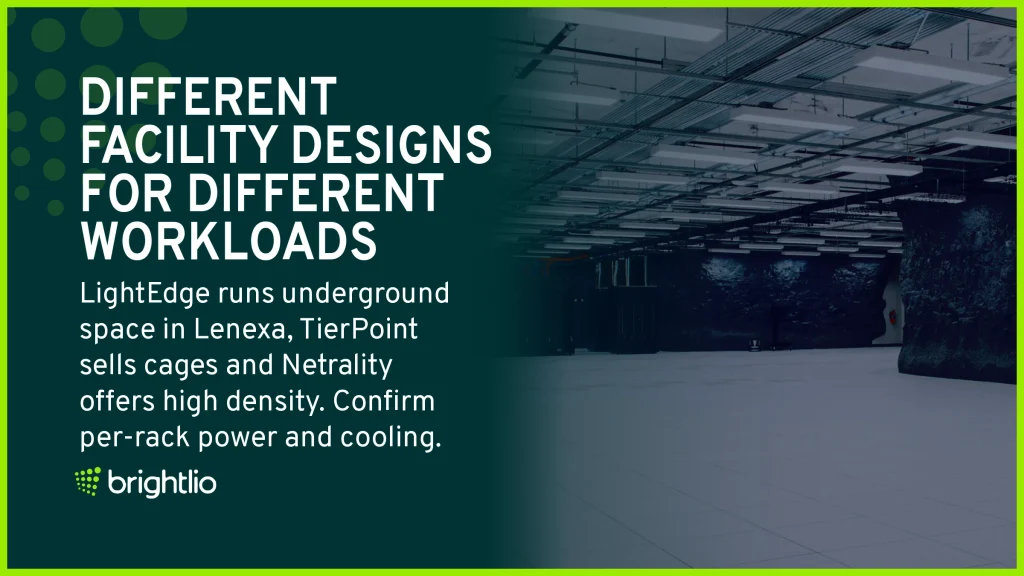
This choice gives buyers a way to compare designs against their actual requirements. A traditional enterprise deployment may prioritize managed support and convenient access. A dense computing deployment needs evidence that the proposed rack arrangement can receive enough power and reject enough heat.
Availability remains specific to each building. A facility’s overall design capacity does not establish the size of the suite an operator can deliver on your required date.
Where Kansas Data Centers Are Located
Established Kansas data centers cluster in the Kansas City suburbs, with a smaller group in Wichita. De Soto adds a major proposed campus location. The areas below differ in available services and development stage, so buyers should separate operating options from future supply.
1. Lenexa, Shawnee, And Overland Park
These western and southwestern Kansas City suburbs contain several of the state’s established options. TierPoint, LightEdge, Netrality, QTS, and DataBank appear in the supplied inventory across this area.
This is a practical starting point for businesses that want multiple nearby proposals. Compare each building’s staffing model and service scope. An operator with managed cloud services may offer a different operating relationship from a provider focused on space and power.
FullControl Network also lists a Lenexa facility. The October snapshot describes a direct connection to LightEdge’s underground location. Buyers should confirm whether that connection is included in a proposal or priced separately.
2. Olathe
Olathe includes DigiCo’s KCM1 enterprise facility and additional locations associated with C1 and Connect Data Centers. It also appears in the planned market through Spark AI Foundry.
The distinction between investment properties and retail colocation matters here. DigiCo’s KCM1 disclosures describe a leased enterprise asset. Its presence does not mean an ordinary buyer can order a cabinet there.
For an Olathe deployment, establish the commercial model before comparing building sizes. Ask whether the operator offers individual cabinets, private cages, dedicated suites, or an entire leased facility.
3. Kansas City Kansas And Wyandotte County
Kansas City, Kansas, has proposed projects including the Red Wolf DCD campus on Parallel Parkway. The inventory also identifies the PowerTransitions Quindaro site.
This submarket deserves attention for future development. Proposed capacity should remain separate from operating space when building a procurement shortlist.
Check the state on every address. Kansas City, Missouri, contains facilities that belong to the same metropolitan network ecosystem but are outside Kansas. Missouri buildings should not inflate a Kansas-only facility count.
4. De Soto
De Soto is a major proposed development location through Digital Realty’s Astra project. Digital Realty describes Astra North as a roughly 280-acre first phase. The wider North and South development covers about 1,400 acres.
The operator describes up to nine data center buildings totaling approximately 3 million square feet for Astra North. The broader landholding should not be presented as the footprint of that first phase.
De Soto is most relevant to buyers evaluating longer-term campus supply. Confirm which phase a proposal covers and what utility work must finish before delivery.
5. Wichita
Wichita provides local options for businesses whose users and support teams are concentrated in south-central Kansas. The inventory includes Concergent’s UV&S location at 245 N Waco and other downtown facilities.
Additional entries include CenterServ, AO Business Technology Solutions, and Wichita Data Center at 125 N Market. Comparable IT capacities for these buildings are not published in the supplied data.
For a Wichita shortlist, request the same technical information from each provider. Network routes and support coverage deserve particular attention when comparing a smaller local facility with a larger regional option.
Five Operating Kansas Data Centers To Evaluate
The following five facilities illustrate different operating models in the Kansas market. Published specifications differ, so they are not ranked by usable IT capacity. White space means the area used to house IT equipment.
1. DigiCo Kansas City KCM1
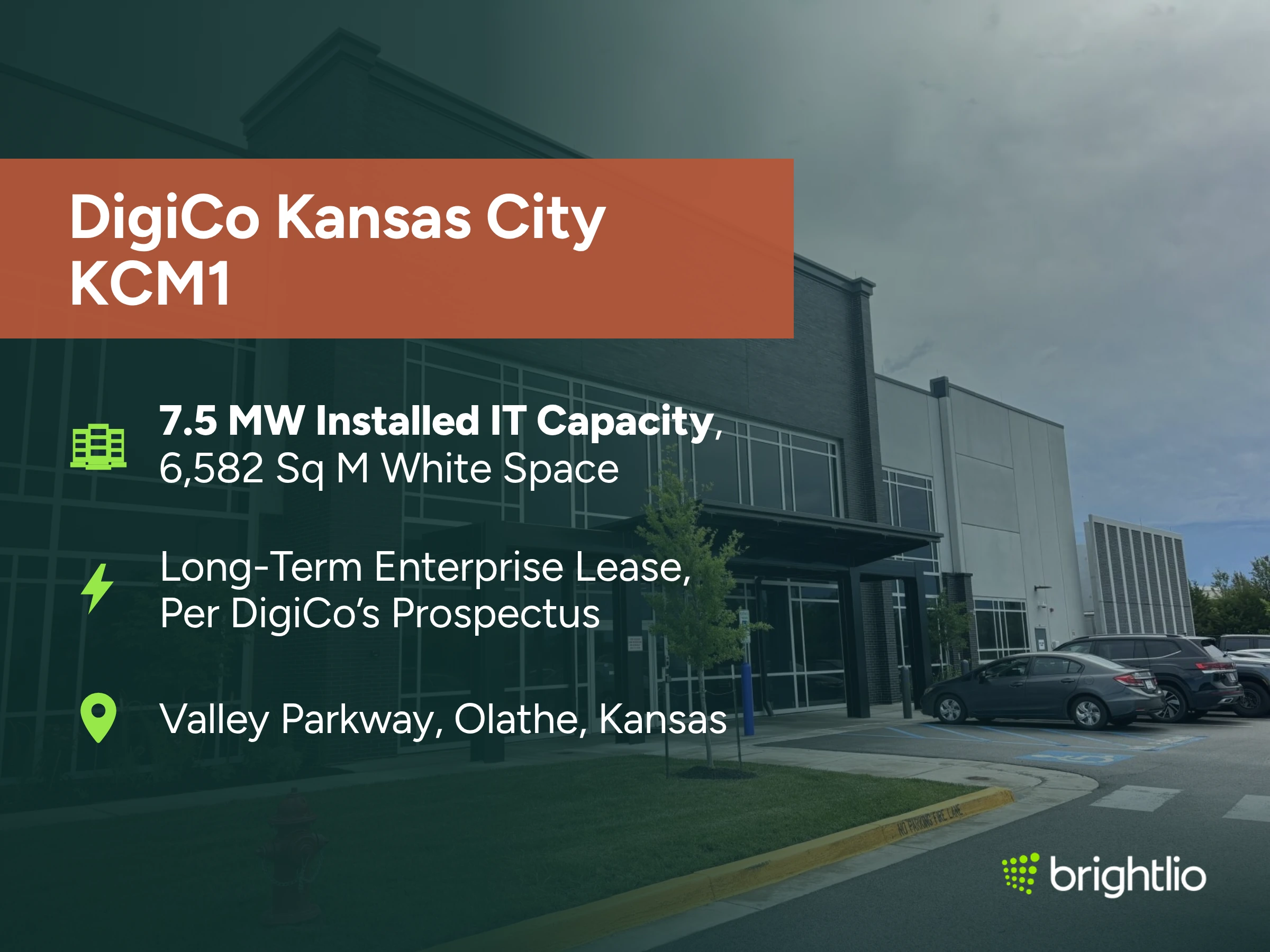
- Location: 24400 W Valley Parkway, Olathe. Operator: DigiCo Infrastructure REIT.
KCM1 is a purpose-built enterprise facility with 7.5 MW of installed IT capacity and 6,582 square meters of white space, according to DigiCo’s prospectus. IT capacity describes the electricity available to computing equipment, rather than the total demand of the building.
The prospectus describes a long-term enterprise lease. Those disclosures establish the asset’s operating model at the time of publication. They do not establish current retail availability.
This distinction makes KCM1 useful evidence of Kansas’s enterprise infrastructure base. A buyer should obtain direct confirmation of leasing options before treating it as an available colocation alternative.
2. TierPoint Kansas City Lenexa
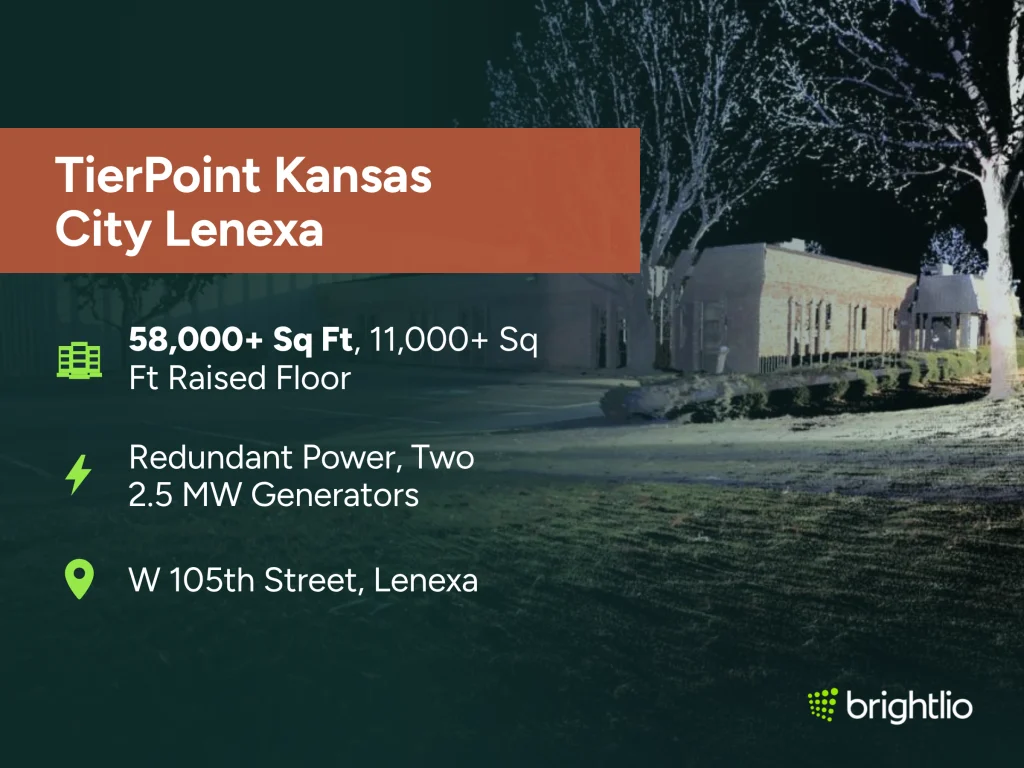
- Location: 14500 W 105th Street, Lenexa. Operator: TierPoint.
TierPoint’s facility page lists 58,000+ square feet of total space and 11,000+ square feet of raised floor. It offers cabinet and cage configurations alongside managed services.
The operator describes redundant power distribution and two 2.5 MW generators. Redundant equipment provides backup when another component is unavailable. The combined generator ratings do not establish 5 MW of customer IT capacity.
Ask TierPoint for the available critical load and the capacity that remains usable during maintenance or a component failure. Buyers considering managed services should also establish which monitoring and recovery tasks are included in the contract.
Netrality KC2 At 7801 Nieman
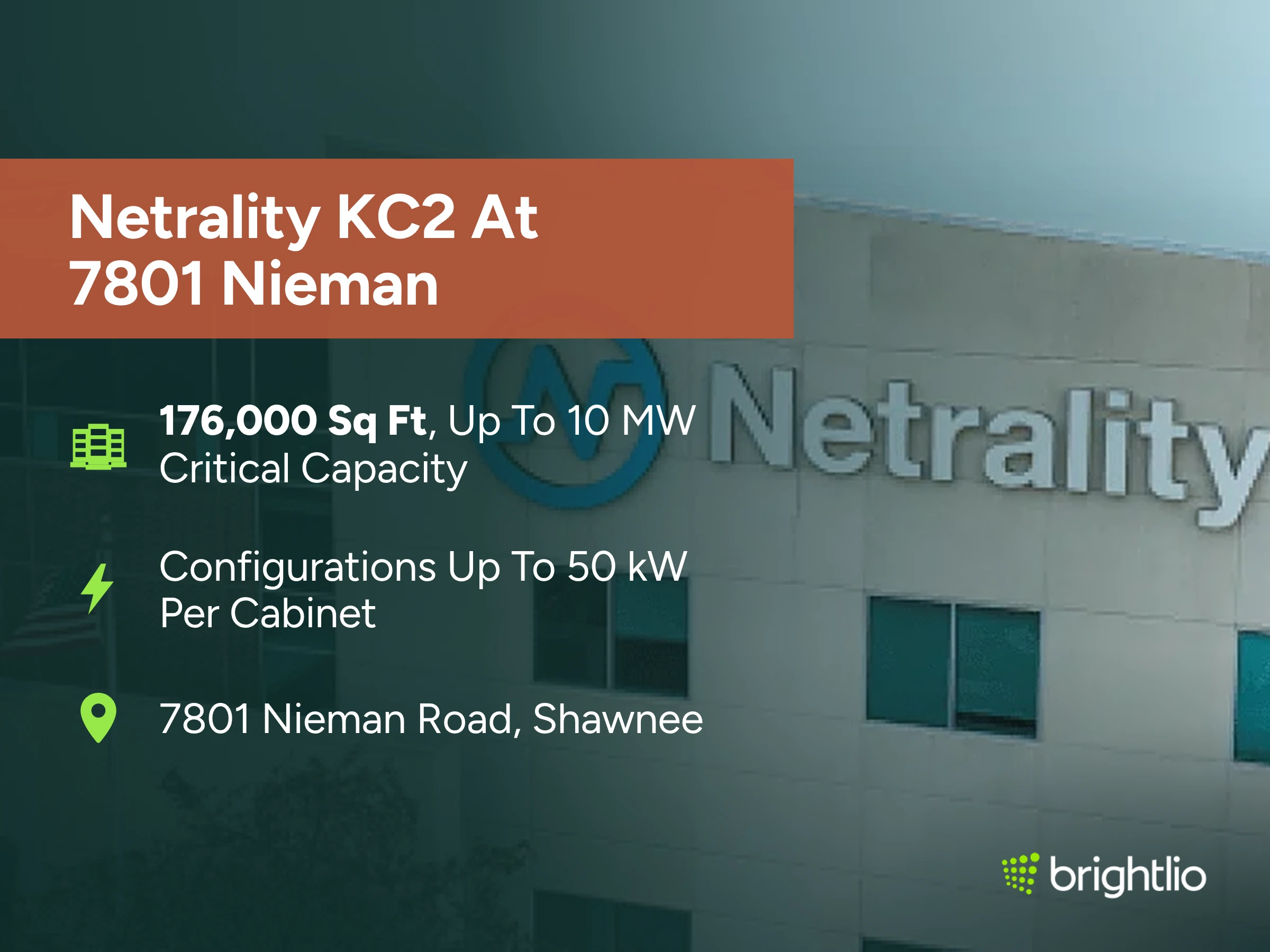
- Location: 7801 Nieman Road, Shawnee. Operator: Netrality.
Netrality describes KC2 as a 176,000-square-foot facility designed for up to 10 MW of critical capacity. Critical capacity is power intended for the computing load. Confirm how much is commissioned in the proposed deployment area.
The operator markets configurations reaching 50 kW per cabinet. Higher rack density requires a coordinated cooling design. Ask for approval of the actual equipment configuration and whether any additional cooling installation is necessary.
KC2’s fiber connection to 1102 Grand extends access to the wider Kansas City network ecosystem. Ask for separate lists of carriers in the Shawnee building and providers reached through Missouri.
QTS Overland Park 1 DC1
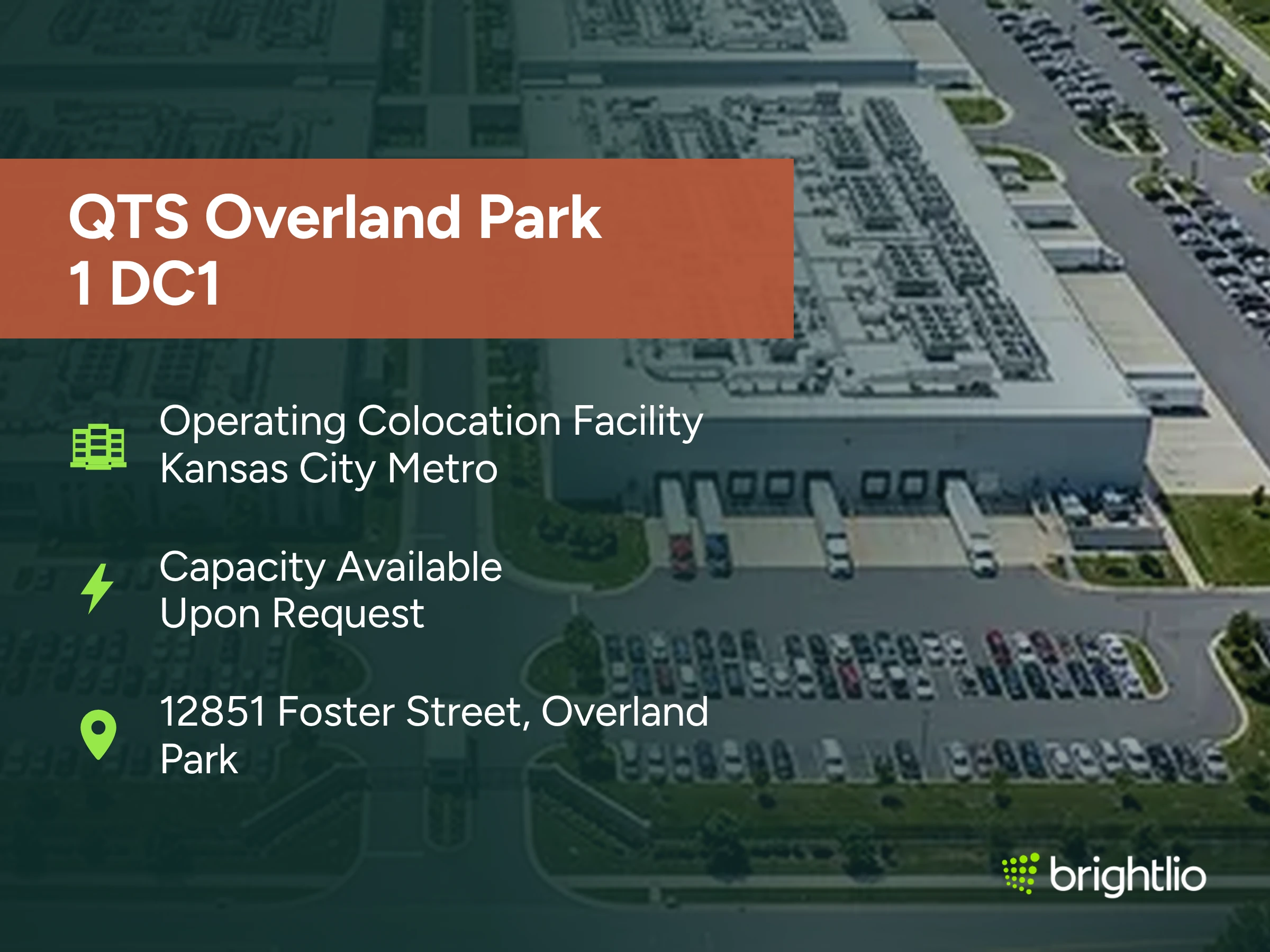
- Location: 12851 Foster Street, Overland Park. Operator: QTS Data Centers.
QTS Overland Park 1 DC1 is listed as an operating facility serving the Kansas City metropolitan area. A building-specific IT capacity is not established in the supplied data.
Do not infer the site’s capabilities from the scale of other QTS campuses. Request building-specific information about the deployment models offered and the capacity currently available.
For a practical comparison, obtain the proposed power allocation and cooling limits in writing. Confirm whether the quoted service includes network connections and on-site technical assistance.
LightEdge Lenexa
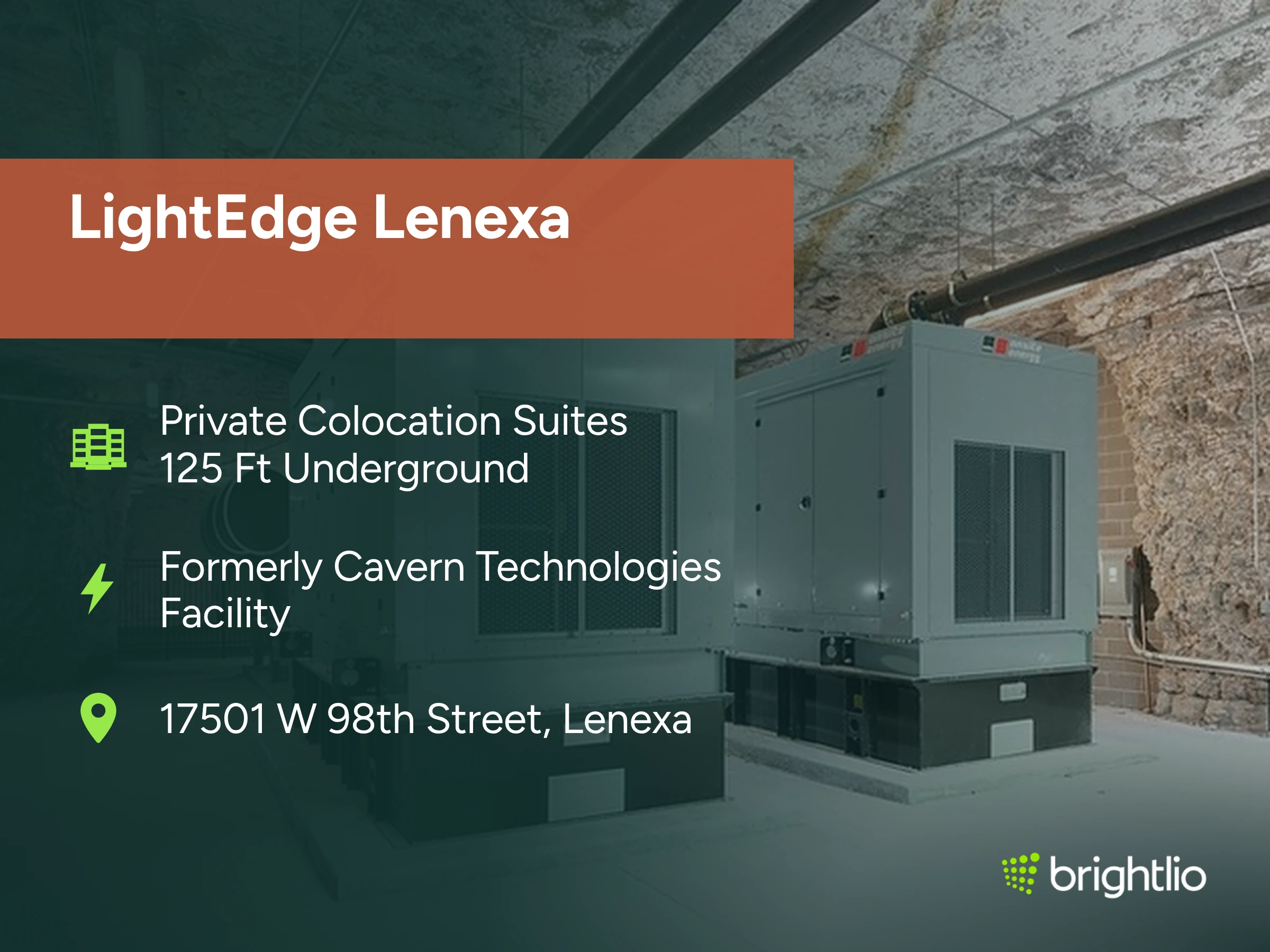
- Location: 17501 W 98th Street, Lenexa. Operator: LightEdge.
Formerly associated with Cavern Technologies, this facility sits 125 feet underground. LightEdge markets private colocation suites in the underground environment.
Underground construction changes the building’s exposure to surface weather. It does not eliminate dependencies on utility feeds, access points, ventilation, or telecommunications routes.
Ask how the operator protects entrances and manages water intrusion. Confirm how technicians and replacement equipment reach your suite during a severe-weather event. Evaluate those operating procedures alongside the physical location.
Planned Projects And Recent Developments
Kansas’s proposed pipeline is much larger than the published capacities of its established retail facilities. A hyperscaler operates computing infrastructure at very large scale, often through campuses built for its own workloads. That development model differs from a facility selling individual cabinets.
The earlier 2,371 MW headline combines the five largest listed proposals using the upper end of Osawatomie’s original capacity range. It should not be presented as a verified sum across all nine planned sites. Osawatomie’s revised proposal also makes that older total unsuitable as a current pipeline figure.
Flint Hills Digital Campus In Emporia
The October market snapshot describes a proposed 1,000+ MW Flint Hills campus at Emporia Industrial Park IV. The concept combines grid power with on-site generation on approximately 1,000 acres.
Emporia’s municipal materials describe a digital infrastructure overlay district review. Such a planning process does not establish that a campus is approved, financed, or ready to receive tenants.
Buyers should request phase-specific evidence of power delivery. The proposed campus total does not establish the initial phase’s IT load or opening date.
Digital Realty Astra North In De Soto
The October market snapshot assigns Astra North 600 MW and a 2028 target. Those figures should be read as planning assumptions rather than guaranteed delivery commitments.
Digital Realty’s current project description supports a phased development. It separates Astra North’s roughly 280 acres from the much larger combined North and South landholding.
For a future lease, establish the exact building and power phase. Obtain a contractual delivery date and a clear description of any utility or permitting conditions.
Red Wolf DCD Properties In Kansas City Kansas
The October market snapshot identifies a 600 MW proposed campus at 13000 Parallel Parkway. Red Wolf DCD Properties LLC is the listed developer.
A proposal of this size requires more than a suitable parcel. Utility delivery and local approvals can control the schedule.
Treat the stated capacity as a campus proposal. Require current planning records and a documented power arrangement before assigning the project a firm place in a deployment schedule.
Project Catalyst In Osawatomie
Alcove Development now describes Project Catalyst with MDH Partners as a 283-acre proposal with 500+ MW of interconnection capacity delivered in phases. This supersedes the smaller 116-acre, 50–150 MW concept in the supplied inventory.
The developer says the project must clear Planning Commission and City Council review. It identifies 2028 as the earliest potential construction start. That is not an operating date.
Interconnection capacity is also different from commissioned IT capacity. Future customers need a building-level power allocation and delivery schedule.
Spark AI Foundry In Olathe
Spark AI Foundry markets an Olathe campus with an initial 21 MW of critical load. Its published concept includes Bloom Energy fuel cells for on-site power.
The developer’s site describes the anchor lease as pending. Buyers should distinguish the proposed service from capacity that has been commissioned and accepted for operation.
The fuel-cell design warrants its own review. Ask about fuel supply continuity and backup arrangements. The statewide wind share does not establish the emissions profile of on-site generation.
Other Proposed Locations
The inventory also names DAMAC Heartland Data Center, QTS New Century, Beale Infrastructure’s Project Brewer, and the PowerTransitions Quindaro site. Comparable public capacity figures are not established here.
These proposals can inform longer-term market monitoring. They should enter a near-term shortlist only when the operator can document a suitable product and delivery commitment.
Drawbacks Of Colocating In Kansas
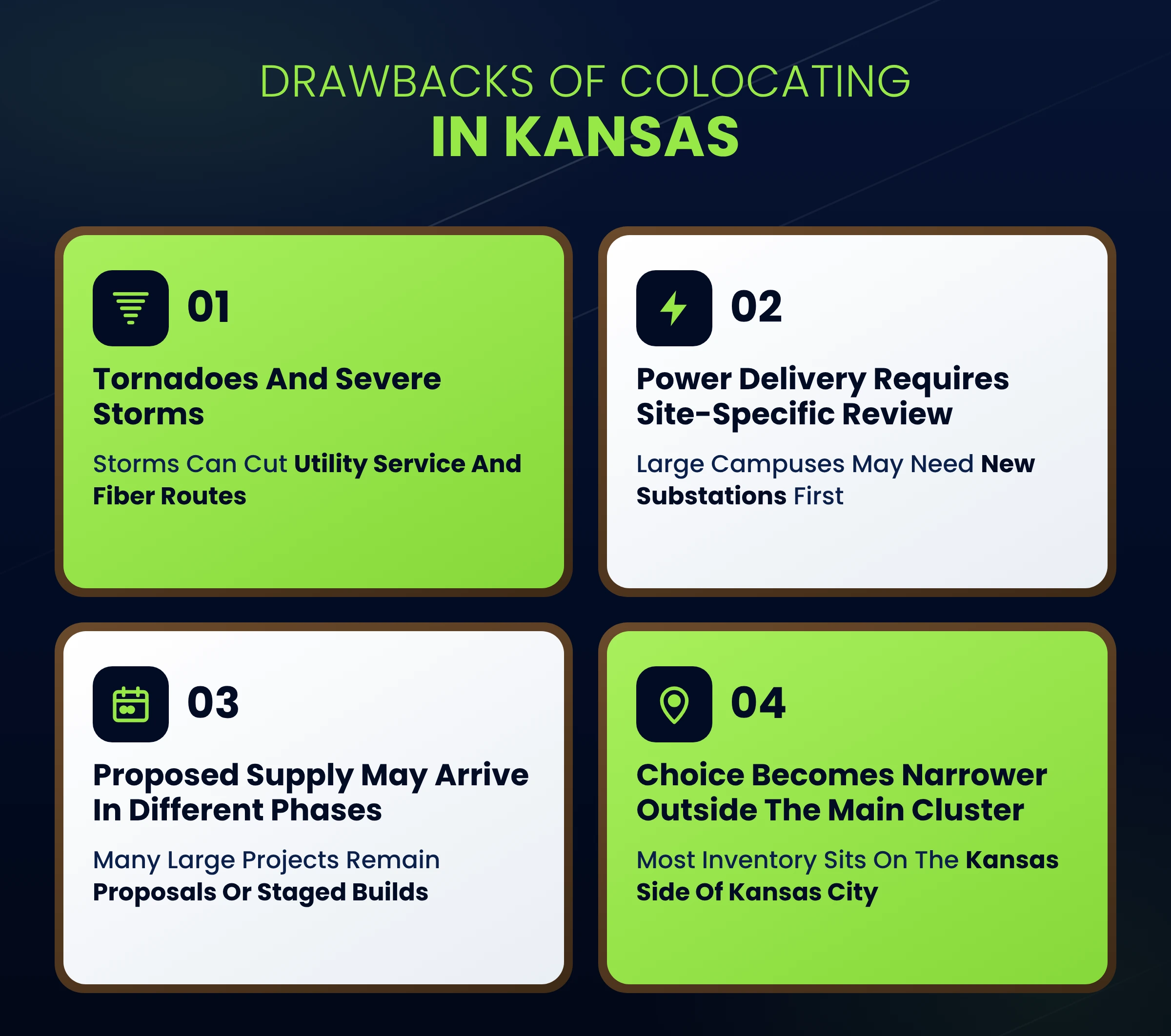
Tornadoes And Severe Storms
Tornadoes and severe storms are material site-selection considerations. A facility can remain structurally intact while losing utility service or access to a damaged fiber route.
Request the building’s wind-design information and recent incident history. Review generator fuel arrangements during a regional disruption. Ask whether staff can remain on site when nearby roads close.
Disaster recovery also needs geographic separation. Two buildings in nearby suburbs may share exposure to the same storm system and supporting infrastructure.
Power Delivery Requires Site-Specific Review
Kansas participates in the Southwest Power Pool regional grid. Evergy serves the Kansas City and Topeka areas, but utility arrangements vary across the state.
Statewide electricity averages cannot establish a facility’s actual tariff or available power. A large proposed campus may need a new substation or transmission work before it can operate.
Ask whether a utility expansion is included in the offer or remains a future condition. For an operating building, confirm the power available at contract signing. For a proposed site, request the utility milestones that support the delivery date. Determine who bears the cost if the required infrastructure changes.
Proposed Supply May Arrive In Different Phases
The scale of the announced pipeline can give an exaggerated impression of immediate choice. Several large Kansas projects remain proposals or depend on staged development.
Local review can change a project’s footprint or timing. Osawatomie’s revised concept shows why older figures should not be carried forward without checking the developer’s current plan.
Match a procurement deadline to an identifiable building and commissioned power block. If either remains uncertain, maintain an alternative with a documented delivery path.
Choice Becomes Narrower Outside The Main Cluster
The established inventory concentrates around the Kansas side of Kansas City. Wichita offers additional options, but the inventory does not establish the same depth of comparable products across the state.
The number of listed buildings also overstates choice when an asset is committed to an enterprise tenant. Published total floor area may include support spaces that cannot hold customer equipment.
Compare providers that can actually meet your rack density and support needs. A statewide count is a starting point for research, not evidence that each listed facility can quote your deployment.
How Brightlio Helps You Compare Kansas Providers
Brightlio helps businesses evaluate colocation options against their power, connectivity, location, and service requirements. A useful comparison starts with a defined deployment rather than a broad list of buildings.
Specify the initial rack count and expected growth. Document power per rack and any cooling constraints. Include required carriers and the tasks your team expects the provider to perform.
Brightlio can help organize provider proposals around those requirements. Compare installation fees with recurring charges. Review contract terms alongside the operational commitments that matter to your business.
Explore Brightlio’s colocation services to build a Kansas shortlist and compare available options.
Frequently Asked Questions
How Many Data Centers Are In Kansas?
The October 10, 2026 inventory lists 23 facilities across 18 operators. Its categories include five featured operating sites, nine additional colocation facilities, and nine planned projects. The colocation category also contains operating facilities, so the five-site category should not be described as the entire operating market.
Data Center Map counts 39 buildings across seven Kansas markets. These totals measure different things. A multi-building campus can count as one tracker entry, while separate tenant suites can have their own entries.
For procurement, count the locations that can offer the service you need. Exclude planned campuses if your deployment requires existing space. Confirm that enterprise-leased facilities accept third-party customers. Keep Missouri buildings outside a Kansas-only total, even when they serve the same metropolitan area. This approach produces a smaller but more useful shortlist than a headline building count.
How Much Does Kansas Colocation Cost?
The May 2026 benchmarks are 11.19¢/kWh for business customers and 8.12¢/kWh for industrial customers. These are statewide averages for those customer classes. A colocation quote includes a different set of services and infrastructure costs.
A continuously used 5 kW IT load consumes 3,650 kWh over a 730-hour month. At 11.19¢/kWh, that represents about $408 for the IT electricity alone. This illustration excludes cooling and electrical losses. It also excludes space, backup infrastructure, network services, taxes, and provider margin.
Providers may charge for reserved power rather than the electricity actually consumed. Others use metered arrangements with additional charges. Obtain proposals using the same power allocation and redundancy requirements. Brightlio’s colocation pricing guide explains the components to compare. Ask how annual increases and one-time installation charges affect the total contract cost.
Which Kansas Location Should My Business Choose?
Start with the location of your equipment users and support team. Lenexa, Shawnee, Overland Park, and Olathe provide several established options on the Kansas side of Kansas City. Wichita may be a better operational fit for an organization concentrated in south-central Kansas.
The right location also depends on the product offered. A cabinet deployment has different requirements from a private suite or an entire enterprise building. DigiCo’s 7.5 MW KCM1 asset illustrates why a large listed facility may not be a retail option.
Compare actual network routes to your users and cloud services. Measure latency on the proposed route where possible. Include technician travel time and after-hours access in the decision. De Soto and Emporia may matter for future campus supply, but a proposed site needs a credible delivery commitment before it can serve an immediate requirement.
Are Kansas City Data Centers In Kansas Or Missouri?
The metropolitan area spans both states. A Kansas City market guide can therefore include facilities in Kansas and Missouri. A Kansas state article should identify the distinction clearly.
Netrality KC2 at 7801 Nieman Road in Shawnee is in Kansas. Its connected carrier hotel at 1102 Grand in Kansas City is in Missouri. Access to services at the Missouri building does not change the location of the Kansas facility.
This matters when comparing network availability and contracts. Ask which services are physically delivered at your building and which require a link to another location. Establish the price and resilience of that link. Utility arrangements and incentive eligibility also follow the actual site. Brightlio’s Kansas City colocation guide provides a wider metropolitan comparison. Use the state article when your selection specifically requires a Kansas address.
Can Kansas Facilities Support AI And High-Density Computing?
Some operators market services suited to denser equipment, but the available configuration must be confirmed. Netrality advertises KC2 cabinet configurations reaching 50 kW. Its stated building design is up to 10 MW of critical capacity. Neither number proves that the exact rack layout you want is ready for delivery.
Provide the operator with equipment-level power and cooling specifications. Identify the expected sustained load and any short-duration peaks. Ask whether the proposed room supports the required heat removal method without additional construction.
Spark AI Foundry’s Olathe concept includes 21 MW of initial critical load and on-site fuel cells. Its published anchor-lease status remains pending. Treat it as a development opportunity until commissioning and delivery are documented. For any AI proposal, require written approval of your equipment configuration and a schedule for the necessary infrastructure.
Does Kansas Wind Generation Make A Data Center Fully Renewable?
No. The 52% wind share in 2024 describes electricity generated within Kansas over the year. It does not measure the electricity delivered to a particular data center or the source of its consumption during each hour.
Ask the operator how it supports its renewable energy claim. Relevant evidence may include an electricity procurement agreement or renewable energy certificates assigned to the customer’s usage. Establish the reporting period and whether the claim covers all electricity consumption.
Review backup and on-site generation separately. A fuel cell’s environmental impact depends on its fuel and operating conditions. It should not inherit the statewide wind percentage. If your organization reports emissions, ask for the data needed to apply its chosen reporting method. Evaluate the strength of that documentation alongside price and operational performance.
How Should Buyers Evaluate Tornado Risk And Underground Facilities?
Evaluate the entire service chain. Tornadoes can damage a utility corridor or telecommunications route even if the data hall remains protected. Severe weather can also affect staff access and generator fuel deliveries.
LightEdge’s Lenexa facility sits 125 feet underground. That location changes its physical exposure to surface conditions. It does not remove the need to inspect access points, drainage, ventilation, and the routes used by power and fiber.
Ask every shortlisted operator for its building design criteria and emergency procedures. Review how long backup systems can support the contracted load and how fuel is replenished. Request a record of relevant service interruptions. For disaster recovery, map shared dependencies between the primary and recovery sites. Geographic separation should support the recovery objective rather than merely place equipment in a different building nearby.
Who Qualifies For Kansas Data Center Tax Incentives?
The SB98 exemption is designed for approved large data center developments. The headline thresholds are $250 million of eligible investment and 20 new full-time Kansas jobs. An applicant must also meet the program’s timing and approval requirements.
The required utility agreement does not itself exempt electricity costs. Approval also involves a water plan and security review. Developers should establish how their proposed ownership and operating structure fits the current program guidance before treating the exemption as a financing assumption.
Electricity is excluded from eligible data center costs. Retail tenants should ask whether any approved benefit affects their equipment purchases or provider charges. A tenant should ask which entity holds the exemption certificate and which purchases it covers. Confirm the treatment of the actual transaction with the provider and the relevant tax authority before relying on savings.
How Much Of The Planned Kansas Capacity Is Available Today?
The available research does not establish a statewide inventory of immediately leasable megawatts. Proposed campus figures describe future development ambitions. They are not a measure of available cabinets or commissioned IT load.
The earlier 2,371 MW headline is not a current available-capacity figure. Its underlying proposals include Osawatomie’s former smaller concept. Alcove now describes Project Catalyst around 500+ MW of interconnection capacity, with construction potentially starting in 2028. Interconnection capacity still needs to be translated into specific operating phases.
Ask each developer to identify the building it can deliver and the corresponding usable IT allocation. Request evidence of the utility arrangement and the remaining approvals. Distinguish construction commencement from customer-ready operation. For a near-term deployment, prioritize operating facilities that can contract for the required capacity and provide a dependable installation date.
What Should A Kansas Colocation Proposal Include?
A useful proposal identifies the exact building and deployment area. It states the committed power per rack and explains whether billing uses reserved capacity or measured consumption. It should also specify the power available during maintenance and the proposed cooling arrangement.
Network information should distinguish carriers in the building from services reached elsewhere. Request cross-connect pricing and details of the proposed backup routes. Include the cost of remote hands, meaning on-site staff performing tasks at your direction.
Finally, review the delivery date and service commitments against your business requirements. Establish installation charges and recurring fees. Check renewal increases and expansion rights. The same operator may offer different terms across buildings, so attach the comparison to a specific site and configuration. This makes competing proposals easier to evaluate and reduces the risk of choosing on headline price alone.

Tamzid is a cybersecurity researcher with 5+ years of experience across SaaS, security, compliance, data centers and cloud. He writes for brightdefense.com and hipaasimple.com, covering security, compliance, and infrastructure topics. Certified through Cisco, Fortinet (NSE 1), and the Basel Institute on Governance in OSINT, he grounds his work in primary sources and verified data.
Recent Posts
Top 5 Floating Data Centers
Data Centers and Colocation in Colorado
Data Centers and Colocation in Delaware
Data Centers and Colocation in Hawaii
Let's start
a new project together