

Virginia data centers bring together a dense concentration of cloud platforms, telecommunications networks, and colocation providers. As of November 2026, the state has 492 operating data center buildings, with Northern Virginia at the center of the market. Ashburn anchors interconnection, while Richmond and Virginia Beach give buyers additional options for enterprise infrastructure and international connectivity.
For businesses, colocation means placing servers in a provider’s facility while retaining control of the equipment. Virginia offers choices from individual cabinets to large private deployments. Its appeal comes from the combination of network access and established operators, supported by a commercial electricity price below the national average.
This guide explains the benefits, locations, operating facilities, and drawbacks that matter when choosing Virginia colocation. Check out Brightlio’s colocation services for help comparing providers around your power requirements, budget, and deployment schedule.
Virginia Data Center Tracker
716total data centers
492 operational224 planned
Counts cover individual data center buildings, so a campus with ten buildings counts ten times. Planned covers buildings that are proposed, in development or under construction.
Market Snapshot
Notable Operating Data Centers In Virginia
Few Virginia operators publish live capacity, so these are notable campuses rather than a size ranking, and each figure carries the basis shown. Circles mark the remaining operating buildings by market, and colocation facilities appear as green squares.
- Iron Mountain Northern Virginia CampusManassas, IT capacity, existing and planned400+ MWOperational
142-acre campus with seven operating data centers and more than 2 million sq ft of existing and planned space, plus two more buildings planned on an adjacent 40-acre site
- Location:
- Manassas, Prince William County
- Operator:
- Iron Mountain
- QTS Richmond 1 CampusSandston, critical campus capacity238 MWOperational
2.3 million sq ft on 207 acres east of Richmond, with six data centers in the master plan
- Address:
- 6000 Technology Blvd and Portugee Rd, Sandston
- Operator:
- QTS
- Sabey Intergate.AshburnAshburn, full campus build-out85 MWOperational
Three-building campus on 38 acres, with the final building due for service in 2026
- Location:
- Ashburn, Loudoun County
- Operator:
- Sabey Data Centers
- Microsoft Boydton CampusBoydton11 data centersOperational
175-acre hyperscale campus in Mecklenburg County, one of Microsoft's largest cloud sites on the East Coast
- Location:
- Boydton, Mecklenburg County
- Operator:
- Microsoft
- Equinix Ashburn CampusAshburnInterconnection hubOperational
Equinix describes it as the most interconnection-dense hub in the U.S. and home to North America's largest internet peering point. DC21 alone has more than 124,000 sq ft of colocation space
- Location:
- Ashburn, Loudoun County
- Operator:
- Equinix
Largest Planned Data Centers In Virginia
Ranked by announced MW. The pipeline has moved south and west of Northern Virginia, into Goochland, Louisa, Stafford, Caroline and Wythe counties. Coral circles mark the remaining planned buildings by market.
- Google West Creek CampusGoochland County, proposed1,200 MWProposed
About 1,000 acres in the West Creek Business Park along Route 288. Google is doing due diligence on the land, and the county had received no plans as of late October 2026
- Location:
- West Creek Business Park, Goochland County
- Developer:
- EdgeCore Shannon Hill CampusLouisa County, critical IT, full build-out1,100+ MWPlanned
At least six single-tenant data centers totaling 3.1 million sq ft on 697 acres
- Location:
- Shannon Hill Regional Business Park, Louisa County
- Developer:
- EdgeCore Digital Infrastructure
- STACK Stafford Technology CampusStafford County, full build-out1,000+ MWUnder construction
19 data centers across four sub-campuses on 500 acres, fed by six 300 MW Dominion substations
- Location:
- Stafford County
- Developer:
- STACK Infrastructure
- TAC Wythe County CampusWythe County, planned1,000 MWPlanned
Nine to 11 buildings totaling 3.5 million to 4 million sq ft on about 1,000 acres east of Wytheville. Wythe County has no zoning, and the first half is targeted for 2029
- Location:
- Eastern Wythe County, near the Pulaski County line
- Developer:
- TAC Data Centers
- CleanArc VA1 CampusRuther Glen, grid capacity, three phases900 MWUnder construction
Hyperscale campus delivered in three 300 MW phases, with the first 300 MW due in early 2027
- Location:
- Ruther Glen, Caroline County
- Developer:
- CleanArc Data Centers
Notable Colocation Facilities In Virginia
Major colocation campuses and operators across the state, led by Ashburn, Reston and Manassas. This is not a count of every colocation building, and these operating facilities also count in the Operational total.
- Iron Mountain Northern Virginia CampusManassas, IT capacity, existing and planned400+ MWColocation
142-acre campus with seven operating data centers and more than 2 million sq ft of existing and planned space, plus two more buildings planned on an adjacent 40-acre site
- Location:
- Manassas, Prince William County
- Operator:
- Iron Mountain
- QTS Richmond 1 CampusSandston, critical campus capacity238 MWColocation
2.3 million sq ft on 207 acres east of Richmond, with six data centers in the master plan
- Address:
- 6000 Technology Blvd and Portugee Rd, Sandston
- Operator:
- QTS
- Sabey Intergate.AshburnAshburn, full campus build-out85 MWColocation
Three-building campus on 38 acres, with the final building due for service in 2026
- Location:
- Ashburn, Loudoun County
- Operator:
- Sabey Data Centers
- Equinix Ashburn CampusAshburnInterconnection hubColocation
Equinix describes it as the most interconnection-dense hub in the U.S. and home to North America's largest internet peering point. DC21 alone has more than 124,000 sq ft of colocation space
- Location:
- Ashburn, Loudoun County
- Operator:
- Equinix
- CoreSite Reston Campus (VA1 to VA3)Reston, VA1 and VA2390,000+ sq ftColocation
VA3 added a planned 100 MW expansion with more than 900,000 sq ft of data center space on the former Sunrise Technology Park
- Location:
- Sunrise Valley Dr, Reston
- Operator:
- CoreSite
Choose a category to switch the list and highlight its sites on the map. Click any site card to find it on the map, or click a marker to jump to its card. Pins are approximate, and each MW figure carries the basis shown beside it.
Data sourced from Data Center Map, EIA rates, PJM, Inside the Datacenter, Tri-City Local News, Whiteford, Iron Mountain, QTS, Trade and Industry Development, Baxtel, Equinix, Data Center Frontier, Baxtel (Google), EdgeCore, STACK, Cardinal News and CleanArc, checked November 8, 2026. Totals count individual data center buildings.
Why Colocate In Virginia
Virginia’s strongest advantages are practical. Businesses can place equipment close to important networks, compare several types of facilities, and support applications serving the Washington, D.C., region. The following are five benefits of colocating in Virginia.
1. Access A Dense Network And Cloud Ecosystem
Ashburn’s concentration of networks makes Virginia attractive for businesses that exchange substantial traffic with cloud platforms, partners, or customers. Interconnection lets those organizations connect their networks directly. A cross-connect is the physical cable that joins two parties inside a data center.
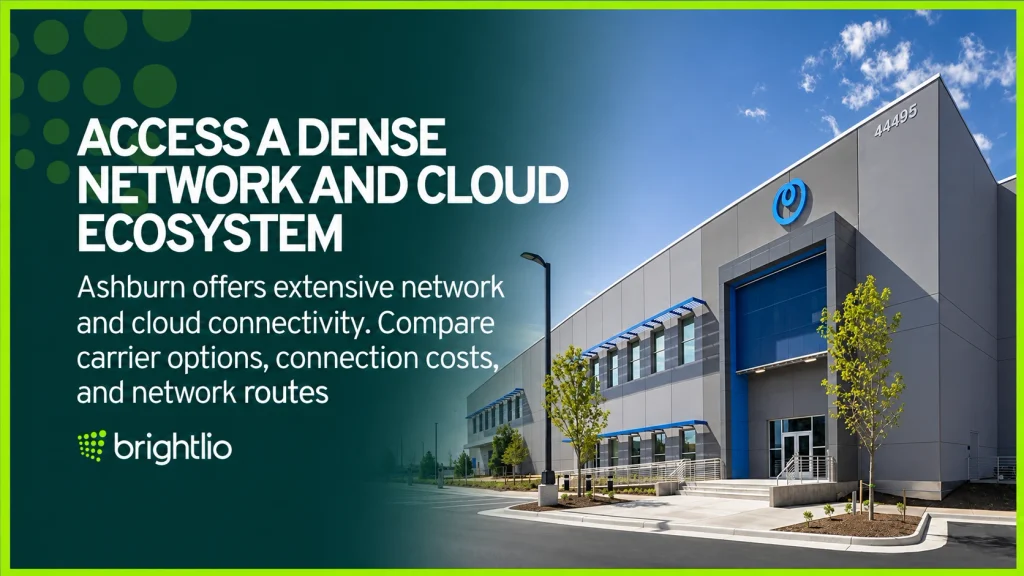
A carrier-neutral data center allows customers to choose among telecommunications providers. That choice can help an organization negotiate connectivity costs or build independent network paths. The benefit is strongest when the required carriers already serve the building.
In November 2020, Kelly Morgan, then a research director at 451 Research, described Ashburn as:
“a central connectivity hub and critically important to the U.S. cloud and infrastructure story.”
— Kelly Morgan, Equinix announcement
A hybrid cloud deployment combines privately operated infrastructure with public cloud services. Virginia’s network concentration can simplify connections between those environments. Compare the complete route to the cloud platform, including any transport service between buildings, before deciding which facility offers the best connection.
2. Choose From A Broad Range Of Colocation Options
Virginia supports several purchasing models. Equinix serves interconnection-focused deployments.
Iron Mountain offers cabinets and dedicated space in Manassas. Sabey and QTS provide campus environments that can accommodate larger requirements.
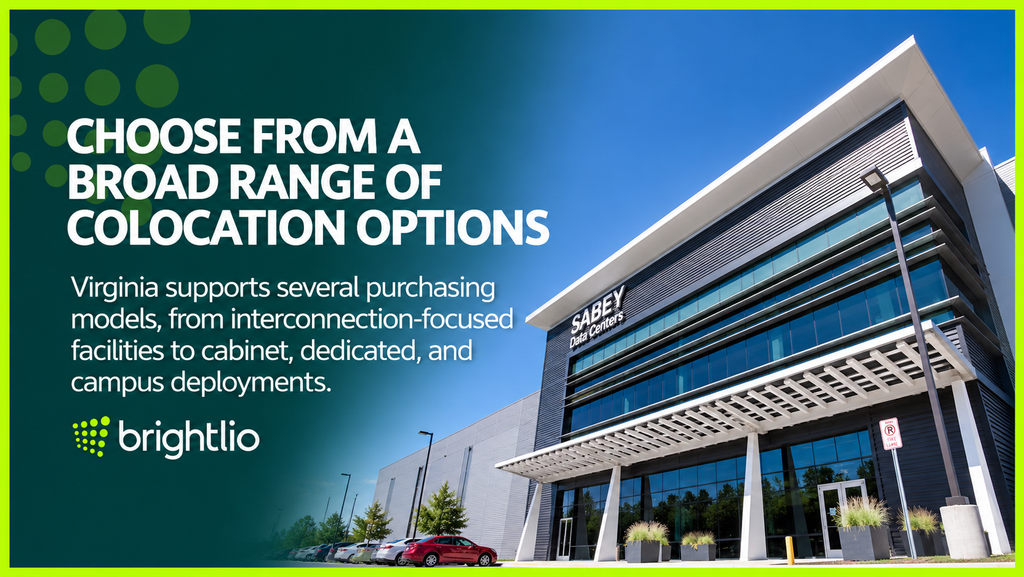
This variety gives a buyer room to compare different operating models. A company with a few cabinets may prioritize support and network access. A larger enterprise may need a private suite, higher rack power, and dedicated cooling arrangements.
The statewide building count includes private cloud facilities as well as commercial colocation. A hyperscaler operates cloud infrastructure at very large scale, often in buildings that do not accept retail colocation customers. Begin with providers that offer the service and deployment size your organization needs.
3. Benefit From Competitive Commercial Electricity Prices
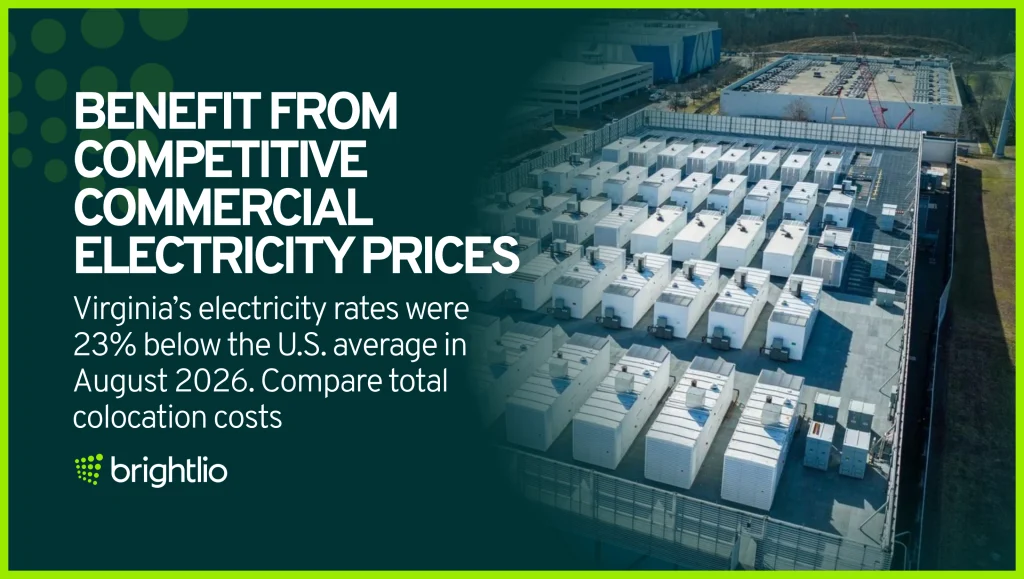
Electricity is a major component of colocation costs. Virginia’s statewide commercial rate provides a favorable starting point for comparing markets, particularly for equipment that operates continuously.
A kilowatt (kW) measures power. A megawatt (MW) equals 1,000 kW. Electricity consumption is measured in kilowatt-hours (kWh).
Power Price Snapshot: Virginia’s average commercial electricity price was 11.14¢/kWh in August 2026, approximately 23% below the U.S. average of 14.47¢/kWh. Source: U.S. Energy Information Administration.
That comparison describes electricity sold to commercial customers across the state. A colocation invoice covers additional services, including protected power and cooling. Utility tariffs, taxes, and the provider’s billing structure affect the amount a tenant pays.
For example, equipment drawing a constant 10 kW uses 7,300 kWh over a 730-hour month. At the statewide benchmark, that represents about $813 in electricity before any additional facility costs.
The calculation excludes electricity used by cooling and other facility systems. A provider quote establishes the complete monthly colocation charge.
4. Use Equipment Tax Exemptions At Qualifying Facilities
Virginia offers a sales and use tax exemption for qualifying data center equipment and software. It can reduce the cost of eligible purchases, including servers and certain supporting infrastructure.
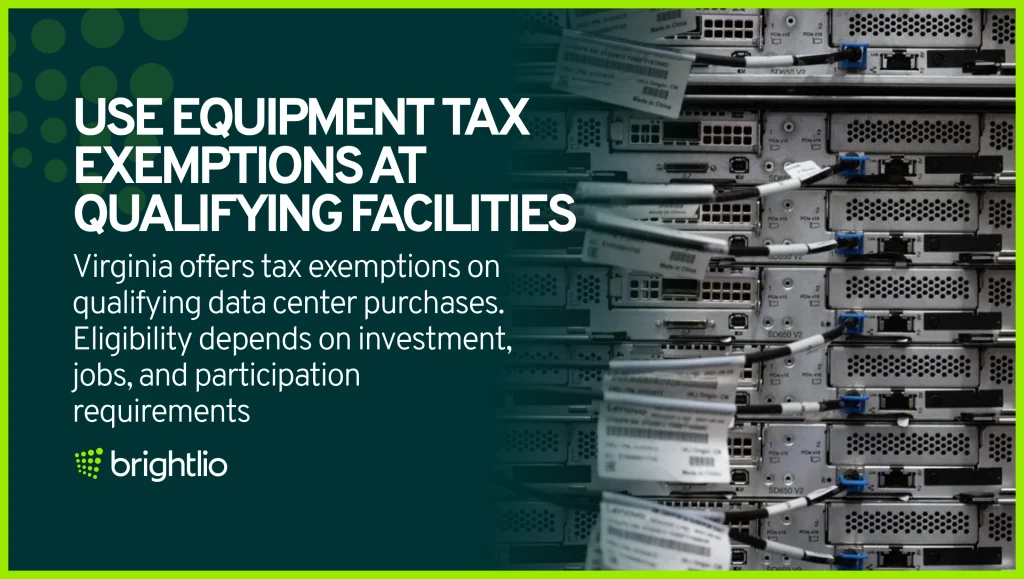
The Virginia Economic Development Partnership’s exemption program generally requires $150 million in new capital investment and 50 new jobs. Those jobs must meet a wage threshold of at least 150% of the locality’s prevailing annual average wage. Different thresholds apply in qualifying distressed localities.
Colocation tenants can participate through a qualifying facility. The operator needs an agreement with the state.
The tenant must complete a participation agreement and obtain its own exemption certificate. For a business replacing a large amount of hardware, this can be a meaningful part of the location decision.
Equipment tax savings and electricity taxation are separate considerations. Build both into the comparison before calculating a facility’s total financial benefit.
5. Keep Infrastructure Close To Regional Operations
Northern Virginia can be convenient for organizations with technical teams or customers in the Washington metropolitan area. Local access makes equipment installation, maintenance visits, and hardware replacement easier to coordinate.
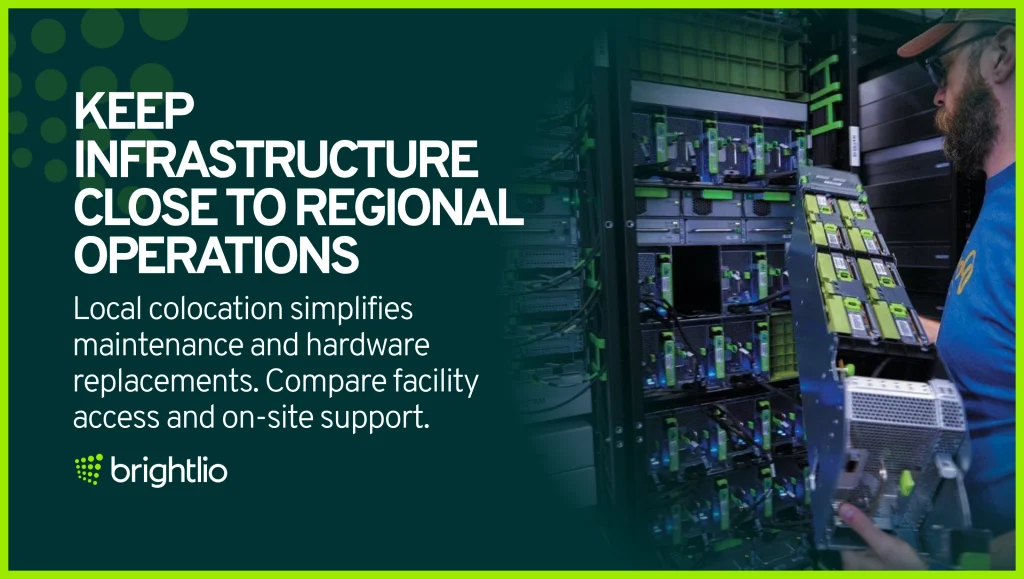
Richmond provides a similar advantage for businesses based in central Virginia. Virginia Beach and Norfolk serve organizations operating in Hampton Roads. Choosing a location near the staff who manage the environment can reduce the travel needed for work that requires physical access.
When replacing failed hardware, local teams can bring spare equipment to the site and work alongside the provider’s technicians. Nearby space can make regular physical inspections easier to schedule. Compare those benefits with the support available from the facility when your staff cannot attend.
Where Virginia Data Centers Are Located
Virginia’s data center market extends beyond Ashburn. Different areas serve different combinations of cloud connectivity, enterprise computing, and international traffic. The following are six areas to consider when comparing Virginia data center locations.
1. Ashburn And Sterling
Ashburn and Sterling form a major part of Loudoun County’s data center concentration. Equinix and Sabey are among the operators serving this area. For buyers, the main attraction is access to a large network ecosystem within a compact region.
Ashburn is a strong starting point when applications need frequent communication with cloud platforms or network partners. However, the building address matters more than the city name. Carriers, cloud access arrangements, and available rack power can differ between neighboring facilities.
2. Reston And Herndon
Reston and Herndon offer Northern Virginia alternatives near established business and technology offices. CoreSite’s Reston facilities combine colocation with network and cloud connectivity. Its VA1 facility provides access to the Any2Exchange and LINX NoVA internet exchanges, where participating networks exchange traffic.
This area can suit businesses whose staff work along the Dulles corridor. Compare the time required for an equipment visit alongside the network route to your other systems. A slightly different location may improve operational convenience without changing the broader market your infrastructure serves.
3. Manassas And Prince William County
Manassas and the surrounding Prince William County market support substantial data center campuses. Iron Mountain’s Northern Virginia campus is one example, with seven operating facilities on its main 142-acre site.
The area gives buyers another way to access Northern Virginia’s networks while comparing a different set of buildings and commercial terms. Evaluate connectivity back to Ashburn where it is required. Transport charges and route design can influence whether a Manassas deployment meets the same needs as space closer to a specific interconnection point.
4. Richmond And Henrico County
The Richmond market includes Sandston and the White Oak Technology Park area in Henrico County. QTS Richmond 1 anchors a large operating campus east of the city, with 238 MW of critical campus capacity. Critical capacity refers to power for computing equipment.
Richmond deserves consideration for organizations serving central Virginia or seeking separation from a Northern Virginia primary site. It can support enterprise computing without requiring every application to sit in Ashburn. For a recovery deployment, examine shared utility and network dependencies before treating geographic distance as sufficient protection.
5. Virginia Beach And Hampton Roads
Virginia Beach brings a different connectivity advantage: subsea cables linking the United States with overseas markets. MAREA connects Virginia Beach with Spain, while BRUSA connects to Puerto Rico and Brazil. Globalinx’s Virginia Beach facilities support connections between subsea and terrestrial networks.
This makes Hampton Roads relevant for businesses with international traffic requirements. A buyer should compare the actual cable system and onward network route needed for its applications. Coastal location adds a separate resilience consideration, including flood exposure and reliable access during severe weather.
6. Boydton And Southern Virginia
Boydton, in Mecklenburg County, is home to a major Microsoft campus. Its presence demonstrates that Virginia’s cloud infrastructure reaches well beyond the Washington metropolitan area.
Southern Virginia’s role is different from a dense retail colocation district. A private cloud campus supports its operator’s services rather than acting as a place where an unrelated business can rent a cabinet. Companies evaluating the area should first establish which commercial providers can accept their equipment and meet their connectivity requirements.
Five Notable Operating Data Centers In Virginia
Virginia’s operating facilities serve different purposes, from retail colocation to private cloud computing. The following are five notable operating campuses.
Power figures describe capacity rather than measured electricity consumption, which is not publicly disclosed for these campuses. Building and full-campus figures retain their respective scopes.
1. Iron Mountain Northern Virginia Campus
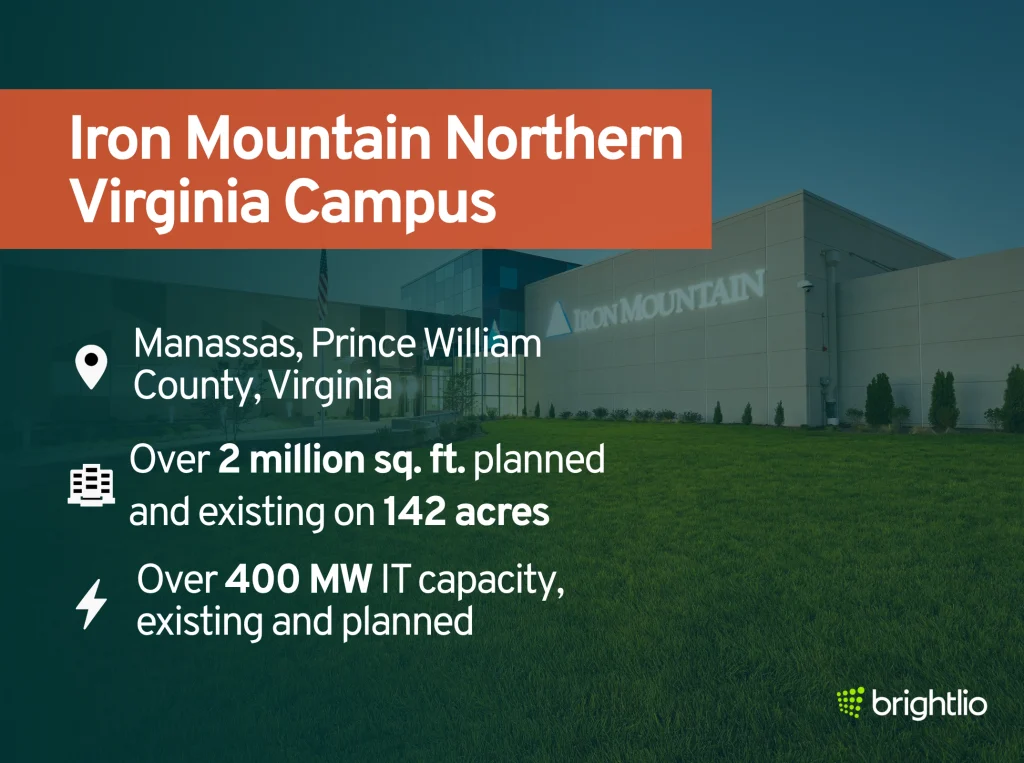
- Location: Manassas, Prince William County, Virginia.
- Facility Size: More than 2 million square feet of existing and planned space across a 142-acre campus.
- Power: More than 400 MW of total IT capacity, covering existing and planned facilities.
Iron Mountain operates seven data centers at its Northern Virginia campus. The site supports both single-tenant and multi-tenant deployments, making it relevant to enterprises seeking secure space within the broader Washington market.
The campus provides carrier-neutral connectivity and access to cloud services. Its operating footprint gives buyers multiple buildings to evaluate, with different configurations and commercial terms. Ask for the specifications and available capacity of the particular building offered in a proposal.
For sustainability reporting, distinguish renewable energy matching from the electricity physically delivered at every hour. A provider’s procurement arrangements and customer reporting documents determine what an organization can claim for its own deployment.
2. QTS Richmond 1 Campus
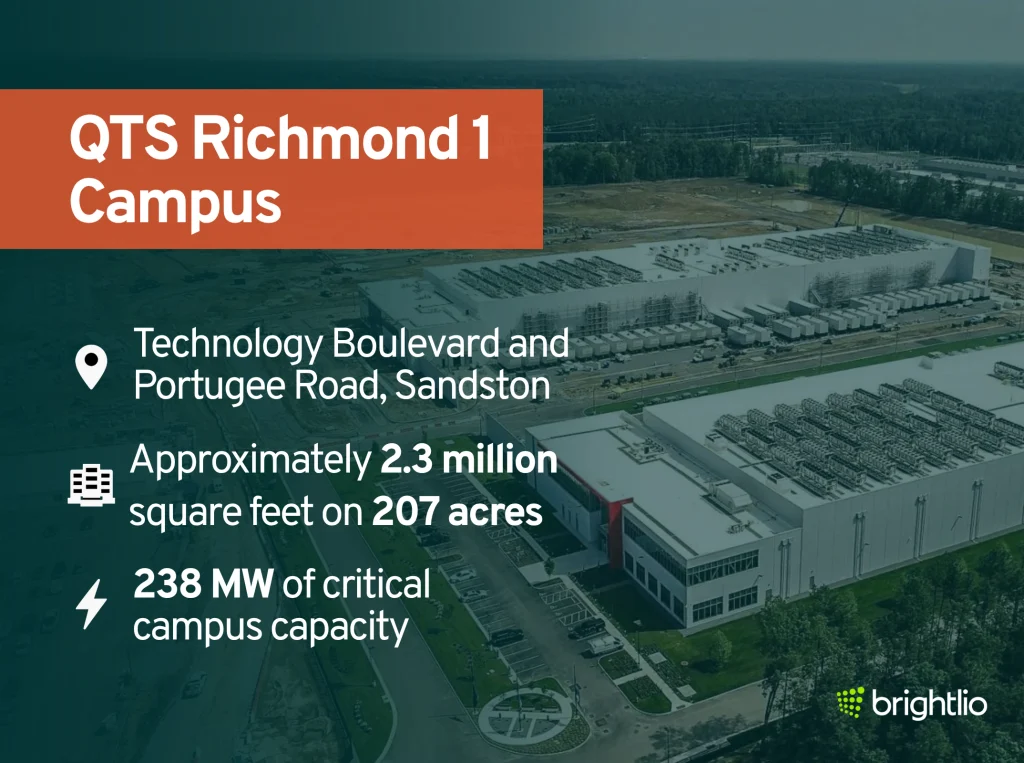
- Location: 6000 Technology Boulevard and Portugee Road, Sandston, east of Richmond.
- Facility Size: Approximately 2.3 million square feet on 207 acres.
- Power: 238 MW of critical campus capacity.
QTS Richmond 1 is a major operating campus in Henrico County. Its scale makes it relevant to enterprises assessing substantial infrastructure requirements outside Northern Virginia.
The campus has on-site solar equipment and LEED Gold green-building certification. These features can contribute to a sustainability review, but they do not establish that all customer electricity comes from on-site generation. Evaluate the energy arrangements for the space being offered.
For an enterprise serving central Virginia, the campus offers a local option for substantial computing requirements. Its Sandston location can make site visits practical for a Richmond-based team. Compare the offered building’s connectivity with the applications it will host.
3. Sabey Intergate Ashburn
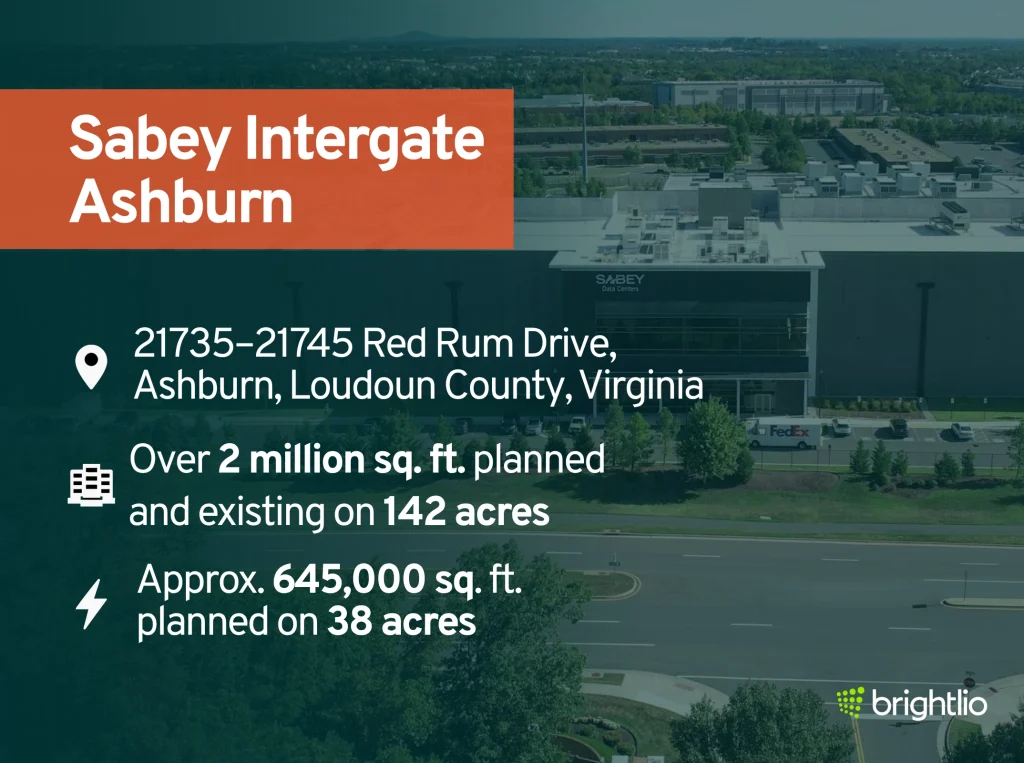
- Location: 21735–21745 Red Rum Drive, Ashburn, Loudoun County, Virginia.
- Facility Size: Approximately 645,000 square feet across the full campus design on 38 acres.
- Power: 85 MW at full campus build-out.
Sabey’s Ashburn campus combines modular colocation space with access to Northern Virginia’s carrier ecosystem. Its operating buildings provide an option for enterprises that want a campus environment in the Ashburn market.
Redundant mechanical systems provide backup cooling components for the modular spaces. Carrier-neutral connectivity allows customers to evaluate multiple network providers. The available cooling arrangement depends on the particular building and room selected.
For equipment with substantial power requirements per rack, begin with the configuration that can be delivered in operating space. Confirm the cooling method and the power allocation for the proposed deployment, especially when moving beyond conventional enterprise server densities.
4. Microsoft Boydton Campus
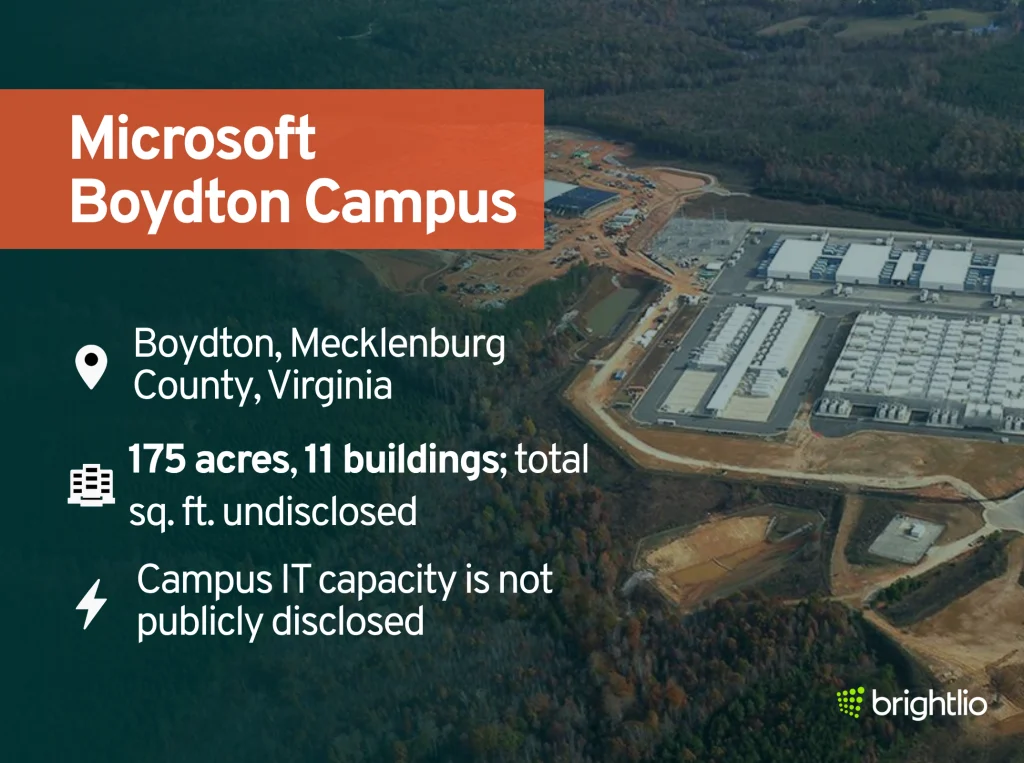
- Location: Boydton, Mecklenburg County, Virginia.
- Facility Size: A 175-acre campus with 11 data center buildings. A current campus-wide square-footage total is not publicly disclosed.
- Power: Campus IT capacity is not publicly disclosed.
Microsoft’s Boydton campus is a significant part of southern Virginia’s cloud infrastructure. Its scale shows how the state supports large computing operations outside the Northern Virginia concentration.
This is a private cloud campus. Businesses access Microsoft services through their cloud agreements rather than renting space here for independently owned servers.
For businesses combining Microsoft cloud services with their own infrastructure, the relevant colocation decision is where to place that privately owned equipment. Evaluate connections to the required Azure services from the commercial facilities under consideration.
5. Equinix Ashburn Campus
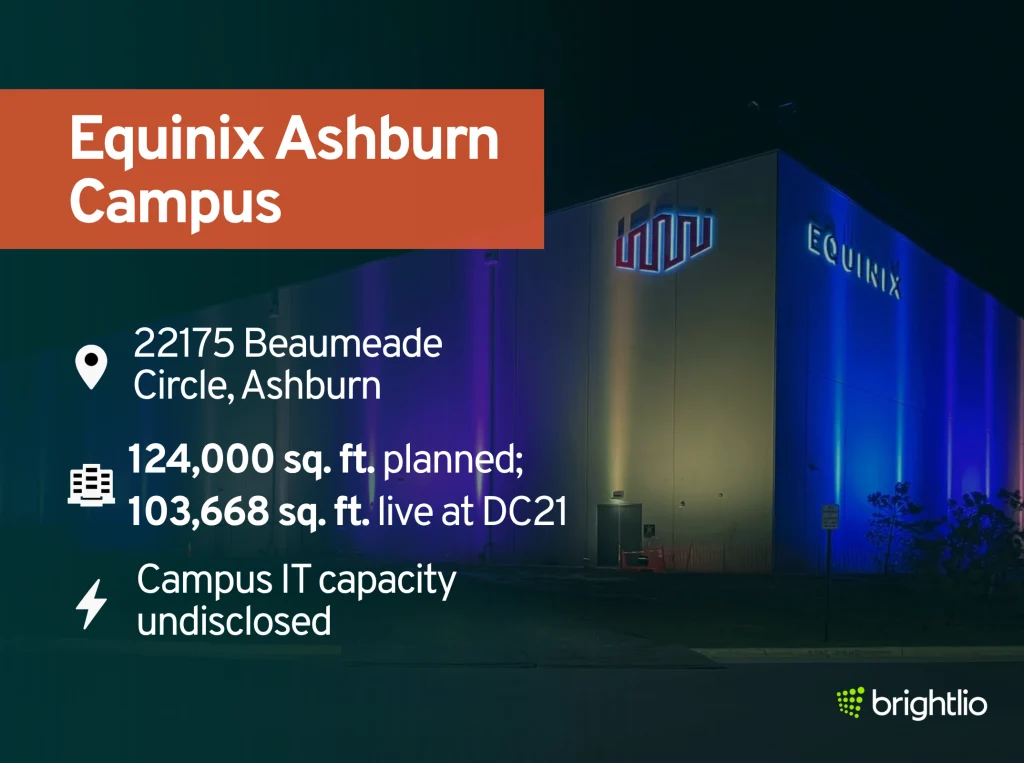
- Location: Ashburn, Loudoun County; DC21 is at 22175 Beaumeade Circle.
- Facility Size: 124,000 square feet at full build-out, including 103,668 square feet of live colocation space at DC21. These are building-level figures.
- Power: A consolidated campus IT capacity figure is not publicly disclosed.
Equinix DC21 is part of the Ashburn campus, a major interconnection hub. Its value for many customers lies in the ability to connect with networks, cloud platforms, and business partners from a shared location.
A customer can use colocation for its own equipment while purchasing the network connections needed to reach other environments. This can be useful for hybrid cloud applications, distributed enterprise networks, or systems that exchange substantial traffic with multiple partners.
Compare the specific building and connection path in each proposal. A service reached through another building may require additional transport. Include recurring connection charges when assessing the overall value of an interconnection-focused deployment.
Drawbacks Of Colocating In Virginia
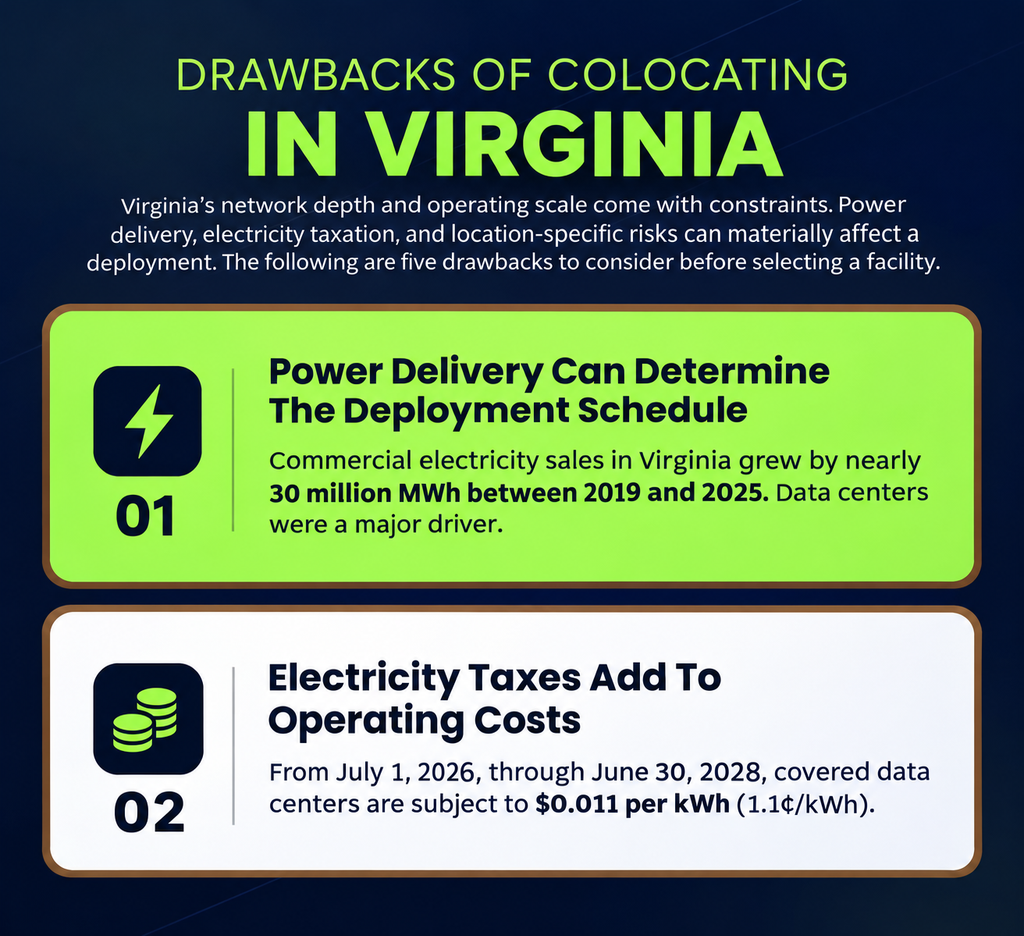
Virginia’s network depth and operating scale come with constraints. Power delivery, electricity taxation, and location-specific risks can materially affect a deployment. The following are five drawbacks to consider before selecting a facility.
1. Power Delivery Can Determine The Deployment Schedule
A large data center market does not automatically provide spare electrical capacity in every building. The usable power available for a new customer depends on the facility’s existing commitments and its utility connection.
Dominion Energy supplies much of the core market, while some facilities receive service from cooperatives such as NOVEC. PJM coordinates the regional transmission grid. The serving utility and the regional grid have different roles in delivering power to a building.
The EIA’s analysis of Virginia electricity demand shows that commercial electricity sales grew by nearly 30 million megawatt-hours between 2019 and 2025. Data centers were a major driver of that increase. For a new deployment, the key question is how much power a specific building can commit.
Request a committed power allocation and a delivery date for the space you intend to occupy. If an offer depends on electrical work, clarify which milestones must be completed before installation. Your migration schedule should reflect the power that can actually be delivered to your equipment.
2. Electricity Taxes Add To Operating Costs
Virginia’s equipment sales tax exemption coexists with a separate electricity consumption tax. From July 1, 2026, through June 30, 2028, covered data centers are subject to a charge of $0.011 per kWh, or 1.1¢/kWh.
Electricity Tax Snapshot: At a constant taxable facility load of 1 MW, a 730-hour month produces 730,000 kWh of consumption and an $8,030 tax charge before any applicable refund. The rate is established in Virginia’s data center electricity tax provisions.
Coverage follows the statutory facility definition, including equipment managing at least 1 MW of electrical power and cooling. Facilities primarily providing internet access or communication services are excluded. The tax covers qualifying consumption, including self-generated electricity.
Its effect on a tenant depends on the contract and the provider’s allocation method. Ask how the charge appears on the invoice and whether it includes an allocation for cooling or other shared systems.
A statewide refund mechanism applies to collections above the statutory annual threshold. The contract should explain how any benefit reaches the customer when the provider passes through the original charge.
3. Local Development Rules Can Complicate Expansion
Land-use decisions occur at the local level, even in a state with an established data center industry. Loudoun County changed its rules in March 2025 so that data center development requires special exception approval in districts where it previously could proceed by right.
A special exception requires a discretionary local review of the proposed use. Loudoun’s land-use guidance explains the change and the county’s approach to development controls.
For an existing colocation customer, the practical concern is expansion certainty. A provider’s ability to add nearby space may depend on approvals that are separate from the operating building you occupy. Contract for growth capacity that has a clear delivery basis, and understand what happens if it is delayed.
4. Summer Heat And Severe Weather Affect Facility Design
Virginia has warm, humid summers, with different weather conditions across its mountains, inland cities, and coast. NOAA’s state climate summary identifies substantial regional variation and coastal exposure to sea-level rise and flooding.
Warm and humid conditions can limit the use of outside air for cooling. Ask how the selected facility maintains temperature and humidity during peak summer conditions. Where cooling uses water, review the supply arrangement and how the operator handles interruptions.
Weather resilience extends beyond the server room. Flooding can affect roads, fuel deliveries, and staff access. Examine the property’s elevation and drainage alongside the location of generators, fuel systems, and electrical equipment.
5. Nearby Sites Can Share The Same Failure Risks
Northern Virginia’s concentration makes it convenient to connect multiple facilities. However, two buildings in the same region may share utility infrastructure, fiber routes, or access constraints.
That matters when the second location is intended to provide disaster recovery. A different street address does not establish independence from the first site’s risks. Review the utility paths and physical network routes supporting both environments.
Richmond or an out-of-state market may provide more geographic separation, depending on the original site. The tradeoff can include longer network paths and slower data replication between sites. Test recovery behavior against the actual business requirement before choosing the backup location.
What To Compare In A Virginia Colocation Quote
A useful quote connects the technical requirement with a complete monthly cost. Brightlio’s colocation pricing guideexplains the main charges to compare. The following are the key items to request from each provider.
- Space and power: Cabinets, cage or suite dimensions, committed kW, and the maximum power allowed per rack.
- Delivery: The exact building, installation date, and conditions that could delay access to space or power.
- Connectivity: Required carriers, cloud access, physical route diversity, and recurring cross-connect or transport charges.
- Cooling: Supported equipment density, air or liquid cooling arrangements, and any cost to adapt the space.
- Billing: Electricity treatment, applicable taxes, installation fees, annual increases, and charges for technical support.
- Resilience: Maintenance procedures, backup power, fuel arrangements, and the provider’s contractual service commitments. Distinguish incident response targets from service restoration targets.
Use the same deployment assumptions in every request. For example, compare the same rack count and power allocation over the same contract term. This makes it easier to see whether a lower monthly charge reflects better value or a different service package.
How Brightlio Helps You Choose A Virginia Data Center
Brightlio helps organizations compare colocation providers based on their technical requirements and budget. For Virginia, that means matching the workload to an appropriate market before comparing individual facilities.
An application that depends on many network connections may benefit from Ashburn. A business with a Richmond operations team may place greater value on local access. A larger deployment may be driven primarily by committed electrical capacity and cooling support.
Share your required rack count, power demand, connectivity needs, and target installation date with Brightlio. We can help compare provider proposals and identify the commercial terms that matter over the life of the agreement.
Frequently Asked Questions
1. How Many Operating Data Centers Are In Virginia?
Virginia has 492 operating data center buildings. This is a building count, so a campus with several buildings contributes several facilities to the total. The operating base includes commercial colocation and private cloud infrastructure.
It therefore describes the scale of the market rather than the number of providers from which a business can rent space. For a buying decision, narrow the comparison to facilities that accept your deployment size and offer the required services.
2. Why Are So Many Data Centers In Ashburn?
Ashburn has a dense concentration of telecommunications networks, cloud connections, and established data center operators. Businesses can place equipment close to the organizations with which they exchange traffic. That concentration makes it useful for hybrid cloud applications that need connections to multiple networks.
The benefit still depends on the building: check which networks are physically present, how the cloud connection is delivered, and what cross-connect or transport charges apply to the proposed service.
3. How Much Does Virginia Colocation Cost?
The price depends on the power allocation, space, network services, and contract term. Virginia’s 11.14¢/kWh commercial electricity average for August 2026 provides market context, but a colocation contract includes more than raw electricity. Request a complete quote covering installation and recurring charges.
Compare energy billing, the electricity consumption tax, support, and annual increases using the same technical requirements. A single statewide rack price would conceal meaningful differences between facilities and service packages.
4. Does Virginia Still Offer Data Center Tax Incentives?
Yes. Qualifying data centers and participating tenants can use Virginia’s equipment sales and use tax exemption. General eligibility includes $150 million of new investment and 50 jobs meeting wage requirements, with different thresholds for qualifying distressed localities.
Tenants must complete the participation and exemption process through an eligible facility. The equipment exemption is separate from the electricity consumption tax. Confirm the covered purchases and participation requirements before including a tax saving in your equipment budget.
5. How Does The Electricity Consumption Tax Affect Tenants?
Under Virginia’s electricity consumption tax, covered data centers pay 1.1¢ per kWh from July 1, 2026, through June 30, 2028. The provider’s contract determines how that expense is allocated to a colocation tenant.
Ask whether the charge is included in the quoted power rate or billed separately. Check how shared cooling consumption is allocated and how any statutory refund is treated. The relevant figure is the resulting charge for your contracted deployment.
6. Can A Small Business Rent Colocation Space In Virginia?
Yes. Virginia has providers that accommodate cabinet-based deployments as well as larger private spaces. Small buyers should focus on minimum power commitments, technical support, and the carriers needed for their business.
Ask whether hands-on assistance is available when your team cannot visit the facility. A smaller deployment can still benefit from a major network hub, but only if the connectivity and support advantages justify the total recurring cost.
7. Can I Put My Own Servers In Microsoft’s Boydton Campus?
Microsoft’s Boydton campus supports its cloud operations rather than retail colocation for independently owned equipment. Businesses consume Microsoft cloud services through their service agreements. If you need to retain physical ownership and control of servers, evaluate a commercial colocation provider instead.
For a hybrid environment, select a facility with suitable connectivity to the Azure services your applications use. Review that connection separately from the building’s general proximity to Microsoft infrastructure.
8. Is Richmond A Good Alternative To Northern Virginia?
Richmond can be a strong choice for organizations based in central Virginia or seeking a separate location from a Northern Virginia primary site. QTS Richmond 1 provides a large operating campus with 238 MW of critical campus capacity. The decision depends on available power, required network connections, and operational access.
Compare measured application performance and the full cost of connectivity. For recovery, examine shared dependencies as well as the distance between the two facilities.
9. Can Virginia Data Centers Support AI Workloads?
Some Virginia facilities can support artificial intelligence (AI) workloads. Suitability depends on the specific room and equipment configuration.
Begin with the required power per rack and the cooling method specified by the server manufacturer. Ask the operator to confirm the electrical allocation, heat-removal capability, and physical installation requirements.
Large campus capacity does not establish that a particular suite supports your AI equipment. Evaluate the configuration offered in the contract and its delivery schedule.
10. What Should I Check Before Signing A Virginia Colocation Contract?
Confirm the building, power allocation, installation date, and required network services. Then review electricity charges, taxes, annual increases, and support fees. Examine the provider’s maintenance and incident procedures alongside its service commitments.
If growth is important, establish the terms for additional space and power. If the facility is part of a recovery design, verify independent network and utility paths and test the application’s recovery process before relying on the arrangement.
Explore Nearby Data Center Markets
Broaden your comparison with Brightlio’s guides to these nearby colocation markets:

Tamzid is a cybersecurity researcher with 5+ years of experience across SaaS, security, compliance, data centers and cloud. He writes for brightdefense.com and hipaasimple.com, covering security, compliance, and infrastructure topics. Certified through Cisco, Fortinet (NSE 1), and the Basel Institute on Governance in OSINT, he grounds his work in primary sources and verified data.
Recent Posts

Data Centers and Colocation in Virginia

Data Centers and Colocation In Wyoming
Most Secure Data Centers in the World

Data Centers in Space and the Future of Computing
Let's start
a new project together