
The most secure data centers combine controlled physical access, continuous monitoring, reliable infrastructure, and disciplined operating procedures. Underground locations and former military facilities can add protection, but the people managing access and responding to incidents are just as important as the structure around the servers.
Iron Mountain’s WPA-1, Green Mountain’s SVG-Rennesøy, Lefdal Mine, Bahnhof Pionen, and Swiss Fort Knox provide examples of how operators approach these requirements. Their published security measures offer a starting point for comparing protected hosting environments.
There is no publicly available, independent assessment that establishes one facility as the world’s most secure. This guide compares five operating facilities using public provider documentation reviewed in October 2026 and practical buying criteria. Read on to explore their protections, understand the evidence behind security claims, and identify the right requirements for your business.
Top 5 Highly Secure Data Centers Around The World
Iron Mountain WPA-1, Green Mountain SVG-Rennesøy, Lefdal Mine Data Centers, Bahnhof Pionen, and Swiss Fort Knox combine protected locations with multiple layers of physical security. Publicly documented controls make them useful examples for comparison, although those disclosures do not establish a definitive global security ranking.
| No. | Data Center | Location | Setting And Documented Protections |
| 1 | Iron Mountain WPA-1 | Pennsylvania, United States | A former limestone mine houses the facility approximately 220 feet underground, with multifactor access, vehicle screening, and continuous onsite security. |
| 2 | Green Mountain SVG-Rennesøy | Near Stavanger, Norway | A former NATO ammunition facility provides mountain protection, with biometric access, mantraps, and video surveillance. |
| 3 | Lefdal Mine Data Centers | Western Norway | An underground mountain facility uses perimeter protection, security gates, two-factor access, and camera monitoring. |
| 4 | Bahnhof Pionen | Stockholm, Sweden | A former civil defense shelter provides three security levels, recorded access events, intrusion alarms, and fire protection. |
| 5 | Swiss Fort Knox | Swiss Alps, Switzerland | Former military infrastructure supports restrictive access, continuous surveillance, fire monitoring, and dual-control operating procedures. |
The following five facility profiles explain their physical protections, operating practices, and customer service considerations.
1. Iron Mountain WPA-1 In Pennsylvania, United States
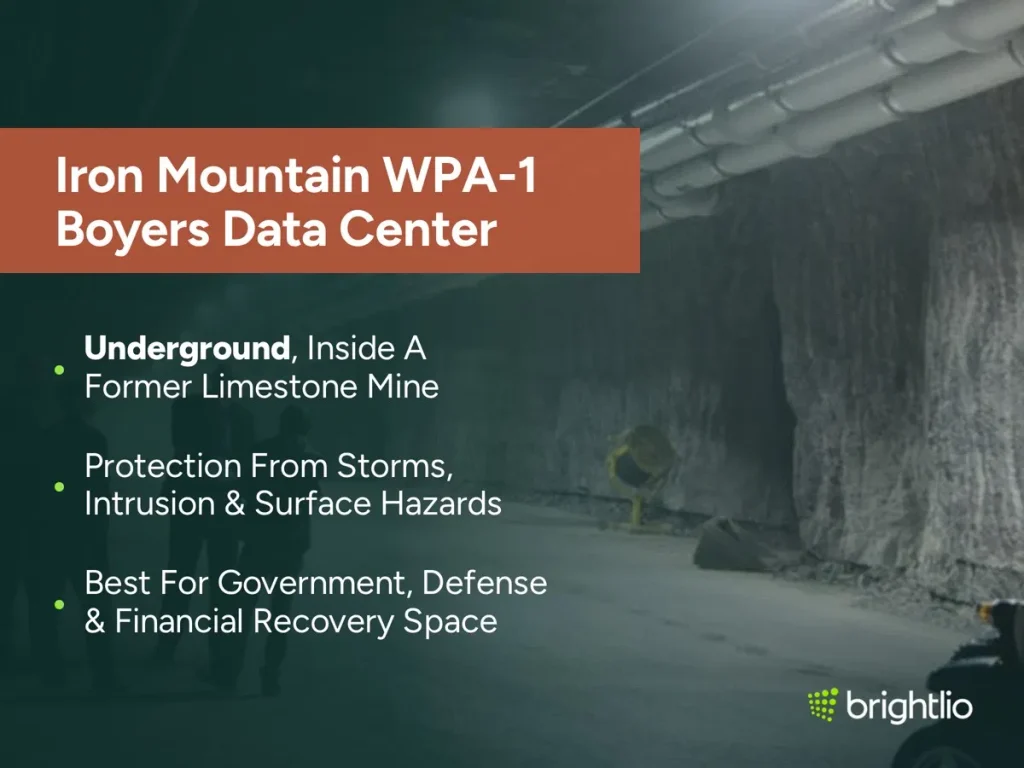
Iron Mountain’s Western Pennsylvania data center, known as WPA-1, operates approximately 220 feet underground in a former limestone mine in Boyers, north of Pittsburgh. Its underground location adds a substantial physical barrier around the computing environment.
The facility combines this protected setting with multifactor access controls, metal detectors, vehicle screening, and security personnel onsite around the clock. These controls address different entry points, from vehicles approaching the site to individuals requesting access to protected areas.
WPA-1 provides commercial colocation services, remote technical support, and redundant network entry infrastructure. Customers should assess the security boundary around their specific cabinet, cage, or suite, together with approved access procedures and recovery requirements. Network performance and support arrangements remain relevant to daily operations.
Key Security Features And Facility Details
- Underground location: The facility sits approximately 220 feet below ground in a former limestone mine.
- Access verification: Multifactor controls and metal detectors support personnel screening.
- Vehicle checks: Screening procedures control vehicle access to the protected site.
- Security staffing: Security personnel remain onsite 24/7.
- Operational support: Remote technical assistance and redundant network entry infrastructure support customer deployments.
2. Green Mountain SVG-Rennesøy In Norway
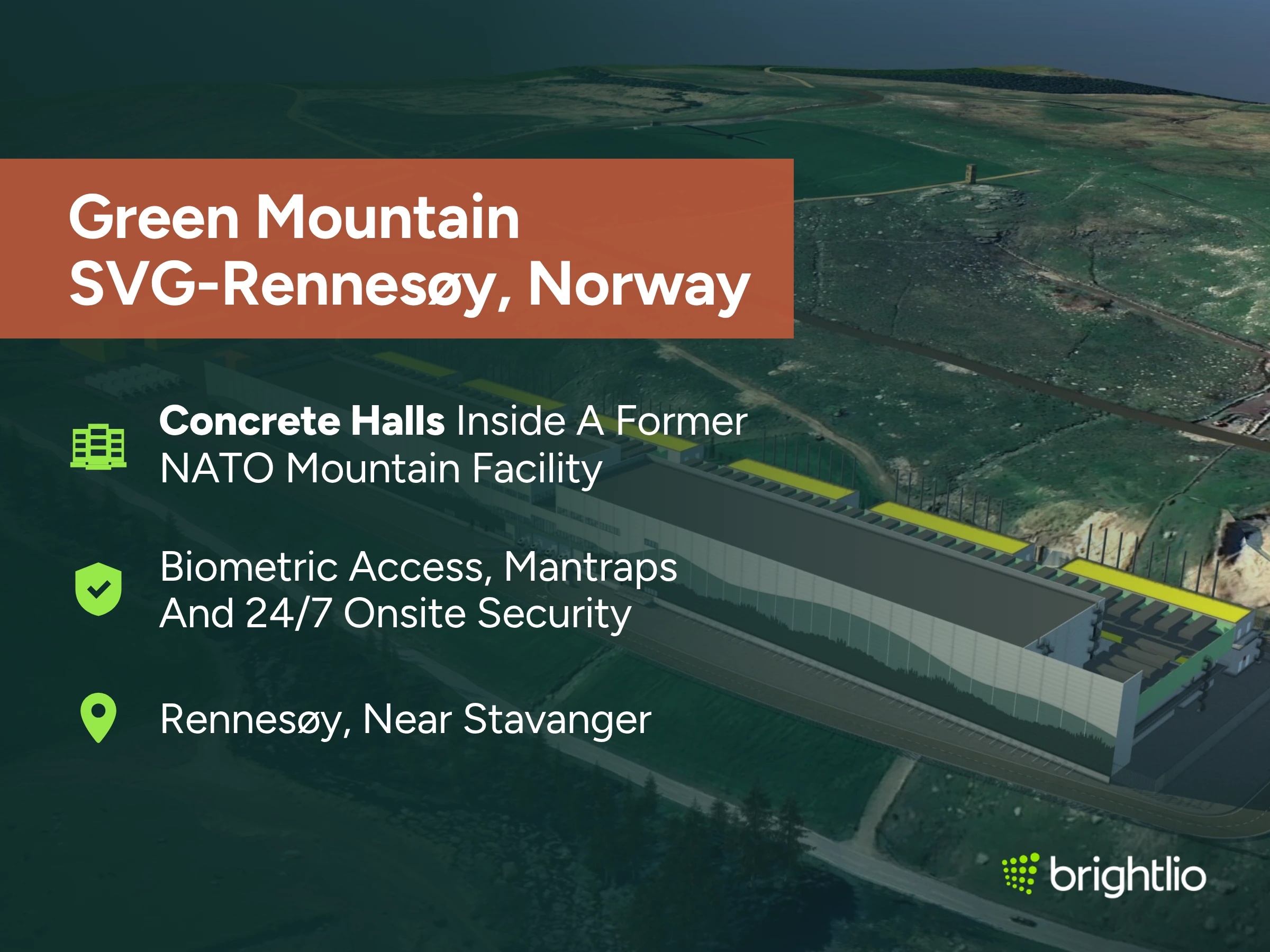
Green Mountain’s SVG-Rennesøy facility, formerly known as DC1-Stavanger, occupies a former NATO ammunition storage site near Stavanger. Concrete buildings inside mountain halls combine a hardened location with commercial data center infrastructure.
Documented protections include biometric access controls, mantraps, intelligent video surveillance, and onsite security personnel working 24/7. A mantrap is an entry enclosure with successive controlled doors that restrict movement between security zones.
Customers can choose configurations ranging from individual racks to dedicated server rooms. The selected configuration determines the physical boundary around the customer’s equipment and the areas shared with other users. Service evaluations should cover authorized access, remote support, and network routes alongside the facility’s physical protections.
Key Security Features And Facility Details
- Protected structure: Concrete buildings sit inside mountain halls at a former NATO storage facility.
- Biometric access: Biometric controls verify authorized personnel at designated access points.
- Controlled entry: Mantraps regulate movement between protected areas.
- Continuous monitoring: Intelligent video surveillance supports around-the-clock onsite security.
- Deployment options: Customers can use racks or dedicated server rooms with different physical boundaries.
3. Lefdal Mine Data Centers In Norway
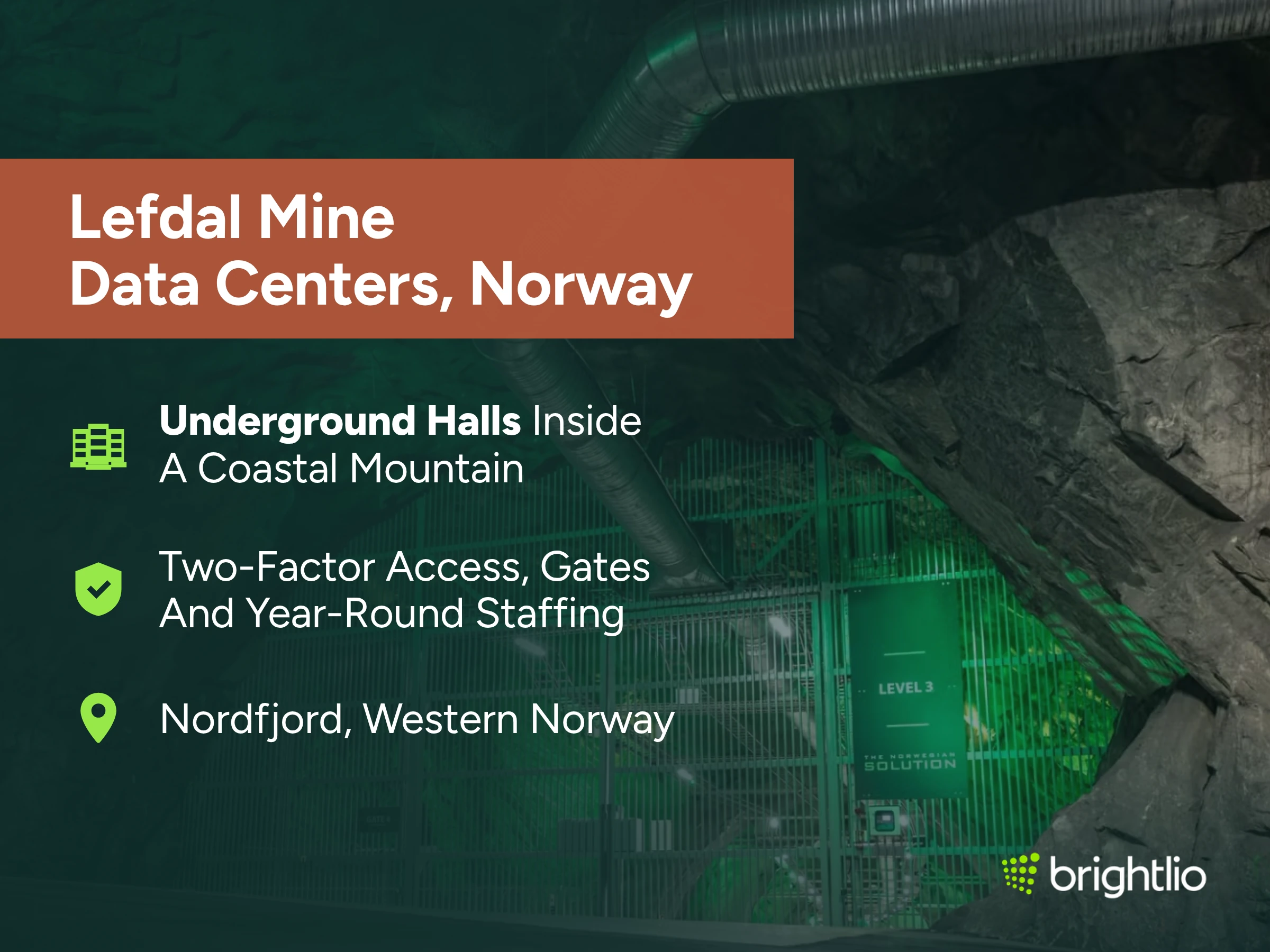
Lefdal Mine Data Centers operates an underground mountain facility on Norway’s west coast. Its security approach covers the site perimeter, internal access points, and customer areas, creating multiple controlled boundaries around the infrastructure.
Published protections include security gates, two-factor access control, camera monitoring, and year-round security staffing. The operator describes physical and logical separation between management, operations, and customer networks. These divisions limit the connections between systems used to operate the facility and systems supporting customer workloads.
Lefdal’s approach combines building security with separation of operational environments. Customers should confirm how the proposed deployment handles equipment access, maintenance authorization, and provider administration. Facility protections form one part of the customer’s security model, which must address application access and workload configuration.
Key Security Features And Facility Details
- Underground setting: The computing environment operates inside a mountain facility.
- Perimeter controls: Site protection and security gates restrict entry to the premises.
- Access authentication: Two-factor controls govern access to protected areas.
- Monitoring and staffing: Cameras and year-round security personnel support site oversight.
- Network separation: Management, operations, and customer networks have physical and logical separation.
4. Bahnhof Pionen In Stockholm, Sweden
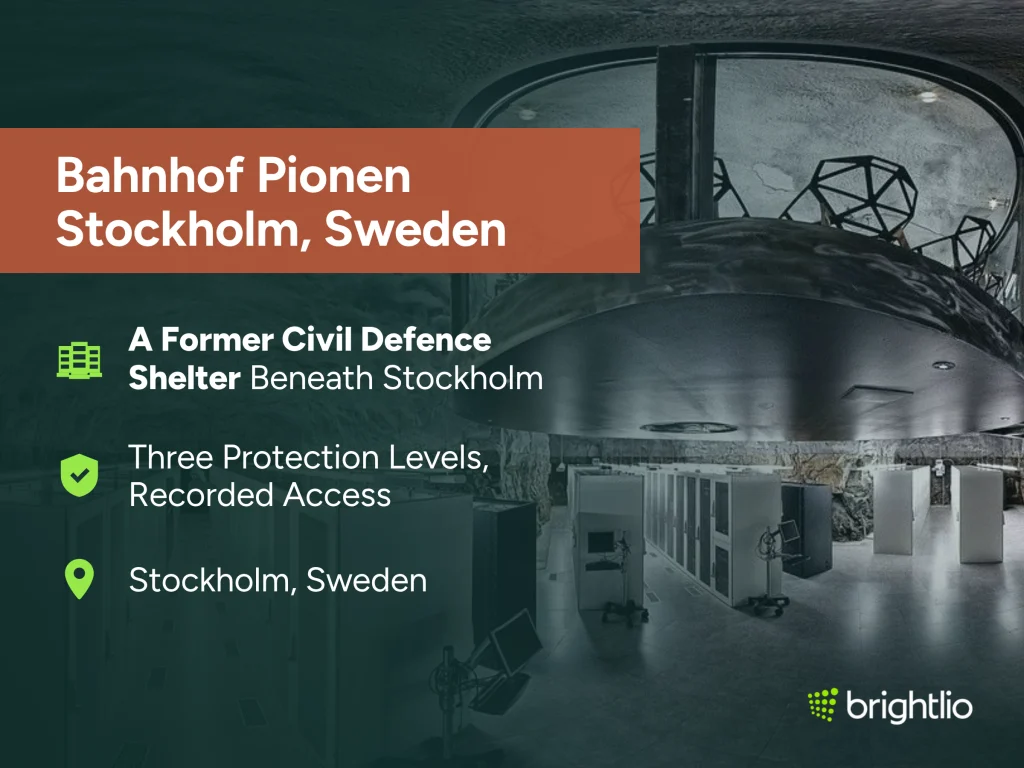
Bahnhof’s Pionen data center occupies a former civil defense shelter beneath Stockholm. The facility combines an underground protective structure with an urban location, making it a distinctive example of hardened infrastructure inside a major city.
The operator documents three levels of physical protection with separately assigned permissions. Recorded access events provide a history of entry activity, and continuous camera monitoring supports oversight of protected areas. Intrusion alarms connect to Bahnhof’s network operations center and an external security company.
Pionen’s environmental protections include early smoke detection and automatic fire suppression. These systems address threats to equipment and availability alongside the controls governing physical entry. Customers should assess permitted equipment, staff access, connectivity, and support arrangements for their specific deployment.
Key Security Features And Facility Details
- Protected location: The facility occupies a former civil defense shelter beneath Stockholm.
- Security zones: Three protection levels use separately assigned access permissions.
- Access records: Entry events are recorded to support review of physical access.
- Intrusion monitoring: Alarms connect to the network operations center and a security company.
- Fire protection: Early smoke detection and automatic suppression support equipment protection.
5. Swiss Fort Knox In Switzerland
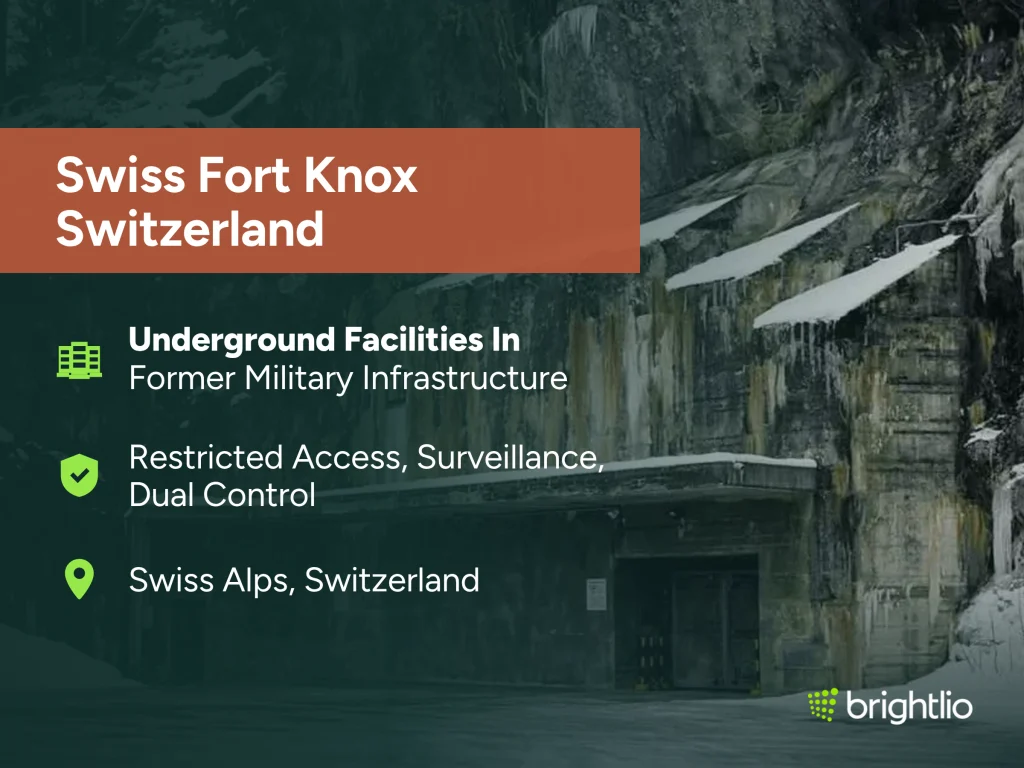
Swiss Fort Knox is an underground data center environment in the Swiss Alps that uses former military infrastructure. SIAG Secure Infostore operates the facilities, which support MOUNT10 services, including protected backup and recovery offerings.
MOUNT10 describes restrictive access, continuous surveillance, fire monitoring, and a dual-control principle for operating processes. Dual control requires a second authorized person to participate in or oversee defined activities, reducing reliance on a single individual’s actions.
Published protections cover visitors and equipment deliveries, supported by backup electricity arrangements. Customers should confirm which measures apply to their contracted service and whether specific configurations carry additional charges. The facility operator and service provider have different roles, so contracts should clearly assign responsibility for support, incident response, and data recovery.
Key Security Features And Facility Details
- Protected setting: Underground facilities use former military infrastructure in the Swiss Alps.
- Restricted access: Procedures control entry to sensitive areas and address visitors and equipment deliveries.
- Continuous oversight: Surveillance and fire monitoring support facility protection.
- Dual control: Defined operating activities require participation or oversight from a second authorized person.
- Service continuity: Backup electricity arrangements support the infrastructure used for MOUNT10 services.
What Makes a Data Center Secure
A secure data center protects equipment and information against unauthorized access, damage, and disruption. Its controls should address the threats relevant to its customers and remain effective during maintenance, staffing changes, and emergencies.
The following are six areas to evaluate:
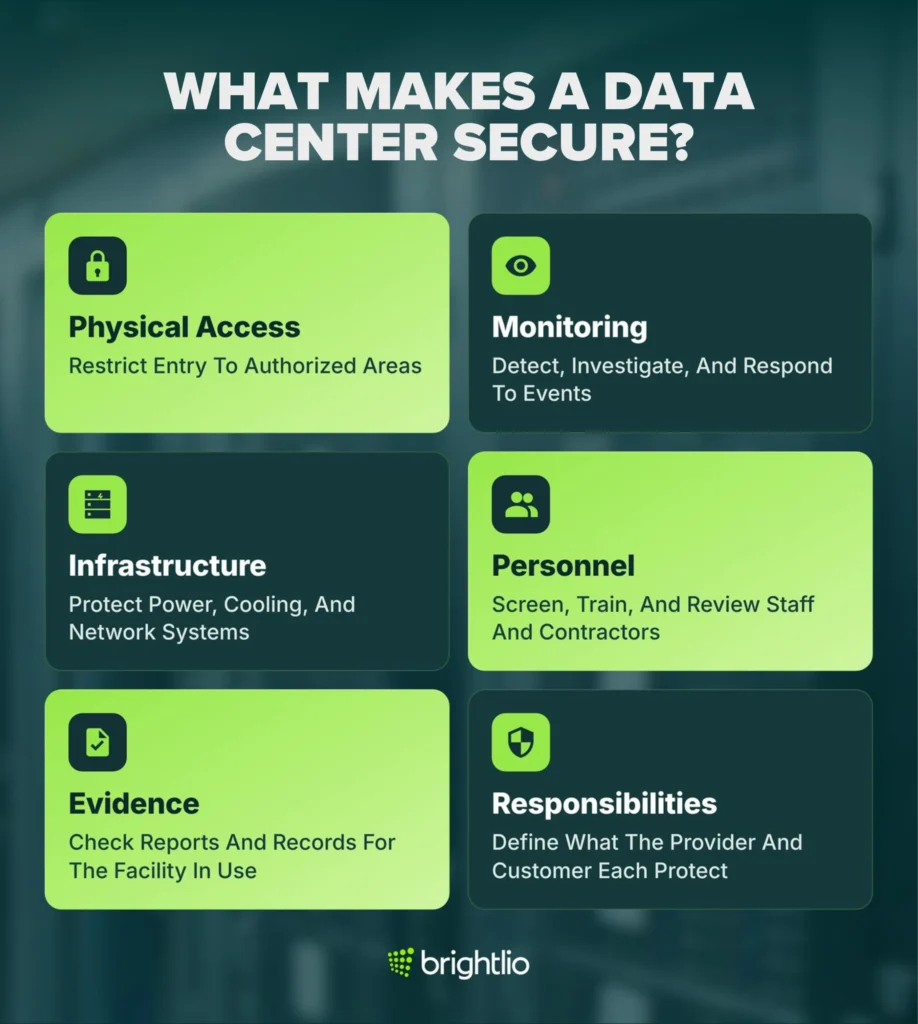
1. Layered Physical Access Controls
Security starts at the site boundary and continues through reception, equipment areas, customer suites, cages, and racks. Each transition should require the authorization appropriate to that area.
A person permitted to enter the building should not automatically gain access to every customer’s equipment. Visitor approval, identity verification, access logs, and prompt removal of permissions help maintain that separation.
2. Monitoring and Incident Response
Cameras, alarms, and access records help staff detect unusual activity. Their value depends on whether someone reviews alerts, investigates events, and takes action when a control fails.
Ask how the provider staffs its security operation and handles incidents affecting your equipment. The response process should cover escalation, preservation of relevant records, and communication with the customer.
3. Protection for Critical Infrastructure
Servers depend on electricity, cooling, networking, and fire protection. These systems need protection against unauthorized changes and physical damage, as well as procedures for maintenance and recovery.
Extend the review to generators, network connections, and facility control systems. Protecting these supporting assets helps keep the service available when the data hall itself remains secure.
4. Personnel and Contractor Controls
Employees, maintenance contractors, and remote support staff may need legitimate access to sensitive areas or systems. Their permissions should match approved duties and remain subject to supervision and review.
Background screening, training, vendor approval, and separation of duties can reduce the risk of mistakes or misuse. Ask how those procedures apply to the people who could work on your deployment, including subcontractors providing support outside normal business hours.
5. Evidence of Operating Effectiveness
Policies describe what the provider intends to do. Audit reports, access reviews, maintenance records, and test results help establish whether those processes operate as intended.
The evidence needs to cover the actual facility and service you are buying. A certificate for another location or a report covering a different service provides limited assurance about your deployment.
6. Clear Customer Responsibilities
The provider and customer need a shared understanding of who protects each part of the service. Physical hosting, managed operating systems, network security, encryption, and backups can involve different parties.
A secure arrangement makes those responsibilities explicit. Brightlio’s guide to colocation explains the hosting model and the infrastructure services typically involved.
Are Underground Data Centers More Secure?
Underground data centers can add a physical barrier and reduce exposure to some external threats. A former mine or military installation may provide a foundation for controlled access and separated customer areas.
Security depends on the site. Water ingress, fire response, ventilation, evacuation, utility delivery, and maintenance need engineering and operating plans appropriate to the underground environment.
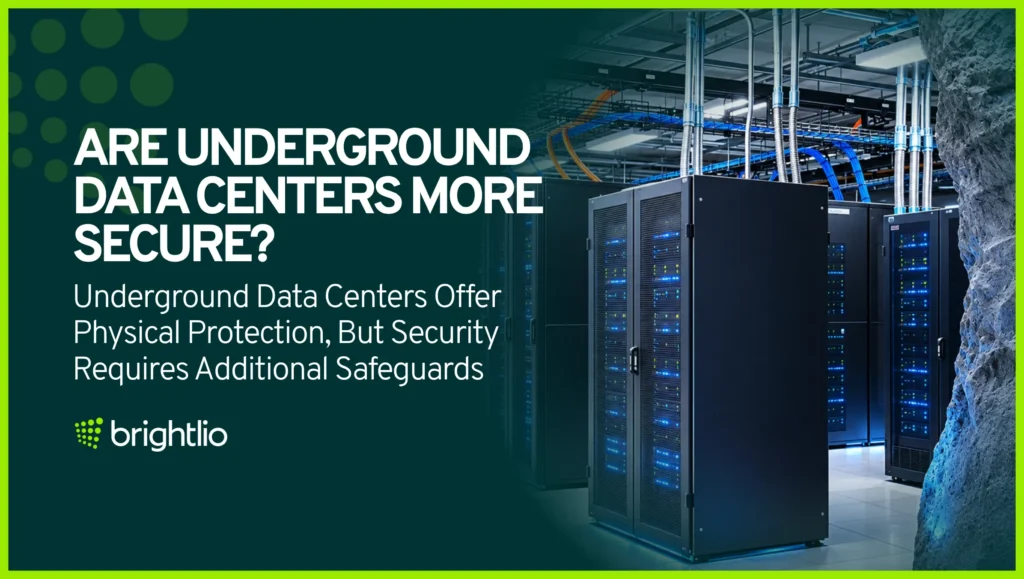
The useful comparison is between complete systems. Review a facility’s design assessments, operating procedures, and recovery arrangements alongside its physical setting. Current assessments should explain how the converted building and the systems installed inside it work together.
For example, a business may value the physical separation of an underground backup site. That benefit becomes useful only when the organization can restore its data, access the recovered applications, and continue working during an interruption at its primary location.
Which Certifications and Reports Should You Review
Independent assurance can help you evaluate a provider, but different documents answer different questions. Check what each assessment covers before using a logo or certification claim as a reason to select a facility.
The following are four types of evidence to request:
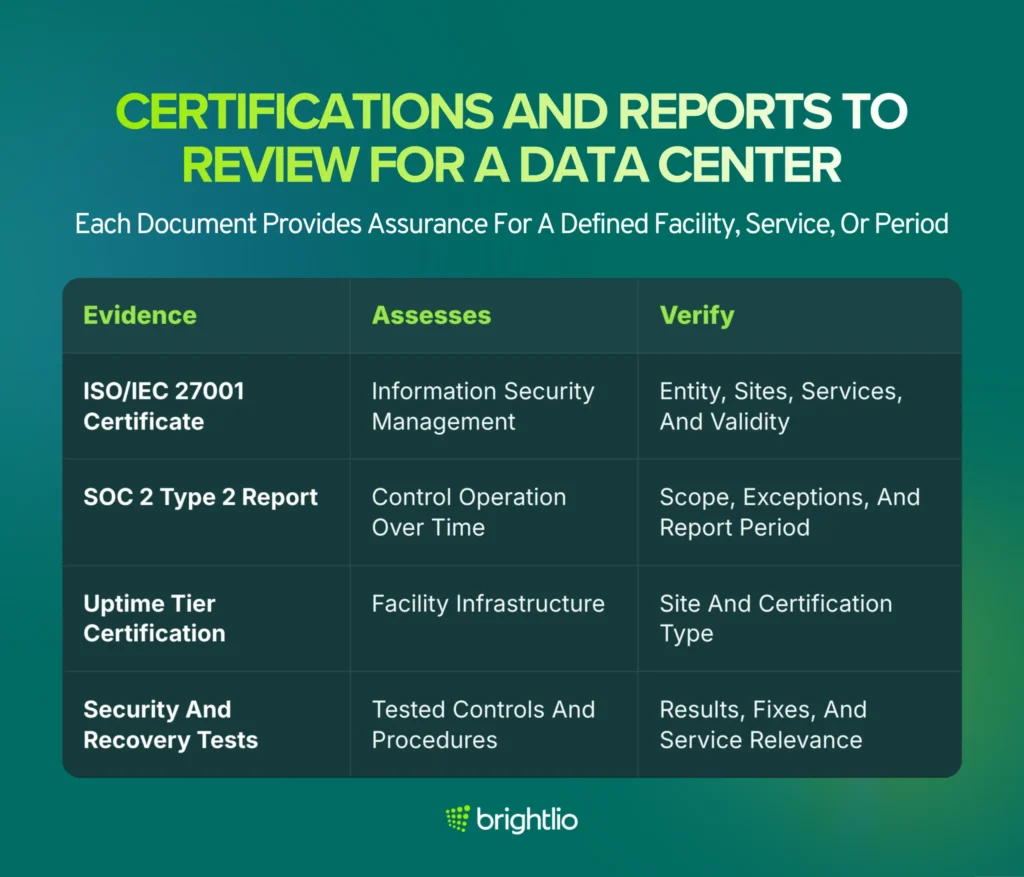
ISO/IEC 27001 concerns an information security management system. Its certificate should identify the scope being certified. A SOC 2 report provides an independent examination of the defined system and the criteria included in that engagement.
Uptime Tier classifications address infrastructure topology and availability characteristics. A Tier IV designation should not be read as a cybersecurity score or a global ranking of physical security. Review security evidence and availability evidence for their respective purposes.
When reports are confidential, the provider may make them available through a controlled review process. Your assessment should still establish whether the evidence covers the facility and service in your proposal.
If you’re looking for help with ISO 27001 certification or SOC 2 readiness, check out Bright Defense. They offer gap assessments, control implementation, and evidence collection support to help your organization prepare for an audit.
Does Physical Security Protect Against Cyberattacks
Physical controls help protect servers, storage devices, and supporting infrastructure from unauthorized contact. Cybersecurity also depends on identities, software, network configuration, monitoring, and recovery procedures.
In colocation, the provider commonly manages the building and shared infrastructure while the customer manages its own equipment and applications. Managed hosting and cloud services allocate responsibilities differently, so the contract and service description need to make the boundary clear.
Your business should review administrative access, multifactor authentication, vulnerability management, encryption, key control, and backup recovery. A provider’s secure room cannot compensate for an exposed application or an account with excessive privileges.
The operator’s own systems also matter. Ask how it approves, authenticates, and monitors remote maintenance access, including access to technology controlling power, cooling, and physical entry. These systems can affect service delivery even when they do not hold your application data.
How Should Your Business Choose a Secure Data Center?
Start with the risks your business needs to manage and the service your applications require. A consistent evaluation makes it easier to compare a specialized underground facility with other credible providers.
The following are five steps to guide the decision:
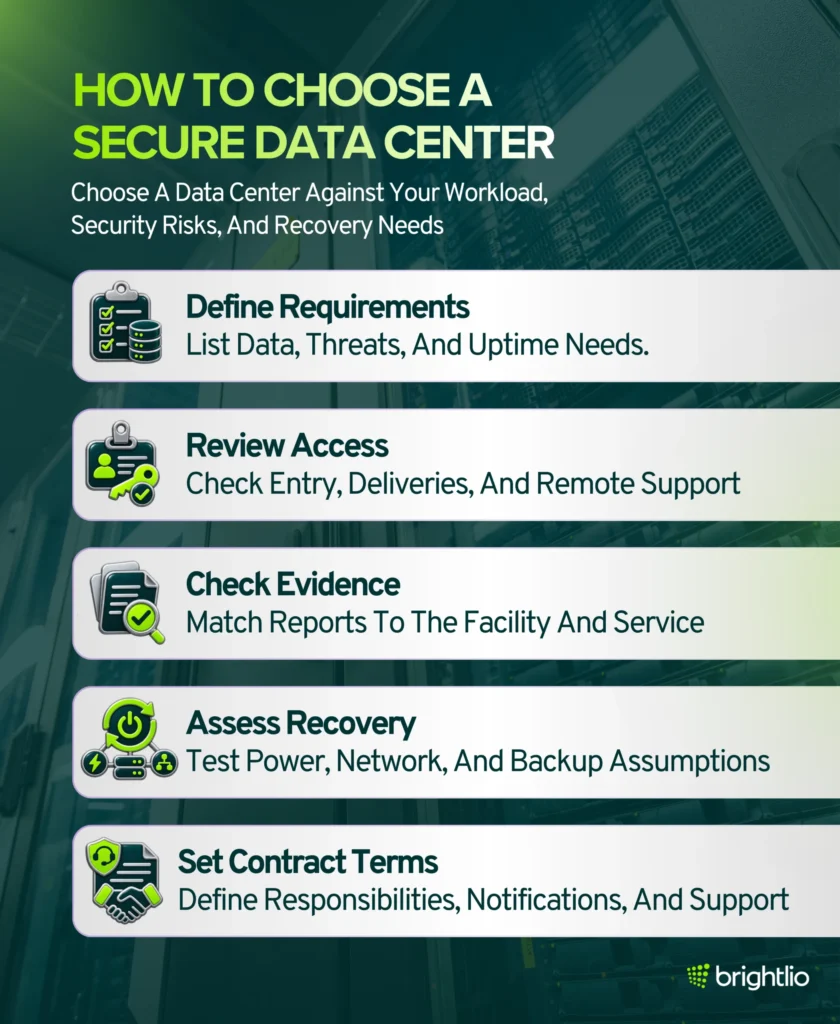
1. Define Your Workload and Threats
Document the information you will host, the consequences of an outage, and the physical or operational risks that matter most. Include any customer requirements that affect location, access, or evidence.
A production application needing frequent hardware changes may have different priorities from a protected backup environment. Brightlio’s data center location guides can help you research the markets that fit those requirements.
2. Review the Access Process
Ask how employees, customers, visitors, and contractors receive permission to enter your environment. Confirm who can approve access, how authorization is checked, and how permissions are removed.
Review equipment deliveries and remote support as part of the same process. A strong policy should translate into a documented workflow your team can follow during routine and urgent work.
3. Examine Evidence for the Actual Service
Request current certificates, relevant audit reports, and a description of the contracted security measures. Match the named legal entity, facility, and service to your proposal.
Where an assessment identifies exceptions, review their significance and the corrective work completed. Focus on evidence that directly addresses your requirements and any gaps affecting your deployment.
4. Test Availability and Recovery Assumptions
Evaluate power, cooling, network diversity, and the support arrangements needed during an incident. Establish how you would recover if the facility became unavailable or your own systems were compromised.
Geographic distance alone does not guarantee independent recovery. Check for shared dependencies such as administrative accounts, network routes, and backup systems that could affect both environments.
5. Put Responsibilities Into the Contract
Define the security configuration, approved access arrangements, incident notification deadlines, and support commitments you are purchasing. Address equipment handling, maintenance activity, and access to relevant evidence.
The agreement should also explain how changes are communicated and how you retrieve or move your equipment and data when the service ends. Clear commitments make the provider’s protections easier to manage throughout the relationship.
Do More Secure Data Centers Cost More?
Additional security measures can affect pricing, especially when you require a private cage, dedicated room, specialized access procedures, or more restrictive support arrangements. Location, electricity, connectivity, and service scale also influence the overall cost.
Compare proposals with the same space, committed power, network services, and support requirements. Brightlio’s colocation pricing guide explains the charges to review when assessing the complete bill.
Access restrictions can create operational costs as well. If a repair requires an approved technician or escorted visit, your team needs to understand the procedure, response time, and fees before an outage occurs.
The right investment depends on the risk being reduced. A specialized facility may make sense for a sensitive deployment, while another provider may meet the same documented requirements through a different design and operating model.
Which Businesses Need Stronger Data Center Security?
Organizations handling sensitive customer information, intellectual property, financial systems, or critical public services often need more detailed assurance about hosting controls. The appropriate measures depend on the workload and the organization’s obligations.
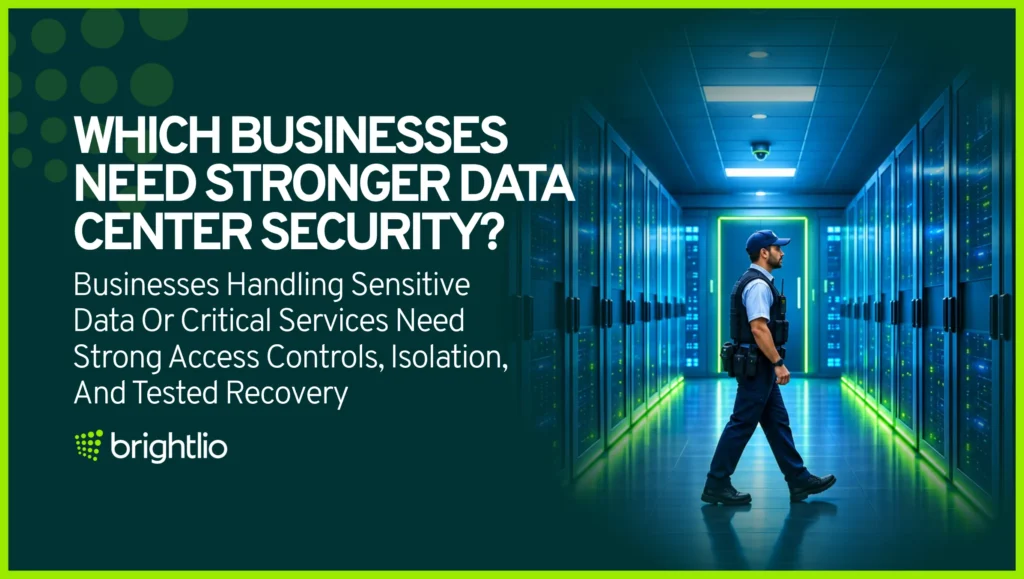
A financial services business might prioritize controlled administrator access, documented change management, and tested recovery. A research organization may place greater weight on confidentiality and the separation of customer environments. A backup deployment needs evidence that protected copies can actually be restored.
For each use case, connect the physical facility to the wider security program. Include staff procedures, cybersecurity, network access, and recovery testing in the decision so that the chosen site supports the outcome your business needs.
Find the Right Secure Data Center With Brightlio
Choosing a secure data center starts with understanding your workloads, access needs, recovery objectives, and budget. Brightlio helps businesses compare colocation, cloud, and connectivity options against those requirements.
Whether you are evaluating a hardened underground facility or comparing providers in a specific market, a clear view of the service and its commitments makes the choice easier. Contact Brightlio to discuss your requirements and explore suitable solutions.
Frequently Asked Questions
1. What Is the Most Secure Data Center in the World?
There is no independently verified global winner. WPA-1, SVG-Rennesøy, Lefdal Mine, Pionen, and Swiss Fort Knox are examples with documented physical protections. The right choice depends on your threats, workload, and required evidence.
2. Are All Underground Data Centers Equally Secure?
No. Their construction, access controls, staffing, maintenance, and emergency arrangements differ. Evaluate each facility’s current design and operating procedures rather than assuming that underground placement provides a standard level of protection.
3. Does Tier IV Mean a Data Center Has the Best Security?
No. Tier classification addresses infrastructure characteristics associated with availability. Assess physical security, cybersecurity, and operational controls using evidence relevant to each area.
4. Can a Secure Data Center Prevent Ransomware?
Facility security supports protection of the infrastructure, but ransomware defenses also depend on access management, software security, monitoring, and recoverable backups. Responsibility varies across colocation, managed hosting, and cloud services.
5. Can Businesses Rent Space in These Facilities?
These providers offer commercial infrastructure or related services, but availability and service models differ. Confirm whether your requirement is for colocation space, managed hosting, backup, or recovery, then request a proposal for that service.
6. What Should You Ask Before Signing a Contract?
Ask for evidence covering the actual facility and service, a clear security responsibility matrix, access procedures, incident notification terms, and recovery arrangements. Confirm the configuration and support commitments in the agreement.

Tamzid is a cybersecurity researcher with 5+ years of experience across SaaS, security, compliance, data centers and cloud. He writes for brightdefense.com and hipaasimple.com, covering security, compliance, and infrastructure topics. Certified through Cisco, Fortinet (NSE 1), and the Basel Institute on Governance in OSINT, he grounds his work in primary sources and verified data.
Recent Posts
Data Centers and Colocation In Wyoming
Most Secure Data Centers in the World
Data Centers in Space and the Future of Computing
Nuclear Powered Data Centers
Let's start
a new project together