
Data centers in space use computing and storage equipment aboard satellites or other spacecraft to process information beyond Earth. Solar panels can supply their electricity, while communication links connect them to users on the ground or to other spacecraft.
Artificial intelligence is increasing demand for computing capacity, giving companies a reason to explore new sources of power and new places to operate. Small orbital computing systems are already working. The next challenge is turning those early capabilities into reliable services at a much larger scale.
For your business, the value depends on where your data originates, how quickly you need results, and what it costs to move that information. Read on to explore how space data centers work, the projects making progress, and the benefits and limitations that could shape their future.
What Are Data Centers in Space?
A space data center combines processors, storage, networking, power, and thermal management in a spacecraft. The equipment may operate as a payload on a larger satellite, aboard a space station, or within a dedicated computing satellite.
Some designs process information from nearby spacecraft. Others aim to connect multiple satellites into a larger computing system capable of running demanding AI workloads.
The term covers a wide range of capacity. Running an AI task on one accelerator proves that a particular system can work in orbit. A commercial cloud platform must also deliver consistent performance, protect against equipment failures, and remain available to customers.
This article focuses on orbital data centers. A computing installation on the Moon would face different transportation, communication, and operating conditions and should be evaluated separately.
Why Are Companies Exploring Orbital Data Centers?
Power availability is becoming a major consideration in data center development. The International Energy Agency’s 2026 outlook projects global data center electricity consumption rising from approximately 485 terawatt-hours in 2025 to 950 terawatt-hours in 2030. The same report identifies constraints involving grid connections, transformers, and other equipment.
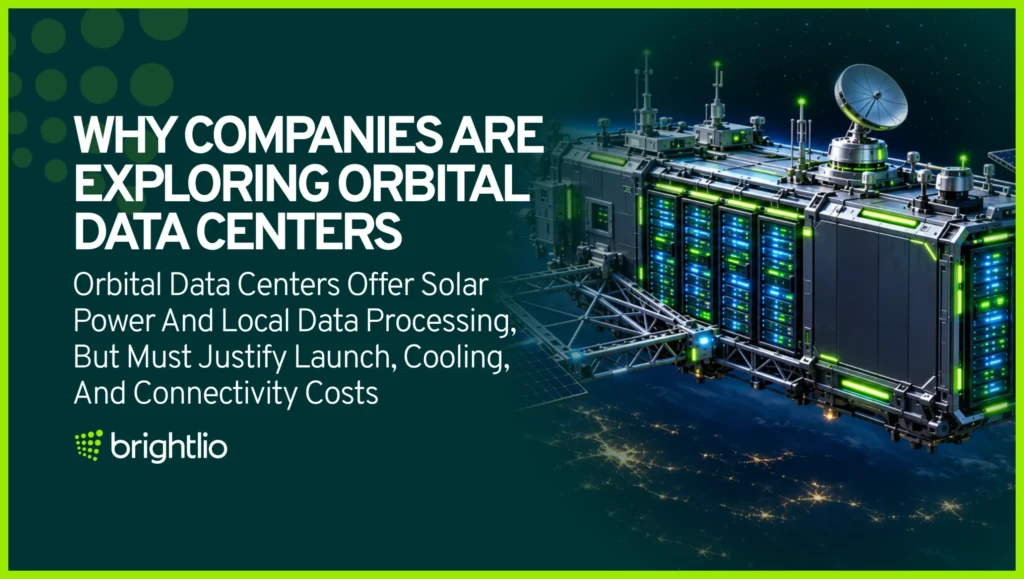
An orbital facility could generate electricity with solar panels without drawing its computing load from a local utility. It would also avoid the need to acquire a large terrestrial site for that computing equipment.
Space is particularly interesting when the information being processed already comes from satellites. Processing imagery near its source could reduce the volume transmitted to Earth and make useful results available sooner.
For a provider, the commercial question is whether those advantages justify the cost of launching, cooling, connecting, and eventually replacing the equipment.
How Do Data Centers in Space Work
Space data centers combine computing hardware with power, communication, and cooling systems designed for the orbital environment. These systems work together to process information and deliver results to users.
The following are the main functions an orbital data center must support:
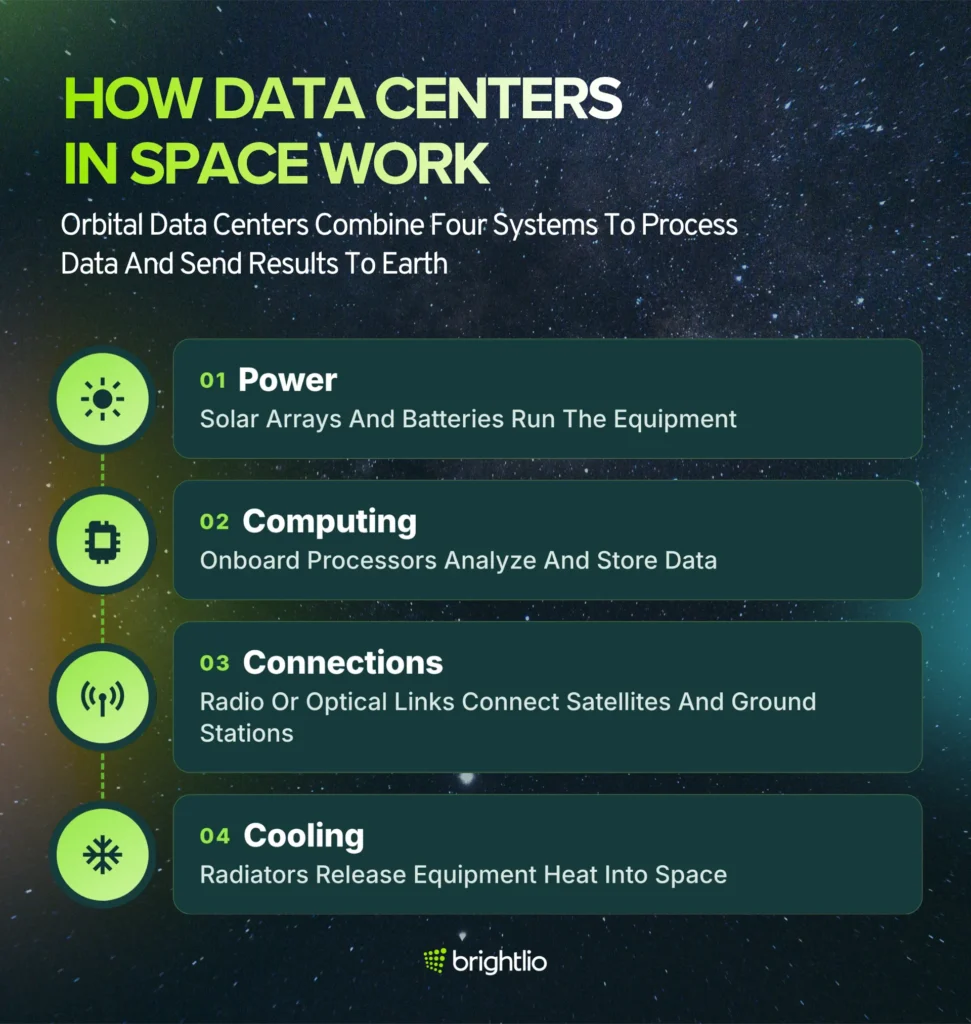
1. Generate and Distribute Power
Solar arrays convert sunlight into electricity for processors, communications equipment, and spacecraft systems. Batteries can supply power when sunlight is unavailable or demand temporarily exceeds generation.
Orbit selection matters. Certain orbital configurations offer long periods of sunlight, while others regularly pass through Earth’s shadow. The design must match the computing workload to the power that remains available throughout the mission.
2. Process Information Onboard
General-purpose processors and AI accelerators run applications and store their results. Software assigns work to available resources and manages interruptions or equipment faults.
For example, a satellite imaging application could identify useful observations before transmitting them to Earth. This helps the operator prioritize relevant information when the downlink, the connection carrying data back to the ground, has limited capacity.
3. Connect to Satellites and Ground Stations
Radio or optical links carry data between spacecraft and Earth. Optical links use lasers and can also connect satellites within a distributed computing system.
The connections must match the application. Sending a small analysis result to Earth requires a different network design from continually exchanging large amounts of data between AI accelerators.
Transfer time matters as much as signal delay. As an illustrative calculation, sending one terabyte over a one-gigabit-per-second link takes about 2.2 hours even with uninterrupted access and no transmission overhead. A short communication path does not eliminate a bandwidth bottleneck.
4. Remove Heat From the Equipment
Processors generate heat that must move away from sensitive components. Thermal hardware carries that heat to external surfaces, where it leaves the spacecraft as infrared radiation.
NASA’s explanation of heat transfer in space describes how spacecraft reject heat through radiation. There is no outside air for a fan to blow across a server. Effective cooling therefore depends on a carefully designed path from the chips to the radiators.
Which Space Data Center Projects Are Making Progress?
The following projects demonstrate different approaches to orbital computing, from individual AI accelerators to distributed networks and proposed megawatt-scale infrastructure. Published milestones as of October 29, 2026, range from operating prototypes to completed feasibility studies:
| Project | Published Milestone | Development Stage |
|---|---|---|
| Starcloud | Starcloud-1 launched with an NVIDIA H100 in November 2025 | Orbital hardware demonstration; commercial follow-on planned |
| Google Project Suncatcher | Prototype satellite launched on October 1, 2026 | In-orbit TPU research; satellite networking experiment planned |
| Axiom Space and Kepler | Two operating orbital compute nodes reported in October 2026 | Early distributed computing infrastructure |
| ASCEND | Feasibility study results announced in June 2024 | Modular infrastructure concept; no operating capacity reported |
1. Starcloud
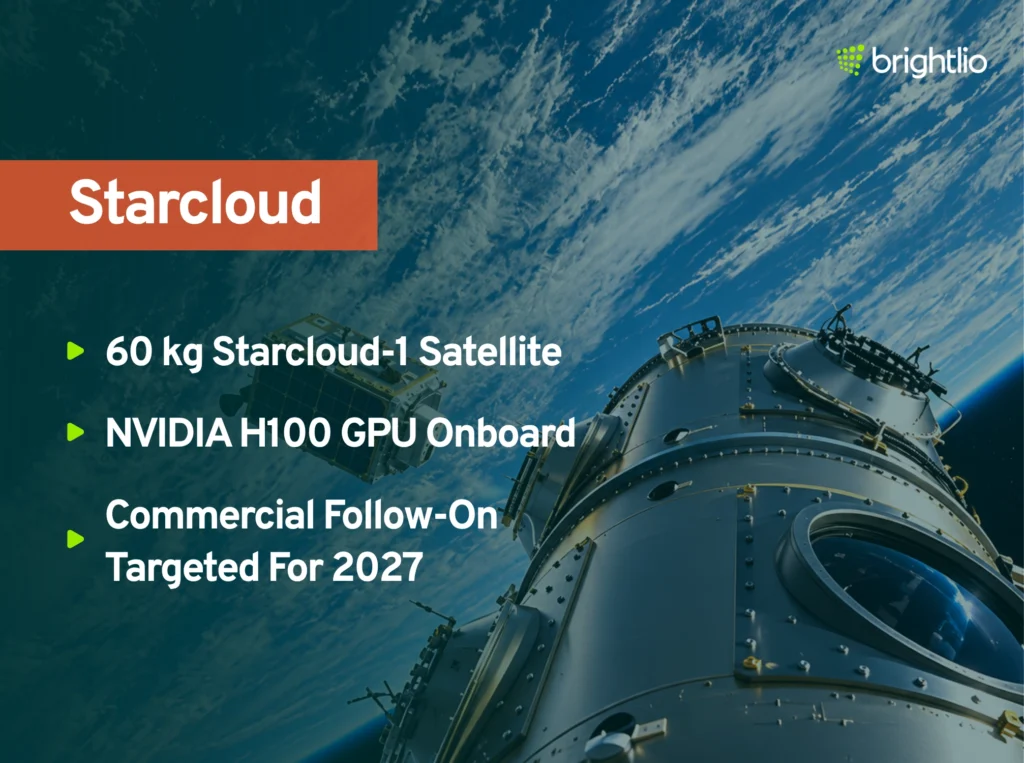
Starcloud is developing orbital computing systems built around commercial AI hardware. Its Starcloud-1 satellite launched in November 2025 carrying an NVIDIA H100 GPU, demonstrating how a data center-class accelerator can operate aboard a small spacecraft. NVIDIA describes the satellite as weighing approximately 60 kilograms and being about the size of a small refrigerator.
The company’s next mission, Starcloud-2, is intended to move beyond hardware demonstrations toward commercial computing and storage. Planned applications include processing satellite observations before downlinking results and providing remote storage and cloud computing. The company targets full operation by 2027; its advertised capabilities remain planned services.
Key Features
- Size And Scale: Starcloud-1 weighs approximately 60 kilograms; Starcloud-2 is described as a small satellite carrying a GPU cluster.
- Compute Hardware: One NVIDIA H100 aboard Starcloud-1; a GPU cluster and persistent storage planned for Starcloud-2.
- Power And Cooling: Solar power supports the spacecraft approach. Starcloud-2 specifies proprietary power and thermal systems, but its mission page does not give a rated electrical capacity.
- Orbit: Sun-synchronous orbit is specified for Starcloud-2.
- Connectivity: Starcloud-2 advertises planned 24/7 access, without specifying a communications link speed on its mission page.
- Development Stage: Starcloud-1 has reached orbit; Starcloud-2 is the planned first commercial mission, targeting operation by 2027.
2. Google Project Suncatcher
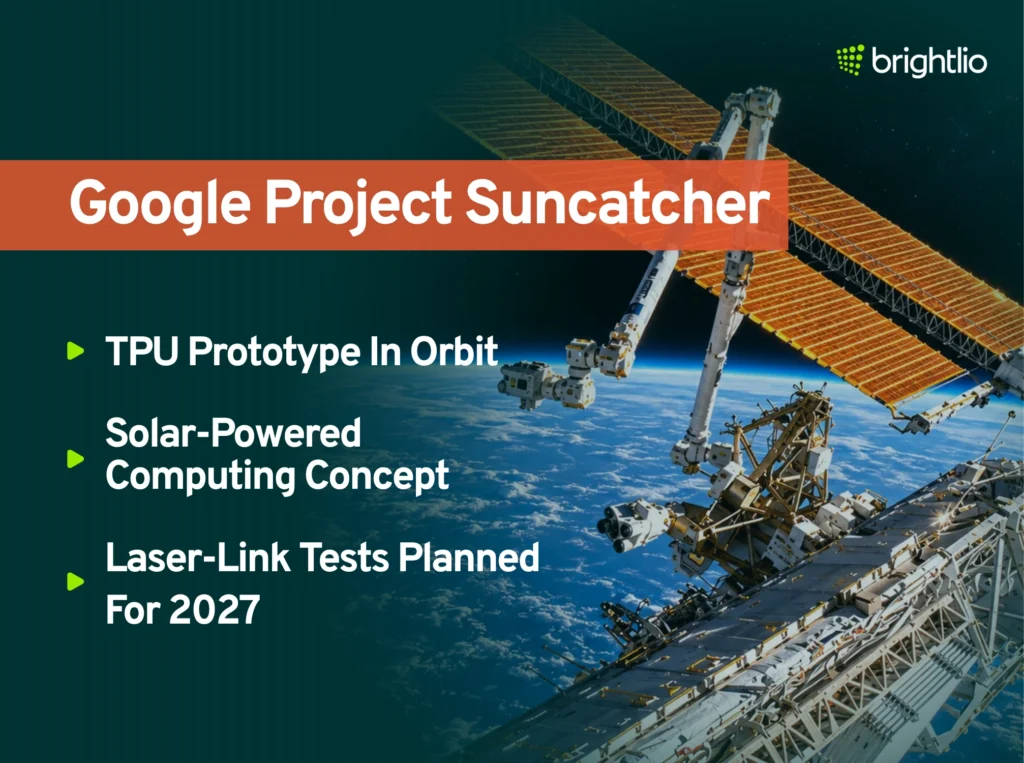
Google Project Suncatcher explores whether interconnected satellites can support large machine learning workloads. Its first prototype, developed with Planet, launched on October 1, 2026. Google confirmed contact and reported that the spacecraft was operating as expected. The mission gathers data on how Tensor Processing Units, or TPUs, withstand launch stresses, radiation, and orbital temperature conditions.
The longer-term design connects solar-powered computing satellites through high-bandwidth laser links. Google’s research models an illustrative 81-satellite formation, while its engineering program investigates chip cooling, radiation tolerance, and precise satellite positioning. That modeled constellation describes a possible future architecture, rather than the deployed prototype.
Key Features
- Size And Scale: One launched prototype; published modeling examines an illustrative cluster of 81 satellites.
- Compute Hardware: Google TPUs, with future satellite designs intended to carry dozens of TPU chips each.
- Power And Cooling: Solar-powered architecture, with heat pipes and radiators under development to remove processor heat.
- Orbit: The proposed architecture uses a dawn–dusk sun-synchronous orbit; one modeled configuration has a mean altitude of approximately 650 kilometers.
- Connectivity: Optical links between satellites; Google reports an 800 Gbps transmission in each direction in a laboratory demonstration.
- Development Stage: Initial hardware testing in orbit, followed by a planned two-satellite optical communications experiment in 2027.
3. Axiom\\\\\\\\\\\\\\\\\\\\\\\\\\\\\\\\\\\\\ Space And Kepler
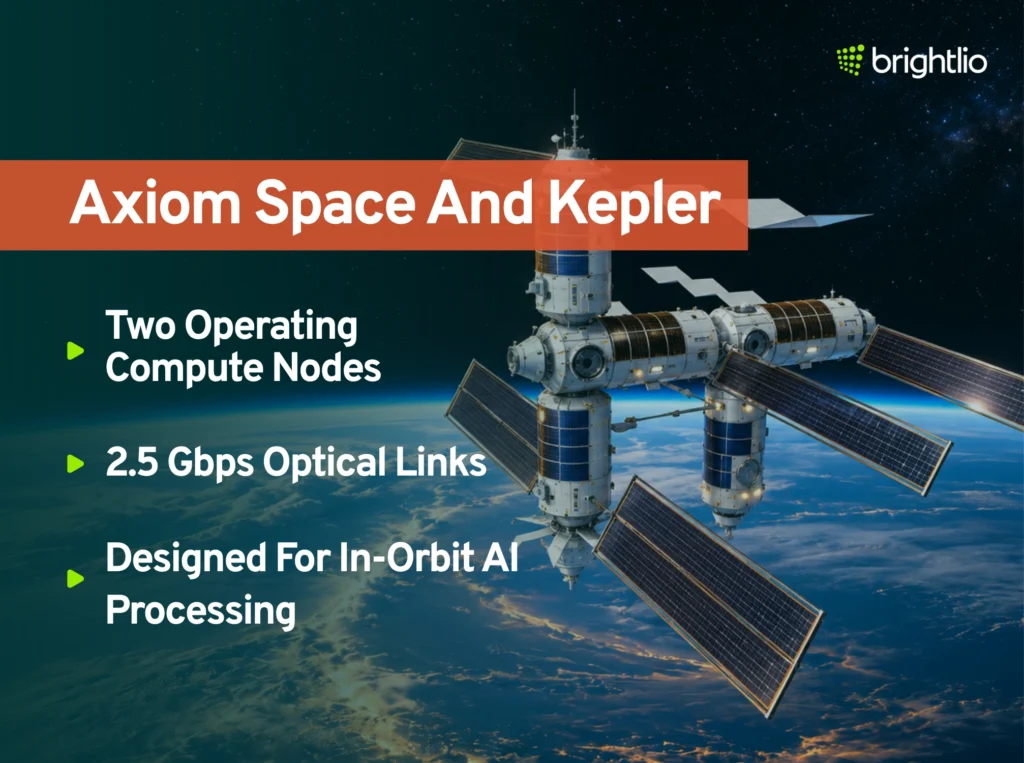
Axiom Space and Kepler are developing distributed orbital computing through Axiom Resilient Compute, or ARC, nodes hosted aboard Kepler’s optical relay constellation. Axiom’s October 6, 2026, update reports two operating nodes and confirmed communications between the nodes and between the nodes and the ground.
The platform is designed to process information close to the spacecraft collecting it, reducing dependence on transmitting every raw observation to Earth. Axiom also reports a successful ground demonstration involving migration of a post-quantum-encrypted workload. Demonstrating that cryptographic capability in orbit remains a future milestone.
Key Features
- Size And Scale: Two operating ARC nodes. Kepler’s first relay tranche contains 10 satellites weighing approximately 300 kilograms each; that figure describes the host satellites, rather than individual ARC units.
- Compute Hardware: ARC supports workload orchestration and AI processing. Kepler describes its relay satellites as carrying multi-GPU compute modules and terabytes of storage.
- Power And Cooling: Axiom’s October update does not disclose node power consumption or cooling specifications.
- Orbit: Low Earth orbit, using Kepler’s optical relay infrastructure.
- Connectivity: The ARC deployment incorporates 2.5 Gbps optical links compatible with the Space Development Agency’s Tranche 1 standards.
- Development Stage: Early operating infrastructure, with an in-orbit post-quantum cryptography demonstration planned next.
4. The European ASCEND Study
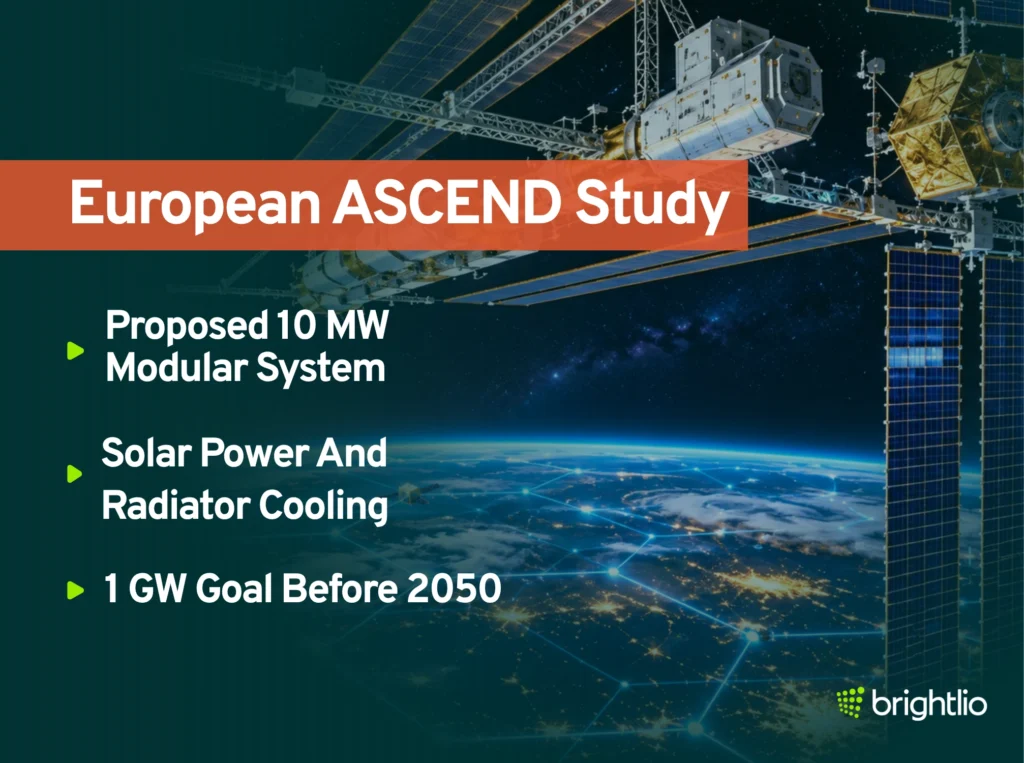
ASCEND is a European Commission-funded feasibility study led by Thales Alenia Space. It examines whether large orbital data centers can provide computing and storage while reducing environmental impacts and supporting European digital sovereignty. Results announced in June 2024 describe an ambition to deploy one gigawatt of capacity before 2050.
Its proposed architecture divides an approximately 10 MW system into multiple building blocks assembled robotically in orbit. Each block incorporates computing hardware, power generation, thermal regulation, and communications equipment. The environmental case depends partly on developing launch technology with substantially lower lifecycle emissions.
Key Features
- Size And Scale: A proposed minimum system of approximately 10 MW, formed from 13 building blocks rated at 800 kW of data center capacity each.
- Compute Hardware: Modular cloud computing and storage equipment; the published architecture does not specify a deployed processor configuration.
- Power And Cooling: Solar arrays generate electricity, while radiator systems reject equipment heat.
- Orbit: A proposed sun-synchronous orbit at approximately 1,400 kilometers.
- Connectivity: High-speed optical links connect the building blocks operating in formation.
- Development Stage: Feasibility study and infrastructure concept. The one-gigawatt objective before 2050 represents proposed future capacity.
What Are the Potential Benefits of Data Centers in Space
Data centers in space could reduce data transfers, access solar power beyond local grids, and provide another location for computing and storage.
The following are three potential benefits for satellite operators and future computing customers:
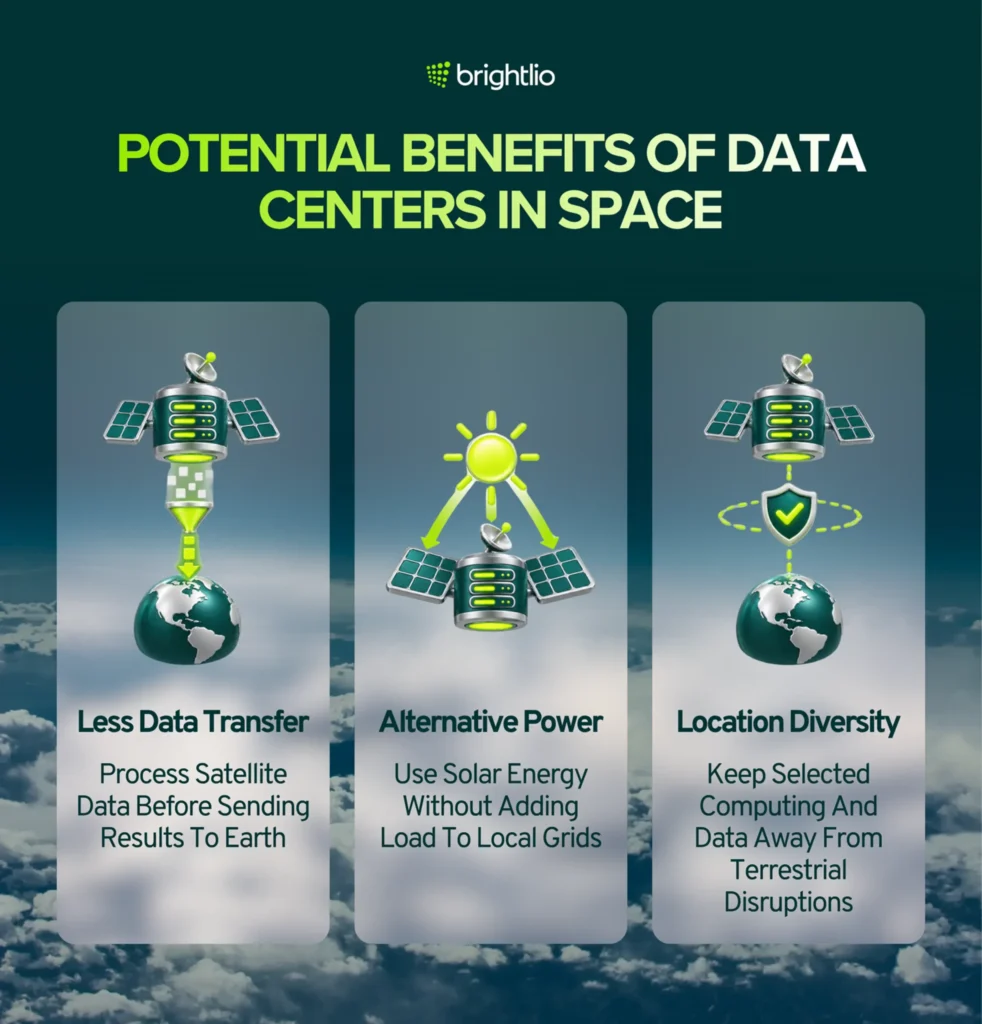
1. Process Satellite Data Closer to Its Source
Earth observation satellites generate information that must be transmitted, stored, and analyzed. Onboard or nearby orbital computing can perform part of that work before the data reaches a ground station.
Consider an application designed to identify changes in agricultural land. Processing selected imagery in orbit could prioritize the areas that need attention and send a smaller result to the customer. The benefit comes from reducing unnecessary data movement.
2. Access Solar Power Beyond Local Grids
Space-based solar generation offers a way to expand computing without adding the same load to a terrestrial electricity network. This could become useful where new data centers face long waits for power connections.
Google’s Project Suncatcher research estimates that a solar panel in the right orbit can be up to eight times more productive than one on Earth. That comparison depends on the orbital and terrestrial conditions; it is not a universal efficiency gain for every satellite.
3. Diversify Where Computing Takes Place
Orbital equipment is physically separate from terrestrial events such as floods, earthquakes, and local utility failures. A suitably designed service could add another location for selected processing or data copies.
Its usefulness would still depend on access to the information when it is needed. An orbital backup has limited value during an outage if the customer cannot reach its ground gateway. Recovery testing must cover the complete path from the stored copy to the restored application.
What Challenges Must Space Data Centers Overcome
Operating a data center in space introduces technical and financial challenges that affect cost, reliability, and long-term performance. The following are the main challenges providers must overcome to deliver dependable computing services in orbit:
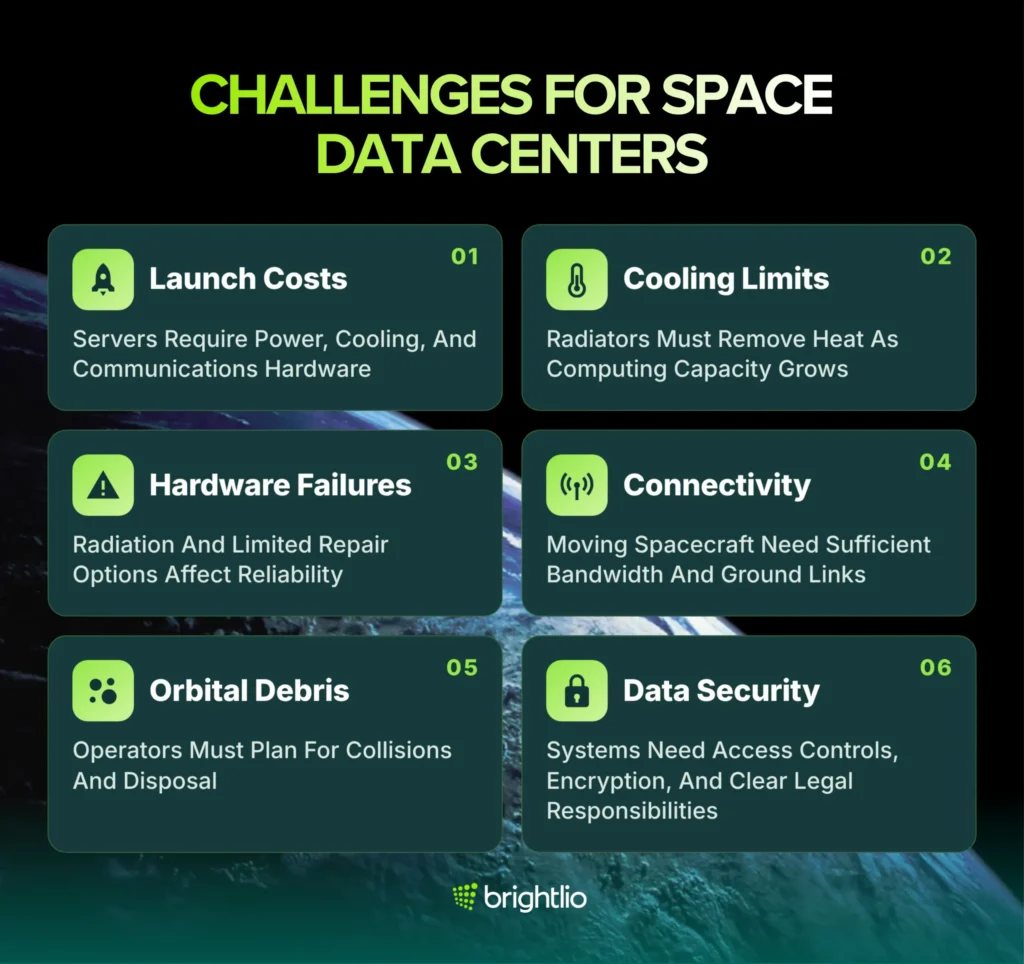
1. Launching the Complete Infrastructure
A computing satellite needs more than servers. Solar arrays, batteries, radiators, communications equipment, and spacecraft controls all add mass and occupy launch volume.
Launching the equipment also introduces scheduling and mission risks. A provider must account for the full spacecraft and its replacement plan when comparing costs with an Earth-based facility.
2. Scaling the Cooling System
Adding processors increases the heat that the spacecraft must reject. Radiators need sufficient surface area, suitable orientation, and a clear view for heat rejection. NASA’s thermal control guidance also accounts for heating from sunlight and radiation from Earth.
Large arrays and radiators must survive launch and deploy correctly. The practical capacity of a satellite therefore depends on how much heat it can remove, as well as how much electricity it can generate. Solar-array output and power available to the computing hardware are different figures.
3. Maintaining Hardware in a Harsh Environment
Radiation can disrupt electronics or cause cumulative damage. NASA’s radiation analysis guidance emphasizes evaluating commercial components against their expected orbit, shielding, and failure modes.
A server fault that requires a technician on Earth may require remote recovery, spare capacity, or a replacement spacecraft in orbit. Operators must design for these events before launch and consider how quickly the hardware will become outdated.
4. Providing Reliable Network Capacity
Cloud services depend on predictable connectivity. An orbital system must maintain links as spacecraft move, manage limited transmission opportunities, and deliver sufficient bandwidth to its users.
Optical communication adds a weather consideration at the ground connection. NASA notes that clouds and atmospheric turbulence can disrupt laser signals. Multiple ground stations and alternative routes can help, but they add infrastructure and operating costs.
5. Managing Orbital Debris and End of Life
Satellites share their operating environment with other spacecraft and debris. ESA’s 2026 Space Environment Report identifies growing collision risk and the need for more reliable disposal of satellites after their missions.
Data center operators would need to plan for collision avoidance, fuel reserves, and end-of-life disposal. Adding computing capacity also means taking responsibility for its effect on the orbital environment.
6. Protecting Data and Defining Responsibility
Physical distance does not remove software vulnerabilities, compromised credentials, or weaknesses in ground systems. Access management, encryption, secure updates, and recovery processes remain important parts of the service.
Space also does not create an automatic exemption from national jurisdiction. The UN Registration Convention addresses registration and jurisdiction arrangements for space objects. Businesses must establish which entities operate the service, where information travels, and what contractual and regulatory obligations apply.
How Do Space Data Centers Compare With Facilities on Earth
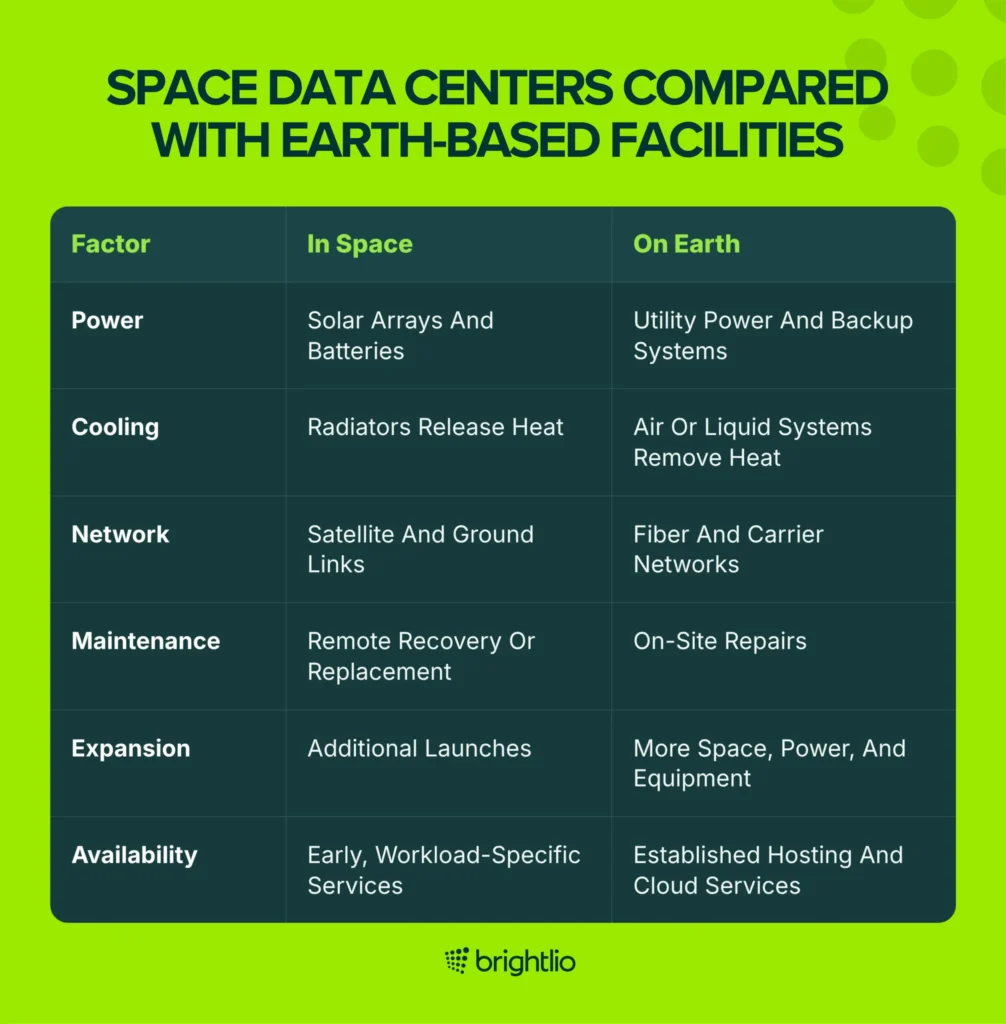
For conventional deployments, colocation lets businesses retain their hardware while using a provider’s power, cooling, connectivity, and physical security. Orbital computing changes how those supporting functions are delivered and maintained.
Which Workloads Could Benefit First
Based on the projects and technical requirements above, the clearest near-term fit is information generated in space. Satellite imagery analysis, sensor filtering, and scientific processing can benefit when local computation reduces the amount of raw data that must be transmitted to Earth.
Space missions could also use nearby computing for applications that need to operate during limited ground contact. The value would come from making a useful decision sooner or continuing a task without waiting for a terrestrial response.
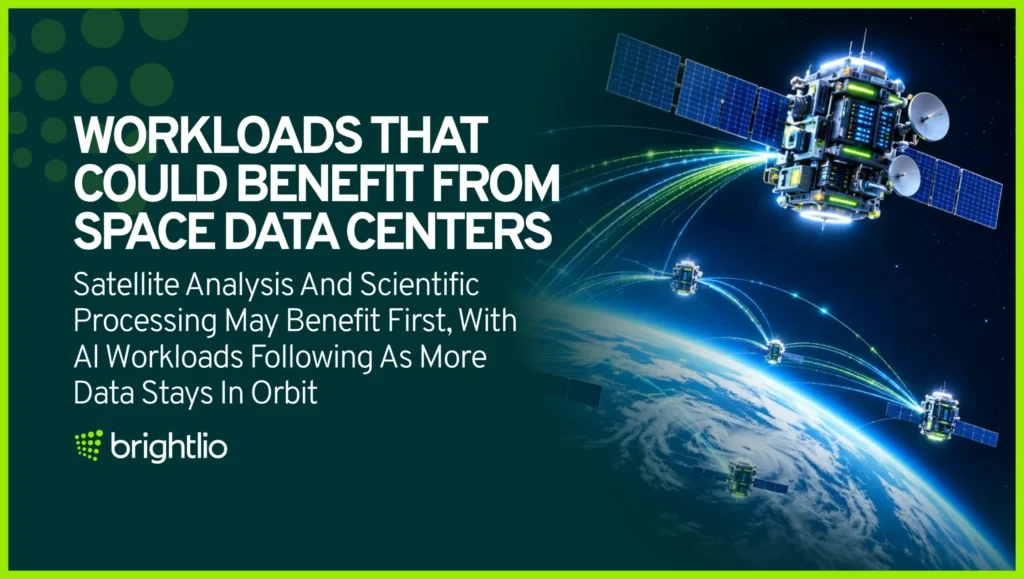
Some future batch AI workloads may be suitable if they perform substantial computation on data that can remain in orbit. Frequent transfers of large datasets could reduce that advantage, while distributed training requires tightly coordinated communication between accelerators.
For everyday business applications, the case is less immediate. Websites, payment systems, and databases need reliable connections to users and other services. Moving them to orbit would need to deliver a clear benefit that justifies the additional complexity.
Could Space Data Centers Be Cheaper
Solar power and reduced demand for terrestrial land make orbital computing attractive. However, low electricity purchases alone do not establish a lower cost per completed workload.
A useful comparison includes spacecraft manufacturing, launch, communications, mission operations, spare capacity, and hardware replacement. It also considers utilization: expensive processors that sit idle while waiting for data still contribute to the service’s cost.
Google’s 2025 cost analysis considered a scenario in which launch prices fall below $200 per kilogram by the mid-2030s. Under those assumptions, launch and operating costs could become comparable to the energy costs of an equivalent terrestrial data center on a per-kilowatt-year basis. This is a conditional model comparing selected costs, rather than a current launch quote or proof of lower total ownership costs.
Are Data Centers in Space More Sustainable
Environmental performance depends on the full lifecycle. ASCEND’s published study results identified a need for a tenfold reduction in launcher lifecycle emissions to achieve a substantial emissions benefit. Spacecraft manufacturing, replacement missions, and disposal belong in that assessment.
Radiative cooling can avoid the routine evaporative water use associated with some terrestrial systems. That potential benefit does not mean the complete supply chain has no water use or environmental impact.
Will Data Centers in Space Replace Terrestrial Facilities
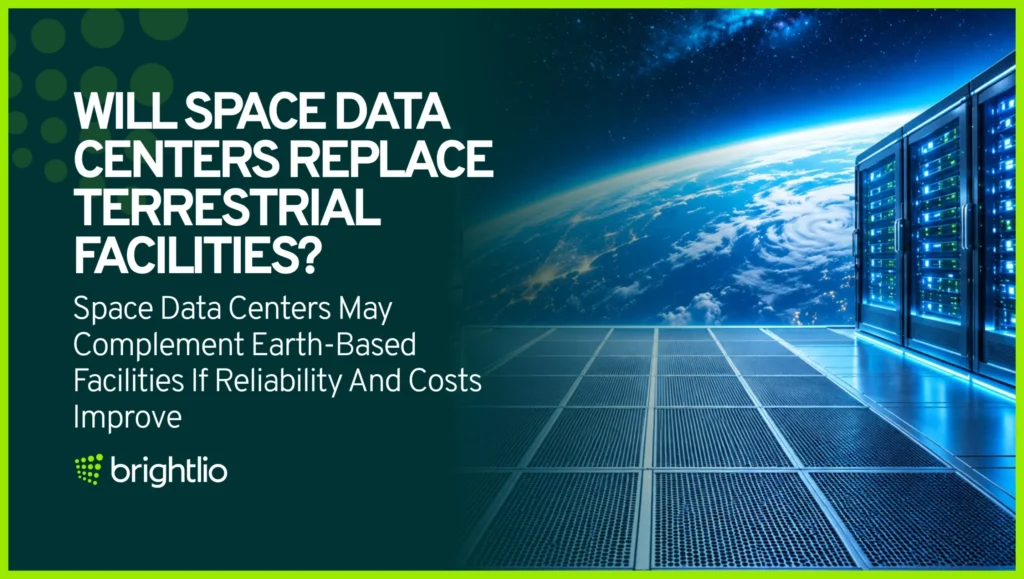
The available evidence supports a more limited near-term role: orbital computing serving selected workloads alongside infrastructure on Earth. Current missions demonstrate useful capabilities, but they do not establish a replacement for the broad services enterprises already buy from cloud and colocation providers.
Commercial progress will depend on repeatable workload performance, dependable communications, manageable failure rates, and costs customers can justify. Providers will also need to demonstrate how they expand capacity and replace equipment throughout the service’s life.
If you are considering an orbital pilot, ask the provider to demonstrate the following:
- A Measurable Workload Benefit: Lower data-transfer volume, faster useful results, or another improvement compared with your existing setup.
- End-to-End Service Performance: Available capacity, transfer rates, response times, and availability across both orbital and ground systems.
- A Tested Failure and Exit Plan: Recovery from a failed node, access to data during disruptions, and a practical way to retrieve your information when the service ends.
These requirements make a pilot easier to evaluate and prevent a successful hardware demonstration from being mistaken for a complete enterprise service.
Businesses planning a deployment today should continue evaluating the power, connectivity, support, and location their applications require. Brightlio’s data center location guides provide a starting point for comparing terrestrial markets while orbital infrastructure develops.
How Brightlio Can Help With Your Data Center Strategy
Your infrastructure should support the applications you run today and give you room to grow. Whether you need AI capacity, more reliable connectivity, or an additional deployment location, start with your workload and operating requirements.
Brightlio helps businesses compare colocation, cloud, and connectivity options based on technical requirements, location, and budget. Our colocation pricing guide explains the major cost components to consider when comparing providers.
If you are planning a deployment or reviewing your existing environment, contact Brightlio to discuss your requirements and explore suitable options.
Frequently Asked Questions
1. Are There Already Data Centers in Space?
Small computing systems and prototypes have reached orbit, including Starcloud-1, Google’s Suncatcher prototype, and Axiom’s two orbital compute nodes. Axiom reports that its nodes are operating. These systems are much smaller than a conventional hyperscale data center.
2. Why Would a Data Center Be Built in Space?
Potential reasons include generating solar power beyond terrestrial grids and processing satellite data close to its source. The business case depends on whether those benefits outweigh launch, networking, maintenance, and cooling costs.
3. Is Cooling Easier in Space?
Space provides an environment into which radiators can emit heat, but there is no outside air to carry heat away. Computing equipment needs a thermal system that moves heat from the chips to those radiators.
4. Would Space Data Centers Make the Internet Faster?
They could shorten the path from a satellite sensor to a nearby processor. Faster service for users on Earth is not guaranteed because performance depends on the complete network route, available bandwidth, and application requirements.
5. Can Ordinary Businesses Use Orbital Cloud Services?
Some providers are developing commercial offerings, but suitability and availability must be checked for the specific workload. Most businesses can meet current hosting needs through established terrestrial cloud and colocation services.
6. When Will Large Space Data Centers Become Common?
There is no established date. Scaling from prototypes to widely available services depends on technical performance, launch capacity, reliable operations, and competitive economics. Announced development targets should be treated as plans.

Tamzid is a cybersecurity researcher with 5+ years of experience across SaaS, security, compliance, data centers and cloud. He writes for brightdefense.com and hipaasimple.com, covering security, compliance, and infrastructure topics. Certified through Cisco, Fortinet (NSE 1), and the Basel Institute on Governance in OSINT, he grounds his work in primary sources and verified data.
Recent Posts
Data Centers in Space and the Future of Computing

Nuclear Powered Data Centers

10 Largest Data Centers in Europe

Data Centers and Colocation In Minnesota
Let's start
a new project together