
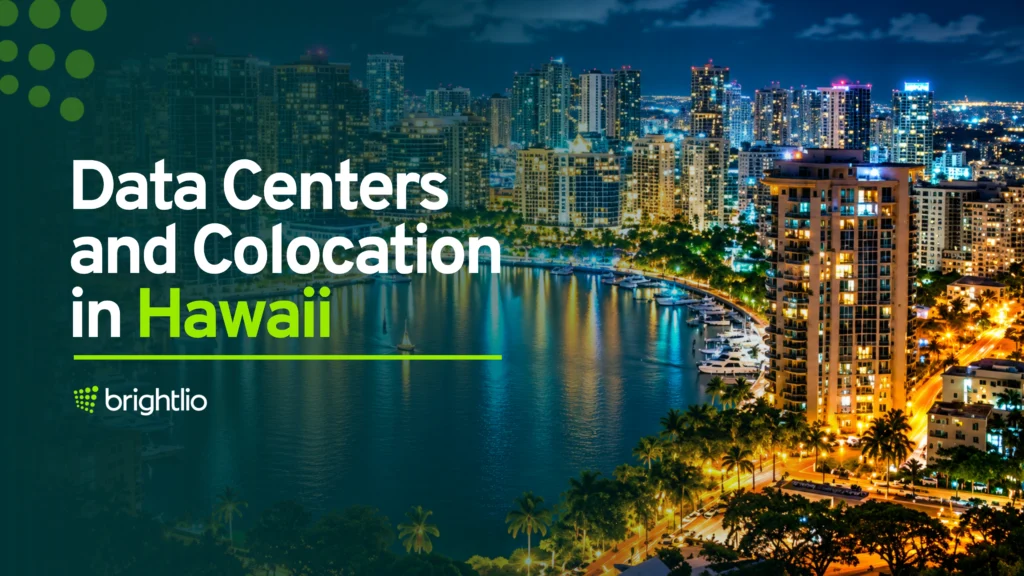
Hawaii is a small interconnection market with the most expensive power in the country. DRFortress in Honolulu is the largest colocation facility at 65,000 sq ft, and Servpac’s MTP data center in Mililani adds 30,000 sq ft inland.
The rest of the market is small. AlohaNAP runs a carrier hotel in Kapolei, Hawaiian Telcom operates colocation in Honolulu and on Hawaii Island, and the University of Hawaii runs its own data center and the Maui High Performance Computing Center.
There is no hyperscale campus, and none is coming soon. Commercial power cost 43.63¢/kWh in July 2026, the highest rate in the U.S. and about three times the 14.53¢ national average.
Hawaii’s real value is position. Subsea cables between Asia and North America land on Oahu, and Honolulu and Kapolei give carriers, cloud platforms, and island businesses a place to meet in the middle of the Pacific.
Buyers serving Hawaii users or needing trans-Pacific interconnection get what they need here. Anyone looking for cheap power or room to scale will find better options on the West Coast.
Hawaii Data Center Tracker
9tracked sites, plus 2 expansion projects
2 institutional2 expansions7 colocation
Data Center Map lists 8 facilities across 3 markets, counting rooms within shared buildings as separate listings. This tracker counts each site once and adds the Maui High Performance Computing Center. It tracks 9 sites, 2 institutional and 7 colocation, plus 2 expansion projects at existing sites. It is a selected inventory, not a count of every data center in the state.
Market Snapshot
Operating Institutional And Research Data Centers In Hawaii
Hawaii has no hyperscale campus. Its largest single-owner sites serve the University of Hawaii and Defense Department research, with operating sites in green and expansions in coral on the map.
- University of Hawaii ITS Data CenterHonoluluNot publishedOperational
Central data center for the University of Hawaii system on the Manoa campus
- Address:
- 2520 Correa Rd, Honolulu
- Operator:
- University of Hawaii
- Maui High Performance Computing CenterKiheiNot publishedOperational
Defense supercomputing center the University of Hawaii has run since 2001 under Air Force Research Laboratory contracts
- Location:
- Kihei, Maui
- Operator:
- University of Hawaii Applied Research Laboratory
Expansion Projects In Hawaii
Both projects add buildings at existing Oahu sites. A complete statewide development capacity total is unavailable, and a modular Globalstar deployment on Maui is left off because its site has not been disclosed.
- AlohaNAP Phase 1 ExpansionKapolei, new building1.5 MWUnder construction
10,300 sq ft building for about 200 more cabinets. 1547's 2024 announcement put the site at 2.7 MW after this phase, while its 2025 specification lists 1.5 MW of total building power, so the current baseline is unconfirmed
- Address:
- 91-340 Farrington Hwy, Kapolei
- Developer:
- 1547 Critical Systems Realty and Harrison Street
- Servpac MTP Building 2Mililani15,500+ sq ftAnnounced
$13 million second building on company-owned land. Servpac targeted completion in Q2 2026, and completion has not been confirmed
- Address:
- 200 Kahelu Ave, Mililani
- Developer:
- Servpac
Notable Colocation Facilities In Hawaii
Colocation clusters near the airport in Honolulu, with inland and West Oahu sites in Mililani and Kapolei. These five are notable facilities, not a size ranking.
- DRFortress HonoluluHonolulu, total facility area65,000 sq ftColocation
Hawaii's largest colocation facility by area, with a public cloud edge node among its anchor tenants
- Address:
- 3375 Koapaka St, Honolulu
- Operator:
- DRFortress (1547 and Harrison Street)
- Servpac MTP Data CenterMililani, available power, 2021 spec1 MWColocation
30,000 sq ft carrier-neutral facility 10 miles inland and 850 ft above sea level, per Servpac's 2021 specification sheet. The operator describes it as Tier 4
- Address:
- 200 Kahelu Ave, Mililani
- Operator:
- Servpac
- AlohaNAPKapoleiNot publishedColocation
Carrier hotel on West Oahu. Its current power baseline is unconfirmed while a 1.5 MW expansion is under way
- Address:
- 91-340 Farrington Hwy, Kapolei
- Operator:
- 1547 Critical Systems Realty
- Hawaiian Telcom Endeavor Data CenterHonoluluNot publishedColocation
Hawaiian Telcom's main Oahu colocation facility
- Address:
- 2339 Kamehameha Hwy, Honolulu
- Operator:
- Hawaiian Telcom
- Hawaiian Telcom KawaihaeKawaihaeNot publishedColocation
Hawaii Island facility the operator says sits outside flood, volcanic and evacuation zones, with a 5-day generator fuel reserve
- Location:
- Kawaihae, Hawaii Island
- Operator:
- Hawaiian Telcom
Other colocation facilities, shown on the map as green squares: , .
Choose a category to switch the list and highlight its sites on the map. Click any site card to find it on the map, or click a marker to jump to its card. Pins are approximate, and each MW figure carries the basis shown beside it.
Data sourced from Data Center Map, EIA rates, EIA, Maui Now, Hawaii Tribune-Herald, DRFortress, Servpac, Hawaii County notice, 1547, DatacenterDynamics and University of Hawaii, checked October 23, 2026. Totals count each campus or facility once; Data Center Map's own count lists individual facilities.
Why Colocate In Hawaii?
Hawaii's advantages come from geography. Subsea cables, cloud on-ramps, local hosting, and hazard-aware site design are real strengths. Power price, tax policy, and climate count against the state and appear with the drawbacks.
Four benefits hold up under scrutiny.
1. Trans-Pacific Interconnection
Honolulu and Kapolei are landing points for subsea cables that carry traffic between Asia and North America. Carriers and content networks that need a mid-Pacific meeting point can find one on Oahu.
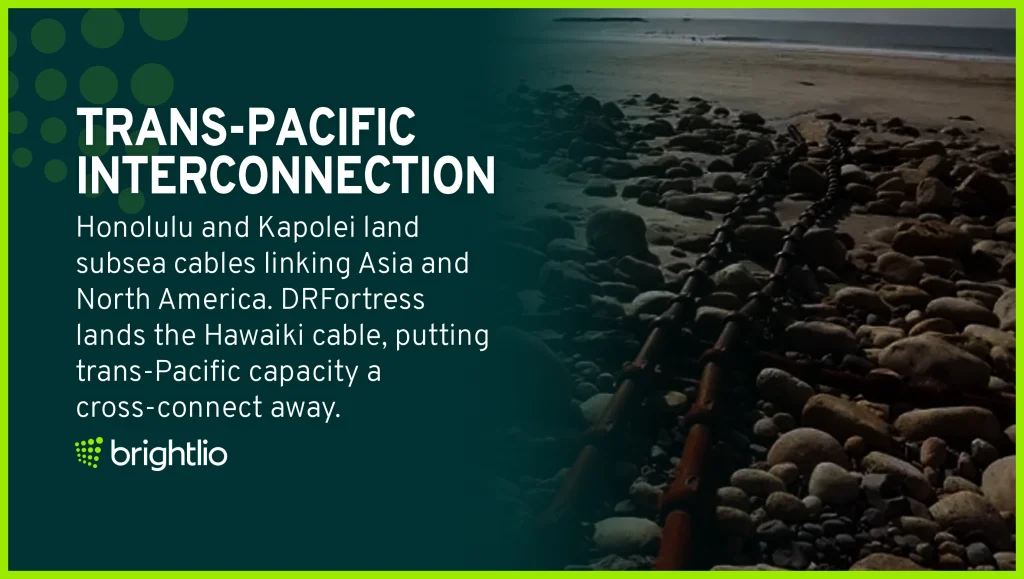
DRFortress serves as the Hawaii landing party for the Hawaiki cable, which links Australia, New Zealand, Hawaii, and Oregon. That role puts trans-Pacific capacity a cross-connect away for tenants in Honolulu.
2. Cloud On-Ramps And Local Peering
AlohaNAP in Kapolei is an AWS Direct Connect location and hosts the Aloha-IX internet exchange, where local networks swap traffic without leaving the island.
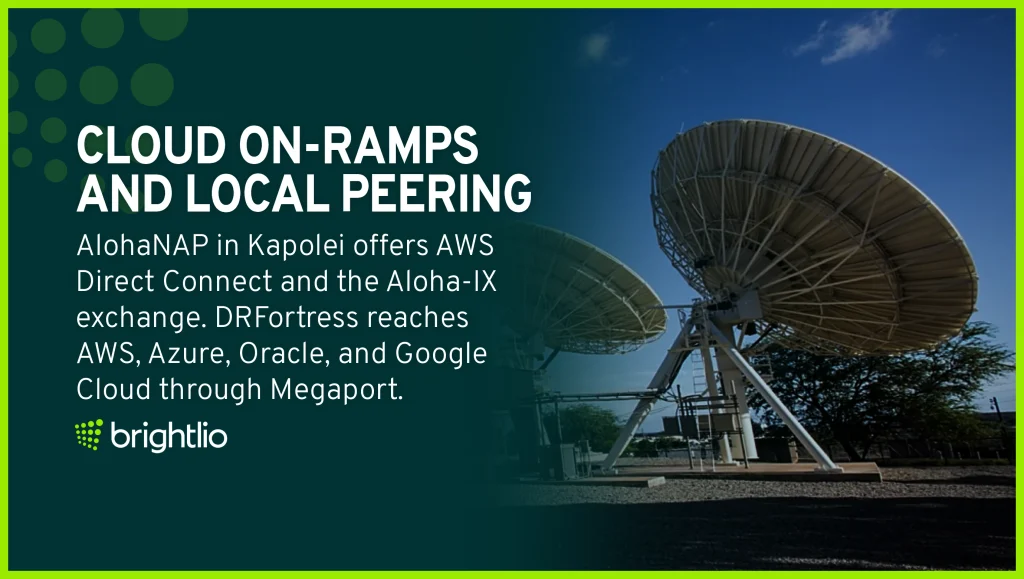
DRFortress offers cloud access through Megaport, with connections to AWS, Microsoft Azure, Oracle Cloud, and Google Cloud. Island businesses can reach the major clouds from a local cabinet.
3. Local Hosting For Hawaii Users
Hawaii sits more than 2,000 miles from the mainland, so every round trip to a West Coast data center adds latency. Hosting in Honolulu keeps applications close to the people who use them.
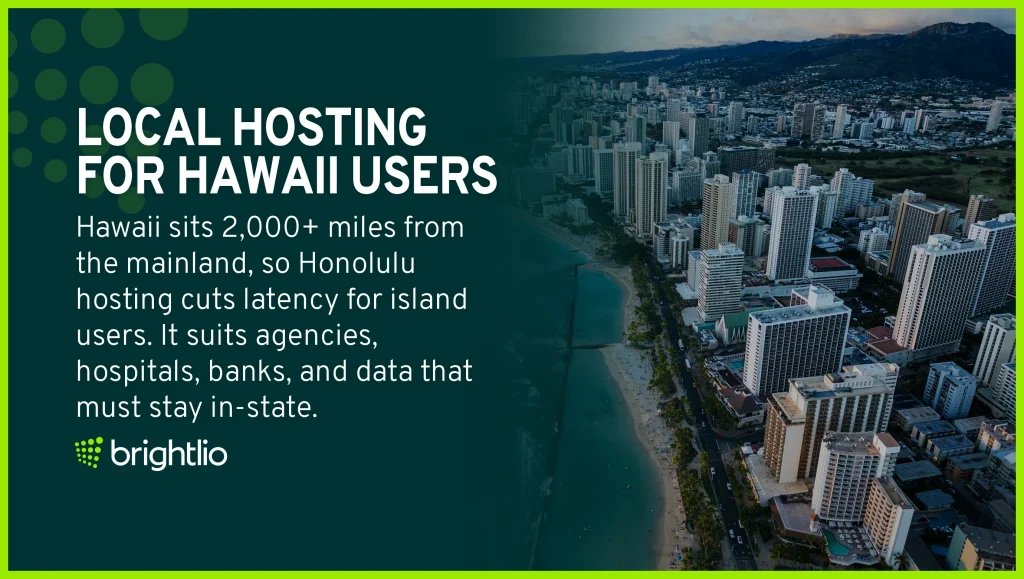
That matters most for state and county agencies, hospitals, banks, and the visitor industry, which serve users on the islands. Data that must stay in-state has a home here too.
4. Sites Built Above Hazard Zones
Hawaii's colocation operators design around tsunamis and flooding. Servpac's MTP data center sits 10 miles inland at 850 feet above sea level, and AlohaNAP sits 2 miles inland at 160 feet, outside the tsunami incursion zone, per 1547.
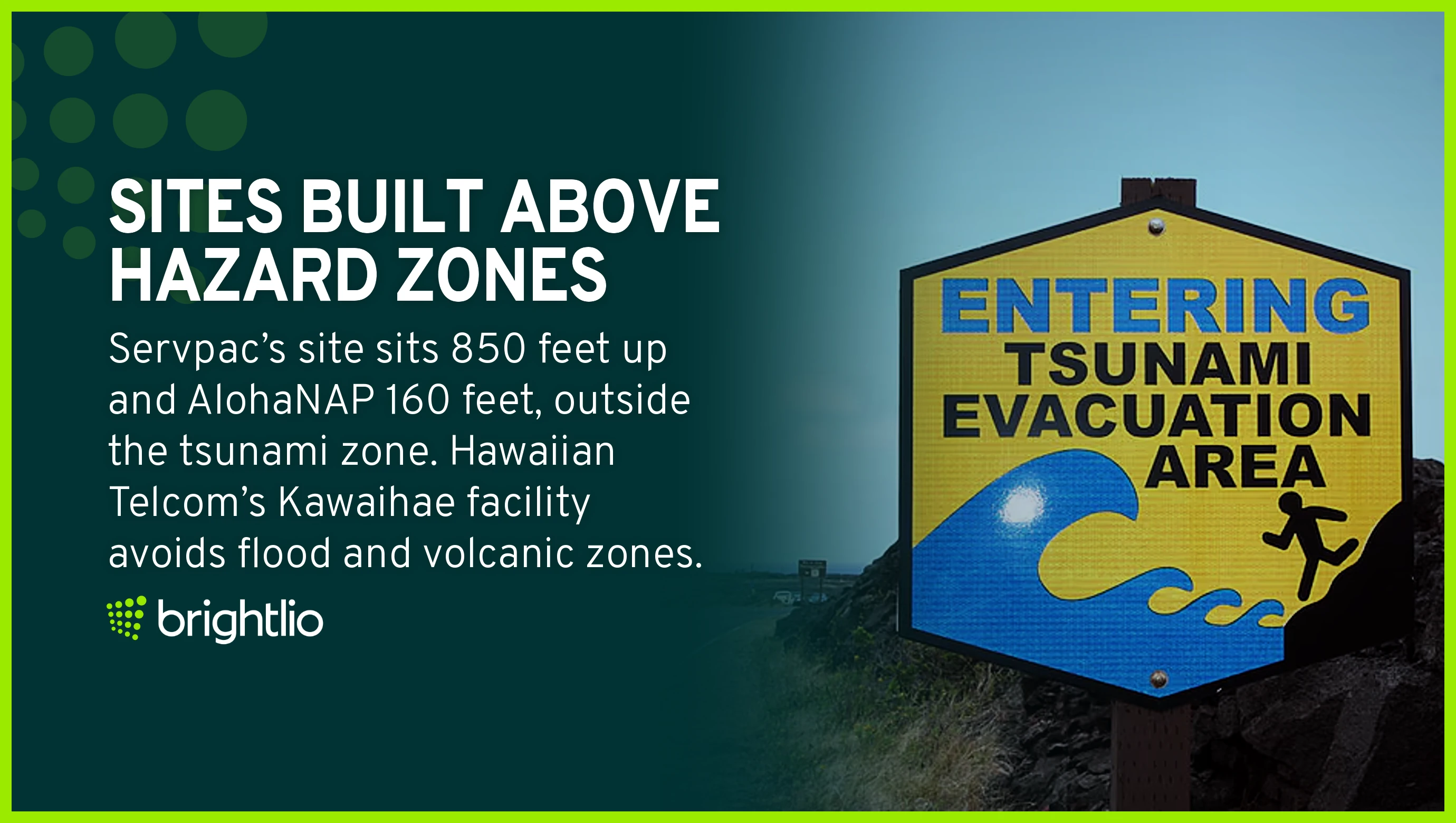
Hawaiian Telcom says its Kawaihae facility on Hawaii Island sits outside flood, volcanic, and evacuation zones, with a 5-day generator fuel reserve. Buyers can choose sites matched to the hazards of each island.
Key Cities Or Submarkets In Hawaii
Nearly all of Hawaii's data center capacity sits on Oahu, split between Honolulu's airport district, Central Oahu, and the West Oahu cable corridor. The neighbor islands hold a research center on Maui and a single colocation site on Hawaii Island.
The five submarkets below run from the busiest interconnection hub to the most remote.
1. Honolulu Airport District
The area around Daniel K. Inouye International Airport holds Hawaii's densest cluster of carriers. DRFortress at 3375 Koapaka St, profiled below, anchors the district, and Lumen operates a Honolulu facility nearby.
Servpac runs its Puahale site a short drive east, and Hawaiian Telcom's Endeavor data center in Kalihi, profiled below, serves the same corridor.
This district suits carriers, cloud platforms, and enterprises that need the most network choice in the state from one building.
2. Central Oahu: Mililani
Mililani holds Servpac's MTP data center, profiled below, set high above the coast in the middle of the island.
The inland location separates it from the airport cluster, which makes it a strong second site for buyers who want production and recovery on the same island without sharing coastal risk.
3. West Oahu: Kapolei
Kapolei is Oahu's cable corridor. AlohaNAP, profiled below, sits beside the Hawaii Pacific Teleport, with access to subsea cables and more than 40 communications satellites.
The Hawaiki cable lands at an open-access station in Kapolei, which makes West Oahu the natural home for trans-Pacific networks and satellite operators.
4. Manoa And Urban Honolulu
The University of Hawaii runs its central data center at 2520 Correa Rd on the Manoa campus. It serves the UH system and publishes no capacity.
The site is institutional and offers no colocation. Its relevance to other buyers is the research and education networks it anchors in Honolulu.
5. Maui And Hawaii Island
Maui holds the Maui High Performance Computing Center in Kihei, profiled below, a Defense Department research site run by the University of Hawaii.
On Hawaii Island, Hawaiian Telcom runs a colocation facility in Kawaihae. Hawaii County is reviewing Bill 170, a zoning proposal that would ban industrial-scale data centers on the island.
The neighbor islands suit local businesses and recovery sites for Oahu systems. Large deployments have no path here.
Notable Colocation Providers And Facilities In Hawaii
Hawaii's five most significant operating sites are four colocation facilities on Oahu and one research computing center on Maui. Only two publish their size, and the largest is a fraction of a typical mainland building.
The five profiles below run from the largest interconnection hub to the most specialized site.
1. DRFortress Honolulu
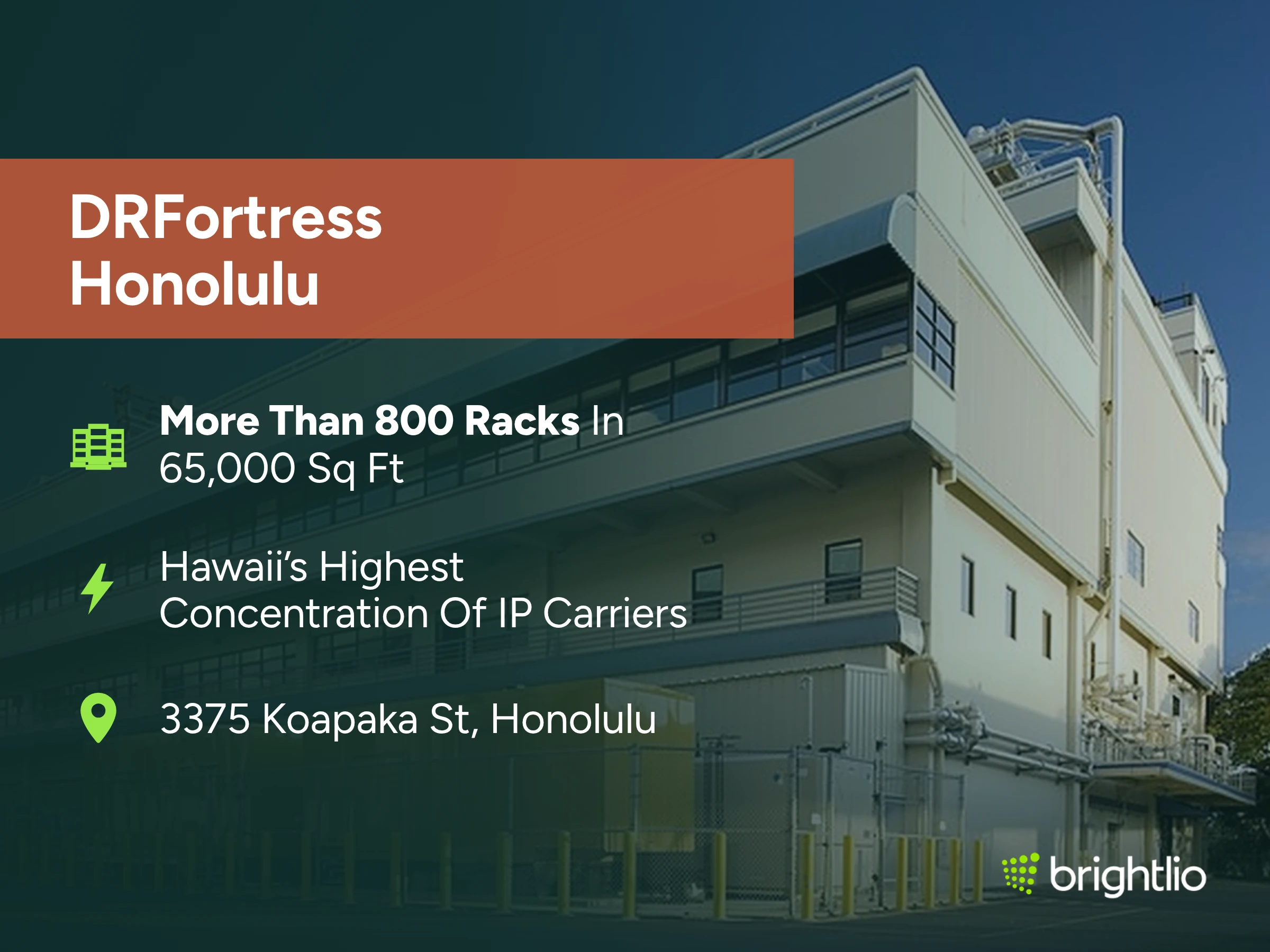
DRFortress at 3375 Koapaka St is Hawaii's largest carrier-neutral data center, with more than 800 racks in a 65,000 sq ft facility. It opened in 2006 in a former Equinix building near the airport.
A public cloud edge node is among its anchor tenants, and the building holds the state's highest concentration of IP carriers and networks.
DRFortress is best suited for carriers, content networks, and enterprises that need the most interconnection options in Hawaii.
2. Servpac MTP Data Center
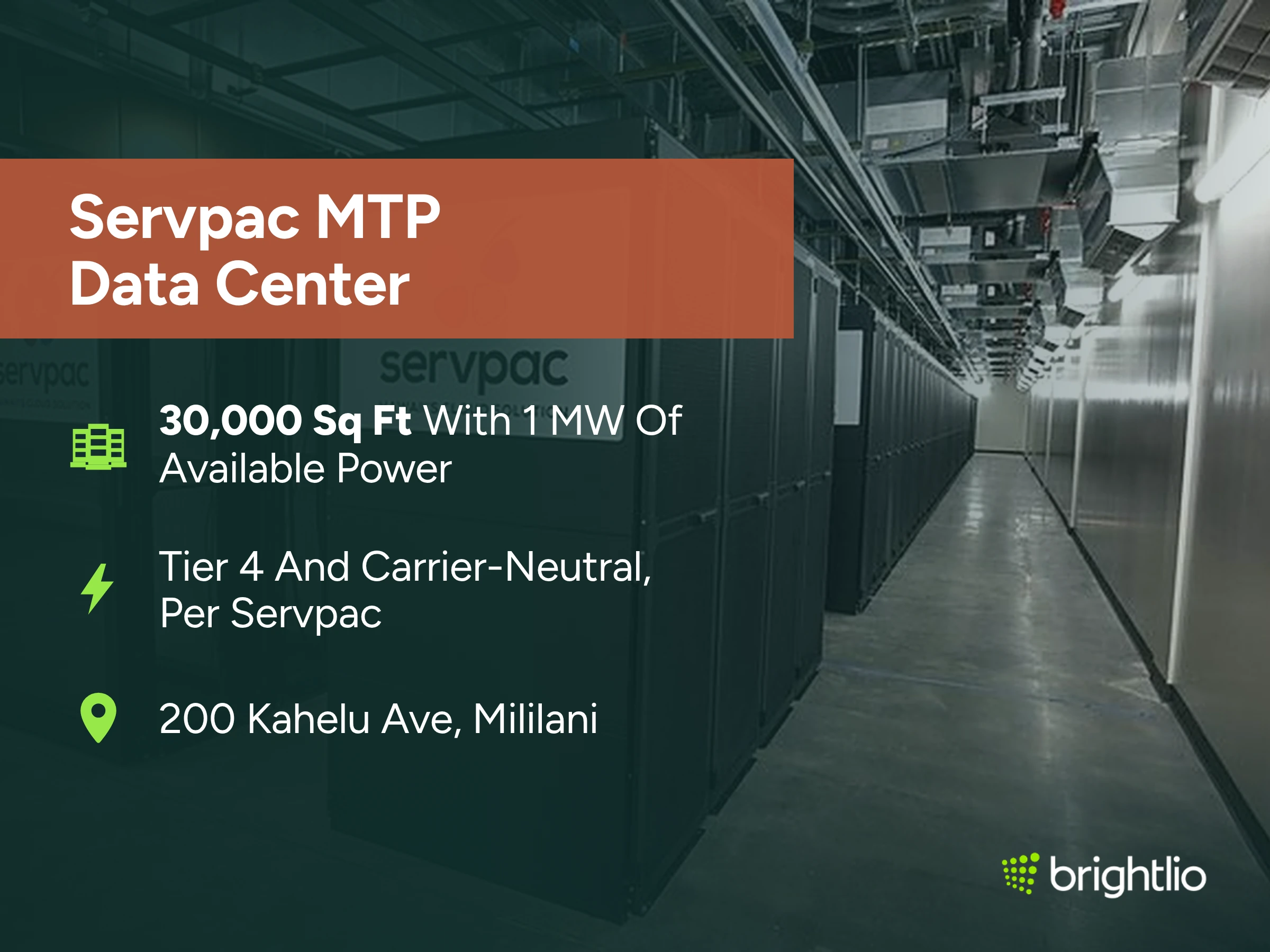
Servpac's MTP data center at 200 Kahelu Ave in Mililani covers 30,000 sq ft with 1 MW of available power, per its 2021 specification. Servpac describes it as Tier 4 and carrier-neutral.
The Central Oahu location keeps the building away from the coast and the airport cluster.
Servpac MTP is best suited for enterprises and government agencies that want a hardened primary site or a recovery site separate from Honolulu.
3. AlohaNAP Kapolei
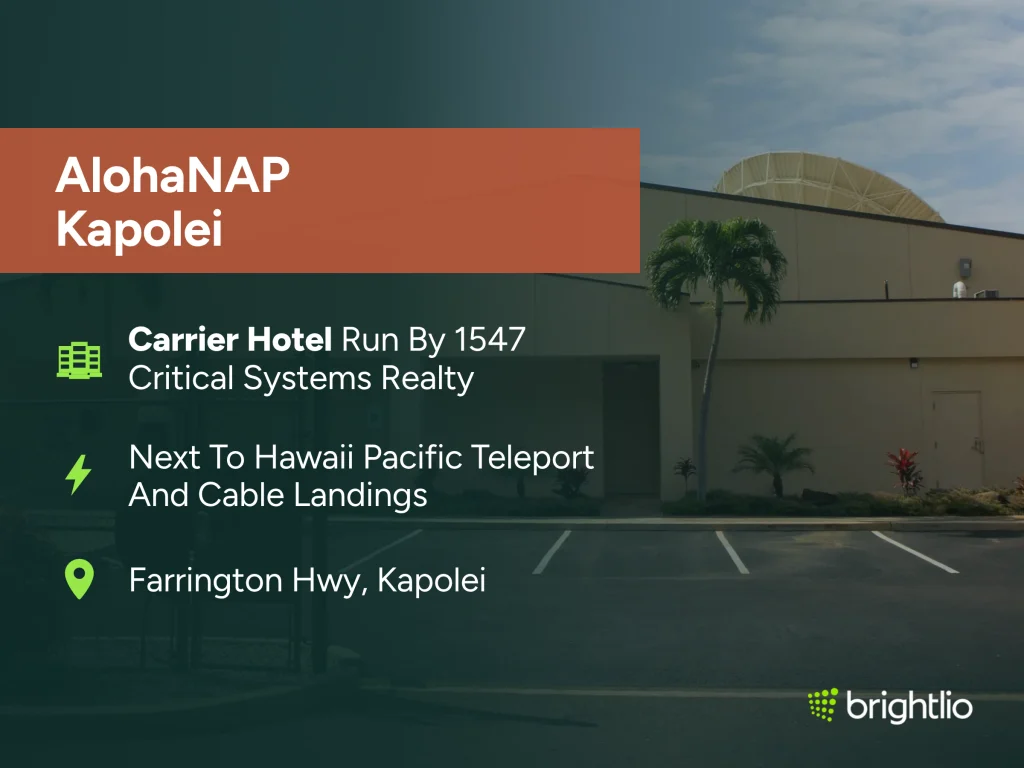
AlohaNAP at 91-340 Farrington Hwy in Kapolei is a carrier hotel run by 1547 Critical Systems Realty. It does not publish a current power figure.
The building sits next to the Hawaii Pacific Teleport and close to the island's cable landing stations, so it serves as a meeting point for subsea, satellite, and cloud traffic.
AlohaNAP is best suited for network operators, satellite providers, and enterprises that need direct cloud and trans-Pacific connectivity.
4. Hawaiian Telcom Endeavor Data Center
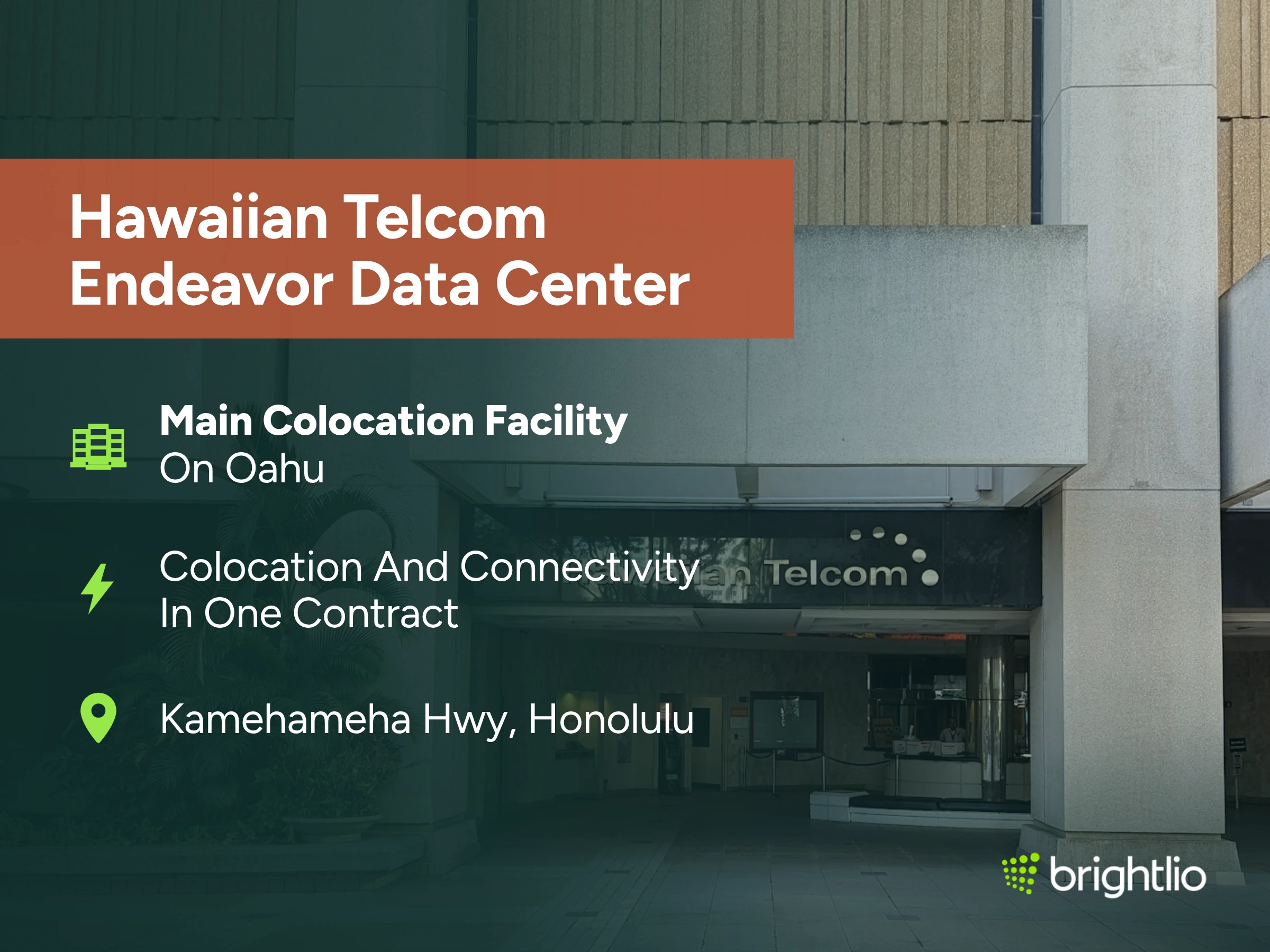
Hawaiian Telcom's Endeavor data center at 2339 Kamehameha Hwy is the company's main colocation facility on Oahu. It publishes no capacity.
Tenants can buy colocation and connectivity from the state's incumbent telecom provider in one contract.
Endeavor is best suited for Hawaii businesses that already rely on Hawaiian Telcom's network and want local colocation.
5. Maui High Performance Computing Center
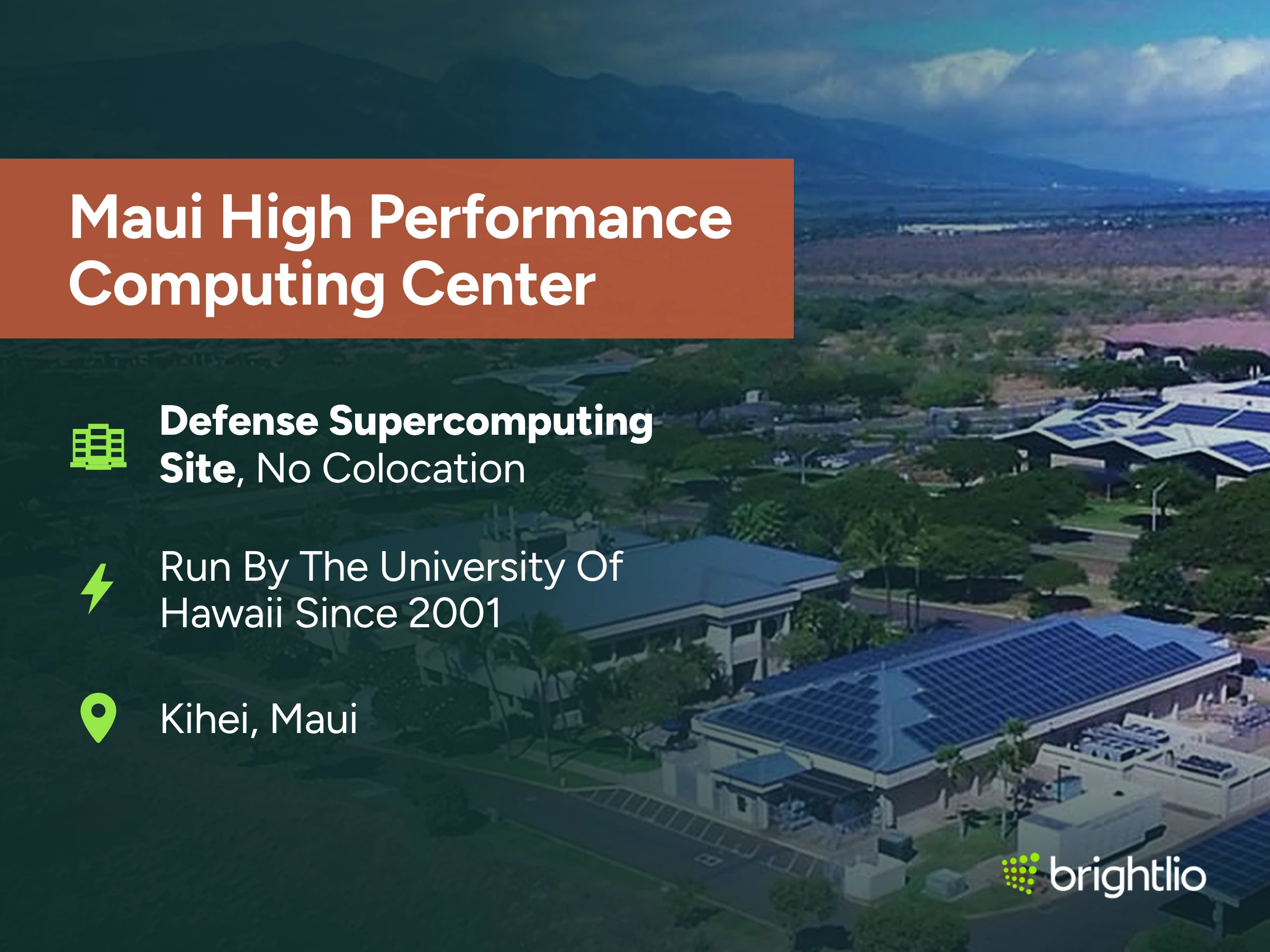
The Maui High Performance Computing Center in Kihei is a Defense Department supercomputing site. The University of Hawaii has run it since 2001 under Air Force Research Laboratory contracts.
The center offers no commercial colocation and publishes no capacity.
Its relevance to other buyers is talent: it gives Maui a base of high-performance computing staff that few island communities have.
Recent Developments In Hawaii (Last 12 To 24 Months)
- September 2026: Hawaii County published notice on Bill 170, a zoning proposal that would ban industrial-scale data centers on Hawaii Island.
- July 2026: Hawaii County lawmakers introduced legislation targeting data centers on Hawaii Island.
- March 2026: Hawaiian Electric reported that renewables supplied 37% of power across its five-island territory in 2025, even as electricity use spiked.
- April 2025: 1547 Critical Systems Realty and Harrison Street acquired DRFortress from GI Partners, putting Hawaii's two main carrier hotels under the same owners.
Drawbacks And Considerations For Colocation In Hawaii
Hawaii's drawbacks are structural. Most come from its isolation, and none will change quickly.
The six drawbacks below matter most when comparing Hawaii with California and the Pacific Northwest.
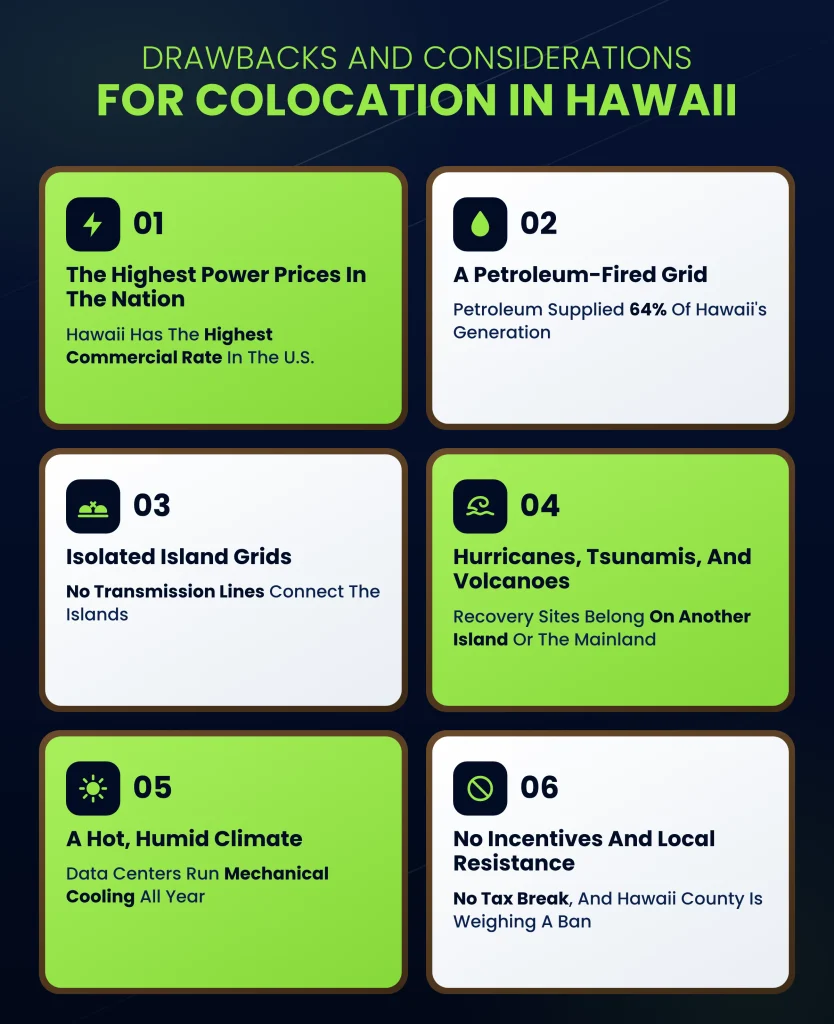
1. The Highest Power Prices In The Nation
Hawaii's commercial rate is the highest in the U.S. by a wide margin. Buyers comparing colocation pricing will find power alone makes Hawaii the most expensive state to run servers.
2. A Petroleum-Fired Grid
Petroleum supplied 64% of Hawaii's generation, and renewables, including rooftop solar, supplied 34% statewide in 2025. Imported oil keeps prices high and volatile.
3. Isolated Island Grids
No transmission lines connect the islands, and Hawaiian Electric serves about 99% of residents outside Kauai. A large new load has no neighboring grid to lean on.
4. Hurricanes, Tsunamis, And Volcanoes
Hurricanes and tsunamis threaten coastal sites, and volcanic activity affects Hawaii Island. Recovery sites need to sit on another island or on the mainland.
5. A Hot, Humid Climate
Year-round warmth and humidity limit outside-air cooling. Data centers run mechanical cooling all year, on the most expensive power in the country.
6. No Incentives And Local Resistance
Hawaii offers no data center tax break, and Hawaii County is weighing a ban on industrial-scale facilities. Large developers face a market that is neither cheap nor welcoming.
How Brightlio Can Help With Colocation In Hawaii
Brightlio helps organizations compare Hawaii colocation, cloud connectivity, and disaster recovery options across Honolulu, Mililani, Kapolei, and the neighbor islands, along with West Coast markets when Hawaii falls short. Our team helps clients evaluate facility fit, power pricing, carrier access, compliance needs, cooling design, and long-term site risk.
We compare providers such as DRFortress, AlohaNAP, Servpac, Hawaiian Telcom, Lumen, and other Hawaii operators. For Hawaii projects, we pay close attention to power costs, tsunami and hurricane exposure, island-to-island and trans-Pacific routes, cloud on-ramps, and recovery sites off the island.
Brightlio can support cabinet, cage, private suite, and multi-site disaster recovery planning, and our quotes come free to clients. Contact Brightlio to compare Hawaii colocation solutions and start planning a cost-effective and resilient deployment.
Frequently Asked Questions
1. Which U.S. State Has The Most Data Centers?
Virginia has the most data centers in the United States, led by Northern Virginia's Loudoun County cluster. Hawaii is one of the smallest markets, with 9 tracked sites.
2. How Many Data Centers Are In Hawaii?
Hawaii has 9 tracked data center sites: 2 institutional and 7 colocation. Data Center Map lists 8 facilities across 3 markets.
3. What Is The Largest Data Center In Hawaii?
DRFortress in Honolulu is the largest, with 65,000 sq ft and more than 800 racks. Hawaii has no hyperscale campus.
4. Who Operates Data Centers In Hawaii?
1547 Critical Systems Realty and Harrison Street own DRFortress and AlohaNAP. Servpac, Hawaiian Telcom, Lumen, and the University of Hawaii run the other main sites.
5. Are Hawaii Electricity Costs Favorable For Colocation?
No. Commercial power cost 43.63¢/kWh in July 2026, the highest in the country. Power is the single biggest cost of running servers in Hawaii.
6. What Tax Incentives Does Hawaii Offer Data Centers?
Hawaii offers no data center tax break. Hawaii County is reviewing Bill 170, which would ban industrial-scale data centers on Hawaii Island.
7. Which Cities Are Best For Colocation In Hawaii?
Honolulu's airport district has the most carriers, led by DRFortress. Kapolei suits trans-Pacific and satellite networks, and Mililani offers an inland recovery site.
8. Can Hawaii Colocation Support AI Or High-Density Workloads?
Not at scale. Hawaii's buildings are small, and the power price makes dense GPU deployments far more expensive than on the mainland.
9. Why Does Hawaii Matter For Subsea Cables?
Hawaii sits between Asia and North America, so Oahu is a natural landing point for trans-Pacific cables. Kapolei hosts an open-access landing station for the Hawaiki cable.
10. Who May Not Need Hawaii Colocation?
Buyers serving mainland users or running large deployments will pay far less on the West Coast. Hawaii makes sense mainly for island users and trans-Pacific interconnection.
Keep reading with our colocation guides for these nearby markets:

Tamzid is a cybersecurity researcher with 5+ years of experience across SaaS, security, compliance, data centers and cloud. He writes for brightdefense.com and hipaasimple.com, covering security, compliance, and infrastructure topics. Certified through Cisco, Fortinet (NSE 1), and the Basel Institute on Governance in OSINT, he grounds his work in primary sources and verified data.
Recent Posts

Top 5 Floating Data Centers

Data Centers and Colocation in Colorado

Data Centers and Colocation in Delaware
Data Centers and Colocation in Hawaii
Let's start
a new project together