
Missouri data centers serve two established colocation markets: Kansas City and St. Louis. Both cities offer facilities where businesses can rent space for their servers and connect to multiple networks. Large campus developments are expanding the state’s infrastructure footprint, though their announced power figures do not measure space available today.
The October 10, 2026 market snapshot groups 51 facilities across 43 operators. Its categories comprise five featured operating sites, 28 additional colocation entries, and 18 planned projects. The colocation category includes operating facilities. Current operator information changes how some planned entries should be described, particularly Patmos’s existing Kansas City operation.
Data Center Map lists 95 facilities across seven Missouri markets. Its listing count differs from a campus-based inventory. Buyers should use these figures to understand market coverage, then confirm which individual buildings can meet their requirements.
Missouri’s average retail electricity price was 11.06¢/kWh in 2024, according to EIA. This historical statewide figure covers all customer sectors. A colocation customer’s bill depends on the provider’s contract and the services included.
For an immediate deployment, start with Missouri’s carrier hotels and established commercial facilities. For a larger future commitment, establish the utility delivery schedule first. Confirm project approvals and the capacity offered in the proposed construction phase.
Missouri Data Center Tracker
51data center facilities
5 operational18 planned28 colocation
Data Center Map counts 95 buildings across 7 markets here. Multi-building campuses count once, while tenant suites in shared buildings count separately.
Market Snapshot
Largest Operating Data Centers In Missouri
These are the five largest operating sites by published capacity. Meta's Northland campus is the biggest operating build but doesn't publish a firm MW figure, and every other listing appears on the map, with operating sites in green and planned ones in coral.
- Netrality 210 N TuckerSt. Louis, available power20 MWOperational
442,837 sq ft building with 45,200 sq ft of raised floor for colocation
- Address:
- 210 N Tucker Blvd, St. Louis
- Operator:
- Netrality
- 1530 SwiftNorth Kansas City, campus power20 MWOperational
Campus of roughly 175,000 sq ft with a large peering ecosystem
- Address:
- 1530 Swift St, North Kansas City
- Operator:
- NOCIX
- Edged Kansas CityKansas City, facility design18 MWOperational
Waterless-cooled facility developed with Evergy, the local utility
- Address:
- 3420 N Arlington Ave, Kansas City
- Operator:
- Edged Energy
- Meta Kansas City Northland CampusKansas CityNot publishedOperational
Three-building campus at I-435 and US-169, online since August 2025
- Address:
- 1800 NW 128th St, Kansas City
- Operator:
- Meta
- Energy:
- Matched with 100% clean and renewable energy, per Meta
- Iron Mountain KCM-1Kansas CityNot publishedOperational
Underground colocation facility 110 feet below the surface
- Address:
- 6301 Winchester Ave, Kansas City
- Operator:
- Iron Mountain Data Centers
5 Largest Planned Data Centers In Missouri
Nebius's Independence campus and the Festus project account for 1,550 MW of the 2,950 MW in the five largest projects, while Google's Project Mica is already being built.
- Nebius Independence CampusIndependence, campus plan800 MWPlanned
2.5 million sq ft AI campus with up to four buildings on 400 acres, powered by a new private facility
- Location:
- Independence, Jackson County
- Developer:
- Nebius
- Festus Data Center CampusFestus, reported750 MWPlanned
240-acre campus south of St. Louis with potential for over $1 billion in investment
- Location:
- Festus, Jefferson County
- Developer:
- CRG
- Google Project Mica CampusKansas City, full build-out700 MWPlanned
Five buildings totaling 1.56 million sq ft on nearly 500 acres
- Location:
- Kansas City Northland, Clay County
- Developer:
- Power:
- Evergy, via Nashua Power Station and on-site substations
- Construction:
- Google confirmed work under way in February 2026
- Atmosphere Kansas City CampusSt. Joseph, scalable power600 MWPlanned
Campus the operator describes as Tier III+, with scalable power for AI and ML workloads
- Address:
- 6321 Pickett Rd, St. Joseph
- Developer:
- Atmosphere Data Centers
- Patmos AI Data CenterKansas City, planned100 MWPlanned
Conversion of the former Kansas City Star printing plant into a 400,000 sq ft facility
- Address:
- 1601 McGee St, Kansas City
- Developer:
- Patmos Hosting
- Tenant:
- Nebius plans a GPU cluster starting at 5 MW
Other planned projects, shown on the map in coral: , , , , , , , , , , , , .
5 Largest Colocation Facilities In Missouri
Retail colocation splits between Kansas City's downtown carrier hotels and St. Louis's Tucker Boulevard corridor, led by Saragon's 67,518 sq ft Kansas City facility.
- Saragon Kansas CityKansas City67,518 sq ftColocation
42U cabinets, multiple UPS units and carrier-neutral ports up to 100GE
- Address:
- 101 Holmes St, Kansas City
- Operator:
- Saragon
- Lumen St. Louis 1St. Louis40,178 sq ftColocation
AC and DC power with generator and UPS backup and N+1 HVAC
- Address:
- 1015 Locust St, St. Louis
- Operator:
- Lumen
- H5 Data Centers St. LouisSt. Louis36,000 sq ftColocation
Space inside the 550,000 sq ft Globe Building
- Address:
- 710 N Tucker Blvd, St. Louis
- Operator:
- H5 Data Centers
- Cogent Data Center St. LouisSt. Louis6,600 sq ftColocation
42U cabinets with UPS and generator backup
- Address:
- 1925 Chouteau Ave, St. Louis
- Operator:
- Cogent Communications
- Netrality 1102 GrandKansas CityNot publishedColocation
Kansas City's carrier hotel and largest neutral hub for voice and data traffic
- Address:
- 1102 Grand Blvd, Kansas City
- Operator:
- Netrality
Other colocation facilities, shown on the map as green squares: , , , , , , , , , , , , , , , , , , , , , , .
Choose a category to switch the list and highlight its sites on the map. Click any site card to find it on the map, or click a marker to jump to its card. Pins are approximate, and each MW figure carries the basis shown beside it.
Data sourced from Data Center Map, EIA, Port KC, KSHB, Compute Atlas and Baxtel, checked October 10, 2026. Listings count individual buildings, and the lists show the largest sites in each category.
Why Colocate In Missouri
Missouri combines established network hubs with different facility designs. Qualifying developments can receive sales tax relief. Seasonal weather can support efficient cooling. The sections below explain where each benefit matters and what buyers should confirm.
Established Network Hubs In Two Cities
Kansas City and St. Louis each have carrier hotels, where multiple telecommunications providers connect their networks. Netrality’s 1102 Grand serves the Kansas City market. Its 210 North Tucker facility provides an established interconnection location in downtown St. Louis.
At 210 North Tucker, Netrality identifies 61+ on-net network providers. On-net means a provider has a network presence at the facility. That presence can simplify connections between customers and carriers in the same building.
A carrier-neutral data center allows customers to choose among network providers. The practical benefit comes from the carriers and services available to the proposed suite. A provider reached through another building may require a separate circuit and an additional monthly charge.
Compare the route to your offices and cloud services. Multiple carrier names do not establish physical route diversity if their cables share a building entrance or conduit.
A Choice Of Facility Designs
Missouri’s commercial market includes downtown interconnection buildings, underground facilities, and newer sites designed for dense computing. This range supports different requirements for network access, equipment density, and physical protection.
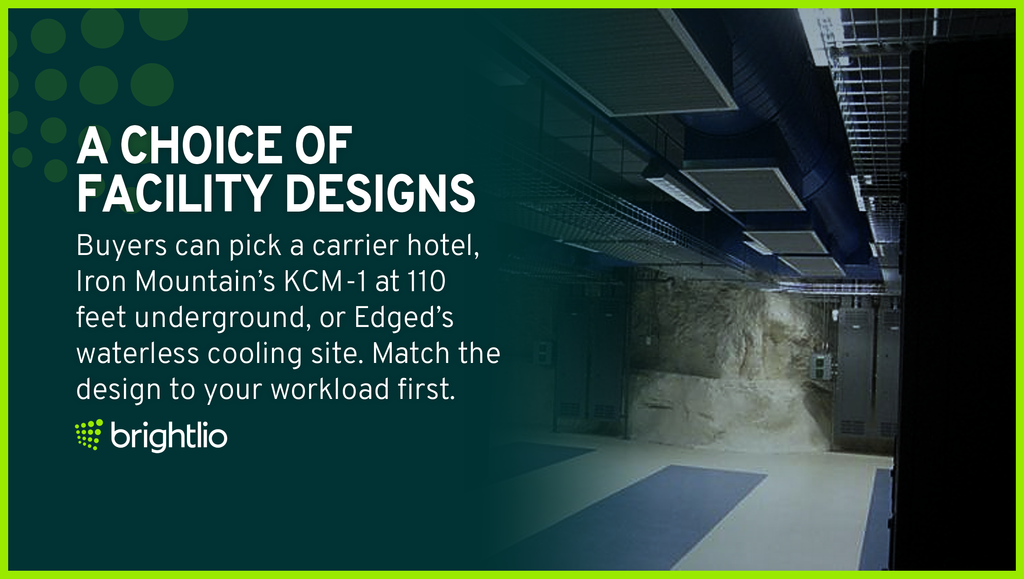
Iron Mountain’s KCM-1 sits 110 feet underground in Kansas City. Edged offers a newer facility with waterless cooling. NOCIX’s 1530 Swift provides colocation with connections to the regional peering ecosystem.
A business exchanging traffic with several networks may prioritize a carrier hotel. A dense computing installation needs sufficient power and cooling in the particular room it will occupy. A recovery deployment needs a design that addresses the failures it must survive.
Compare these options using the same operating requirements. Technical support coverage and access procedures can affect day-to-day service as much as the building’s physical design.
Sales Tax Relief For Qualifying Projects
Missouri’s data center program provides sales and use tax exemptions for qualifying purchases. Covered categories include equipment and construction materials, with utilities included under the applicable program requirements.
For a qualifying new facility, the headline thresholds are $25 million of investment and 10 new jobs. The statute applies a 36-month period from conditional approval. The jobs must meet a wage threshold of at least 150% of the county average wage.
These requirements make the program relevant to developers and qualifying operators. A business leasing a cabinet should establish how an approved exemption affects its own purchases or provider charges. The host facility’s eligibility does not automatically determine the tax treatment of every tenant transaction.
Seasonal Opportunities To Reduce Cooling Energy
Missouri’s cooler months can allow appropriately designed facilities to reduce their use of mechanical refrigeration. This operating approach is often called economization or free cooling.
The benefit depends on outdoor conditions and the temperature limits of the cooling system. Humidity and equipment design influence when economization can operate. A statewide annual temperature average cannot establish the number of qualifying hours at a particular site.
Request measured seasonal performance from an operating facility. For a proposed deployment, ask for the assumptions behind the cooling model and the conditions used to size equipment for summer demand.
Where Missouri Data Centers Are Located
The established market concentrates around Kansas City and St. Louis. Northland and Independence add major campus developments near Kansas City. The areas below offer different combinations of operating facilities and future development.
Downtown Kansas City
Downtown Kansas City contains network-focused locations such as Netrality 1102 Grand and Saragon at 101 Holmes Street. The snapshot assigns Saragon 67,518 square feet. The former Kansas City Star printing plant at 1601 McGee Street houses Patmos’s AI campus.
This area suits buyers comparing interconnection services and commercial colocation within the urban core. A building’s proximity to a carrier hotel can help, but the actual connection needs its own price and service commitment.
Kansas City, Missouri, is distinct from Kansas City, Kansas. Nearby facilities in Lenexa, Shawnee, and Overland Park belong to the Kansas side of the metropolitan market. They should remain outside a Missouri-only count.
North Kansas City And The Northland
North Kansas City includes NOCIX’s 1530 Swift campus. Farther into Kansas City’s Northland, Meta operates its own campus and Google is developing Project Mica.
These locations illustrate the difference between commercial colocation and facilities built for an operator’s own computing. NOCIX sells colocation services. Meta’s campus supports Meta’s platforms and is not a retail cabinet option.
Buyers should establish the commercial model before comparing campus size. A large corporate development can expand regional infrastructure without adding space that an unrelated business can lease.
Independence
Independence is a major development location through Nebius’s AI factory near Route 78 and Little Blue Parkway. Nebius describes a campus planned for up to 1.2 GW across approximately 400 acres.
The company’s power plan combines service through Independence Power & Light with future on-site generation. This makes the utility arrangement central to the project’s delivery schedule.
Independence matters most to buyers evaluating large computing commitments and future expansion. A campus-wide power plan needs to be translated into the specific service, building, and delivery phase offered to a customer.
St. Louis And Its Western Suburbs
Downtown St. Louis has an established cluster around Tucker Boulevard, Locust Street, and Walnut Street. Netrality operates at 210 North Tucker and 900 Walnut. H5 occupies 36,000 square feet in the much larger Globe Building at 710 North Tucker, according to the snapshot.
The snapshot lists 40,178 square feet for Lumen St. Louis 1 at 1015 Locust Street. It identifies a smaller 6,600-square-foot Cogent facility at 1925 Chouteau Avenue. These property figures help describe the market, but available customer space requires a separate check.
The wider market includes facilities in Maryland Heights and other western suburbs. TierPoint and additional operators provide alternatives outside the downtown buildings.
Compare downtown and suburban options according to the application. Direct access to a particular carrier may favor one building. Space configuration and access for local technicians may favor another.
St. Joseph And Other Emerging Locations
St. Joseph appears in the development pipeline through Atmosphere’s proposed Pickett Road project. The operator uses a Kansas City regional label for the St. Joseph site.
The city states that the relevant annexation and rezoning applications were withdrawn in June 2026. That history matters when evaluating the project’s schedule. A future proposal would need a new application process.
Other development locations include Festus, New Florence, Warrenton, and Villa Ridge. These are separate local markets with their own permitting and utility arrangements. Their proposed campuses should be evaluated individually.
Five Operating Missouri Data Centers
The following five facilities illustrate Missouri’s operating market, from commercial colocation to infrastructure built for a company’s own use. Power specifications range from potential capacity to critical IT load, meaning the power allocated to computing equipment. The profiles retain those distinctions and identify each site’s purchasing relevance.
Netrality 210 North Tucker
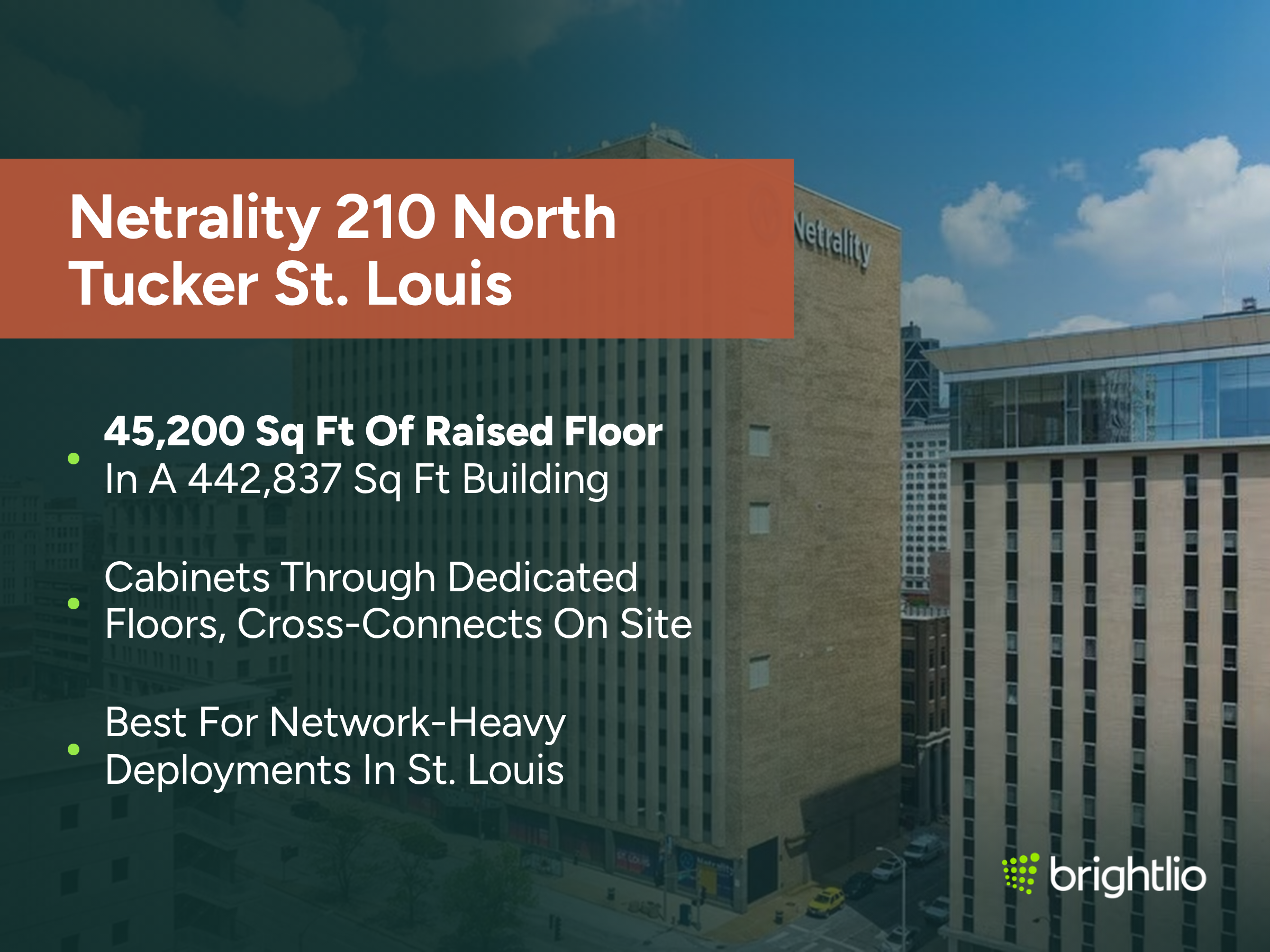
Location: 210 N Tucker Boulevard, St. Louis. Operator: Netrality.
The snapshot identifies a 442,837-square-foot building with 45,200 square feet of raised-floor colocation space. The distinction matters because total building area includes space beyond the customer equipment rooms.
The snapshot assigns 20 MW of available power to the property. Netrality’s current facility page does not confirm that figure as leasable IT capacity. It identifies configurations ranging from individual cabinets to dedicated floors.
A cross-connect provides a physical connection to another service within the facility. For a network-heavy deployment, compare the required connections and their recurring charges. Confirm the power allocation for the proposed suite separately from the building-level figure.
NOCIX 1530 Swift
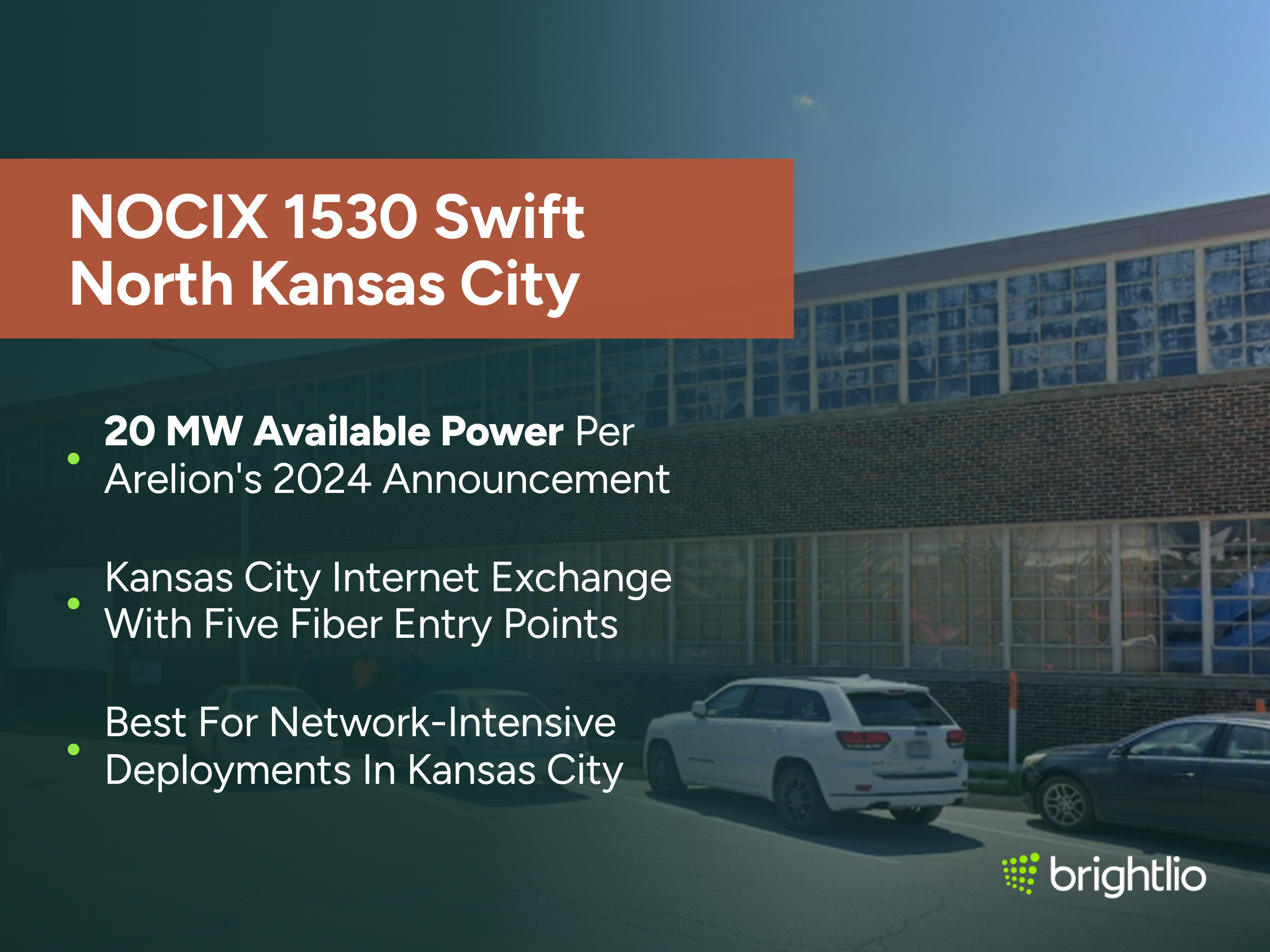
Location: 1530 Swift Street, North Kansas City. Operator: NOCIX.
Arelion’s 2024 announcement describes the campus with 20 MW of available power and expansion toward 175,000 square feet. The floor-area figure reflects the expansion context of that announcement rather than a fresh measurement of completed space.
NOCIX identifies connections to the Kansas City Internet Exchange and other exchanges. Peering allows participating networks to exchange traffic directly. Its technical materials identify five fiber entry points and links to other Kansas City interconnection buildings.
For a network-intensive deployment, request the available carriers and the services included in the offer. Confirm which exchange connections are local and which use transport to another location. Power availability should be confirmed for the proposed cabinet or cage.
Edged Kansas City
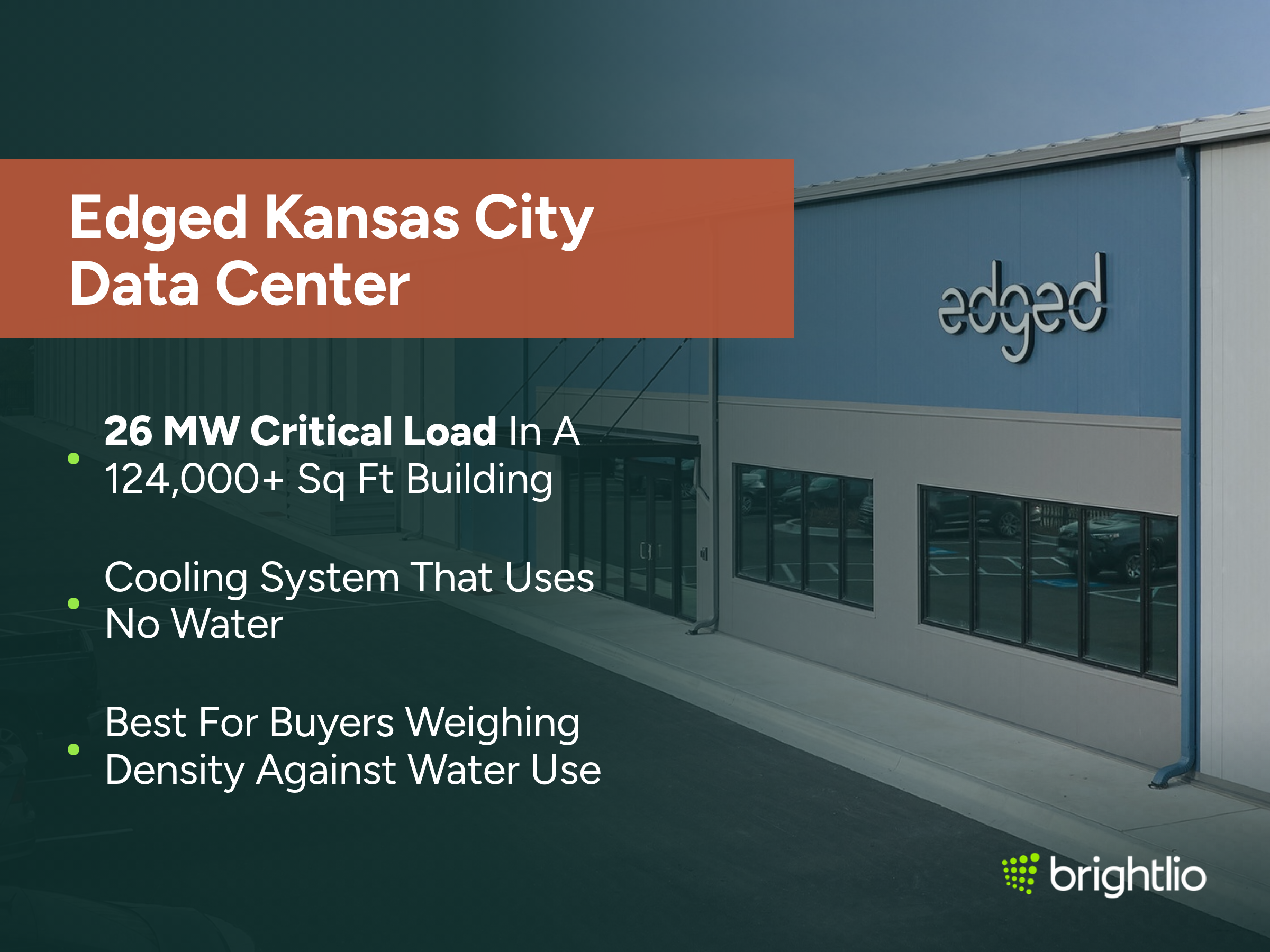
Location: 3420 N Arlington Avenue, Kansas City. Operator: Edged.
Edged’s current facility page lists 26 MW of critical load capacity. Critical load is the power allocated to computing equipment. The operator’s current specification supersedes the earlier 18 MW design figure.
The operator lists a 124,000+ square-foot building and a cooling system that consumes no water for cooling. That statement applies to the cooling process. It should not be extended into a claim that the entire property has no water use.
Edged identifies separate fiber entrances and redundant power distribution. Buyers should obtain the density and cooling specifications for the offered deployment area. The total facility capacity does not establish current vacancy or the amount available during a maintenance event.
Meta Kansas City Northland Campus
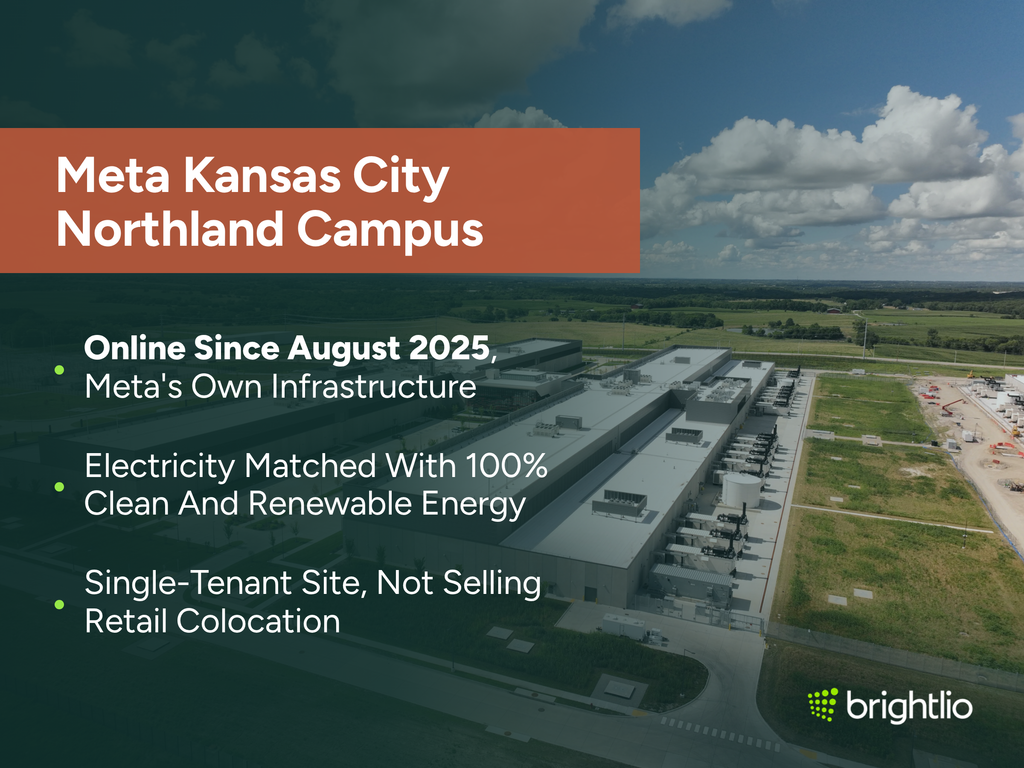
Location: 1800 NW 128th Street, Kansas City. Operator: Meta.
Meta announced that its Kansas City data center was online in August 2025. The campus is part of the company’s infrastructure for its own platforms. A firm campus-wide MW figure is not established in the sources used here.
Meta states that the campus’s electricity use is matched with 100% clean and renewable energy. Energy matching describes a procurement approach. It does not mean the physical electricity arriving at the site comes exclusively from renewable generation at every moment.
The campus demonstrates Missouri’s role in large corporate computing deployments. It should remain outside a shortlist of facilities selling ordinary retail colocation to unrelated customers.
Iron Mountain KCM-1
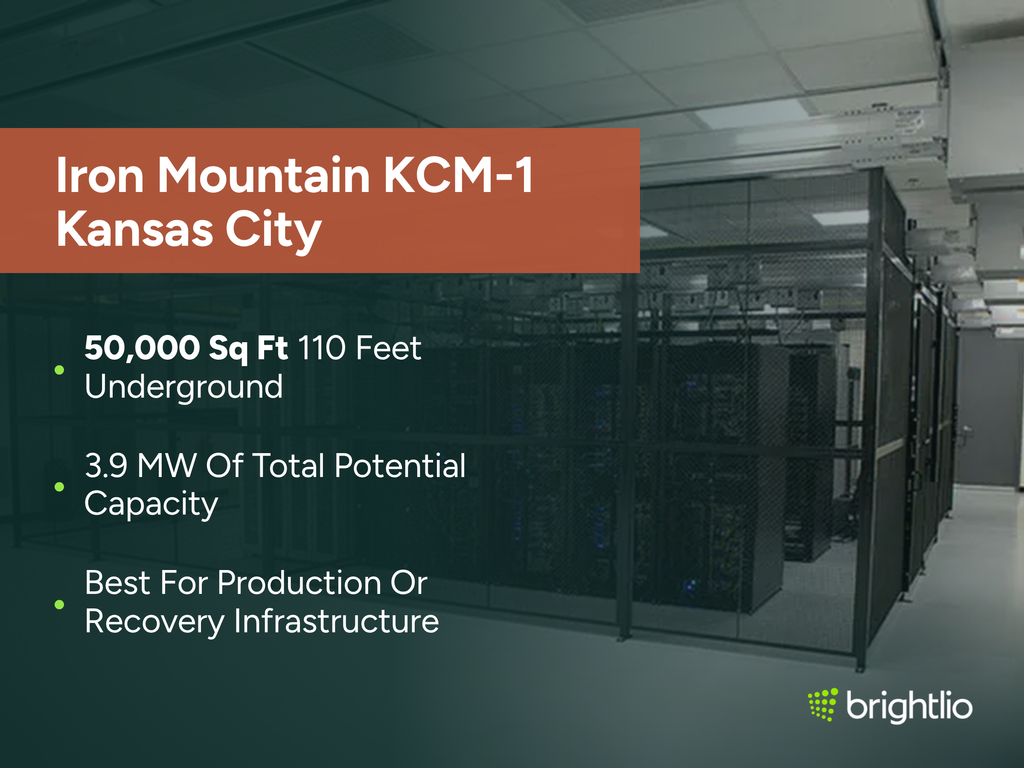
Location: 6301 Winchester Avenue, Kansas City. Operator: Iron Mountain Data Centers.
Iron Mountain describes KCM-1 as a 50,000-square-foot facility with 3.9 MW of total potential capacity. The site sits 110 feet underground on a 22-acre campus.
Potential capacity describes what the facility can ultimately support under the operator’s stated design. Confirm the installed power allocation available to the proposed deployment. The underground location changes exposure to surface weather but leaves dependencies on entrances, utility routes, and ventilation.
KCM-1 offers a distinct option for businesses evaluating production or recovery infrastructure. Review how people and replacement equipment enter the facility during a regional disruption. Include water management and fuel delivery in the assessment.
Planned Projects And Recent Developments
Missouri’s largest developments have changed materially since their earliest announcements. The older 2,950 MW headline is the sum of the five project figures in the October snapshot. Their measurement bases differ, and several plans have changed. The total cannot be used as a current measure of approved or leasable IT capacity.
The project updates below explain the current development scope and the milestones that remain unresolved.
Nebius Independence AI Factory
Nebius broke ground on its Independence campus in May 2026. Its current project description sets out up to 1.2 GW of total capacity, replacing the earlier 800 MW campus headline.
The power plan identifies 800 MW through the municipal utility, Independence Power & Light, and 400 MW from on-site generation. Nebius says a privately financed facility at the retired Blue Valley Power Plant site will support the utility arrangement. The on-site generation solution remains part of a future phase under evaluation.
The company describes construction across multiple years. A customer commitment needs to identify the computing service offered and the power phase supporting its delivery.
CRG Festus Data Center
CRG’s current community website describes an approximately 600 MW conceptual plan with four single-story buildings. This differs from the 750 MW figure in the supplied snapshot.
The developer says the revised plan responds to community feedback. It states that no groundbreaking or opening date has been set and that site planning must be completed before construction begins.
Festus therefore belongs in a longer-term development assessment. An approved development agreement is one milestone, but it does not establish a customer-ready facility or a firm operating date.
Google Project Mica
Project Mica is a Google development in Kansas City’s Northland. Port KC describes nearly 500 acres with five hyperscale buildings totaling approximately 1.56 million square feet.
Port KC puts the development’s full power draw at nearly 700 MW. The plan uses the adjacent Nashua Power Station and on-site substations. Full-site power draw includes supporting systems such as cooling, so it differs from power allocated only to computing equipment.
The October snapshot records Google’s February 2026 confirmation that construction was under way. Mica remains a development story with a full build-out power figure. Its scale does not establish a retail colocation product for unrelated businesses.
Atmosphere Pickett Road Proposal
Atmosphere markets 600 MW in development for its Kansas City regional campus. The supplied address, 6321 Pickett Road, places the proposed site in St. Joseph.
On June 26, 2026, the city announced that the developer had withdrawn the annexation and rezoning applications covering the Pickett Road properties. The city said those applications would no longer move forward for consideration. A later proposal would require new applications.
The 600 MW remains an operator development figure. A customer commitment requires evidence of a current permitting path and a deliverable power phase. The operator’s “Tier III+” wording is a design description in its marketing. An independent facility certification was not established in the reviewed sources.
Patmos Kansas City AI Campus
Patmos’s former printing-plant conversion at 1601 McGee Street already includes operations. Its September 2025 announcement described 35 MW of total capacity and newly available colocation space. A January 2026 financing announcement described expansion to 35 MW as a subsequent milestone, so the sources do not establish a consistent commissioning timeline.
The older 100 MW figure represents a broader development ambition. It should not be counted as 100 MW of wholly unbuilt supply or treated as a current vacancy figure.
Nebius identifies Patmos as its Kansas City colocation partner. Buyers should request a current capacity schedule showing how much power is operational and committed to tenants. The remaining expansion phases need separate delivery dates.
Additional Development Activity
The snapshot names Google projects Shale, Kestrel, and Spade alongside proposals involving AWS, Crusoe, Provident, Metrobloks, and other developers. Some campuses have multiple building listings.
Those records need to be consolidated before calculating a statewide project count or aggregate capacity. An existing facility with an expansion should retain a separate description of its operating phase. Multiple listings for one campus should not become multiple independent power commitments.
Drawbacks Of Colocating In Missouri
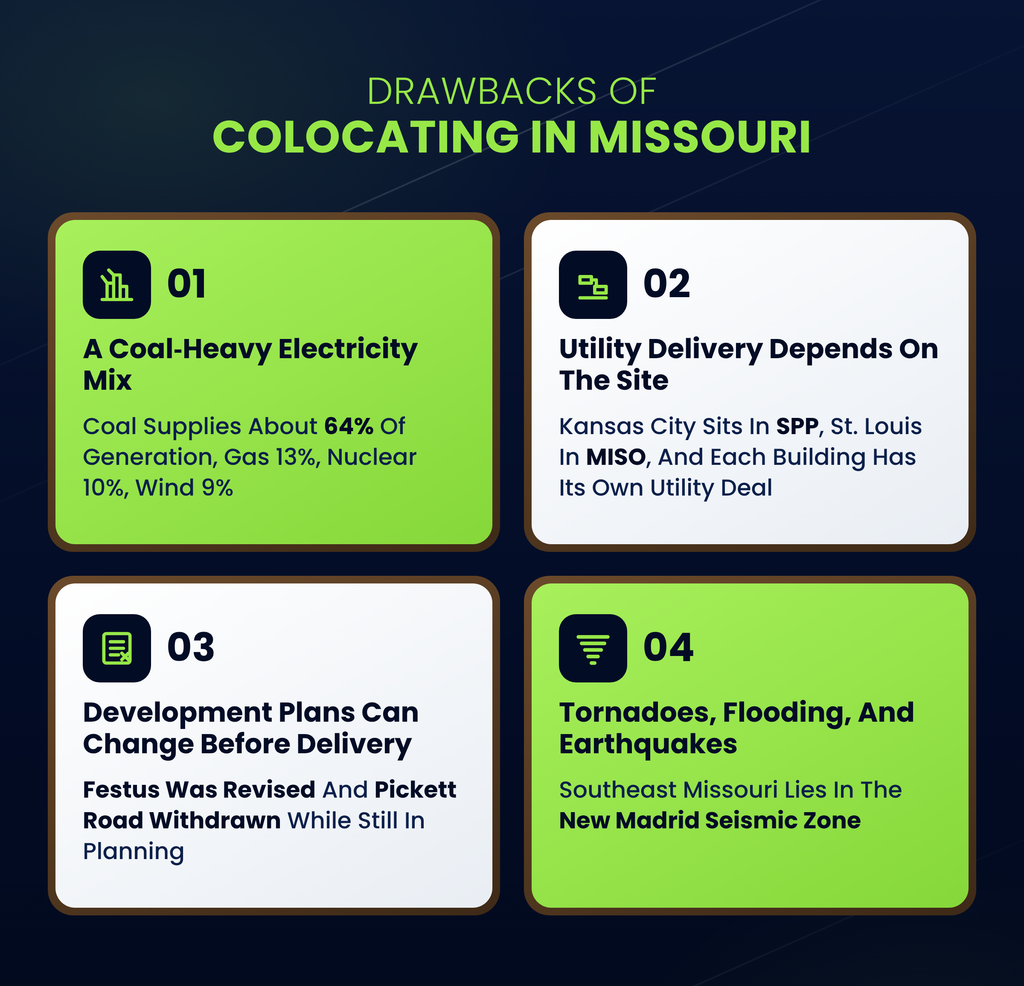
Missouri’s limitations are most visible in energy sourcing, utility delivery, project certainty, and physical hazards. Each issue needs a building-level assessment. A statewide average or a large development announcement cannot answer those questions for a particular lease.
A Coal-Heavy Electricity Mix
The 2025 generation mix in the market snapshot is approximately 64% coal, 13% natural gas, 10% nuclear, and 9% wind. This creates a significant consideration for businesses with electricity-related emissions targets.
State generation is different from the electricity product a specific operator purchases. Renewable energy contracts or certificates may change how an organization accounts for its consumption, but the underlying claim needs evidence.
Ask how the provider allocates renewable attributes to customers. Confirm the reporting period and whether backup or on-site generation is included in the environmental data.
Utility Delivery Depends On The Site
Missouri spans two regional grid organizations. Evergy’s Kansas City area participates in the Southwest Power Pool, or SPP. Ameren’s St. Louis area participates in the Midcontinent Independent System Operator, or MISO.
These organizations coordinate regional grid operations. They are not interchangeable retail electricity suppliers. The local utility agreement and physical power connections determine how a building receives electricity.
Large developments may need substations or new generation before the full campus can operate. Review the power delivery milestones tied to the proposed building. The Independence project illustrates how a large capacity plan can depend on infrastructure beyond the data center itself.
Development Plans Can Change Before Delivery
The revised Festus concept and withdrawn Pickett Road applications show why proposed megawatts require careful interpretation. Capacity can change while a project remains in the planning process.
A permit application, an incentive agreement, and a commissioned data hall represent different stages. A buyer needs the stage that supports its required installation date.
For a future facility, establish which approvals and utility milestones remain open. Include delivery conditions in the contract and maintain an alternative when the timetable depends on unresolved work.
Tornadoes, Flooding, And Earthquakes
Tornadoes and severe storms can affect facilities across Missouri. Flooding requires an address-level assessment of buildings, roads, and supporting infrastructure. Southeast Missouri has an additional seismic consideration because it lies within the New Madrid Seismic Zone.
A protected equipment room can still lose service when a shared fiber route fails or fuel trucks cannot reach the site. Underground facilities need their own assessment of entrances, drainage, and ventilation.
For disaster recovery, compare the failure dependencies of both locations. Physical distance helps only when the recovery design accounts for shared power, network, and access risks.
How Brightlio Helps You Compare Missouri Providers
Brightlio helps businesses evaluate colocation providers against their deployment requirements. Missouri’s mix of carrier hotels, enterprise facilities, and large campuses makes a consistent comparison especially useful.
Start with the rack count and power needed per rack. Identify required network connections and any cooling constraints. Define which tasks your team will perform and which require on-site provider support.
Brightlio can help compare provider proposals using those requirements. Review installation charges alongside recurring fees. Match the contract’s delivery and service commitments to the workload’s needs.
Explore Brightlio’s colocation services to build a Missouri shortlist and compare suitable providers.
Frequently Asked Questions
How Many Data Centers Are In Missouri?
The October 10, 2026 snapshot contains 51 entries across 43 operators. It separates five featured operating sites, 28 additional colocation locations, and 18 planned projects. The colocation category contains operating facilities, so the five-site category is not the entire live market.
Data Center Map lists 95 facilities across seven markets. Different counting methods explain part of the gap. A campus with several buildings can be consolidated into one entry, while tenants sharing a building may appear separately.
Status changes complicate the comparison further. Patmos has operating space even though its larger development ambition appears in the planned category. For purchasing purposes, count the sites that can quote your required service and delivery date. Remove duplicate campus records and distinguish a whole-building specification from the capacity available in the suite you would occupy.
What Does Missouri Colocation Cost?
EIA’s 11.06¢/kWh figure is Missouri’s 2024 all-sector average retail electricity price. It includes customer classes beyond commercial and industrial users. It should not be described as a current data center tariff or a colocation rate.
For illustration, a continuous 5 kW IT load uses 3,650 kWh in a 730-hour month. At that historical benchmark, the IT electricity alone would cost about $404. The example excludes cooling and power losses. It excludes space, backup infrastructure, network services, and provider charges.
A provider may bill for reserved power even when equipment uses less. Compare proposals with the same power commitment and redundancy requirements. Brightlio’s colocation pricing guide explains the main cost components. Include setup fees and contract increases when calculating the cost over the full term.
Should I Choose Kansas City Or St. Louis?
Choose according to where your users, support staff, and network endpoints are located. Both cities have established interconnection facilities. Kansas City includes 1102 Grand and 1530 Swift, while St. Louis includes 210 North Tucker and the Globe Building cluster.
The utility context differs. Evergy’s Kansas City service area operates within SPP, while Ameren’s St. Louis area operates within MISO. That distinction does not establish that either city offers cheaper electricity or independent disaster recovery by default.
Request proposals for the same deployment in both markets if geography is flexible. Measure application performance on the proposed network routes. Include the cost of technician travel and remote support. For a primary and recovery pair, investigate shared infrastructure between the sites. The preferred market is the one that meets the workload’s delivery, connectivity, and operating requirements at an acceptable total cost.
Can Businesses Lease Space In Meta Or Google Campuses?
Meta’s Northland campus supports the company’s own infrastructure. It is not a retail colocation facility where an unrelated business can order an ordinary cabinet. Google’s Project Mica development supports a different commercial model from a provider selling cabinet space to third-party tenants.
Port KC describes nearly 700 MW of full-development power draw for Mica. That number measures the project’s planned scale. It does not identify leasable IT capacity, cabinet availability, or a customer delivery date.
Businesses seeking physical colocation should focus on operators offering the appropriate commercial product. The five featured operating sites include several different models, and the broader market contains additional providers. Establish whether an offer covers cabinets, a private cage, a suite, or a dedicated building. Purchasing a cloud service is a separate transaction from leasing space for equipment you own.
Which Missouri Facilities Can Support AI Workloads?
Edged and Patmos are relevant starting points for investigating dense computing deployments. Edged lists 26 MW of critical load capacity at its Kansas City facility. Patmos’s September 2025 announcement describes configurations of 100 kW or more per rack, subject to its offered design.
Those specifications do not establish current availability for a particular equipment configuration. Supply the operator with the server model, sustained electrical load, and required cooling method. Confirm whether the deployment needs direct-to-chip liquid cooling or another approach to removing heat.
Nebius’s Independence development adds a much larger future computing platform, with a plan of up to 1.2 GW. Its service offering and delivery phases need separate evaluation. For any AI proposal, confirm how much power is installed and ready for the customer’s use. Establish when the required cooling equipment will be ready.
Are Underground Missouri Data Centers Safer?
An underground location changes physical exposure, but it does not answer every resilience question. Iron Mountain’s KCM-1 sits 110 feet below the surface. Its specifications describe 50,000 square feet and 3.9 MW of total potential capacity. Neither figure measures resilience by itself.
A buyer should evaluate the full path that keeps equipment operating. Utility cables and telecommunications routes still connect the facility to external infrastructure. Entrances, ventilation systems, and water management need site-specific review.
Ask how technicians and deliveries reach the building during severe weather. Review backup generation and the process for replenishing fuel. Determine whether a disruption could affect both the primary and recovery locations through a shared route or supplier. Underground construction may support a resilience strategy, but the service commitment should be based on the complete facility design and operating procedures rather than depth alone.
Which Missouri Data Centers Qualify For Tax Exemptions?
Missouri’s program covers approved new developments and qualifying expansions under different requirements. For a new facility, the core thresholds include $25 million of investment and 10 new jobs. The statute includes timing conditions and a wage test tied to 150% of the county average wage.
Eligible purchase categories can include machinery, equipment, utilities, and construction materials. The approval and exemption documentation determine how the program applies to a particular project. Ordinary retail colocation customers should not assume that every charge on their invoice qualifies.
Ask the operator which entity holds the exemption and which transactions it covers. If your business purchases its own equipment, confirm the treatment of that purchase separately from the provider’s infrastructure. Evaluate the incentive using the actual ownership and purchasing arrangements. Build a budget around confirmed eligibility and written pricing rather than an assumed statewide discount.
Does Missouri’s Coal Share Prevent Renewable Energy Procurement?
No. The supplied 2025 generation mix attributes approximately 64% of Missouri electricity production to coal. That is a statewide generation measure. An individual operator may use contracts or renewable energy certificates to support a different procurement claim.
Meta states that its Kansas City data center’s electricity use is matched with 100% clean and renewable energy. Such matching should be evaluated according to its accounting method and reporting period. It does not establish that renewable generators physically supply the facility during every hour.
For a commercial lease, ask which environmental attributes are assigned to your consumption. Confirm how the provider measures customer electricity use and whether its claim includes backup generation. Businesses with emissions targets should request the information required by their own reporting method. Compare that evidence across providers rather than relying on a statewide generation percentage alone.
Is Missouri’s 2,950 MW Pipeline Available To Customers?
No. The 2,950 MW figure is an older sum of five project figures with different measurement bases. It includes campus plans and a development ambition for a site that already has operations. It does not represent vacant, commissioned IT capacity.
Primary sources now describe Nebius Independence at up to 1.2 GW and CRG’s Festus concept at approximately 600 MW. The Pickett Road applications in St. Joseph were withdrawn in June 2026. These changes make the older aggregate unsuitable as a current delivery forecast.
A buyer needs a building-specific offer. Request the usable IT allocation and the remaining utility or permitting milestones. Distinguish construction commencement from customer-ready operation. A development agreement or groundbreaking can show progress without establishing the date a provider can accept equipment. Compare future commitments with operating alternatives when the installation deadline is firm.
What Hazards Should A Missouri Recovery Site Address?
The assessment should cover tornadoes, severe storms, and flooding at the actual site. Southeast Missouri adds exposure to the New Madrid Seismic Zone. Site location and ground conditions determine the seismic assessment; risk is not uniform across Missouri.
Review the building and the routes that support it. Electrical switchgear, generators, and fuel systems may face different flood conditions from the equipment room. Road closures can delay staff or deliveries even when the facility remains dry.
For a recovery location, establish which failures it must survive. Compare utility connections and telecommunications routes with the primary site. Confirm the provider’s backup duration at the proposed load and its replenishment procedures. Run a recovery exercise that tests the actual application dependencies. A second address becomes useful protection when the systems and operating plan can continue through the disruption being considered.

Tamzid is a cybersecurity researcher with 5+ years of experience across SaaS, security, compliance, data centers and cloud. He writes for brightdefense.com and hipaasimple.com, covering security, compliance, and infrastructure topics. Certified through Cisco, Fortinet (NSE 1), and the Basel Institute on Governance in OSINT, he grounds his work in primary sources and verified data.
Recent Posts
Data Centers and Colocation In Minnesota
Data Centers and Colocation In Missouri
Data Centers and Colocation In New Mexico
Data Centers and Colocation In Washington
Let's start
a new project together