
Alaska data centers serve businesses that need local hosting, regional network access, or computing close to remote operations. Existing commercial facilities concentrate in Anchorage and Fairbanks. Much larger North Slope proposals depend on new power infrastructure and development approvals.
The October 22, 2026 market snapshot identifies nine facilities and projects. It separates two operating sites from three colocation facilities and four proposals. Colocation means housing customer-owned servers in a provider’s facility, with supporting power, cooling, and connectivity.
Data Center Map lists eight entries across five markets. Its inventory and market boundaries differ from the supplied snapshot, which adds Cordova’s operating edge deployment. The counts describe coverage rather than the amount of capacity available to lease.
Alaska’s cold climate can help cooling efficiency, but electricity remains expensive. Newer EIA data places the July 2026 commercial average at 23.29¢/kWh, compared with 14.53¢/kWh nationally. The case for Alaska usually begins with where the workload needs to run.
This guide explains the operating market, the major proposals, and the tradeoffs for colocation buyers. A business seeking space soon should begin with existing providers and an address-specific offer. North Slope development plans belong in a longer-term capacity assessment.
Alaska Data Center Tracker
9data center facilities
2 operational4 planned3 colocation
Data Center Map lists 8 buildings across 5 markets. This tracker counts each campus or facility once and adds operating sites reported by other public sources.
Market Snapshot
Notable Operating Data Centers In Alaska
Alaska has no large operating hyperscale or mining campus. These two sites are the operating facilities outside the colocation market, with operating sites in green and planned ones in coral on the map.
- Greensparc Cordova Edge Data CenterCordova, pod capacity0.17 MWOperational
Modular 170 kW edge pod powered by the local electric cooperative, with heat recovery planned for community use
- Location:
- Cordova
- Operator:
- Greensparc
- Utility:
- Cordova Electric Cooperative
- Talkeetna Alaska TeleportTalkeetnaNot publishedOperational
Satellite teleport with hosting space in the Susitna Valley north of Anchorage
- Address:
- 21518 S Comsat Rd, Talkeetna
Planned Data Centers In Alaska
North Slope gas drives the pipeline. Stak Energy's 3 GW proposal and Far North Digital's 120 MW campus sit near Prudhoe Bay, while Greensparc pursues small modular sites in Southeast Alaska.
- Stak Energy CampusNorth Slope, proposed, up to3,000 MWProposed
Natural gas powered campus proposed on 715 acres about 26 miles south of Deadhorse, with construction scheduled to start in summer 2026
- Location:
- Umiat Meridian, south of Deadhorse
- Developer:
- Stak Energy
- Far North Digital Prudhoe BayPrudhoe Bay, full build-out120 MWPlanned
Campus designed around fuel cells with carbon capture on a 1.87 million sq ft plot
- Location:
- Prudhoe Bay
- Developer:
- Far North Digital
- Greensparc PetersburgPetersburgNot publishedProposed
Proposed reuse of the former Ocean Beauty cannery site, which has an idle 2 MW transformer
- Location:
- Former Ocean Beauty cannery, Petersburg
- Developer:
- Greensparc
- Greensparc WrangellWrangellNot publishedProposed
Early-stage modular data center proposal that the Wrangell Planning and Zoning Commission recommended for approval
- Location:
- Wrangell
- Developer:
- Greensparc
Colocation Facilities In Alaska
Retail colocation sits in Anchorage and Fairbanks, served by GCI and Alasconnect.
- GCI Anchorage Data CenterAnchorageNot publishedColocation
Colocation and cloud services from Alaska's largest telecom provider
- Address:
- 6831 Arctic Blvd, Anchorage
- Operator:
- GCI
- Alasconnect AnchorageAnchorageNot publishedColocation
Colocation, managed IT and cloud services in Midtown Anchorage
- Address:
- 3403 Minnesota Dr, Anchorage
- Operator:
- Alasconnect
- Alasconnect FairbanksFairbanksNot publishedColocation
The only Fairbanks facility in the market, offering colocation and managed services
- Address:
- 612 Illinois St, Fairbanks
- Operator:
- Alasconnect
Choose a category to switch the list and highlight its sites on the map. Click any site card to find it on the map, or click a marker to jump to its card. Pins are approximate, and each MW figure carries the basis shown beside it.
Data sourced from Data Center Map, EIA, DatacenterDynamics and Alaska Center for Energy and Power, checked October 22, 2026. Totals count each campus or facility once; Data Center Map's own count lists individual buildings.
Why Colocate In Alaska
Alaska offers specific advantages for workloads serving local users and remote industries. Local computing can shorten network paths, and selected projects can use nearby hydropower. Cooling conditions and the absence of a statewide sales tax can help individual deployments when the facility economics support them.
Computing Close To Alaska Users And Operations
Hosting within Alaska can reduce the distance data travels for local applications. This matters when a business exchanges large files with nearby offices or runs systems supporting local operations. The benefit depends on the actual network route between users and the facility.
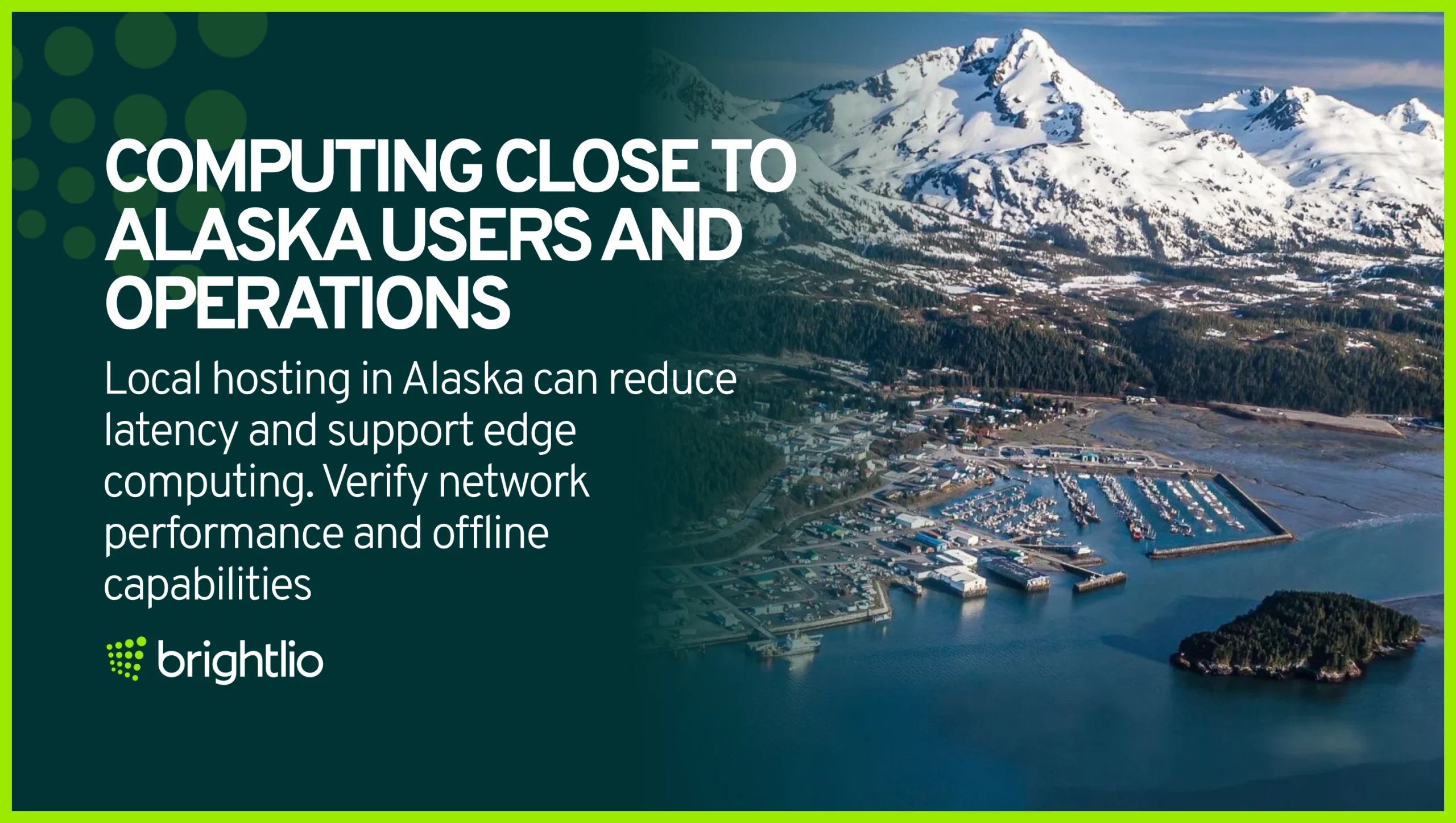
Greensparc’s Cordova deployment illustrates the edge-computing model. Edge computing places processing near the users or equipment producing the data. It can support local services while reducing the amount of information that must travel to a distant computing center.
Local hosting can preserve selected functions during an interruption to an outside connection. That requires an application designed to operate with local authentication, storage, and other essential services. A server in Alaska still depends on external connectivity when its software requires a remote service.
Measure application performance from the intended offices or field sites. Latency, the delay in transmitting data, depends on routing as well as distance. Compare the proposed local service with the network path to a mainland alternative.
Opportunities To Use Local Hydropower
Cordova demonstrates how computing can be integrated with an existing energy resource. Greensparc installed a modular system inside the Humpback Creek hydroelectric facility, working with Cordova Electric Cooperative. The deployment uses computing close to the source of power.
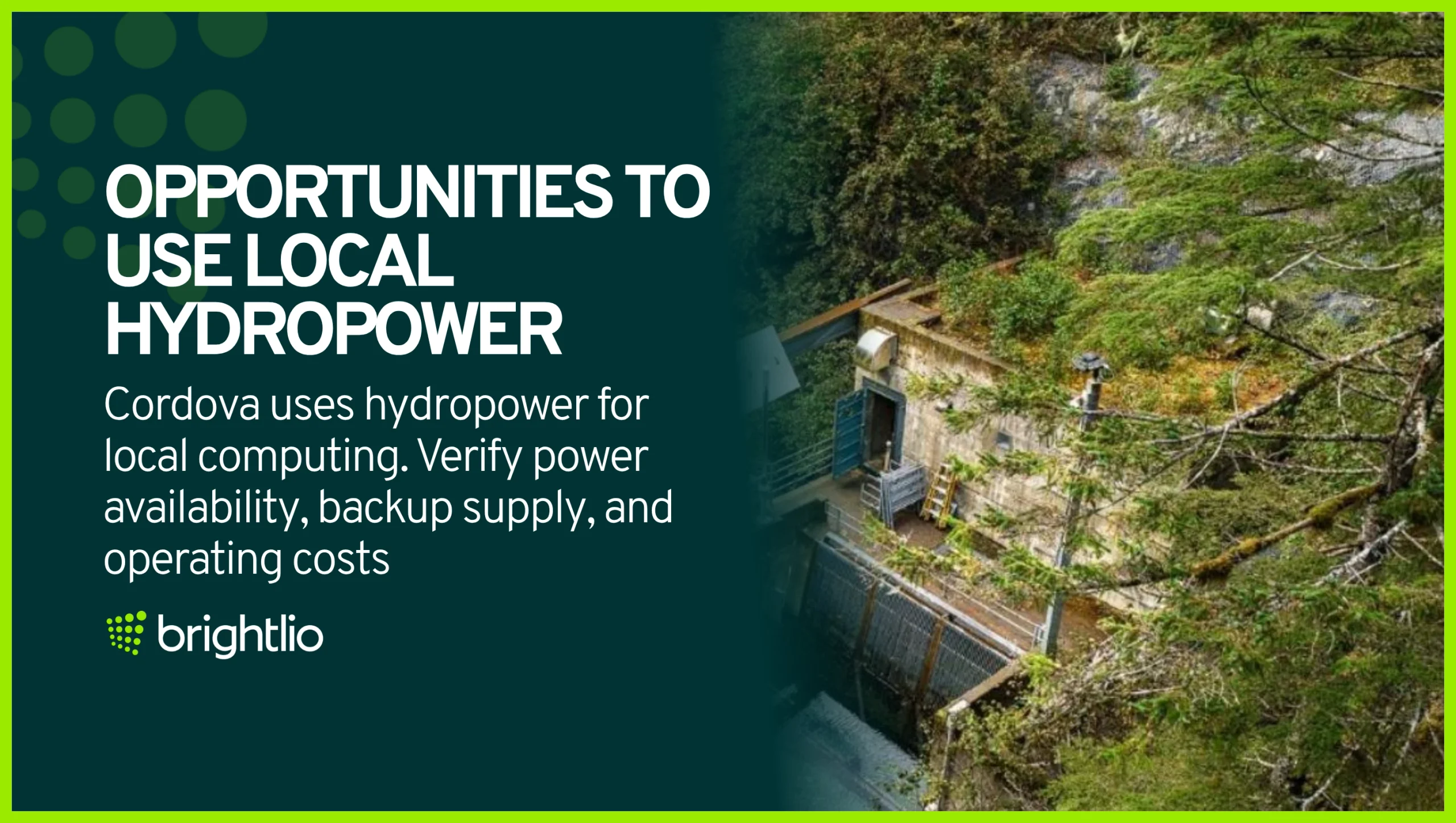
The pilot is a small local installation. Its capacity is expressed in kilowatts (kW), a measure of power. One thousand kilowatts equal one megawatt, or MW.
The model may suit a location with suitable electricity and a defined customer need. Its economics depend on when power is available and what the computing service earns. Seasonal hydro output and backup supply need to be included in the operating plan.
Businesses with environmental requirements should examine the proposed facility’s electricity arrangements. A hydropower-based project in one community does not describe the supply available at every Alaska data center.
Cooling Benefits In Suitable Facility Designs
Cold outdoor conditions can reduce the energy required to remove server heat. Free cooling uses favorable ambient conditions instead of relying entirely on mechanical refrigeration. The operating method depends on the building’s equipment and the limits set for the servers.

Far North Digital projects a 40%–60% reduction in cooling-related energy consumption from ambient Arctic air and water at its Prudhoe Bay proposal. This is a developer projection for a specific design. It is not a measured saving across Alaska’s operating facilities.
Alaska’s climate varies substantially by location. A North Slope design should not be used as a proxy for a facility in coastal Southeast Alaska. Even at a cold site, cooling systems must maintain suitable conditions during warmer periods and prevent freezing where necessary.
Request the provider’s operating data and supported rack configuration. For a proposal, review the engineering assumptions behind any savings claim. Compare the complete electricity bill with the cooling benefit.
No Statewide Sales Tax
Alaska’s general statewide sales tax rate is 0%. This can reduce one component of an equipment purchase compared with a jurisdiction applying a general state sales tax. The benefit does not require a data-center-specific investment threshold.

Cities and boroughs can levy local sales taxes. The Alaska Office of the State Assessor directs businesses to the relevant municipality for the applicable rules. Equipment location and the type of transaction therefore matter to the calculation.
Budget the actual local treatment of hardware purchases and recurring services. Ask how taxes appear in a provider’s proposal, particularly when equipment and services are supplied by different companies. Keep the equipment purchase calculation separate from operating charges.
The absence of a statewide sales tax is one part of the financial comparison. Electricity and connectivity can have a larger effect over a multiyear deployment. Compare the total cost for the equipment’s expected operating life.
Where Alaska Data Centers Are Located
Alaska’s existing services and proposed campuses occupy very different environments. Anchorage and Fairbanks provide the main enterprise colocation choices in the tracker. Cordova and Southeast Alaska illustrate smaller community projects, while the North Slope proposals focus on computing near natural gas resources.
Anchorage
The tracker identifies GCI at 6831 Arctic Boulevard and Alasconnect at 3403 Minnesota Drive. These are the two Anchorage entries most relevant to a commercial colocation search.
Anchorage is a starting point for businesses that need access from local offices and connections to statewide networks. Compare the offered electrical allocation and the route to each required office or cloud service. The city label alone does not establish either network performance or physical route diversity.
Distinguish the data center address from a provider’s sales office. Alasconnect’s current website lists a different Anchorage office address from the facility location in the tracker. Obtain the installation address in the proposal and service agreement.
Fairbanks
Alasconnect’s Fairbanks entry is at 612 Illinois Street. Its current website identifies services in both Fairbanks and Anchorage, including connections between those markets.
Fairbanks can be relevant to Interior Alaska operations or an architecture distributing equipment between cities. Assess the actual network paths and shared power dependencies before treating the two locations as independent recovery sites.
The tracker contains one Fairbanks colocation entry. That describes the supplied inventory; it does not establish that no other facility or hosting service exists in the market.
Talkeetna And The Susitna Valley
Talkeetna Alaska Teleport operates at 21518 South Comsat Road. A teleport is a ground facility connecting terrestrial networks and satellite systems. The operator offers equipment colocation alongside antenna hosting and technical services.
This location is relevant to buyers combining satellite connectivity with terrestrial network access. It should be evaluated against that particular requirement rather than assumed interchangeable with a general-purpose enterprise facility.
Data Center Map groups Talkeetna within its Anchorage market. The site is physically in Talkeetna, and technician travel should be planned around that address. Directory market boundaries are broader than city boundaries.
Cordova And Southeast Alaska
Cordova has Greensparc’s operating deployment at Humpback Creek. Petersburg and Wrangell appear in the proposal pipeline. These communities should be evaluated separately from the Anchorage–Fairbanks market.
The projects center on modular computing integrated with local resources. The availability of a former industrial electrical service may support a concept, but it still needs a current utility allocation and a workable operating plan.
Equipment transport and local support are part of the location decision. Establish who can replace failed hardware and how replacement parts reach the site. Those arrangements can matter as much as the nominal computing capacity.
Prudhoe Bay And The North Slope
Stak Energy’s proposed site lies south of Deadhorse near the Dalton Highway. Far North Digital’s proposal is in the Prudhoe Bay area. Both concepts seek to use nearby natural gas resources.
These proposals are separate from ordinary Railbelt utility service. The Railbelt is the electrical network linking the Fairbanks, Anchorage, and Kenai Peninsula regions. Power, gas delivery, and telecommunications for a North Slope campus require their own project arrangements.
The presence of oil-field infrastructure does not establish a completed data center. Evaluate the customer commitment and construction phase alongside the supply contracts needed to operate it.
Five Existing Alaska Data Center And Colocation Sites
The snapshot contains two operating entries and three separately categorized colocation facilities. All five appear below because both categories matter to readers evaluating the existing market. The profiles are not a size ranking, and the reviewed materials do not establish a common MW basis across the sites.
Greensparc Cordova Edge Data Center
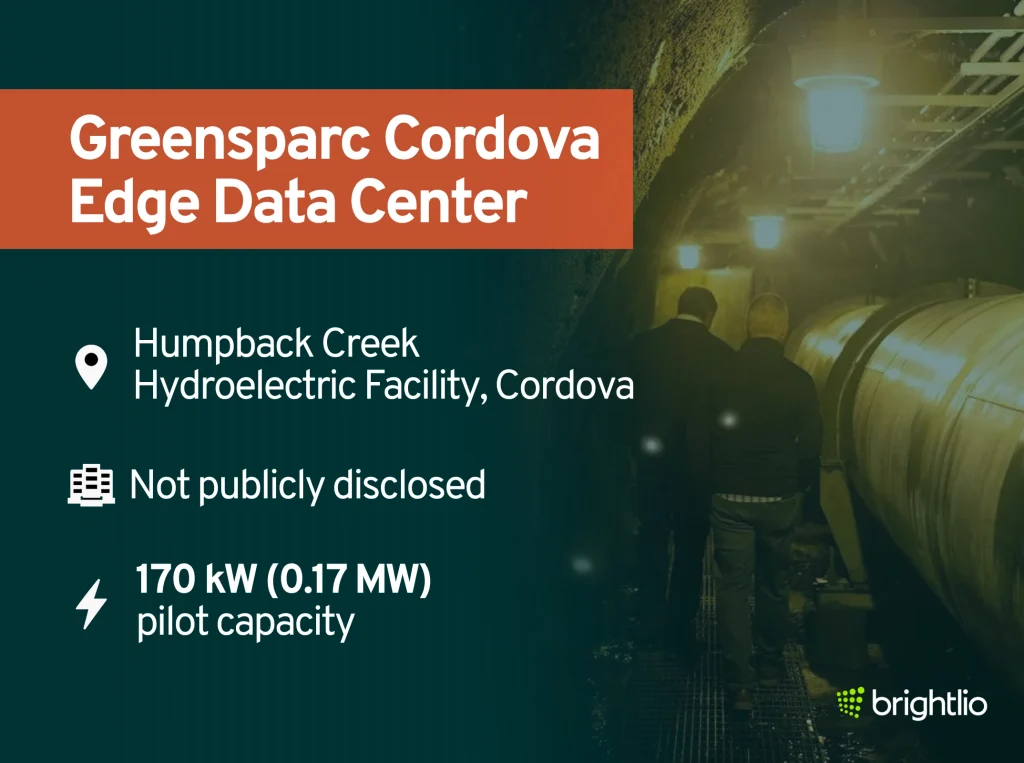
Location: Humpback Creek hydroelectric facility, Cordova. Operator: Greensparc. Utility partner: Cordova Electric Cooperative.
The national laboratory’s Cordova account describes a 170 kW, or 0.17 MW, pilot inside the hydroelectric facility. Greensparc’s own project page describes the original installation as 150 kW. These descriptions should not be added together as separate capacity.
The project demonstrates local computing integrated with a community energy system. For buyers, the relevant distinction is between hosted computing and space for customer-owned equipment. Establish which service is available at this deployment.
The laboratory account notes that winter supply may include diesel when hydro resources fall. Buyers should examine the full operating arrangement before relying on a year-round renewable-energy claim. Planned heat recovery needs a separate confirmation of what has actually been installed.
Talkeetna Alaska Teleport
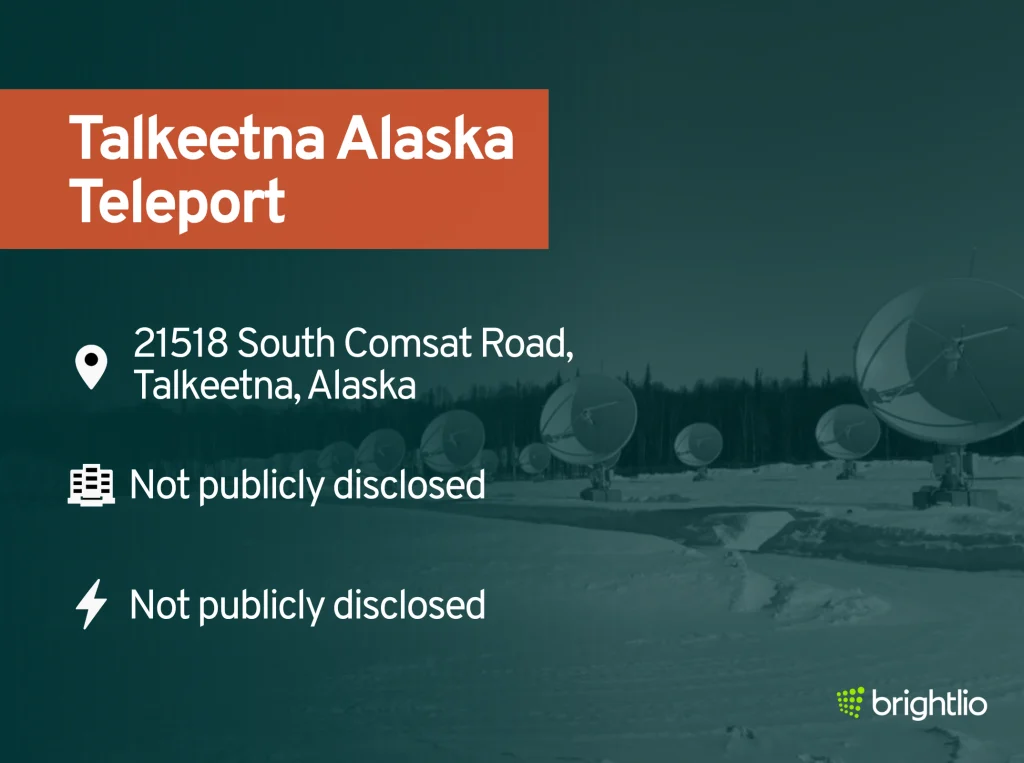
Location: 21518 South Comsat Road, Talkeetna. Facility: Talkeetna Alaska Teleport.
The operator offers colocation ranging from a single rack unit to multiple racks. A rack unit is a standard measure of equipment height within a rack. The service page identifies commercial power and redundant fiber connections alongside satellite and antenna services.
No firm IT capacity is established in the reviewed materials. Buyers should obtain a defined power allocation for the proposed rack and confirm the cooling supported at that load. Satellite connectivity and server power allocations need separate specifications in the offer.
For a satellite deployment, agree who installs and maintains the antenna equipment. For colocation, establish physical access and the technical work available on site. Specify how the proposed terrestrial and satellite paths behave during a connection failure.
GCI Anchorage Data Center
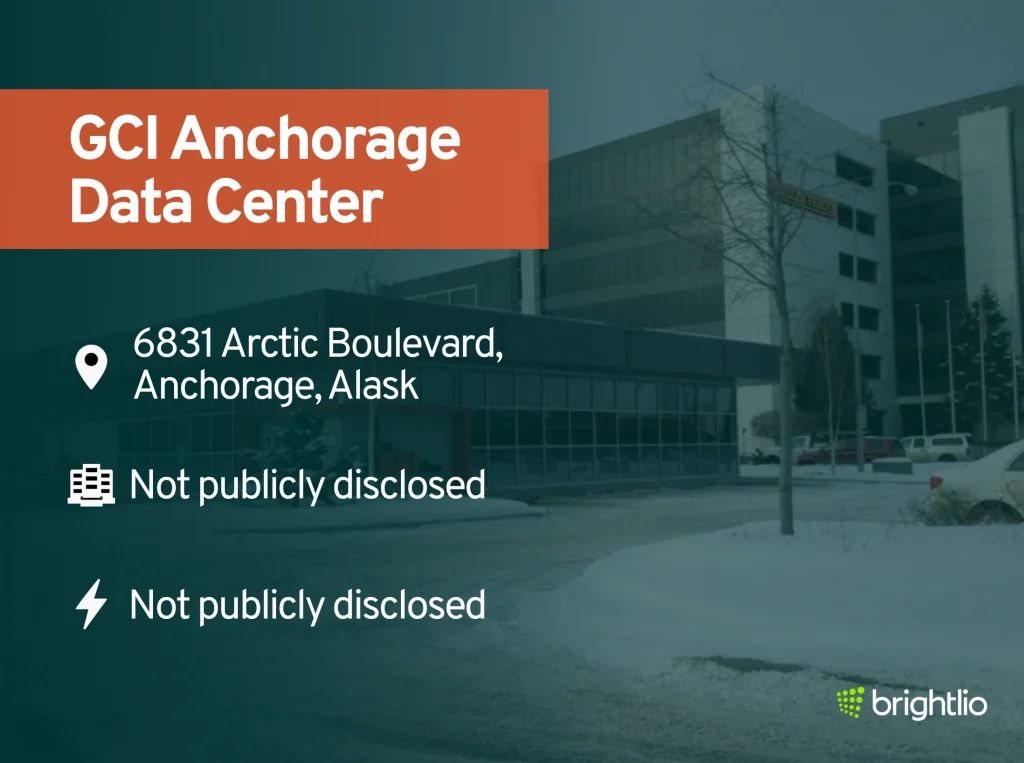
Location: 6831 Arctic Boulevard, Anchorage, according to the tracker. Operator: GCI.
GCI’s colocation service uses self-contained pods with isolated power and cooling for customer equipment. The company identifies generator and battery backup, environmental monitoring, and a guarded facility.
GCI describes dual fiber connectivity with satellite backup. Those features make the service relevant to businesses combining colocation with managed Alaska connectivity. The appropriate bandwidth and application performance under backup conditions still need to be specified in the offer.
The reviewed service page does not establish a facility MW figure or a current vacancy total. Ask for the power committed to the proposed deployment and any expansion rights. Review the contractual availability terms separately from broad marketing claims about the facility.
Alasconnect Anchorage
Location: 3403 Minnesota Drive, Anchorage, according to the tracker. Operator: Alasconnect.
Alasconnect offers colocation and server hosting as distinct products. In a colocation arrangement, the customer owns the hardware. Its hosted services place more of the infrastructure responsibility with the provider.
The company’s service materials describe access to major Alaska carriers and integration with public cloud platforms. Obtain the actual carrier options and connection design for the proposed Anchorage room. Company-wide capabilities do not establish that every product is available in every cabinet.
The company’s current office listing is not a confirmation of the tracker’s Minnesota Drive installation address. Obtain that location in writing. A facility capacity figure is not established in the reviewed materials.
Alasconnect Fairbanks
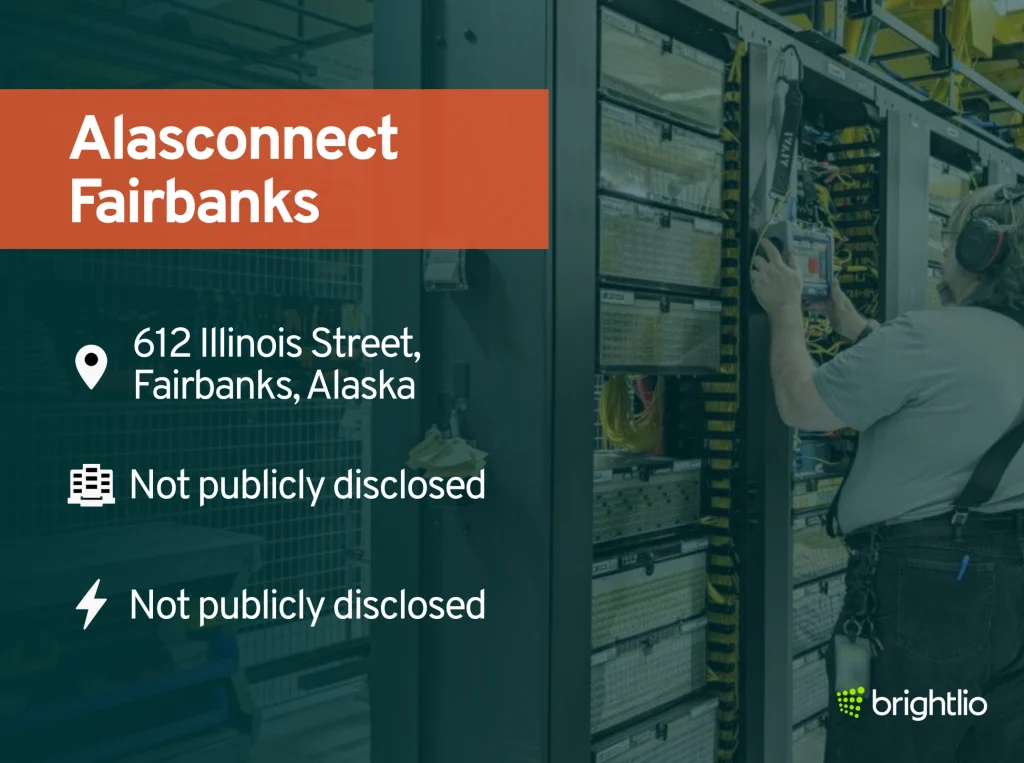
Location: 612 Illinois Street, Fairbanks. Operator: Alasconnect.
Alasconnect identifies a Fairbanks presence and describes geographically diverse fiber paths between its Fairbanks and Anchorage facilities. Businesses evaluating distributed hosting within Alaska can investigate the two facilities together.
For a recovery design, identify which systems must remain available when either city loses connectivity. Review the actual routes and how the application fails over between locations. Geographic separation provides useful protection when the architecture can use it.
The tracker does not assign a MW figure to this site. Request current cabinet power and expansion terms directly from the provider. Review the staffing model for tasks such as replacing drives or receiving equipment, particularly when the customer’s own team is based elsewhere.
Planned Projects And Recent Developments
The tracker’s 3,120 MW headline combines Stak’s up-to-3,000 MW proposal with Far North Digital’s 120 MW figure. The latter is described by its developer as prospective initial power-plant capacity. The sum should therefore remain a tracker headline rather than a measure of committed IT load or future retail availability.
Stak Energy North Slope Campus
Stak proposes a large natural-gas-powered development on the North Slope. Alaska’s land notice identifies a proposed 50-year lease for 715.4 acres south of Deadhorse. The public process concerns land for the development and supporting infrastructure.
The snapshot gives an upper proposed power figure of 3,000 MW, or 3 GW. One gigawatt equals 1,000 MW. Each operating phase needs its own capacity and delivery basis.
The state’s land-lease notice is a preliminary decision. The earlier summer 2026 construction target has passed. The reviewed public materials do not establish that construction began, so the project remains described here as proposed with its start date unconfirmed.
A purchasing decision needs evidence of an approved phase and the infrastructure serving it. Establish the gas supply and power-generation arrangements alongside the network delivery plan. Confirm the phase’s commissioning date and the conditions attached to that commitment.
Far North Digital Prudhoe Bay
Far North Digital’s project description identifies 120 MW of prospective initial power-plant capacity. It describes a modular colocation concept on an existing 43-acre pad, with potential expansion. The 120 MW figure is not identified there as commissioned customer IT capacity.
The developer proposes using fuel cells with carbon capture. Fuel cells generate electricity through an electrochemical process. Carbon capture is part of the proposed energy design, and its operating performance would need evidence before a buyer relies on an emissions claim.
The developer’s international connectivity concept includes future submarine networks. Establish the service available under a current contract before relying on that expansion concept.
The reviewed materials do not establish a commercial opening date. Request the delivery phase and supported IT load for any offer. A tier certification assesses specified aspects of data center infrastructure; the developer’s prospective tier language needs separate certification evidence.
Greensparc Petersburg
The Petersburg proposal concerns reuse of the former Ocean Beauty cannery site. Local project information describes an existing industrial electrical service. The tracker identifies an idle 2 MW transformer, which is a site resource rather than a confirmed data center IT allocation.
Petersburg’s April 2026 community information sheet describes a small edge-computing concept. Greensparc’s own account identifies the project as proposed. Neither source establishes an operating facility or a verified commissioning date.
Before converting the electrical-service figure into computing capacity, establish what the utility can supply under current conditions. The project needs a load allocation that accounts for cooling and other supporting systems.
Reuse of an industrial site may reduce some development work. Building suitability and the commercial service still need their own assessment. Confirm the equipment model and the local maintenance arrangement before relying on the proposal for an installation deadline.
Greensparc Wrangell
Wrangell’s January 2026 planning agenda includes Greensparc’s request to lease borough-owned waterfront property. The snapshot records a planning recommendation supporting the proposal. A planning recommendation is one stage of development.
The project belongs in the early-stage pipeline. A firm IT allocation and a customer-ready date are not established in the reviewed materials. Buyers should look for the executed property arrangements and utility commitment before assigning a delivery schedule.
The proposal shares the broader modular-computing approach used in Cordova. That does not establish the same capacity or energy arrangement in Wrangell. Each location has its own utility conditions and intended customers.
Railbelt Transmission Investment
On October 5, 2026, the U.S. Department of Energy announced an intent to support the Beluga–Healy transmission project. Its preliminary plan totals approximately $418 million and includes about 223 miles of new line.
The project would add a second high-voltage connection between Southcentral and Interior Alaska. Its delivery would improve the electricity network supporting the region. The announced investment remains a planned transmission project.
Drawbacks Of Colocating In Alaska
Alaska’s limitations are material to a colocation decision. High electricity costs affect recurring charges, while network routes and a small provider pool constrain the choice of service. Weather and physical hazards require an assessment at the proposed building.
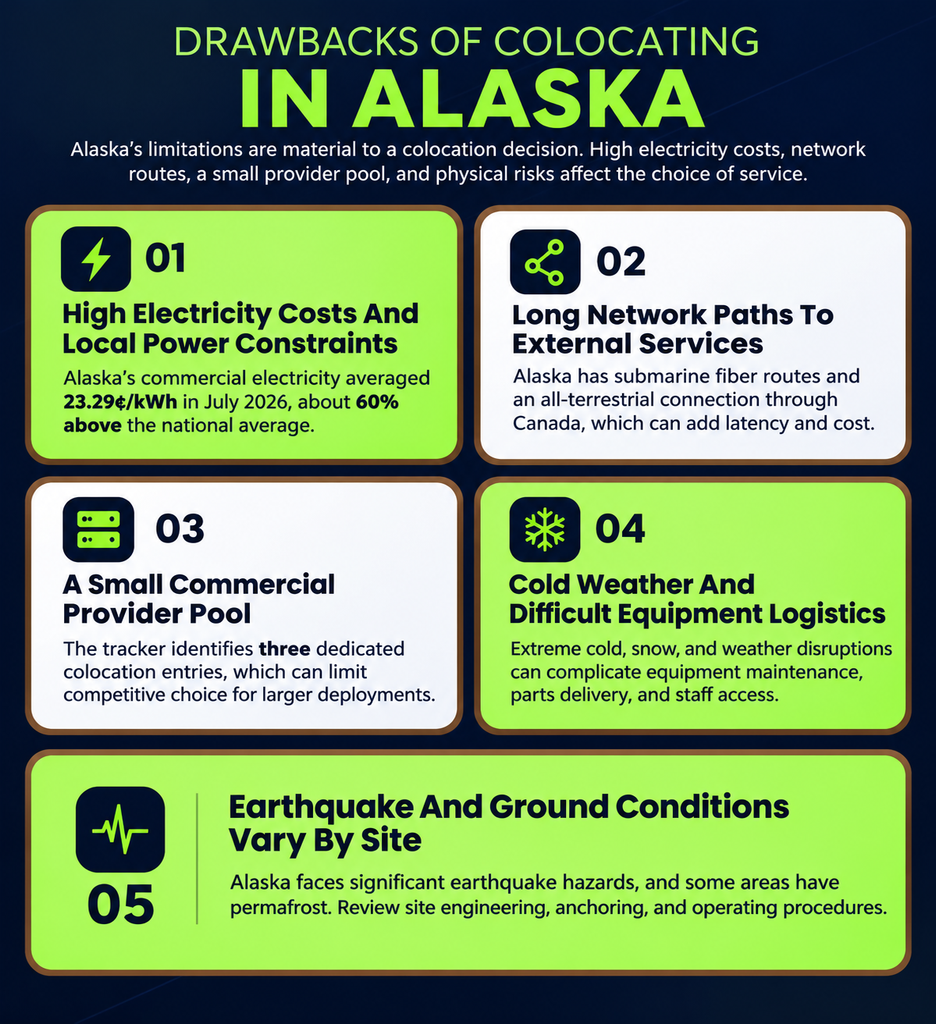
High Electricity Costs And Local Power Constraints
Alaska’s 23.29¢/kWh commercial average in July 2026 was about 60% above the national commercial average. A cooling advantage can reduce supporting energy use while leaving the total bill comparatively high.
The Railbelt is separate from the major interconnected electricity systems serving the contiguous United States. North Slope proposals and remote community grids have different supply arrangements again. A statewide generation total does not establish spare power at a particular site.
Ask the provider how utility charges reach the customer’s bill. Review the reserved power and the conditions governing future expansion. For a new development, establish when its permanent supply becomes available.
Long Network Paths To External Services
Alaska has submarine fiber routes and an all-terrestrial connection through Canada. MTA confirmed operation of its AlCan ONE terrestrial route in 2020. Buyers can therefore investigate more than one type of long-distance path.
The useful question is which paths the proposed facility and service actually use. A different carrier name does not establish a different physical route. Request the shared-risk information relevant to the application.
For a carrier-neutral data center, compare the available providers and connection charges. Test performance to the cloud services or mainland offices the application needs. Backup connectivity should be sized for the functions that must continue during a primary-route failure.
A Small Commercial Provider Pool
The tracker identifies three dedicated colocation entries, with Talkeetna offering colocation within the operating group. Cordova’s edge deployment follows a different service model. The much larger proposed MW figures do not expand the number of providers a buyer can use immediately.
This can limit competitive choice for a large private suite or specialized cooling requirement. Obtain a clear statement of current capacity and the next expansion phase. A provider’s statewide service footprint is different from spare power in a specific room.
Compare a mainland offer when the workload can tolerate the network path. Include the connectivity needed to reach Alaska users in that comparison. The lower facility price may be offset by other operating costs.
Cold Weather And Difficult Equipment Logistics
Extreme cold affects more than cooling efficiency. Outdoor electrical equipment and backup systems need a design suited to local temperatures. Snow and weather disruptions can complicate staff access and freight delivery.
The operating plan should identify who performs physical repairs and which parts are stored locally. Remote hands are technicians who carry out tasks at the facility for the customer. Agree which tasks are included and how urgent work is handled.
A North Slope project needs a different logistics plan from an Anchorage cabinet. Review transport arrangements for the largest equipment replacements. Delivery and maintenance assumptions belong in the cost and recovery assessment.
Earthquake And Ground Conditions Vary By Site
USGS identifies Alaska as a region of significant earthquake hazards. Southcentral locations require particular attention to seismic conditions. Review the building and equipment anchoring alongside the utility and telecommunications routes that support them.
In permafrost areas, the foundation assessment must address ground that remains frozen for at least two consecutive years. Thaw can affect its stability. Alaska’s geological and transportation agencies describe these risks and the need for suitable engineering.
Neither hazard should be generalized uniformly across the state. Obtain the site’s engineering assessment and relevant operating procedures. For recovery, consider whether the primary and secondary facilities share likely regional failures.
How Brightlio Helps You Compare Alaska Providers
Brightlio helps businesses compare colocation and connectivity options against their operating requirements. For Alaska, the location of users and the availability of network paths are central to the shortlist.
Start with the power required per rack and the applications the deployment must support. Identify the offices and cloud services it must reach. Include the physical support your team needs and the planned installation date.
Brightlio can help compare suitable Alaska options with mainland alternatives. Review installation costs alongside the recurring facility and network charges. Establish the provider’s delivery commitment for the proposed configuration.
Explore Brightlio’s colocation services to assess providers for an Alaska deployment.
Frequently Asked Questions
How Many Data Centers Are In Alaska?
The October 22, 2026 tracker contains nine facilities and projects. Its two operating entries, three colocation entries, and four planned developments include very different types of infrastructure. Five entries concern the existing market when the operating and colocation groups are combined.
Data Center Map lists eight entries across five markets. It groups Talkeetna under the Anchorage market, while the supplied inventory adds Cordova’s edge installation. These differences mean the totals should be compared using their coverage and counting methods.
For a business buying colocation, a statewide count is only a starting point. A proposed gas-powered campus and a facility accepting a cabinet today answer different requirements. Request available space and usable IT power for the actual installation date.
Check whether the offer is physical colocation or hosted computing before comparing providers. This produces a shortlist based on services the business can purchase.
Where Can Businesses Rent Colocation Space In Alaska?
The tracker identifies GCI and Alasconnect in Anchorage, with another Alasconnect facility in Fairbanks. Talkeetna Alaska Teleport offers equipment colocation alongside satellite services. These are the main starting points in the supplied inventory for customer-owned equipment.
GCI describes secured pods with supporting power and cooling. Talkeetna’s service options range from a single rack unit to multiple racks. The required electrical allocation still needs to be established for the specific equipment.
Send each provider the rack count, sustained power requirement, and required network endpoints. Include installation timing and the physical tasks your team needs performed on site. Ask for current availability and the capacity reserved under the offer.
Cordova’s modular pilot follows a different computing-service model, so its presence alone does not establish a retail cabinet option. Obtain the installation address in writing, particularly where a provider lists separate office and facility locations.
How Much Does Colocation In Alaska Cost?
Alaska has no single statewide colocation price. EIA’s 23.29¢/kWh commercial average for July 2026 is an electricity benchmark. A provider’s contract includes infrastructure and services beyond the electricity used by servers.
For illustration, a continuous 5 kW IT load uses 3,650 kWh in a 730-hour month. At the Alaska benchmark, that electricity costs about $850. The same calculation at the national commercial average gives about $530, before either example includes cooling or provider charges.
Request comparable quotes for the same reserved power and network services. Establish whether energy is metered, included in a committed allocation, or passed through under another formula. Brightlio’s colocation pricing guide explains the main cost components.
Include remote technical work and equipment transport in the comparison. A decision based on the rack fee alone can miss material costs of operating the deployment.
Does Alaska’s Cold Climate Make Hosting Cheaper?
Cold weather can reduce cooling energy when the facility uses a suitable design. It does not remove the electricity consumed by computing equipment. Far North Digital’s cooling projection concerns one proposed Arctic installation, so it cannot establish savings at a different operating site.
Consider a hypothetical load using 10 kW for servers and 2 kW for cooling. Halving the cooling load reduces the combined figure from 12 kW to 11 kW, a reduction of about 8%. This example illustrates why a large percentage saving in cooling can produce a smaller change in total electricity use.
Other facility loads and pricing terms affect the final bill. Request measured seasonal performance from an operating provider, or the design assumptions for a proposed building. Compare the required equipment configuration and full service cost.
The cooling benefit is useful when it improves the economics of the actual deployment.
Has Stak Energy Started Building Its North Slope Campus?
Construction commencement is unconfirmed in the public materials reviewed for this guide. The tracker’s summer 2026 start was a target that has already passed. It should not be repeated as a future milestone or treated as evidence that work began.
Alaska’s notice concerns a preliminary decision on a 50-year lease covering 715.4 acres. A preliminary land decision does not establish that every approval is complete or that the construction program has started. The up-to-3-GW figure remains a proposal ceiling.
Before relying on the project for capacity, obtain a dated update from the developer and the relevant agencies. Distinguish initial site work from construction of a data hall and its supporting power plant. A purchasing commitment requires the phase and delivery conditions to be identified.
Evidence of first operations would still need to establish the power available to the customer’s computing equipment.
What Does Far North Digital’s 120 MW Figure Mean?
The developer describes 120 MW as prospective initial power-plant capacity. That measures proposed electricity generation. It is different from the power allocated to customer servers and from the capacity currently available to lease.
A data center uses electricity for supporting systems as well as computing. The output available from a generating plant can depend on its operating conditions and reserve requirements. A customer allocation therefore needs an engineering and commercial basis beyond the plant’s headline rating.
Ask for the generation scheduled for the first operating phase and the portion allocated to IT equipment. IT load means the power used by computing hardware. Confirm what has been built, the available service model, and the proposed handover date.
The project’s prospective tier language needs separate certification evidence. A future design objective should remain qualified until the completed facility and its operating services can be assessed.
Can Alaska Data Centers Connect To Mainland Cloud Services?
Yes, Alaska has existing fiber connections supporting services outside the state. MTA confirmed operation of its all-terrestrial AlCan ONE route in 2020. Submarine routes provide another type of connection, while the chosen provider determines which paths a customer can purchase.
Alasconnect describes integration with public cloud platforms. That company-wide capability still requires a defined offer for the proposed site. Ask which cloud endpoint the circuit reaches and whether the service is private connectivity or internet access.
Test application performance over the proposed path. Review bandwidth and how traffic behaves when the primary circuit fails. A backup service may preserve essential communications while supporting less traffic than the normal connection.
When resilience matters, obtain information about common physical routes and dependencies. Two carrier contracts can still share a route. Proposed future international cables belong in a separate expansion assessment until their service is available.
Are Alaska Data Centers Powered By Renewable Energy?
The answer depends on the facility and electricity arrangement. The tracker’s 2025 statewide generation mix attributes about 40% to natural gas and 29% to hydropower. Petroleum contributes about 16%, while coal accounts for 12%.
These are statewide figures across different systems. A facility in Anchorage, a community hydro deployment, and a North Slope gas proposal can have substantially different energy supplies. The statewide hydro share does not determine the renewable percentage available to an individual customer.
For a provider comparison, request the actual supply mix and any renewable attributes allocated to your service. Review seasonal changes and backup generation. Cordova’s hydro-based model still needs an assessment of its full-year supply conditions.
Fuel cells using natural gas require their own emissions assessment, and proposed carbon capture needs operating evidence. Cooling efficiency reduces consumption; it answers a different question from the source of electricity.
Does Alaska Have A Data Center Tax Exemption?
Alaska’s principal sales-tax advantage is the absence of a statewide sales tax. This is a general state tax position rather than a data-center-specific exemption requiring a minimum campus investment. It should not be described as a blanket exemption from all taxes.
Local municipalities can impose sales taxes and determine the transactions they cover. The Alaska Office of the State Assessor directs businesses to the relevant local government for those rules. The tax treatment therefore needs to be checked for the actual facility and purchase.
Identify which company buys the equipment and where it will be installed. Review separately the treatment of recurring services and the costs already included in the provider’s quote. A host facility’s location does not automatically answer the treatment of every customer transaction.
Build the comparison around the applicable local rules and the full operating cost, rather than assuming a zero-tax equipment budget statewide.
Is Alaska A Suitable Disaster Recovery Location?
Alaska can suit recovery requirements when the proposed site reduces the failures shared with the primary location. A business based in Anchorage might investigate another city, while an Alaska-wide disruption may justify capacity outside the state. The decision depends on the application and its network dependencies.
The two Alasconnect locations provide a starting point for investigating an Anchorage–Fairbanks design. Their separation alone does not establish independent recovery. Review shared routes and the ability to operate when communications between the cities are interrupted.
Assess earthquake exposure and site-specific ground conditions. Include cold-weather staffing and the delivery of replacement equipment in the recovery plan. Where permafrost is present, review the relevant foundation engineering.
Define the time available to restore service and the amount of data loss the business can tolerate. Test recovery over the actual network design before relying on geographic distance as the main protection.

Tamzid is a cybersecurity researcher with 5+ years of experience across SaaS, security, compliance, data centers and cloud. He writes for brightdefense.com and hipaasimple.com, covering security, compliance, and infrastructure topics. Certified through Cisco, Fortinet (NSE 1), and the Basel Institute on Governance in OSINT, he grounds his work in primary sources and verified data.
Recent Posts

Top 5 Floating Data Centers

Data Centers and Colocation in Colorado

Data Centers and Colocation in Delaware

Data Centers and Colocation in Hawaii
Let's start
a new project together