
Deep beneath the Earth’s surface, far away from the prying eyes of the public and the reach of natural disasters, lies the digital heartbeat of our modern world. While we often think of “the Cloud” as something floating above us, the reality is much more grounded, literally.
From repurposed Cold War nuclear bunkers to massive limestone caverns, some of the world’s most critical data is stored hundreds of feet underground. Today, we’re venturing into the depths to explore the 10 largest underground data centers that are redefining what it means to be “off the grid.
10 Largest Underground Data Centers
we’ve rounded up the 10 largest underground data centers currently in operation. While our ranking is based on total square footage, we’ve also included key details on their locations and energy efficiency.
Let’s dive in:
Underground Data Centers Ranked by Data Center Facility Size Table
| Facility | Country | Data Center Size (SQ FT) |
|---|---|---|
| 10. Bahnhof Pionen | Sweden | 10,764 |
| 9. InfoBunker | USA | 65,000+ |
| 8. Bluebird Underground | USA | 80,000 |
| 7. Ficolo (Verne Pori “The Rock”) | Finland | 91,500 |
| 6. Westland Bunker | USA | 140,000 |
| 5. Cavern Technologies | USA | 160,000+ |
| 4. Green Mountain SVG-Rennesøy | Norway | 230,000 |
| 3. Iron Mountain WPA-1 | USA | 330,000 |
| 2. SubTropolis Technology Center | USA | 400,000 |
| 1. Lefdal Mine Datacenter | Norway | 1,292,000 |
10. Bahnhof Pionen — 11 ,840 sq ft
Bahnhof’s Pionen data center repurposes a Cold War civil defense shelter drilled 100 ft into granite beneath Södermalm, Stockholm. A 2021 article about the facility states that the bunker took 20 months to convert into a data center and has a total area of 107,64 sq ft, including a 5 382 sq ft hosting area and 2 153 sq ft back‑of‑house space.
The user‑supplied figure of 11 840 sq ft (≈1 100 m²) is slightly higher, perhaps accounting for additional auxiliary space. Inside, the facility features conference rooms suspended above the server hall, waterfalls, tropical plants and a 2 600 litre fish tank. Backup power comes from submarine diesel engines capable of 1.5 MW.

Key features
- Location: Södermalm, Stockholm, Sweden (civil defense bunker 100 ft below ground).
- Size: Total facility area of 10,764 sq ft, with 5,382 sq ft of hosting space.
- Cooling: 1.5 MW of cooling capacity using submarine engines and Baltic seawater.
- Power: 2 Maybach MTU diesel generators repurposed from submarines provide backup power.
- Security and design: 40 cm steel door designed to withstand hydrogen bombs, and the interior includes natural elements to support staff wellbeing.
9. InfoBunker — 65 000 sq ft
InfoBunker operates an underground data center near Des Moines, Iowa that was originally built as a Cold War communications bunker. The official site states that the facility is over 65 000 sq ft and that all critical systems are located underground.
The bunker includes 2N+2 redundant HVAC systems, independent A/B power breakers, three backup generators and EMP shielding. Thick reinforced concrete walls and blast doors allow the facility to survive a 20‑megaton nuclear blast. InfoBunker highlights its ability to provide both commercial and governmental colocation services.

Key features
- Location: Near Des Moines, Iowa, USA (Cold War communications bunker).
- Size: Over 65,000 sq ft.
- Cooling: 2N+2 redundant air handling and cooling, supported by underground temperature stability.
- Power: Independent A/B feeders and multiple diesel generators.
- Security: 3 ft thick concrete walls, EMP shielding, and blast doors, designed to survive nuclear events.
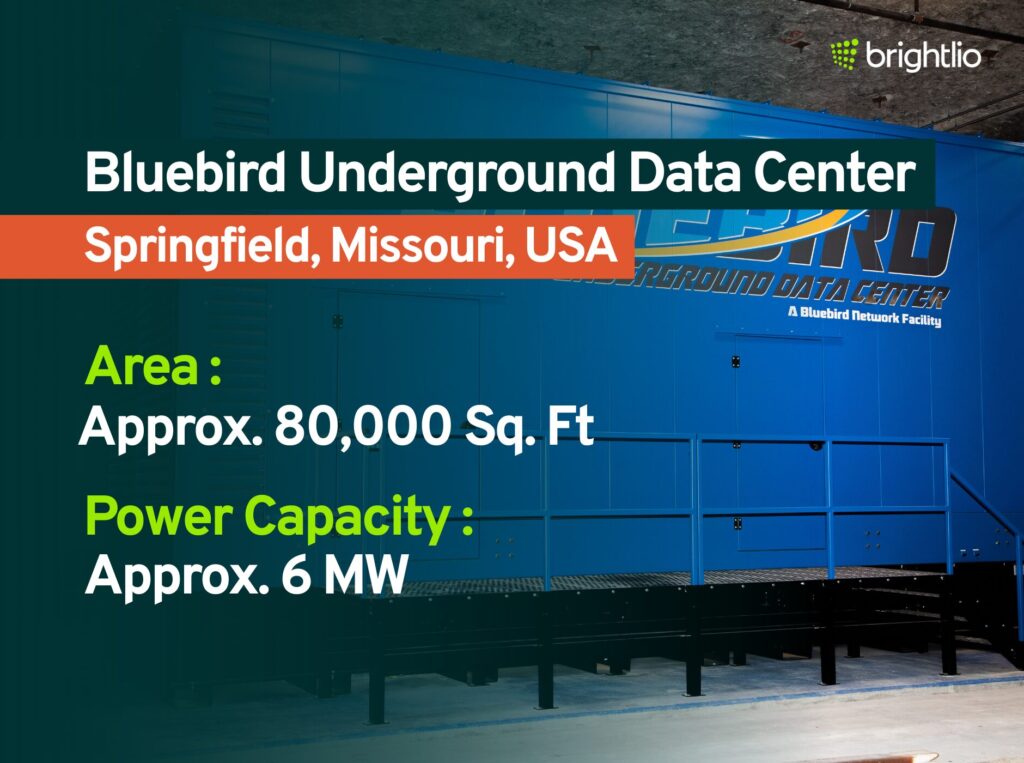
8. Bluebird Underground Data Center – 80,000 SQ FT
Bluebird Network’s underground facility sits 85 feet below a limestone mine in Springfield, Missouri. A Schneider Electric blog describes the expansion of this 80 000 sq ft data center, emphasizing its location 85 ft below ground and multi‑level security measures.
A facility listing notes that Bluebird provides 11 000 sq ft of raised floor colocation space and has 6 MW of total power with N+1 redundancy and three separate utility feeds. The underground environment maintains a constant temperature of 64–68 °F, which reduces cooling costs.
Key features
- Location: Springfield, Missouri, USA (limestone cavern 85 ft below ground).
- Size: 80,000 sq ft facility, including 11,000 sq ft of raised floor space.
- Cooling: Constant 64–68°F cave temperature, with closed-loop water cooling and N+1 redundancy.
- Power: 6 MW capacity including off-grid generators, N+1 UPS, and 3 independent utility feeds.
- Security: 85 ft of limestone overhead, 24/7 guards, biometrics, and mantraps to limit access.
7. Ficolo (Verne Pori “The Rock”) – 91,500 SQ FT
“The Rock” is an underground data center campus in the Pori region of western Finland, built inside a bedrock tunnel network originally quarried for the Finnish Defence Forces in the 1960s.
Ficolo bought the site in 2011 and converted the 9 tunnel halls into a modern colocation facility. Current operator materials list an overall campus size is 91,500 sq ft and 11 MW of total capacity, with 100% renewable energy and an on-site solar plant.

Key features
- Location: Pori region (Ulvila/Harjunpää area), Finland, inside an underground bedrock tunnel system originally built for Finnish military use.
- Size: 8,500 m² (about 91,500 sq ft) campus arranged across 9 separate tunnel halls.
- Cooling: Direct free cooling with N+1 cooling redundancy, plus direct liquid cooling for higher-density racks.
- Power: 11 MW campus capacity, 2 separate 20 kV feeds with diverse routes, 2N generator redundancy, and N+1 or 2N UPS options.
- Security: Multiple security zones with biometric access control, 24/7/365 monitored security operations, and HD CCTV with 180+ days of retention.
- Connectivity and compliance: Carrier-neutral connectivity with meet-me racks and diverse entry points. Certifications include ISO 27001:2022, ISO 9001, ISO 14001, ISO 45001, PCI-DSS, and Katakri.
- Ownership note: Originally developed and owned through Ficolo, it later operated under Verne’s Finland portfolio. Verne also announced an agreement for GleSYS to acquire its Finland operations, including the Pori and Tampere facilities (pending closing conditions).
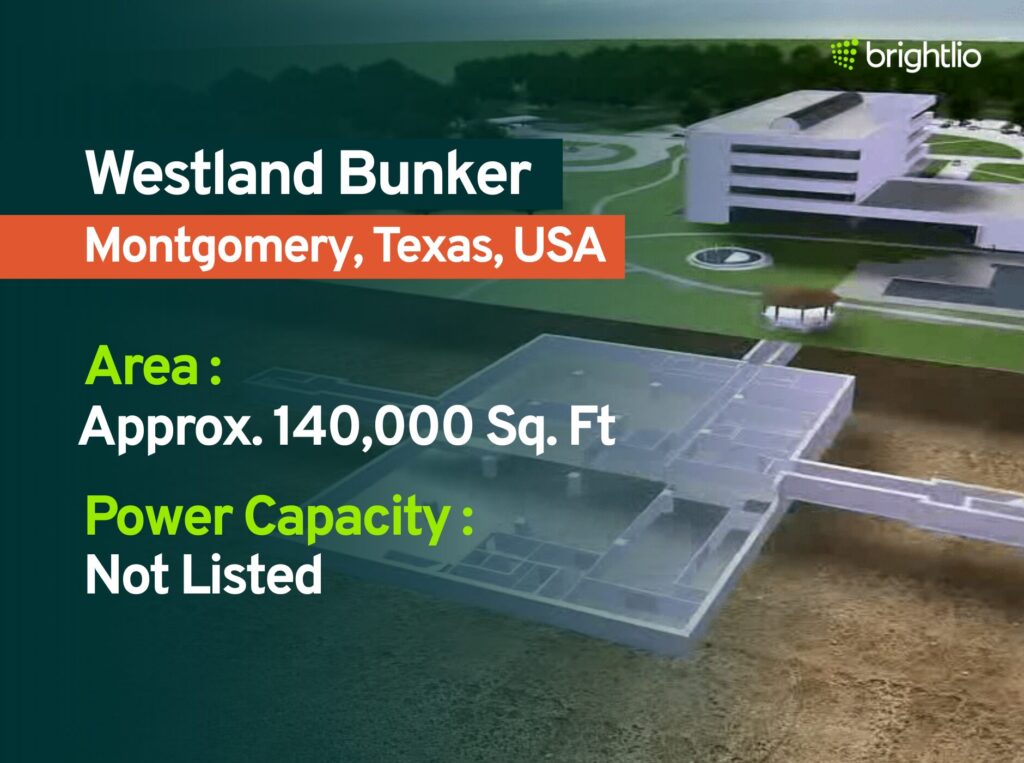
6. Westland Bunker (“The Bunker”) — 140K SQ FT
Westland Bunker, also known simply as “The Bunker,” is a repurposed nuclear shelter located on a 58‑acre property in Montgomery, Texas. Data Center Dynamics reports that the campus includes a four‑story, 100,000 sq ft office building above ground and 140,000 sq ft of underground data center space.
The facility originally built in 1981 to house control systems for a proposed nuclear plant was converted into a data center in 2004 and expanded in 2014. Thick concrete walls and earth cover provide blast protection.
Key features
- Location: Montgomery, Texas, USA (former nuclear shelter on a 58-acre site).
- Size: 140,000 sq ft underground data center plus a 100,000 sq ft office building.
- Cooling: Uses natural thermal stability underground, with mechanical systems providing additional cooling.
- Power: Designed for high availability with redundant generators and power feeds.
- Security: Remote location with limited entry points, originally engineered to withstand nuclear impact.
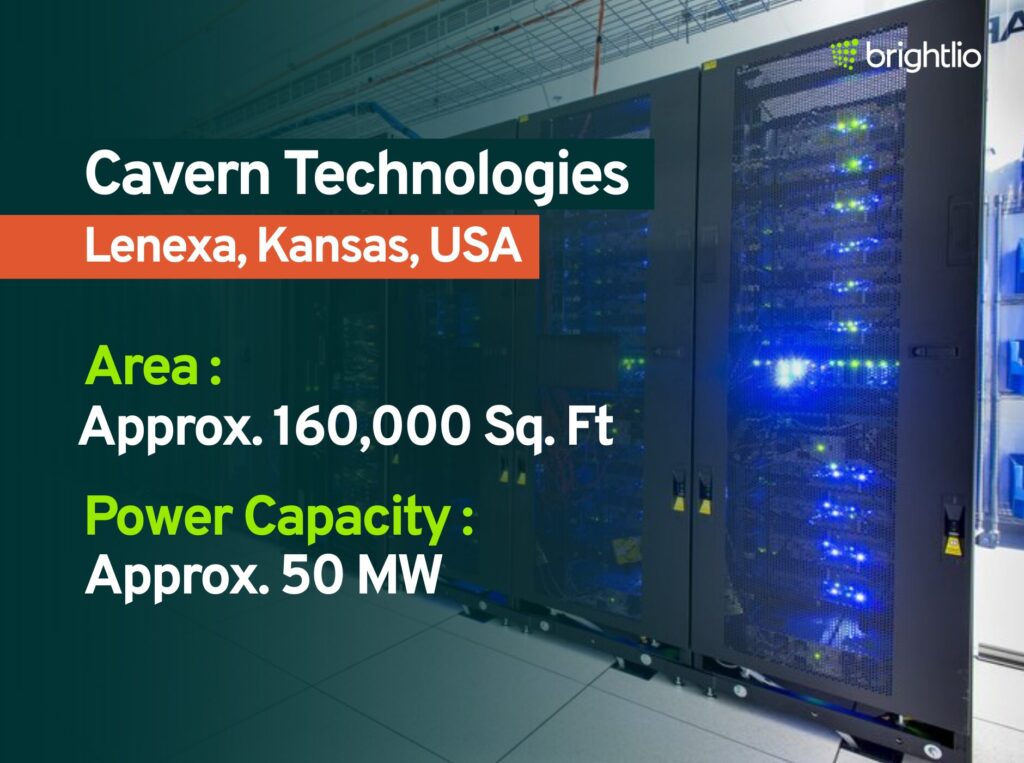
5. Cavern Technologies – 160K SQ FT
Cavern Technologies operates an underground data center 125 ft below the surface in a limestone cave near Kansas City. A Data Center Dynamics report on LightEdge’s acquisition of Cavern notes that the facility has more than 160,000 sq ft of completed hosting space with the ability to expand by up to 700,000 sq ft.
Cooling is aided by the cave’s constant temperature, and power is supplied from dual substations exceeding 50 MW. Clients can lease private suites with dedicated entrances, which makes it easier to separate tenants and restrict physical exposure compared with multi-tenant buildings spread across multiple locations.
Key features
- Location: Lenexa, Kansas, USA (limestone cave 125 ft below ground).
- Size: 160,000 sq ft of finished data center space, with expansion capacity up to 700,000 sq ft.
- Cooling: Natural cave cooling supported by mechanical systems, and the constant underground temperature helps reduce energy use.
- Power: Dual substations delivering more than 50 MW, with the ability to scale as required.
- Security: Private suites with separate entrances, and the hardened rock environment adds physical protection.
4. Green Mountain DC1-Stavanger – 243K SQ FT
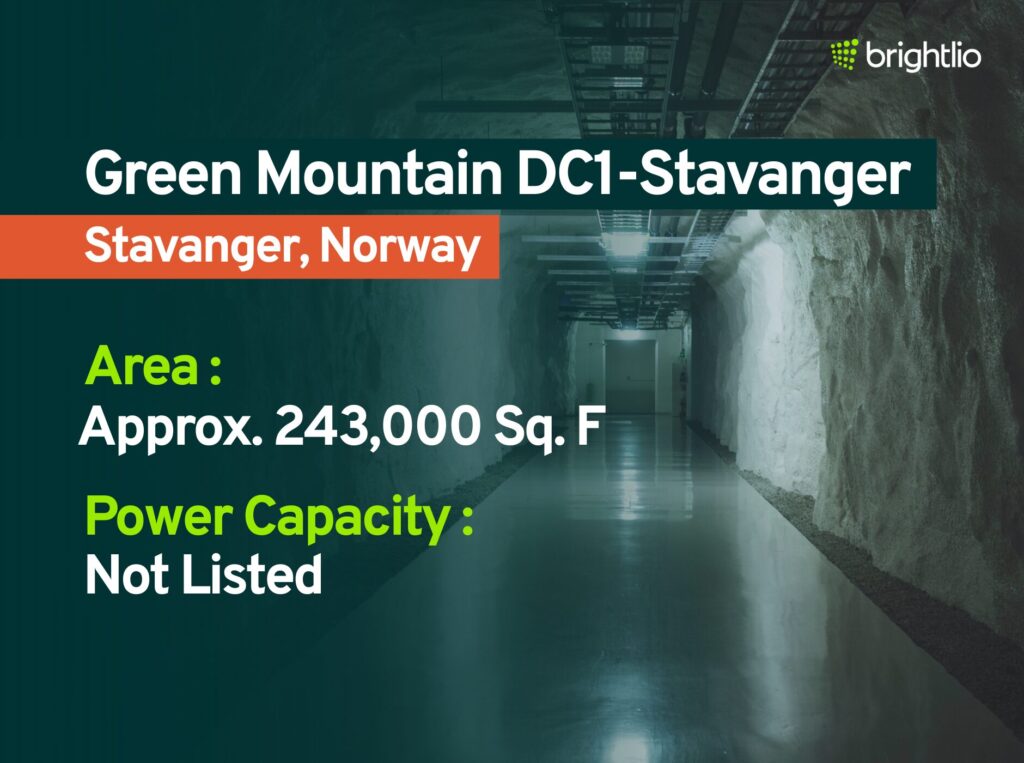
DC1-Stavanger repurposes a former NATO ammunition storage facility in a mountain near Stavanger, Norway. A Data Centre Magazine ranking states that DC1 offers 243,000 sq ft of secure data hall space across 6 mountain halls. Each hall contains 2-story concrete buildings inside the cavern, creating separate suites with redundant power and cooling.
The facility uses 100% hydroelectric power and pumps 7.8 °C fjord water through titanium heat exchangers for free cooling, which supports modern data center equipment layouts without heavy mechanical cooling demand.
Key features
- Location: Rennesøy Island near Stavanger, Norway (former NATO ammunition depot under a mountain).
- Size: 243,000 sq ft of data space.
- Cooling: Direct seawater cooling from an adjacent fjord, with a PUE around 1.15.
- Power: Fully powered by local hydropower, with 2 separate feeds for redundancy.
- Security: Access through a 100 m tunnel with a 0.5 m thick blast door, and the mountain provides natural shielding.
3. Iron Mountain “WPA-1” – 330K SQ FT
Iron Mountain’s Western Pennsylvania facility sits 220 ft underground in a former limestone mine. A catalog entry notes that the complex has 1.7 million sq ft of developed space, including vaults and storage for physical records.
However, Iron Mountain’s data center occupies a 330,000 sq ft portion of this mine, offering 15.5 MW of power and geothermal cooling through an underground lake.
The larger figure reflects the entire repurposed mine, while the data center footprint is a fraction of that area. For some clients, this works as one data center location that supports strict physical security requirements without distributing workloads across multiple sites.

Key features
- Location: Butler County, Pennsylvania, USA (limestone mine 220 ft below ground).
- Size: 330,000 sq ft data center within a 1.7 million sq ft developed complex.
- Cooling: Geothermal cooling using water from an underground reservoir.
- Power: 15.5 MW with renewable energy matching and 100% uptime commitments.
- Security: Limited entry points, CCTV, biometric access, mantraps, and natural protection from tornadoes and hurricanes.
2. SubTropolis Technology Center – 400K SQ FT
SubTropolis Technology Center (STC) operates within Hunt Midwest’s SubTropolis, the world’s largest underground business complex, totaling 7,800,000 sq ft. Phase I of STC offers 400,000 sq ft of underground data center space, with planned expansion up to 2,000,000 sq ft in future phases.
Carved into limestone bluffs near Kansas City, the site maintains a stable temperature of around 65°F, which reduces the workload on mechanical cooling and lowers overall facility power draw. Hunt
Midwest states it can deliver powered shells within 90 days and provides access to 161 kV transmission lines for expansion, which supports data center providers offering scalable data center services across many data centers.

Key features
- Location: Kansas City, Missouri, USA.
- Size: 400,000 sq ft available now, scaling to 2,000,000 sq ft at full build-out.
- Cooling: Naturally cool cave environment, with mechanical cooling added as needed.
- Power: Multiple substations supporting up to 200 W per sq ft, plus access to 345 kV and 161 kV transmission lines.
- Scalability: Fast modular construction options, with space for large tenant suites.
1. Lefdal Mine Datacenter – 1.3 Million SQ FT
Lefdal Mine Datacenter in Måløy, Norway reuses a former olivine mine carved into a mountain. The operator reports that the site can provide up to 1.3 million sq ft of white-space and support 200 MW of IT load. A Data Center Dynamics article notes that the mine contains 75 halls across 5 levels, each hall measuring 12 m tall, with expansions planned for up to 200 MW of capacity.
The facility uses cold fjord water pumped through heat exchangers for cooling, which reduces reliance on conventional data center cooling systems and improves operational efficiency compared with traditional data centers and other above ground facilities. That design also helps cut energy consumption and stabilize energy costs.

Key features
- Location: Måløy, Norway (former olivine mine within a mountain).
- Size: Up to 1.3 million sq ft of data hall space.
- Cooling: Closed-loop seawater system using 8 °C fjord water; PUE between 1.08 and 1.15.
- Power: 100% renewable energy from nearby hydroelectric stations; planned capacity of 200 MW.
- Security: Single entrance 700 m inside the mountain with 60 m of rock above the facility, offering fewer access points than most sites.
Final Thoughts
Underground data centers provide a distinctive blend of physical security and energy efficiency. While some marketing figures emphasize the total size of underground complexes—such as the 1.7 million sq ft at Iron Mountain’s Western Pennsylvania mine—usable data center space is often smaller.
Facilities like Lefdal Mine and SubTropolis Tech Center demonstrate that large‑scale deployment underground is viable when coupled with renewable energy and natural cooling.
Smaller sites such as InfoBunker and Bahnhof Pionen show how Cold War bunkers can be repurposed for modern IT infrastructure. Together, these examples illustrate how subterranean spaces support resilient, sustainable computing.
Read More Similar Posts:
How Brightlio Helps With Colocation
We help businesses select and implement the right colocation solution without the usual complexity. We assess your current environment, performance needs, and budget, then match you with the best-fit data center based on location, power, redundancy, compliance, and long-term scalability.
Brightlio also supports vendor selection, contract negotiation, connectivity planning, and migration strategy so you reduce risk and avoid delays. The result is a more resilient, secure infrastructure that supports uptime today and growth tomorrow.
Interesting Facts About Underground Data Centers
Below are some of the most fun and interesting facts about the Microsoft and Fortum heat-reuse project, including the key numbers, timeline, and how the system turns data-center cooling into district heating.
Finland Warms City Blocks With Data Center Waste Heat
In Helsinki, a data center sits about 30 meters underground and uses cold air and cold seawater for cooling. The heat produced from the servers and other computing equipment is captured and pushed into the district heating network, helping warm nearby buildings and homes. Similar large-scale projects are expanding across Finnish cities, where data center heat is being reused to meet rising demand through municipal heating systems across many parts of the industry.

Why Data-Center Heat Matters
Digital life depends on data centers. Server farms run 24 hours a day, consuming large amounts of energy and releasing low-grade heat. Traditionally, this heat is blown into the air or water, which increases the overall carbon footprint of digital infrastructure. Finland and its Nordic neighbours are demonstrating a different approach: integrating data-center waste heat into district-heating networks to warm homes and buildings as part of broader sustainable alternatives to fossil-based heating.
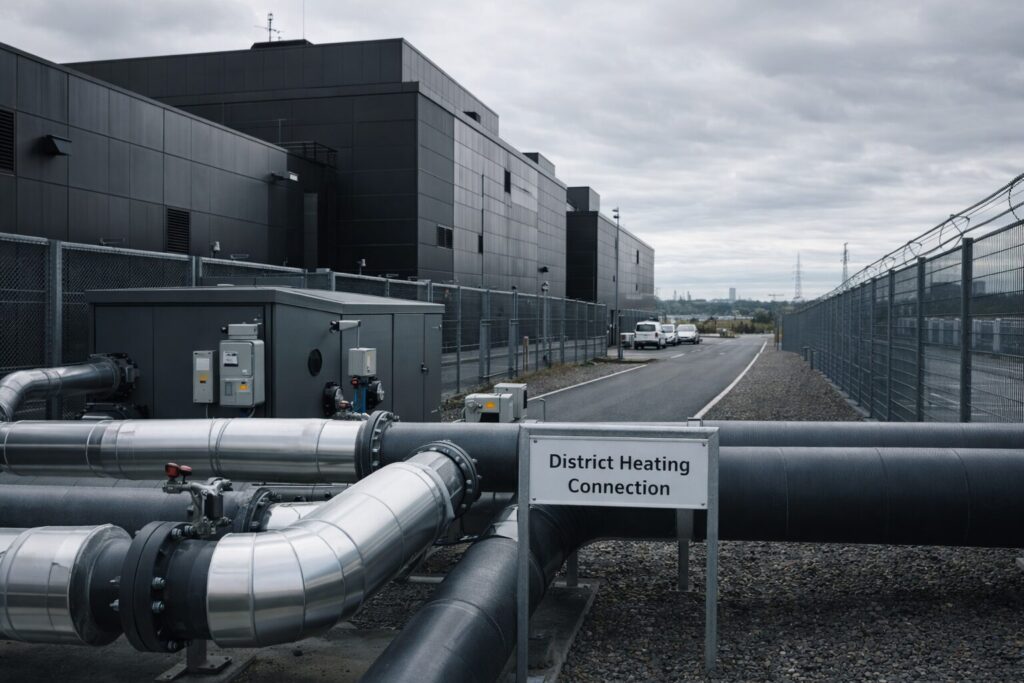
District heating is common in Finland; about 90% of Finnish cities use it. A central plant pumps hot water through insulated pipes to buildings. If a data center connects to this network, heat from cooling systems can warm water instead of being wasted. The combination of cold Nordic climates, favorable ambient temperature, and extensive district-heating infrastructure makes the region ideal for heat-reuse projects that support economic viability at scale.
Microsoft–Fortum: A 100,000-Home Project in Espoo
In 2022, Microsoft and Fortum announced a plan to reuse waste heat from Microsoft’s new data-center region near Helsinki for district heating in Espoo, Kauniainen, and Kirkkonummi. Fortum’s network serves about 250,000 users, and Microsoft data centers are expected to supply roughly 40% of the heat demand. Operations are scheduled for 2027, supported by long-term strategic partnerships between utilities and hyperscale operators.
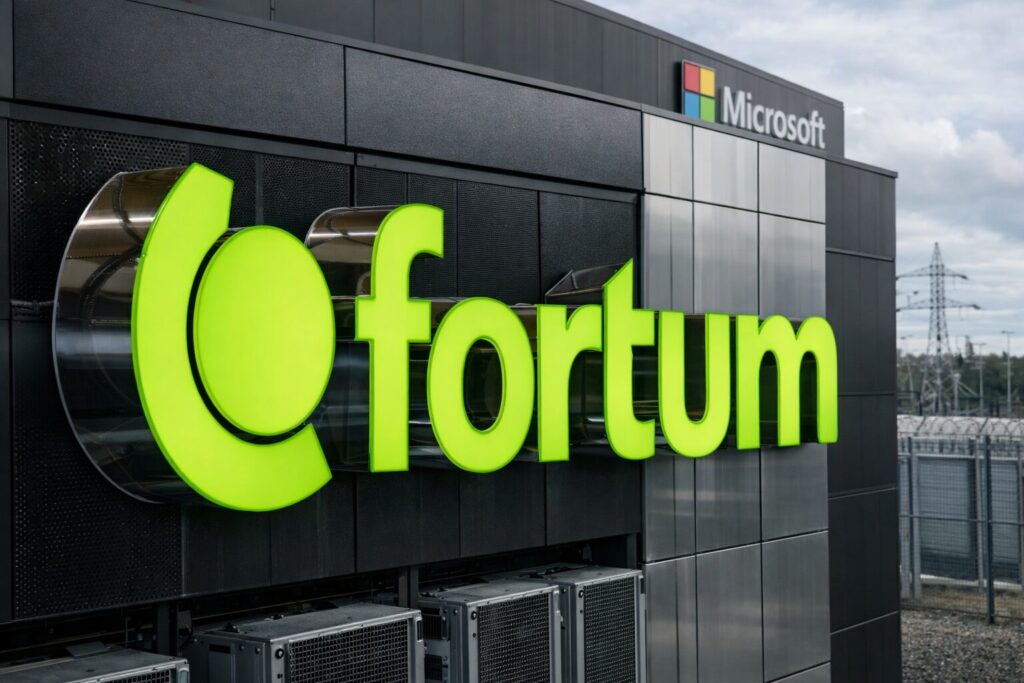
Water warmed to about 30°C at the data centers will be sent to Fortum’s heat-pump plant, raised to around 115°C, then distributed through Fortum’s 900 km pipe network. The project runs on 100% emission-free electricity and is expected to cut emissions by about 400,000 t CO₂ per year through expanded use of sustainable energy. The “100,000 homes” figure comes from converting 40% of Fortum’s roughly 125,000–130,000 dwellings into household equivalents.
How the System Works
- Cooling becomes heating – Data-center servers generate hot air. Instead of venting it outside, Microsoft’s design channels this hot air into heat exchangers that warm water to about 30 °C.
- Heat pumps upgrade temperature – Fortum’s heat-pump plant raises the water temperature to about 115 °C for district heating. Electric boilers and heat pumps supply the necessary power equipment and system output.
- District heat distribution – The superheated water flows through Fortum’s 900-km network of pipes to homes, businesses and public buildings, replacing coal and natural-gas-based heating and reducing exposure to climate change impacts from high-emission infrastructure.
Sweden and Other Nordic Models
Sweden has long promoted heat recovery. In Stockholm, the municipal utility Stockholm Exergi created the Stockholm Data Parks initiative, which recruits data-center operators to connect to an open district-heating network. An early example was the 2018 partnership with DigiPlex; retrofitting that facility allows it to heat up to 10,000 apartments. The program’s goal is for 10% of Stockholm’s heating to come from recovered data-center heat.
More recently, Conapto and real-estate firm Fastpartner began developing a 20-MW data-center campus in southern Stockholm. The campus uses 100% renewable electricity and connects its waste-heat system to the district network. Fastpartner’s CEO explained that the heat-recovery system would heat about 8,000 homes, and this capability was a key reason for investing. Stockholm Exergi notes that expanded heat recovery helped shut down the city’s last coal-fired boiler in 2020.
Germany’s Regulatory Push
Waste-heat recovery is spreading across Europe. Germany’s Energy Efficiency Act (Energieeffizienzgesetz), adopted in 2023, mandates that new data centers coming online after 1 July 2026 must reuse at least 10% of their waste heat, rising to 15% for those commissioned after mid-2027 and 20% from mid-2028.
An analysis by engineering firm Cundall confirms these targets and notes that operators must install heat pumps and integrate with potential heat consumers. Germany’s law also requires data-center operators to implement energy or environmental management systems, and exemptions apply only if no suitable heat recipients can be found, especially for large facilities measured in square feet.
FAQs
– Enterprise data centers
– Colocation data centers
– Cloud data centers
– Edge data centers
Microsoft (Project Natick)
Memphis, Tennessee (xAI’s “Colossus” supercomputer data center)
Top 5 colocation data center operators (data center landlords):
– Equinix
– Digital Realty
– NTT Global Data Centers
– CyrusOne
– KDDI/Telehouse
– Amazon Web Services (AWS)
– Microsoft (Azure)
– Google (Google Cloud)
– Meta
– Equinix

Tamzid is a cybersecurity researcher with 5+ years of experience across SaaS, security, compliance, data centers and cloud. He writes for brightdefense.com and hipaasimple.com, covering security, compliance, and infrastructure topics. Certified through Cisco, Fortinet (NSE 1), and the Basel Institute on Governance in OSINT, he grounds his work in primary sources and verified data.
Recent Posts
Data Centers In Indiana
Data Centers In Arizona
What Is a Data Center?

10 Largest AI Data Centers in the World
Let's start
a new project together